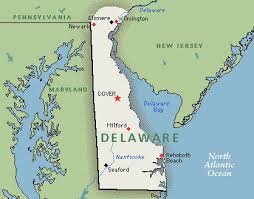
The recent securities and derivative litigation involving e.l.f. Beauty reflects a familiar D&O liability pattern: a high-growth narrative challenged by operational headwinds, followed by securities litigation and a derivative action. While e.l.f. and its D&Os achieved meaningful success at the motion to dismiss stage, the survival of certain securities claims and a recently filed a derivative complaint in Delaware highlights the potential of prolonged D&O exposure.

Continue Reading Securities Suit Partially Survives; Derivative Action Follows and Prolonged D&O Exposure

The U.S. Securities and Exchange Commission’s move to formally rescind its 2024 climate disclosure rule represents a significant turning point in the evolution of ESG-related regulation and the associated D&O risks. According to the federal regulatory tracking website, SEC staff submitted a proposed rule entitled “Rescission of Climate-Related Disclosure Rules” to the Office of Information and Regulatory Affairs for review on May 4, 2026, formally initiating the withdrawal process. 

Continue Reading SEC Moves to Rescind Climate Disclosure Rule

Following the U.S. Supreme Court’s decision invalidating tariffs imposed under the International Emergency Economic Powers Act (IEEPA), litigation risk has entered a new phase. As previously noted on The D&O Diary, early lawsuits seeking recovery focused on companies that passed tariff costs on to consumers. A newly filed class action against Sony Interactive Entertainment suggests a second wave may now be emerging; one targeting companies for allegedly pursuing a “double recovery” by retaining both higher consumer prices and government tariff refunds.

Continue Reading A Second Wave of Tariff Recovery Litigation and Expanding D&O Risk

The U.S. Supreme Court’s June 2024 decision in SEC v. Jarkesy continues to generate follow-on litigation, as regulated entities increasingly challenge the constitutionality of administrative enforcement proceedings. As D&O Diary readers will recallJarkesy held that when the SEC seeks civil penalties for securities fraud, claims the Court characterized as “legal in nature,” defendants are entitled to a jury trial under the Seventh Amendment. That ruling is now fueling a growing wave of challenges to state administrative regimes, including a pending appeal in Delaware and a closely watched case before the Arizona Supreme Court.

Continue Reading Recent Jarkesy Developments and D&O Impact

The D&O Diary has chronicled mounting stress in the private credit market, underscored by the high-profile collapses of borrowers such as Tricolor and First Brands, and the resulting migration from borrower insolvency into securities litigation against private credit lenders themselves. This escalation highlights sharpening scrutiny from private credit fund investors and public shareholders alike. Exemplifying this trend, Blue Owl Capital Corporation (“Blue Owl”) recently moved to limit redemptions following a historic surge in withdrawal requests. This liquidity strain coincides with putative class actions filed in December 2025 and January 2026 (Blue Owl SCAs) as well as a derivative suit filed on April 27, 2026 (Blue Owl Suit).  

While the Blue Owl SCA alleges that Blue Owl’s leadership concealed pressures on the firm’s direct lending vehicles, the Blue Owl Suit additionally alleges that Blue Owl was acting in a dual capacity when determining illiquid private credit fund valuations.  Below, we discuss the allegations against Blue Owl and the developing D&O and E&O risks for private credit funds.

Continue Reading Blue Owl and the Growing D&O and E&O Risks in Private Credit

The recent Chapter 11 filing of QVC Group, Inc. (QVC) underscores a trend that has been building over the past year: consumer-facing companies, facing a combination of leverage, shifting consumer behavior, and tightening credit conditions, are increasingly turning to the bankruptcy courts to restructure their obligations. As recent reporting has highlighted, the QVC’s filing follows mounting losses and ongoing pressure on its traditional television-based retail model, as consumers continue to migrate toward digital and social commerce platforms. Against this backdrop, the QVC filing reflects not only company-specific challenges but also broader structural shifts affecting legacy retail and media-driven commerce businesses.

Continue Reading QVC’s Chapter 11 Filing and the Continuing D&O Coverage Challenges in Bankruptcy

Peloton Interactive, Inc. (Peloton) has faced well-publicized operational and reputational challenges over the past several years. The company’s trajectory, from pandemic-era growth darling to post-pandemic recalibration and product safety scrutiny, has resulted in securities litigation. As previously discussed on the D&O Diary, Peloton successfully defeated a COVID-19-related securities suit at the pleading stage. More recently, the company faced a second securities class action tied to alleged product defects in its flagship bike (Peloton SCA). In a March 31, 2026, decision, the United States District Court for the Eastern District of New York granted Peloton’s motion to dismiss, rejecting plaintiff shareholders’ attempt to convert operational challenges into actionable securities fraud.

Continue Reading Peloton SCA Dismissed: Product Safety Allegations and D&O Exposure

Amid signs of a renewed uptick in SPAC activity, courts continue to grapple with D&O insurance coverage issues arising out of older de-SPAC transactions. In a March 30, 2026,  decision involving the de-SPAC of View Operating Corporation (View), the Delaware Superior Court held, in part, that View’s D&O policy “public offering” exclusion did not apply to preclude coverage for claims arising out of a de‑SPAC transaction and that additional payment conditions could not be imposed unless expressly stated in the policy.

Continue Reading Delaware Court Rejects “Public Offering” Exclusion in De-SPAC Coverage Dispute

A new study highlighted on the Harvard Law School Forum on Corporate Governance, and posted by Subodh Mishra, Global Head of Communications at ISS STOXX, on Tuesday, April 14, 2026, quantifies how cyber incidents can have sustained and measurable negative impacts on shareholder value. The report, based on research conducted by ISS STOXX and ISS-Corporate (the study), analyzed cyber incidents among companies in the Russell 3000 over a multi-year period. Its findings are stark: companies experiencing significant cyber incidents underperform the broader market by approximately 5% on average over a three-year time period. 

Continue Reading Cyber Incidents’ “Long Tail” Impact on Shareholder Value

In February, I noted an emerging securities litigation trend involving pump-and-dump schemes characterized by thin public float, retail investor participation, and the amplifying effects of social media. Three subsequent pump-and-dump securities filings in February and March 2026, along with a recent federal court ruling involving social media platform liability, provide further evidence that these risks may be accelerating. Taken together, these developments have important implications for D&O liability exposure and for underwriters evaluating risks associated with low-float issuers and companies whose securities trading activity may be influenced by online promotional activity.

Continue Reading Follow-On Developments in Pump-and-Dump Litigation