Photo of Sarah Abrams

Artificial intelligence has generated considerable discussion about operational, regulatory, and compliance risks that may translate into D&O underwriting exposure. An August 27, 2026, ruling allowing a securities class action against CVS to proceed highlights a growing source of securities litigation risk arising when AI-enabled business processes materially contribute to financial performance. The Southern District of New York granted in part and denied in part CVS’s motion to dismiss, permitting claims to proceed based on allegations that the company failed to disclose material information regarding the role AI-assisted prior authorization processes allegedly played in generating cost savings and supporting profitability.

Continue Reading The CVS Case and the Emerging D&O Risks of AI-Driven Performance

One of the recurring issues in D&O coverage litigation is whether an individual director or officer was acting in an insured capacity when the conduct that gave rise to a claim occurred. Because directors and officers often serve in multiple roles, as executives, shareholders, investors, lenders, or guarantors, the capacity question can be complex, but the answer can be coverage dispositive.

Continue Reading Eighth Circuit: D&O Policy Does Not Cover Executives’ Personal Loan Guarantees

The D&O Diary has been closely following the growing number of lawsuits, investigations, and governance concerns emerging from the private credit sector. Private credit generally refers to loans made by non-bank lenders, which may include private funds or asset managers, to corporate borrowers. As private credit managers have become increasingly integrated with life insurers and affiliated businesses, questions surrounding related-party transactions and disclosure practices have attracted heightened scrutiny. The investigations involving Mark Walter and several entities within his business empire provide a particularly noteworthy example of how these concerns can evolve into significant regulatory and potential D&O liability events.

While public attention has focused on Walter’s ownership interests in major sports franchises, the underlying investigations reportedly involve questions surrounding affiliated private credit investments, related-party transactions, and disclosure practices involving insurer assets. The circumstances remain ongoing, and no wrongdoing has been alleged. Because the investigations and related proceedings remain ongoing and the relevant facts remain under development, the term “Walter matter” is used throughout this article as a neutral description of the situation.

As discussed below, the Walter matter offers an instructive case study of how questions involving affiliated transactions can develop into significant regulatory scrutiny and potential D&O liability exposures.

Continue Reading Private Credit, Affiliated Transactions, and D&O Risk

Every year after Labor Day, The D&O Diary takes a step back to survey the most important current trends and developments in the world of Directors’ and Officers’ liability and insurance. This year’s review is set out below. As the following discussion shows, this is a particularly interesting time in the world of D&O.

Continue Reading What to Watch in the World of D&O

Over the past year, market-manipulation lawsuits have become a growing feature of the securities litigation landscape, with plaintiffs targeting alleged spoofing, short-selling, pump-and-dump schemes, and other trading-related misconduct. The latest such case, filed on July 31, 2026, in the Middle District of Florida, names hedge fund Pentwater Capital Management and its founder, Matthew Halbower, as defendants (Pentwater SCA). The complaint alleges that they manipulated the market for Avis Budget Group (Avis) shares by orchestrating a short squeeze and then selling into the resulting price spike.

Unlike pump-and-dump securities suits premised on allegedly false or misleading statements, the Pentwater SCA is based on the defendants’ trading activity itself. The lawsuit arguably represents an example of a growing trend in market-manipulation-related securities class action litigation while underscoring an increasingly important issue for D&O underwriters: securities litigation risk arising not from disclosure deficiencies, but from market-structure and trading-related factors capable of driving extreme stock-price volatility.

A copy of the Pentwater SCA can be found here.

Continue Reading Short Squeeze Lawsuit Filed Against Pentwater Capital

The securities class action lawsuit filed against Intuit, Inc. on August 17, 2026, represents another notable development in one of the most significant securities litigation trends of the year. According to our count, the Intuit case is the 20th AI-related securities class action filed in 2026, underscoring the continued evolution of AI-related litigation beyond traditional allegations of AI-washing and overstated artificial intelligence capabilities.

Similar to the securities class action filed against ZoomInfo Technologies on July 13, 2026, the complaint against Intuit alleges that, while the company promoted the benefits of artificial intelligence, it failed to disclose the extent to which AI was simultaneously creating competitive pressures for key parts of its business.

A copy of the complaint filed against Intuit can be found here.

Continue Reading Intuit Hit with AI-Related Securities Suit

Two notable securities litigation trends over the past year have been the rise of AI-related lawsuits and claims stemming from geopolitical developments, particularly U.S.-China tensions. A securities class action complaint filed on August 4, 2026, in the Southern District of New York against Alibaba Group Holding Limited (Alibaba) and the company’s CEO combines both themes in a single action (Alibaba SCA). The complaint alleges that Alibaba misled investors concerning both its AI-related activities and the risks associated with its alleged status as a “Chinese military company” under U.S. law.

Continue Reading Securities Suit Against Alibaba Combines Two Key Litigation Trends

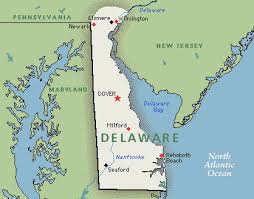
A frequently recurring coverage issue litigated in Delaware courts is the treatment of related claims and the consequences that flow from a determination that multiple proceedings are related. A recent Delaware Superior Court decision revisits those issues, this time in a dispute involving an insurer’s reliance on related-claims language in a policy retention provision to deny coverage for a derivative action.

Continue Reading Delaware Court: Retention Provision Is Not a Related-Claims Exclusion