Alexander Hopkins

One of the most important developments in the business, economic and financial arenas has been the recent emergence of Artificial Intelligence (AI). The advent of the AI era has also presented novel legal issues and has presented regulators with a host of potential challenges. In the following guest post, Alexander Hopkins takes a look at the developing efforts of a variety of governmental regulators to address the issues that AI presents, and considers the implications of these regulatory developments for the liabilities of corporate directors and officers. Alex is Of Counsel at the Saxe Doernberger & Vita, P.C. law firm. I would like to thank Alex for allowing me to publish his article as a guest post on this site.

Continue Reading Guest Post: Global AI Regulations: D&O Liability Implications in a Changing Legal Landscape


It is already well understood that there has been a change in direction at the SEC under the current Trump Administration and SEC Chair Paul Atkins. In a speech earlier this week at the New York Stock Exchange entitled “Revitalizing America’s Markets at 250,” Atkins described the ways in which he thought the agency in recent times has lost its direction, particularly with respect to its public company disclosure requirements. With the stated aim of restoring its original mission, Atkins identified two main public company disclosure reform goals for the agency. He also set out “three pillars” to “make IPOs great again.” Atkins’s IPO-related remarks include brief but noteworthy comments about securities class action litigation reform that have largely been overlooked in the press coverage of his speech.

Continue Reading SEC Chair Paul Atkins and Public Company Disclosure Reform

The Trump Administration’s tariff policies have unquestionably had an impact on the global economy, as well as on the operations and financial performance of at least some individual companies. However, the overall impact has turned out to be less than economists and other observers feared at the time of President Trump’s “liberation day” announcement earlier this year. As discussed below, a number of factors have contributed to the tariffs’ muted impact. However, there are reasons to be concerned that the full effect of the tariffs is yet to kick in so far but may be felt in 2026, with potential consquences for D&O insurance underwriters.

Continue Reading Big AI Investments Have Muted the Tariff Impact. But Will it Continue?
Sarah Abrams

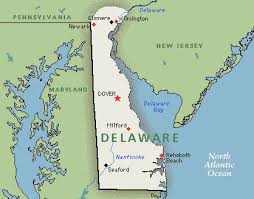
One of the more interesting recent developments in the U.S. corporate arena has been the recent emergence of a DExit movement – that is, the rise of the argument that companies would be better served to move their state of incorporation from Delaware to another state, usually Nevada or Texas. In the following guest post, Sarah Abrams, Head of Claims Baleen Specialty, a division of Bowhead Specialty, takes a closer look at the legal changes that have emerged in the wake of the DExit movement, both in Delaware and elsewhere, and considers the extent to which these changes may present D&O risks. My thanks to Sarah for allowing me to publish her article as a guest post on this site. Here is Sarah’s article.

*********************

Does Coinbase’s recent reincorporation to Texas from Delaware, and its messaging surrounding the move, raise an emerging D&O underwriting risk related to a company’s state of incorporation?

In his Wall Street Journal opinion piece, Coinbase’s Chief Legal Officer asserts that Delaware’s judicial outcomes have become too unpredictable and that Texas, with recent corporate-law reforms, offers efficiency, flexibility, and legal predictability.  He further cites Delaware’s recent jurisprudence, concern about growing shareholder litigation, and desire for statutory protection for fiduciaries, which Delaware does not appear to provide.  Coinbase is not the only company to provide similar bases to reincorporate from Delaware over the last year.

Alongside newly enacted corporate-law reforms in states such as Texas and Nevada, a recent Analysis Group review (reported in the Harvard Law School Forum on Corporate Governance) shows a year-over-year increase in public companies seeking shareholder approval to reincorporate out of Delaware. The filings commonly cite motivations which mirrored Coinbase: greater legal certainty, reduced litigation exposure, and lower operating or franchise-tax costs.

As D&O Diary readers may recall, shortly after Delaware signed into law Senate Bill 21 (DE SB 21) in an attempt to blunt corporate reincorporation efforts, the Texas legislature codified Senate Bill 29 (TX SB 29) and Senate Bill 1057 (TX SB 1057), and the Nevada legislature, not to be outdone, revised its corporation code Chapter 78 (NV 78).  The impact of each of these state initiatives is just beginning to show, along with the potential risk to D&O underwriters of companies that are weighing whether to stay or leave Delaware.   

To appreciate what, if any, additional risk may arise from reincorporation, the following will briefly review the above-referenced Delaware, Texas, and Nevada laws, the recent wave of shareholder proposals seeking reincorporation, and data demonstrating momentum behind DExit.

State Law Developments

Delaware

There have been several D&O Diary posts discussing DE SB 21, including constitutional challenges, so I will only briefly describe the bill as passed. DE SB 21 was enacted in March 2025 and amends select provisions of Sections 144 and 220 of the Delaware General Corporation Law.  The effect is to address provisions of the state’s corporate laws to lessen stockholders’ rights relative to claims involving controlling stockholders, particularly as they relate to purportedly conflicted transactions.

Texas

Signed into law by Governor Greg Abbot in May 2025, TX SB 29 codifies the Business Judgment Rule directly into the Texas Business Organizations Code. Under TX SB 29, directors and officers of a Texas corporation (publicly traded or opt-in) are presumed to act (1) in good faith, (2) on an informed basis, (3) in furtherance of the interests of the corporation, and (4) in obedience to the law and the entity’s governing documents. Thus, a plaintiff seeking to hold a director or officer liable must rebut one or more of those presumptions and prove that the act or omission constituted a breach of duty and involved fraud, intentional misconduct, an ultra vires act, or a knowing violation of law.

TX SB 1057, also codified in May, allows certain Texas incorporated companies, under specified circumstances, to include a provision in their governing documents that imposes higher stock ownership requirements on shareholders seeking to submit proposals. To submit a proposal, a shareholder or group must meet either a $1 million market value threshold OR a 3% ownership threshold and hold the shares continuously for at least 6 months. 

Nevada

Nevada’s corporation code, anchored in NV 78, presumes that fiduciaries (directors and officers) act in good faith and with a valid business purpose, and it permits broad exculpation along with expansive indemnification for any claim other than intentional misconduct, fraud, or a knowing violation of law. Nevada also imposes higher procedural hurdles on derivative litigation and maintains narrower, less shareholder-friendly books-and-records inspection rights than Delaware.

Discussion

Thus, considering the above and the increasing number of shareholder proposals to reincorporate from Delaware, will shareholder scrutiny over a company’s decision to stay or leave begin to impact D&O underwriter exposure? 

First, it is important to note that Delaware continues to attract substantial new entity formations even while high-profile public companies are opting to depart. In 2025, 29 companies, including Coinbase, reincorporated out of Delaware, yet nearly 250,000 new entities (which may include LLPs and LLCs with lower franchise fees)  have been formed in the state since the end of September.

However, as noted earlier, in the HLS post, Delaware experienced a net loss of large public companies (with significant or controlling shareholders) through reincorporation in 2024 and the first half of 2025. In addition, in July, Institutional Shareholder Services (ISS) Group presented data that, through the first half of 2025, 18 public companies proposed to reincorporate out of Delaware, compared with 10 companies proposing to move into Delaware from other states.

Proxy-season data from 2025 further showed heightened scrutiny over the state of incorporation. Glass Lewis evaluated 29 reincorporation proposals, plus one written-consent action, representing a 70.6% increase from 2024. Of the 28 proposals that went to a shareholder vote, 18 companies (64.3%) sought to leave Delaware, compared to 23.5% the prior year. 55% of all reincorporation proposals reviewed by Glass Lewis involved companies with significant or controlling shareholders, echoing the HLS post.

One example illustrating how shareholder scrutiny can influence these decisions is the case of MercadoLibre, a $120 billion e-commerce platform that sought approval to move from Delaware to Texas. MercadoLibre also cited Delaware’s “indeterminate” case law and use of “broad, flexible standards” as creating unpredictability. The company emphasized that Texas’s recent reforms, including the codification of the business judgment rule, would “provide greater certainty to the board in its decision-making.” After publicly stating its concerns, MercadoLibre later withdrew its proposal without explanation, perhaps signaling investor sensitivity surrounding reincorporation debates.

D&O exposures may begin to emerge from a company’s deliberation, disclosures, process, and rationale regarding a company’s state of incorporation or reincorporation. For example, if peer companies, like Coinbase, continue to publicly highlight Delaware’s litigation intensity or case-law unpredictability, shareholder plaintiffs may argue that a board failed to adequately evaluate alternatives, resulting in derivative suits asserting Caremark-style oversight claims.  In addition, Section 14(a) or 10(b) securities claims alleging misstatements about governance risks or reincorporation may arise when a company describes reincorporation as reducing uncertainty or director liability, if shareholders believe they were misled about the risks and benefits.

Thus, D&O underwriters may want to consider that, as companies publicly cite Delaware’s evolving jurisprudence, active derivative-litigation environment, and expansive books-and-records rights as sources of uncertainty and cost, directors and officers who decide to “stay put” may face scrutiny over whether they adequately evaluated alternatives such as Texas or Nevada’s more management-protective regimes.

The views expressed in this article are exclusively those of the author, and all of the content in this article has been created solely in the author’s individual capacity. This article is not affiliated with the author’s company, colleagues, or clients. The information contained in this article is provided for informational purposes only, and should not be construed as legal advice on any subject matter.

Sarah Abrams

In the coroporate law context, a “poison pill” — formally known as a shareholder rights plan — is a corporate defense strategy used to deter hostile takeover attempts. But what if the poison pill is designed to entrench incumbent senior company management rather than to deter unwanted takeover suitors? In the following guest post, Sarah Abrams, Head of Claims Baleen Specialty, a division of Bowhead Specialty, examines this question and considers the D&O insurance underwriting implications. My thanks to Sarah for allowing me to publish her article as a guest post on this site. Here is Sarah’s article.

Continue Reading Guest Post: Poison Pill

In the current heated DExit debate over whether companies incorporated in Delaware should reincorporate elsewhere (usually Texas or Nevada), one factor often cited is the expense of litigating in Delaware, usually as a shorthand reference to a contention that plaintiffs’ counsel’s fee awards in Delaware’s court are out of control. This argument typically cites to a few recent cases in which the fees awarded unquestionably were large; recent academic studies have taken the argument further to contend that the fees awarded in some cases were excessive.

However, a more recent study, based on a comprehensive overview of all Delaware court fee awards in the last ten years, challenges the premise that fee awards are out of control; the study finds, rather, that fee awards generally have been within reasonable bounds, and argues that a very small number of outliers should not drive the analysis of the issues. The study concludes that Delaware’s flexible approach to fee awards provides the appropriate incentives for plaintiffs’ counsel and includes safeguards to protect against excessive fee awards. Perhaps most significant in light of the current controversy is the study’s authors’ finding that “we find no evidence that Delaware fees are systematically excessive.”

Continue Reading But ARE Plaintiffs’ Counsel Fee Awards in Delaware Excessive?

In a recent post, I noted the significant downturn in the amount of SEC enforcement activity during the 2025 fiscal year (ended September 20, 2025). What was true FY 2025 with respect to SEC enforcement activity in general was also true in particular with respect to SEC enforcement activity involving publicly traded companies. According to a new report, SEC enforcement activity against public companies and their subsidiaries also declined significantly during FY 20225. The report, written by Cornerstone Research in conjunction with the Securities Enforcement Empirical Database (SEED) of the NYU Pollack Center for Law & Business, contains a number of interesting observations about the level of enforcement activity in the agency’s final days under outgoing SEC Chair Gary Gensler, compared to the activity levels under the agency’s current Chair, Paul Atkins.

Continue Reading Cornerstone Research: SEC Public Company Enforcement Actions Decline
Sarah Abrams

A recent series of U.S. Department of Justice actions highlights the agency’s focus on combatting so-called “pig-butchering” — a type of online financial scam where fraudsters build a long-term relationship with a victim to gain trust and then convince the victim to invest in fake cryptocurrency or trading schemes. In the following guest post, Sarah Abrams, Head of Claims Baleen Specialty, a division of Bowhead Specialty, takes a look at how developments in the crypto world coinciding with the DOJ’s crackdown may be creating increased D&O risk arising from pig-butchering schemes. I would like to thank Sarah for allowing me to publish her article on this site. Here is Sarah’s article.

Continue Reading Guest Post: Another Emerging Cryptocurrency Risk for D&O Underwriters?

In the 2025 fiscal year (ended September 30, 2025), the SEC’s enforcement activity, as measured by the number of stand-alone enforcement actions, was at its lowest level in ten years. While the decline was reflected across many categories of SEC enforcement, there were certain specific areas – such as cases involving insider trading and market manipulation – where SEC activity actually increased. And notwithstanding the overall decline in SEC enforcement activity, there are signs to suggest that foreign companies listed on U.S. exchanges should be prepared heightened SEC scrutiny and enforcement activity, as discussed below.

Continue Reading SEC Enforcement Actions Decline, But Foreign Cos. Should Remain Vigilant

The D&O Diary was on assignment in Florida last week, with stops in both Orlando and Miami. It is always a pleasure to be in Florida, even though this time the Orlando leg of the trip was unusually cold.

The primary purpose of the Orlando visit was to attend the annual Professional Liability Underwriting Society (PLUS) Conference. As always, the Conference was well-organized and well-attended. It was a pleasure to see so many old friends and to make new friends as well. It was gratifying to learn how many of the new members of our industry follow The D&O Diary. It was also my honor to be able to participate as a panelist for one of the sessions, as reflected in the picture below. My congratulations to the PLUS staff for another excellent event.

Continue Reading Orlando and Miami: PLUS Conference and LatAm Underwriters’ Meeting