cornerOwing to a number of larger settlements, the average securities class action settlement amount in 2013 rose, while at the same time the media settlement amount declined, according to a study of the securities suit settlements from Cornerstone Research. The study also reports that the number of settlements and the aggregate dollar value of all settlements also rose during the year. The report, which is entitled “Securities Class Action Settlements: 2013 Review and Analysis,” can be found here. Cornerstone Research’s March 27, 2014 press release about the study can be found here.


According to the report, there were 67 securities class action settlements that received court approval during 2013 (up from 57 in 2012). The aggregate dollar value of the 2013 settlements was $4.773 billion, which represented a 46 percent increase over 2012 and which also was the highest annual total dollar value over the last six years.


The average settlement amount during the year was $71.3 million, compared to the average securities class action settlement during the period of $55.5 million between 1996 and 2012. (All settlement dollars are adjusted to account for economic inflation.). The increase in the aggregate and average settlement amounts during 2012 was largely a reflection of the number of “mega settlements” (i.e., settlements over $100 million). There were six mega settlements during 2013, which was the second highest proportion of those large settlements in the last ten years. The number of large settlements during the year was in part due to the resolution of several credit crisis-related lawsuits. These six mega settlements accounted for 84 percent of the total dollar value of the 2013 settlements.


While aggregate and average settlement values increased during 2013, the median settlement amount declined. The median settlement value in 2013 was $6.5 million, compared to a median settlement amount during the period 1996-2012 of $8.3 million. The decrease in the median during 2013 was a result of the high number of smaller settlements – approximately 60 percent of the cases that settled in 2013 were resolved for $10 million or less. About a third of these smaller settlements related to cases involving Chinese reverse merger companies (all but one of the Chinese reverse merger cases that settled in 2013 were resolved for less than $10 million).


The report includes a graphical illustration (Figure 4 in the report) showing a cumulative ten-year settlement distribution. According to the illustration, 55.5% of all cases were settled for $10 million or below, 78.8% of cases were settled for $25 million or below, and 87.4% of cases were settled for $50 million or below.


A separate illustration (Figure 7) shows median settlements as a percentage of “estimated damages” during the preceding ten years. The illustration shows that median settlements as a percentage of these estimated damages have fluctuation over time but have remained in the roughly 2-3% range during that period. During 2013, the figure was 2.1%, which was level with 2011 but up slightly from 2012 (when the figure was 1.8%). An accompanying figure shows that these percentages decrease as the size of the settlement increases. For settlements under $50 million, the percentage in 2013 was 15.1%, while for settlements over $250 million, the percentages were 2.0% or lower.


Over the last ten years, the median settlement value of cases that allege only ’33 Act claims ($3.4 million) is lower than for cases that allege only ’34 Act claims ($8.8 million) or that allege both ’33 Act and ’34 Act claims ($6.8 million). This difference is a reflection of the fact that the “estimated damages” for ’33 Act claims tends to be lower than the two other categories of cases.


The study also shows that cases involving alleged GAAP violations, restatements or reported accounting irregularities all tend to be associated with higher settlement amounts and tend to settle for a larger percentage of “estimated damages” than cases without those allegations. Similarly, cases involving third-party codefendants, such as an auditor or underwriter, often are larger and more complex cases and have a higher settlements as a percentage of “estimated damages.”


Over 55 percent of settlements since 2006 have had an institutional investor as lead plaintiff. Possibly because the cases in which the institutional investors tend to get involved are the larger or more serious cases, the settlements in cases involving institutional investor lead plaintiffs are larger than for other cases. The median settlement in 2013 for cases with a public pension as a lead plaintiff was $23 million, compared with $3 million for cases without a public pension lead plaintiffs.


Settlement amounts for class actions accompanied by derivative actions are significantly higher. In 2013, 40 percent of settled cases involved an accompanying derivative action, compared to 32 percent of settled cases during the period 1996-2012.  


Cases involving a corresponding SEC action are associated with significantly higher settlement amounts and have higher settlements as a percentage of “estimated damages.” The median settlement amount for cases with an accompanying SEC action for the period 1996-2013 was more than two times the median settlement for cases without an accompanying SEC action. Settlements of $50 million or lower are far less likely to involve corresponding SEC actions or public pensions as lead plaintiffs.


The report does note that the Halliburton case now pending before the U.S. Supreme Court “has the potential to dramatically affect the entire landscape surrounding securities class actions, “ including the considerations relating to settlements discussed in the report, including, in particular “the settlement amounts involved.”

U.S. ChamberAs I have previously noted on this blog, one of the more noteworthy recent litigation developments has been the rise in litigation financing in the U.S. The presence and effect of litigation financing remains controversial, at least in certain quarters. In the following guest post, Lisa Rickard, the President of U.S. Chamber Institute for Legal Reform, presents her perspective on third-party litigation funding and the dangers that in her view it represents for our legal system and processes.


I welcome guest post submissions from responsible commentators on topics of interest to readers of this blog. The views expressed in guest posts are those of the post’s author(s). Readers who are interested in submitting a guest post should contact me directly. Here is Lisa’s guest post:

***********************

             Third-party litigation funding, the practice by which outsiders fund large-scale litigation, has received substantial attention in recent months as litigation financers have sought to legitimize their business as a valid part of the U.S. legal system.  But the notion that litigation financing is a mechanism for promoting justice is, at best, naïve, and at worst, disingenuous.  In reality, litigation financing is a sophisticated scheme for gambling on litigation, and its impact on American companies is unambiguous:  more lawsuits, more litigation uncertainty, higher settlement payoffs to satisfy cash-hungry funders, and in some instances, even corruption. 


            The ugly side of litigation financing was recently revealed in a ruling by federal Judge Lewis Kaplan in Chevron Corporation v. Donziger, Chevron’s federal civil-racketeering suit against Steven Donziger, lead plaintiffs’ lawyer in the infamous Lago Agrio lawsuit against Chevron.  Lago Agrio was a mass-tort environmental-contamination lawsuit brought by Donziger, purportedly on behalf of Ecuadorians who had been harmed by Texaco’s former oil exploration and production operations in Lago Agrio, Ecuador.  Donziger and his co-counsel prosecuted the suit in part with the help of a $4 million investment by the Burford Capital financing firm, which made its investment in exchange for a percentage of any award to the plaintiffs.


            In February 2011, the Ecuadorian trial court awarded the plaintiffs an $18 billion judgment (later reduced to $9 billion) against Chevron.  Shortly afterward, Chevron sued Donziger for civil racketeering for procuring the judgment fraudulently.  In his March 4 opinion, Judge Kaplan found that the “decision in the Lago Agrio Case was obtained by corrupt means.”  Judge Kaplan also lamented the plaintiffs’ lawyers’ “romancing of Burford,” which the court found led plaintiffs’ counsel to adopt a litigation strategy designed to maximize plaintiffs’ ability to collect on any judgment – rather than focus on securing a judgment ethically and honestly – by multiplying proceedings against Chevron in several jurisdictions to harass it and increase its defense costs.


            Fortunately, many American companies have grown highly skeptical of third-party litigation financing.  In fact, a recent survey by Buford Capital found that only 2% of in-house counsel are using litigation funding.  Presumably, that is because they recognize that funding more litigation in what is already the world’s most litigious country is not in the interests of the business community or the American economy.


            Nonetheless, I frequently hear from proponents of third-party litigation finance that litigation funding companies are in high demand by major law firms who are seeking partners to invest in litigation.  While that may be a profitable model for plaintiffs’ firms, law firms with corporate clients that partner with litigation funders to finance plaintiff litigation do so at the peril of undermining the interests of their clients.  This is so because litigation funding arrangements not only increase litigation and litigation costs, but they erode long-term relationships between law firms and institutional clients by requiring the law firms to advance positions that will put their long-standing corporate clients at risk. 


Even more troubling is the fact that much of the litigation finance industry is unregulated and even unseen.  The U.S. Chamber Institute for Legal Reform will propose an amendment to the Federal Rules of Civil Procedure that would mandate the disclosure of third-party litigation funding arrangements at the outset of civil litigation.  If adopted, the amendment would shine much-needed light on the practice of litigation funding and mitigate some of the abuses that result from this practice. 


            The growth of third-party funding in litigation has made it increasingly difficult to uncover whether the funding company in a given case is calling some or all of the litigation-related shots for the plaintiff.   This uncertainty creates acute problems when it comes to settlement negotiations.  A party that must pay a third-party funder out of the proceeds of any recovery may be inclined to reject what might otherwise be a fair settlement offer in the hopes of securing a larger sum of money.  Disclosure of litigation funding arrangements would curtail this problem, revealing the funder’s presence as a player in the settlement process, garnering more informed litigation decisions by parties on both sides, as well as the judge, who plays an important role in facilitating settlement.  Disclosure of litigation funding would also ensure that judges and jurors do not participate in litigation in which they have a financial interest.


            Disclosure is an important first step, but other steps must be taken to minimize the impact of litigation funding on our system of justice.  For example, funders should be prohibited from exercising any control over litigation in order to protect the attorney-client relationship and minimize ethical risks; and funders should be on the hook for the other side’s legal expenses if a lawsuit they promoted and financed fails.  These common-sense regulations would not solve all the problems posed by litigation financing, but would help minimize them.


No matter how much its proponents try to dress up litigation funding, the reality is not pretty:  litigation funders meddle in litigation, turning a profit for themselves at the expense of the parties to litigation, attorney-client relationships and the integrity of the U.S. judicial system.  That is not a business model the Chamber can support.  The Chamber is, and always will be, a champion of free enterprise.  But third-party funding in litigation is antithetical to all notions of free enterprise; it is an exercise in coercion using the civil justice system.  Funders pursue windfall profits by forcing businesses into a very expensive litigation process (including costly discovery) and pressing for substantial settlements.  In order for American businesses to thrive, we need a reliable, predictable judicial system with judgments all of us trust as impartial and administration focused on deciding the rights of parties.


The author is President of the U.S. Chamber Institute for Legal Reform.

118aThe D&O Diary is on assignment in Europe this week, with the first stop in the Danish capital city of Copenhagen, for meetings there. Copenhagen has a population of about 1.2 million spread across its many neighborhoods and boroughs but perhaps owing to the height restriction on its buildings, the city feels much smaller, even cozy. In 2013, Monocle magazine selected Copenhagen as the world’s “most livable city,” and after just a short visit, it is easy to see why. With its many parks, canals and quiet charm, Copenhagen is a very comfortable city.  


Copenhagen is also unmistakably a Northern city, and in late March, the weather arrives in two forms: chilly sunshine and chilly rain. Fortunately for me, though I got soaked to the skin my first afternoon there, sunshine otherwise prevailed. In addition to a good coat and a scarf, a pair of thick-soled boots is also required for tromping around on the city’s cobblestone streets and sidewalks.


Despite the cool temperatures, Copenhagen is a city filled with bicycles053a and bicyclists. For example, during my visit I saw a new upscale mall that has just been completed. The mall has a massive parking lot – for bicycles. The highlight of my visit to Copenhagen was a bicycle tour of the city’s harbor and canal district with the head of the local Chubb office, my good friend Bjorn Petersen, and his wife. As part of the tour, we took our bicycles on a ferry boat to the islands across the harbor from the central city. One of the literally high points of the tour was a visit to the historic Vor Frelskers Kirke. The church’s corkscrew spire has an external spiral staircase, and the view from the top of the churchtower is extraordinary (if also vertiginous)


002aDenmark has been and remains a monarchy and the vestiges of the country’s royal heritage are a distinctive feature of the country’s capital city.  A key part of the mandatory tourist itinerary in Copenhagen is a visit to the several palaces around the city. The royal palace of Amalienbourg (pictured here, with two of its four wings flanking the Marble Church), which was next to the hotel where I stayed, is remarkably accessible. Cars drive freely through the palace’s central square. A Danish flag flying from the rooftop signaled that the current monarch, Queen Margrethe II, was in residence at the palace while I was in town. The Queen, who I am told is much beloved by the Danish people (I heard her referred to as “Mom”), claims direct lineal descent from the Viking King, Harald Bluetooth.


009aThe city’s most famous tourist attraction may be the statue of the Little Mermaid, based on the character from the Hans Christian Anderson fairy tale. The statue sits on a rock in the harbor and attracts tour buses of visitors, but I am guessing just about everyone has the same reaction I did, which was — “That’s it?” Perhaps the statue came to be such a prominent landmark because, like the city she inhabits, she is quiet, modest and attractive. 


At least the people of Copenhagen have a sense of humor about their iconic statue. Not far from the tourist bus-surrounded site of the famous statue, in a canal away from the central harbor, is a less well-known sculpture, the “Genetically Modified Little Mermaid,” a fantastic figure that suggests that the Danish don’t take their famous statue too seriously.


033a


The city’s chilly climate calls for hearty food, which explains the quintessential Danish meal of smørrebrød, which is basically an open-face sandwich made heavy rye bread (rugbrød) covered in butter (or, more traditionally, lard) and accompanied by an assortment of toppings, such as herring, eggs, tomato, onions, cheese, and liver paste. I found I particularly enjoyed the herring, which is served a variety of ways, including marinated, curried or pickled. The traditional way to enjoy herring smørrebrød is with a glass of schnapps, accompanied by a glass of beer.


062aA  smørrebrød lunch with friends was an appropriate opportunity to contemplate the distinctive Danish cultural concept of hygge (pronounced “hue-gge,” sort of). The word is usually translated as “cozy,” and in a comfortable candle-lit restaurant filled with flowering plants and happy Danes chowing down on heavy rye bread, it is easy to feel as if you have the sense of the concept, particularly after a glass or two of schnapps. But it was explained to me that hygge is not just a descriptive term, it is a process, and you are part of it.


I had an experience in Copenhagen that I think helped me get closer to the true meaning of hygge. One evening while I was there, I went to hear jazz at a club I had found on the Internet. I arrived before the music started, and I was seated at a table with a young couple, who were in their young 20s. It quickly became clear that (1) this was a first date; (2) it was not going well; and (3) the last thing in the world either one of them wanted was some old guy stuck at their table with them. It was apparent that emergency measures were required.


I got up and found the waitress and told her to bring a bottle of champagne and three glasses, and to fill the glasses before anyone had a chance to ask what was going on. In answer to the looks of surprise and confusion that appeared on my tablemates’ faces, I told them that it was traditional in America to serve champagne when you were meeting new friends. After a clink of glasses, I was soon able to learn that my new friends’ names were Jan and Carla. Jan is a student and Carla works in IT for a bank. It turns out that not only was this a first date, it was a blind date. Jan’s sister works with Carla at the bank, and the sister had set up the date. As I anticipated, after the first glass of champage, Jan and Carla were relaxed and laughing, and by the time the second set started, they were sitting, as song goes, dangerously close to one another. The evening which had threatened to become a total disaster for them had been transformed into a big success. I haven’t had a chance to check with any of my Danish friends, but I think this sequence represents a good example of hygge. I also hope that Jan and Carla will name their firstborn after me, and I expect that they will be telling their grandchildren about the crazy American who bought them a bottle of champagne on their first date.


I had hoped that my visit to Copenhagen might include a side trip to Malmö, which is a short-train ride just across the bridge in Sweden, but business back home required my attention and so I will have to save the trip to Malmö for my next visit. And I do have to come back. Everyone here told me that I need to see the city in the summer. It was a great place to visit in the early spring so it has to be fantastic in the warmer months.


More Views of Copenhagen

Sankt Jorkens Canal

092a


The Strøget Shopping District

110a


113a


Who’s this guy? Obviously, a Great Dane.

096a


More Danish Royal Palaces

074a


104a


Copenhagen, a place to discover the meaning of hygge.

121a


magglassThe Sarbanes Oxley Act was enacted nearly twelve years ago in the midst of profusion of corporate scandals. Despite the passage of time, the Act has remained controversial. In order to evaluate the Act’s impact, Harvard Law Professor John C. Coates and Harvard Business School Professor Suraj Srinivasan undertook to review over 120 studies of the Act, focusing on research in accounting law and finance. They compiled their findings in a January 12, 2014 paper entitled “SOX After Ten Years: A Multidisciplinary Review” (here), which finds that though the Act has not had many of the dire consequences that its critics predicted, it is also analytically difficult to make the case that the Act overall has been beneficial.


In certain circles, the enactment of SOX is still highly controversial – it is, as noted in a March 10, 2014 Forbes article about the authors’ paper (here), still viewed by many as “a politically motivated over-correction” that threatens to “lead to a loss of risk-taking and competitiveness.” The authors themselves noted a “puzzle” about the public debate regarding SOX – that is that while the Act “continues to be fiercely and relentlessly attacked in the U.S., particularly in political election battles and during legislative debates,” survey evidence suggests that “informed observers, including corporate officers and investors, do not believe that the Act – as implemented…has been a significant problem and may well have produced net benefits, and the law has been copied at least in part by other countries.”


While the debate has continued, one thing is clear: Despite the criticisms, the Act and its institutions have survived almost unchanged. The PCAOB remains a durable and significant part of the regulatory landscape. The relation between audit firms and issuers continues to be defined by SOX. Internal control mechanisms, as modified by subsequent legislation that eliminates the provisions application to smaller companies, remain in force.


At the time of its implementation, the Act’s most vehement critics predicted it would lead to the federalization of corporate law, and argued that the law was excessively “mandatory,” in contrast to the traditional disclosure-oriented approach of the U.S. securities laws. The authors reviewed the results of research to date and concluded that “SOX had little impact on the federal/state balance of legal authority over corporations, has functioned to force disclosure, which in turn has combined with market forces to induce significant changes in control systems, and has been partly but not completely coped by other countries.”


The Act’s critics also have contended that the Act would “increase the marginal cost of being a U.S.-registered public company more than the benefits of the status,” which in turn, it was predicted, would lead to more companies going private or going dark, fewer companies going public, and loss of listings to exchanges outside of the U.S. However, the authors found that the research to date showed that “while smaller, less liquid and more fraud-prone firms did indeed exit U.S. stock markets after SOX,” the evidence that SOX reduced the number of IPOs is “weak at best, and is offset by evidence that IPO pricing improved.” The firms that have gone private or gone dark typically are very small, with market capitalizations generally under $30 million, and in fact going private trends in the U.K. “were similar to those in the U.S. after SOX.”


Though there are fewer non-U.S. companies with cross listings in the U.S., the firms that “defect to London” are “smaller, less profitable, less likely to have a Big-4/5 auditor, and are more likely to be based in a developed country” (the later point indicating that the benefits of a U.S. listing may be smaller for firms from developed countries than for companies in developing countries). The fact that there are fewer cross-listings obscures the fact that “the firms that choose to list in the U.S. post-SOX are larger, more profitable companies from less developed countries.” In market cap terms, “these larger cross-listing firms more that make up for the loss in listings in small firms, resulting in a net gain in market capitalization from foreign listings into the U.S. post-SOX.”


The authors also found that the results of various surveys about SOX stand in interesting contrast to the frequent criticisms of the Act. The authors found after a review of various surveys of corporate officials and investors that “contrary to the vehement criticisms of SOX,” the views of SOX among those most affected by its provisions “has been far more nuanced, even receptive,” producing among other things a higher level of confidence in companies’ financial reporting.


The authors suggest that the continuing criticisms of the Act may be due to the fact that “the Act has had clear, non-trivial and quantifiable direct costs,” while the “tasks of estimating either the benefits or the indirect costs of the Act are at least an order of magnitude more difficult than the task of estimating the direct costs,” and indeed the tasks of estimating the benefits and indirect costs “are possibly beyond the present capacity of researchers to achieve with much precision.”


Readers of this blog may be particularly interested in the authors’ analysis of the SOX-related costs of litigation. Many of the Act’s critics had predicted that SOX would lead to an “explosion of litigation,” with particularly dire predictions about the liabilities of independent directors. The authors found that while securities litigation incidence did rise immediately after SOX, it dropped to pre-SOX levels soon thereafter, and that while litigation risk for independent directors spiked in 2002, it reverted to pre-SOX levels after that. The authors noted the same pattern with D&O insurance premiums, where the premiums spike in the period 2002 to 2004, but declined in the years that followed. The authors noted that the pattern was “more consistent with large costs arising from the fundamental corporate misconduct that gave rise to SOX, followed by a reduction in that misconduct.”


Of particular note with respect to SOX’s litigation impact is the authors’ review of the impact of SOX on state court litigation. The Act’s critics has suggested that SOX might lead to changes in state law as a result of shareholders suing under state law but using SOX’s requirements as a basis for doing so. A comprehensive review of all Delaware court decisions between 2002 and 2012 showed only fifteen references in any way to SOX, and of these not one imposed liability on directors for failing to adhere to standards or live up to obligations created by SOX.


In the end, the authors conclude that “the state of research is such that – even after ten years – no conclusions can be drawn about the net costs and benefits of the Act, its effects on net shareholder wealth, or other research relevant to its assessment.” For policy makers, the challenges are how to better design future regulatory interventions so as to “permit more reliable inferences about their effects” in order to “improve the quality of information about whether they have led to net benefits” and to “reduce the risk that pure politics, untethered by fact or reason, will continue to generate unnecessarily costly oscillation in systemically important laws.”


Break in the Action: Over the next several days I will be traveling on business and there will a brief interruption in The D&O Diary’s publication schedule while I am away. Normal publication operations will resume upon my return.   

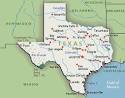
texas naoIn an opinion reflecting her concerns about the role of the lead plaintiff’s law firm as well as concerns about the predominance of common issues among the proposed class members’ claims, a federal district court judge has denied the plaintiff’s motion for class certification in a lawsuit filed under the Securities Act of 1933. The opinion, which is strongly influenced by the U.S. Supreme Court’s recent class action case law, also reflects the interesting (and perhaps timely and topical) use of an event study in connection with a class certification motion. Northern District of Texas Judge Jane Boyle’s March 19, 2014 opinion in the Kosmos Energy Ltd. Securities Litigation can be found here.


Background

As discussed in detail here, investors first sued the company, certain of its directors and officers, and its offering underwriters, based upon alleged misrepresentations in the offering documents in connection with the company’s May 10, 2011 IPO. The investors allege that the offering documents contained misrepresentations about the performance and expected production of an offshore oilfield in Ghana called the “Jubilee Field.” The investors allege that the failure to disclose the now-public production problems cost investors “hundreds of millions of dollars.”


After filing an amended complaint, the lead plaintiff (the Nursing Home and Related Industries Pension Plan) filed a motion for class certification; to appoint the lead plaintiff as Class Representative; and to appoint its counsel as Class Counsel. In support of their motion for class certification, the plaintiff submitted a declaration from its Board Chair. The defendants opposed the motion for class certification, arguing that the plaintiff had not established the adequacy of the proposed class representative or the predominance of common issues among the putative class members.


In opposing the motion, the defendants cited the Board Chair’s deposition testimony to show that the Board Chair was unfamiliar with basic facts about the case and therefore not an adequate class representative. The defendants also relied on an Event Study prepared by Glenn Hubbard, the prominent economist and current head of the Columbia Graduate School of Business (and former head of the Council of Economic Advisors) to contend based on a variety of public disclosures from the company about the problems at the Jubilee Field that the many potential class members likely had varying levels of knowledge or awareness about the problems, and accordingly because of these issues about individual knowledge the plaintiff could not show a predominance of common issues among the potential class members.


Judge Boyle opened her analysis of the plaintiff’s motion with a detailed review of what she called the “evolution” of recent class action case law , both at the U.S. Supreme Court (particularly in the Walmart and Comcast cases) and in the Fifth Circuit.  Judge Boyle said that the case law reflects a shift from a “presumptively favorable approach toward class certification to a more skeptical view coupled with a more exacting review process” that requires plaintiffs to “produce actual evidence that they are entitled to class status.”  She emphasized that the more exacting review process applies to securities class action lawsuits as well. The PLSRA in particular, she noted, focused on the importance of the determination of the adequacy of the class representatives.


In describing what is required, Judge Boyle said “plaintiffs seeking class certification must produce actual, credible evidence that the proposed class representatives are informed, able individuals who are themselves – not the lawyers—actually directing the litigation.” In addition, certification may be denied where the representative lacks a basic understanding of “what the suit is about.”


After reviewing the parties’ submissions, Judge Boyle found that, with reference to the Board Chair’s deposition testimony in which the Board Chair evinced little knowledge of the case, “a strong inference may be drawn” that the plaintiff and the plaintiff’s law firm “maintain the type of close affiliation that calls into question whether the firm or its counsel is the one actually pursuing the case.”


Judge Boyle was particularly concerned with the portfolio monitoring services the plaintiff’s law firm provides to the plaintiff pension fund. Judge Boyce said that the fact that the firm performs these services; recommended and then filed the lawsuit; and now seeks to be lead counsel “strongly suggests that this is a lawyer and not a client-driven suit.”


Judge Boyle said that in light of the Board Chair’s unfamiliarity with the case and the underlying facts and even with the substance of her own declaration, the plaintiff “simply failed to meet her burden to bring forth facts that establish” that the plaintiff pension fund is an adequate representative.


Judge Boyle also found that the plaintiff failed to establish that common questions predominate over individual questions, as required in order to the class certification requirements to be met. In reaching this conclusion, the referenced the defendants’ “unrebutted” evidence of investor knowledge of problems at Jubilee Field, which Judge Boyle found to show that the plaintiff had not established that common questions would predominate.


The Event Study on which the defendants’ relied showed that “the disclosure of information about production issues at the Jubilee Field following Kosmos’ IPO did not cause any decline in Kosmos’ stock price.” The study also identified fourteen occasions on which class members might have acquired varying levels of knowledge about the Jubilee Field production problems, which Judge Boyle found to be “more than adequate to show that individual inquires might be necessary” and therefore that the requirement that common issues predominate had not been met.


Discussion 

There are a number of very interesting aspects of Judge Boyle’s opinion. The first is her emphasis on how much the Supreme Court case law has changed the class certification analysis and the extent to which (she concluded) the evolving case law requires the plaintiff to come forward with evidence to support their class certification position. She seemed quite impatient with what she deemed plaintiff’s conclusory assertions and reliance on legal arguments. She expected the plaintiff to provide factual support to show that the class certification requirements had been met, and was quite critical of the plaintiff and its lawyers for not providing the requisite factual support.


Second, her commentary about the plaintiff’s law firm’s portfolio monitoring services and the plaintiff’s law firm’s role in the case are also interesting. Many of the leading securities plaintiffs’ firms provide these kinds of services for institutional investors, in the obvious hope that they will identify possible cases for the investors to bring, and in the related hope that the law firm might file the lawsuit on their portfolio monitoring client’s behalf.  The plaintiffs firms have in the past faced sharp criticism for their alleged conflicts of interest in providing the services and bringing the cases. Indeed, in a harsh 2009 commentary, Southern District of New York Judge Jed Rakoff (whose ultimate written opinion in the case Judge Boyle cited) questioned the conflict involved in plaintiffs’ firms playing these various roles. (Refer here for a review of Rakoff’s commentary).


But though other judges have questioned these services, what makes Judge Boyle’s commentary here interesting is that the plaintiff’s law firm’s various roles were a substantial factor in her conclusion that the plaintiff had not satisfied the adequacy requirement, because the case appeared to be lawyer-driven rather than client-driven, and involved a client that was uninformed about the most basic aspects of the case and even about the content of her own declaration.


The defendants’ use of an event study is particularly interesting, and not just Judge Boyle cited it in her conclusion that the plaintiffs had not shown that common issues predominate.


Readers will recall that in the recent oral arguments in the Halliburton case now before the U.S. Supreme Court, the justices and the parties had debated the merits of possibly requiring event studies to show the “price impact” of alleged misrepresentations in order for plaintiffs to be able to rely on the “fraud on the market” theory to establish class-wide reliance.


The present case provides an example of what such an event study might look like and how it might be used – indeed, although it was not directly pertinent to the outcome of the class certification motion, the defendants’ event study purported to show that the supposedly withheld information about the production problems at the Jubilee Field did not affect the company’s share price. (Presumably if the Supreme Court winds up requiring plaintiffs to show “price impact,” plaintiffs in future cases will submit their own event studies, unlike the plaintiff here.)


Some readers may be quick to note that courts in the Fifth Circuit (where Judge Boyle’s court is located) are notoriously tough for securities class action plaintiffs and perhaps that Judge Boyle’s opinion can be best understood in that light. However, courts in other jurisdictions may well ask many of the same questions that she asked. Her perspective on the impact of the recent U.S. Supreme Court class action case law is particularly interesting as is her expressions of concern about the plaintiff’s firms various roles 


In case you were wondering, Glenn Hubbard led the Council of Economic Advisors during George W. Bush’s first presidential term. Judge Boyle was appointed to the bench by George W. Bush.


Special thanks to a loyal reader for providing me with a copy of Judge Boyle’s opinion


It has been a while since I have had a chance to publish a collection of reader’s mug shots, but enough pictures have accumulated in the interim that it is now  time to post another round.


Readers will recall that in a recent post, I offered to send out a D&O Diary coffee mug to anyone who requested one – for free – but only if the recipient agreed to send me back a picture of the mug and a description of the circumstances in which the picture was taken. In previous posts (here, here, here, here, here, here, here, here , here, here, here, here, here and here), I published prior rounds of readers’ pictures. I have posted the latest round of readers’ pictures below.


Our first mug shot in the round comes to us from David S. Garner Jr. at Wells Fargo in Atlanta, who sent us this portrait of his desktop including what I have to presume is a picture of a Georgia Bulldog. It is good to see that the D&O Diary mug is being put to use as a coffee cup as well.


bulldog_small[1]


Our next picture was sent in by Tim Bennett of U.S. Risk Financial Services. Here’s his explanation of the picture: “While passing through Chicago Midway Airport, I caught Jake and Woody in the middle of a hot set. I leant them my D&O Diary Mug for a bit of refreshment. But when I got it back, it smelled more like bourbon than coffee!” Well, in the immortal words of the Blues Brothers, “what do you want for nothing, a rubber biscuit?” 


 blues_borthers_small[1]


Andrew L. Margulis of the Ropers, Majeski, Kohn & Bentley law firm in New York sent in this picture depicting a scene that will be all to familiar to anyone who lives on the East Coast of the U.S. This winter has been the worst. Andrew notes that “I believe my mug wishes it was sent to someone who lived in a warmer climate.”


andrew_snowfall_small[1]


Speaking of snow, Abigail Williams of Marsh in Philadelphia attributed her delay in getting me a mug shot in part to “the immense amount of snow on the east coast,” among other things. She was finally able to send in the dashboard shot of the mug with a background of the Philadelphia skyline. In the immortal words of Elton John, “Philadelphia freedom took me knee high to a man” (whatever that means).


philly_dshboa4d_small[1]


Our last shot in the round is a little bit unusual. The picture was sent in by Jason Sacha of the Ricketts Harris law firm in Toronto. Unfortunately, Jason’s request for a D&O Diary mug came in to me only after I had already shipped out the last of the mugs. Though I couldn’t send Jason a mug, I invited him to send in a picture of one of his law firm’s mugs instead, and he submitted this shot looking out of the window of his Toronto office.


torontomugsmall


Because I have shipped out the last of the mugs, I am afraid I can’t fulfill any further requests. However, if other readers like Jason would like to send in pictures taken with their own firm’s mugs, I would be happy to publish the pictures. Of course, if there are D&O Diary mug recipients out there who still have not sent in mug shots, I would be happy to post  those pictures as well.


Very special thanks to everyone that has sent in a mug shot. It has been so much fun seeing the picture and receiving the messages.  


calendarIndyMac Coverage Suit Settled, But Oral Argument Will Stay on the Calendar?: As I noted in a recent post (here, second item), the parties in the IndyMac D&O insurance coverage action – that is, the dispute to determine whether or not only a single $80 million tower of insurance applies to the various D&O claims surrounding the bank’s collapse or whether two $80 million towers have been triggered – had notified the Ninth Circuit that they reached an agreement to settle all of the disputes subject to completion of documentation and subject to bankruptcy court approval. At the time of their initial notice to the court, the parties did not ask that the oral argument scheduled for April 7, 2014 be taken off of the calendar, because not all parties agreed to have the oral argument taken off calendar while the settlement documentation remained uncompleted.


However, in a March 7, 2014 Joint Notice of Settlement to the Ninth Circuit (here), the parties advised the appellate court that the settlement documentation had been completed and that all of the parties were now requesting that the oral argument be taken off calendar. The parties also advised the appellate court that on March 5, a motion for approval of the settlement had been filed with the bankruptcy court.


Apparently, the parties’ Joint Notice of Settlement to the court that they had settled the case was not good enough for the Ninth Circuit.  In a March 14, 2014 order (here), the Ninth Circuit denied the parties’ joint request to have the scheduled oral argument removed from the calendar.


The appellate court noted that in their Joint Notice, the parties had advised that “after the bankruptcy court rules and grants ‘certain related relief,’ its decision ‘will allow other settlements to be consummated.’” The Ninth Circuit said “When those matters are actually settled, or when the parties can give some further explanation of the status of those matters and the contingencies involved, the parties may so inform this court and renew their motions to remove the cases from the oral argument calendar>”


The one thing that isn’t clear from the documents submitted to the court is whether or not the bankruptcy court will act, and the related settlements can be put into place, before the scheduled April 7 date for oral argument. You would hope that the Ninth Circuit would not make the parties actually show up and argue the issues in a dispute that has been resolved. Perhaps if the various approvals and contingencies cannot be sorted out before April 7, the Ninth Circuit would at least agree to continue to the argument to a later date to allow the bankruptcy court processes play out. However, there is nothing in the Ninth Circuit’s somewhat cranky order to suggest that it would entertain such a request.


In any event, for now, the scheduled oral argument — in a case that has been settled – remains on the calendar. I wonder what you would do know if you were one of the lawyers that was planning on presenting in the April 7 oral argument session. Do you go ahead and prepare? Of course, one thing you would to is to press the bankruptcy court for all of the approvals and try to complete all of the remaining contingencies, so you can go back to the Ninth Circuit as soon as possible to answer the appellate court’s questions and requests. However, what do you do if the bankruptcy court doesn’t act quickly enough? Or the Ninth Circuit still has a problem with removing the argument from the calendar?


I know from the list of counsel on the Joint Notice that there are a lot of lawyers out there that know the answers to these questions. I would be grateful of one of the lawyers involved would drop me a note and let me know what it is going on and what is likely to happen. To the extent I can, I will update this post with any additional information.  


German Court Dismisses Investor Action Filed Against Porsche: According to a March 18, 2014 New York Times article (here), a judge in Stuttgart has dismissed the damages lawsuit that 23 hedge fund investors had filed against Porsche in connection with the car company’s unsuccessful attempt to acquire Volkswagen. A March 17, 2014 Reuters article about the dismissal ruling can be found here.


The dismissal in the German lawsuit is the latest setback in a series of defeats for hedge fund investors in their efforts to press their claims against Porsche. As discussed here, certain  hedge funds first filed an action in the Southern District of New York alleging that during 2008, Porsche and certain of its executives made a series of misrepresentations in which Porsche claimed that it did not intend to acquire control of Volkswagen, while at the same time it allegedly was secretly accumulating VW shares with the purpose of obtaining control. In October 2008, after Porsche disclosed its intent to obtain control of VW, VW’s share price rose significantly and the short sellers suffered significant trading losses. The short-sellers’ federal court complaint asserted claims under the U.S. securities laws and also for common law fraud.


As discussed here, on December 30, 2012, Southern District of New York Judge Harold Baer dismissed the securities claims based on Morrison, on the grounds that the subject transactions — securities-based swap agreements — represented a foreign transaction and are therefore not within the purview of the U.S. securities laws. Judge Baer declined to exercise supplemental jurisdiction over the common law claims. The hedge funds appealed the district court ruling to the Second Circuit. However, as discussed here, in March 2013, twelve of the hedge funds withdrew their appeal, although press reports suggest that the appeal of the 20 remaining hedge funds remained unaffected. As far as I know the remaining hedge funds’ appeal remains pending (although if any reader out there has different information, I would be grateful for the clarification).


In March 2011, several of the same short sellers launched a separate action in New York Supreme Court against Porsche alleging claims for fraud and unjust enrichment. Porsche moved to dismiss the state court complaint on the grounds of forum non conveniens and for failure to state a claim. Porsche also moved in the alternative to stay the state court action pending the outcome of the Second Circuit appeal in the federal court action. As discussed here, on August 6, 2012, New York (New York County) Supreme Court Judge Charles E. Ramos rejected Porsche’s motion to dismiss the case on forum non conveniens ground. A copy of Judge Ramos’s decision can be found here. Porsche filed an appeal.


As discussed here, in a December 27, 2012 opinion (here, starting at page 138), a five-Justice panel of the New York Supreme Court appellate division unanimously reversed Judge Ramos’s decision and entered a judgment of dismissal in Porsche’s favor. In dismissing on the grounds that New York was not an appropriate forum, the appellate court noted that the only alleged connections between the action and New York “are the phone calls between plaintiffs in New York and a representative of the defendant in Germany” and “emails sent to plaintiffs in New York but generally disseminated to parties elsewhere.”


While these investors struggled to try to get a U.S. court to take up their case, other investors took their claims to the German courts. As discussed here, these hedge fund investors initiated an action against Porsche in Stuttgart based on the same allegations. According to the recent media reports, however, a judge in Stuttgart has ruled that Porsche managers did not commit misconduct when they denied plans to try to take over Volkswagen. According to the Times article, the judge ruled that Porsche was not obligated in early 2008 to disclose its intention to acquire VW shares. The Times article quotes the judge as saying that “It was hardly possible to react to public speculation about a takeover of VW except with a denial.”


The hedge funds’ action in Germany represented an interesting initiative for aggrieved investors whose claims were foreclosed from U.S. court by Morrison to try to pursue their claims in the corporate defendant’s home country rather than in the U.S. The German lawsuit represented the possibility that the elimination of the U.S. forum for these kinds of investor disputes would force investors to pursue their claims in the courts of the country of domicile, which in turn might lead to the development of the law and of remedies to address these kinds of claims. The Stuttgart court’s dismissal of the hedge funds’ action represents something of a set back for the possibility of the development of these kinds of jurisdictional alternatives in the wake of Morrison.


On the other hand, the dismissal of the Stuttgart action may not be the end of the story. Presumably, the claimants in Stuttgart action have appeal options of some kind. In addition, the Times article also notes that legal proceedings relating to the takeover attempt remain pending in Braunschweig,  Germany, as well as in Hannover and Frankfurt. As far as I know, the Second Circuit appeal remains pending as well. So there may be much more of this story to be told before the outcome is known for sure. But the dismissal of the Stuttgart action seems to represent something of a setback for the idea that investors precluded from U.S. courts by Morrison might be able to pursue their claims in the home courts of the corporate defendants.


Speakers’ Corner: On April 1 and 2, 2014, I will be participating in the C5 Forum on D&O Liability Insurance in London. On April 1, I will be participating in a panel entitled “Assessing the Impact of Regulatory Investigations and Claims on D&O Insurers” with Helga Munger of Munich Re and Clive O’Connell of Goldberg Segalla. On April 2, I will be moderating a panel entitled “Securities Class, Collective and Representative Actions – Critical Developments and Comparisons within the USA and Europe” with panelists Chris Warrior of Hiscox, Isabelle Hilaire of Chubb, and Leslie Kurshan of Marsh. Information about the conference can be found here.


If you are attending the conference, I hope that you will make a point of saying hello, particularly if we have not met before. 


fililng cabinetTwo securities suit filing trends that emerged during 2013 were the filing of securities class action lawsuits against companies that had recently completed IPOs (about which refer here) and the filing of securities suits  in the wake of investigative or regulatory actions (as discussed here). Based on the recent filings, it appears that these trends have carried over into 2014, as plaintiffs’ lawyers have continued to file securities complaints following the announcement of regulatory investigations and following public securities offerings (both IPOs and secondary offerings).  


Regulatory Investigations 


LifeLock: First, with respect to the investigative follow-on civil litigation, on March 3, 2014, a plaintiff filed a securities class action lawsuit in the District of Arizona against LifeLock, Inc. and two of its officers. In the complaint, a copy of which can be found here, the plaintiff asserts allegations related to the company’s alleged noncompliance with certain regulatory settlement orders.


The complaint alleges that in March 2010, the company had entered into a settlement order with the Federal Trade Commission n which the company settled allegations that certain of the company’s advertising and marketing practices were deceptive or violated the FTC Act. The company also entered into companion orders with 35 states’ attorneys general relating to the company’s advertising and marketing. On February 19, 2014, the company announced in its filing on Form 10-K that had met with the FTC to discuss alleged noncompliance of the settlement order after a whistleblower had reported alleged violations to the FTC. The company stated that based on its meetings it expected further FTC investigative activity.


The complaint alleges that the company’s shares declined on this news. The complaint alleges that the company had misled investors about its regulatory compliance and its compliance with the requirements of the FTC settlement agreement. The company’s disclosures about it its meetings with the FTC and the pending FTC investigation were the subject of a February  24, 2014 article on Seeking Alpha.


Hyperdynamics Corporation: On March 13, 2014, a plaintiff filed a class action lawsuit in the Southern District of Texas against Hyperdynamics Corporation and two of its officers. A copy of the complaint can be found here. The lawsuit follows two announcements by the company relating to its activities in Guinea. First, on September 30, 2013, the company announced that it had received a subpoena from the U.S. Department of Justice relating to the company’s business in Guinea. for potentially violations of the FCPA or U.S. anti-money laundering statutes. On March 12, 2014, the company announced that its partner in Guinea, Tullow Oil plc had halted activities in Guinea due to DoJ and SEC investigations into Hyperdynamics’ alleged fraud and corruption in obtaining drilling licenses in Guinea. Tullow asserted that these investigations constituted a Force Majeure event under its agreement relating to exploration rights in offshore Guinea.


The plaintiffs allege that the company had failed to disclose that it had obtained and retained oil and drilling concessions in violation of the FCPA or U.S. anti-money laundering statutes; and that the company had inadequate internal controls. The complaint alleges that the company’s share price declined when the investigations were disclosed.


These lawsuits against LifeLock and Hyperdynamics follow the lawsuit filed earlier this year involving NuSkin Enterprises, which as discussed here was itself a follow-on to the company’s announcement of anticorruption investigation in China.  In addition, as discussed in the same blog post about NuSkin, Archer Daniels Midland was hit in January 2014 with a shareholders’ derivative suit after the company announced that it had settled a pending FCPA investigation.


Public Securities Offerings 


Coty, Inc.: As discussed here, on February 13, 2014, a plaintiff filed a securities class action lawsuit in the Southern District of New York against Coty, Inc., certain of its directors and officers and its offering underwriters relating to the company’s June 13, 2013 initial public offering. The complaint, a copy of which can be found here, alleges that the company’s offering documents contain misleading statements about the consumption of the company’s products in the quarter leading up to the IPO, as well as the fact that during the same period the company’s U.S. and European retailers were returning products to Coty. The complaint further alleges that in the months preceding the offering, sales of certain key company products were declining.


The complaint alleges further that as result of these negative trends that preceded the IPO and continued thereafter, the company experienced a material revenue decline in the two full months after the offering.  The complaint alleges that the company’s share price declined following the offering.


CytRx: According to plaintiffs’ counsel’s March 15, 2014 press release (here), plaintiffs’ have filed an action in the Central District of California relating to the February 5, 2014 securities offering of CytRx. As of the date of this post, the complaint is not yet available on PACER or on the plaintiffs’ attorneys’ website. According to the plaintiffs’ attorneys’ press release, the complaint alleges that “defendants CytRx, its CEO, and two stock promotion firms made false and/or misleading statements and/or failed to disclose that numerous articles issued by the stock promotion firms were paid stock promotions.  According to the suit, when the market began to learn of the true facts through partial disclosures, the value of CytRx stock dropped damaging investors.”


Because, according to the press release, the complaint purports to be brought on behalf of investors who purchased the company’s share between November 22, 2013 and March 13, 2014, the February 5, 2014 offering apparently was a secondary offering, not an initial public offering.


Readers interested in the circumstances surrounding the CytRx lawsuit will want to take a look at the March 15, 2014 Barron’s article discussing the company, as well as another company, Galena Biopharma. According to the Barron’s article, Seeking Alpha and other publications removed from their sites articles about CytRx and Galena that had been submitted by a stock promotion firm called The Dream Team that had not disclosed its paid affiliations in submitting supposedly free-lance copy. The Barron’s article (and the Seeking Alpha article to which it refers) makes for interesting reading.


For the record, and as discussed here, on March 5, 2014, Galena Biopharma was also hit with a securities suit alleging that articles submitted by the Dream Team to various publications (including Seeking Alpha) had driven up the company’s share price, after which its CEO allegedly sold $3.8 million of his shares in the company.


Discussion  

The filings following the regulatory investigation announcement are at one level unsurprising, as these types of announcements typically are followed by share price declines. There is certainly nothing new about a shareholder suit following the announcement of an FCPA investigation, but one detail of the Hyperdynamics complaint that is particularly interesting is that the issues allegedly under investigation is money laundering. I suspect both that in the months ahead we will be seeing more about money laundering investigations and, if I am right about, that we will see more civil litigation following in the wake of the announcement of the investigations.


The two most recent civil suits following on after the announcement of investigations mirror  the follow-on civil suits filed in 2013, in that they involve an increasingly broad array of types of investigations. Not only does the Hyperdynamics suit involve possible money laundering investigations but the LifeLock suit involves alleged deceptive advertising and marketing and allegedly deceptive trade practices. As regulators become increasingly active in an increasingly broader range of regulatory arenas, a broader range of investigative actions seems likely to emerge, resulting in an increasingly broader array of follow-on civil suits.


The involvement of the alleged whistleblower in the LifeLock case is particularly interesting. In an era when the SEC is offering potentially rich whistleblower bounties under the Dodd Frank Act, it seems likely not only that more whistleblowers might step forward, but that the matters that the whistleblowers disclose will involve a potentially broad range of kinds of activities, and that the ensuing investigations will in many cases result in follow-on civil actions.


The recurring involvement in the litigation of reports in Seeking Alpha –including the odd role of the Seeking Alpha articles about CytRx – suggests that these kinds of publications both might spur investigation and lead to follow on civil suits. Certainly during the period in 2010 to 2012 articles in Seeking Alpha (and other online sites) were the source of the allegations raised against many of the Chinese reverse merger companies that were hit with securities suits.


The number of cases filed involving IPO companies is itself a reflection of the relative increase in IPO activity. As I have previously noted, the number of IPOs in 2013 was at the highest level since 2007. The pace has not only continued but increased so far during 2014. According to March 17, 2014 Investors’ Business Daily article (here), the 45 IPOs so far this year is double the number of initial offerings at this point last year. With average price of new issues up 40% its seems likely that the number of IPOs will continue, particularly with the anticipated marquee offerings by Alibaba, Sina Weibo and Dropbox lining up for later this year. As was the case in 2013, the increased levels of IPO activity is likely to lead to increased levels of offering-related litigation.  


Though it now seems less likely that the U.S. Supreme Court will set aside the fraud on the market theory in the pending Halliburton case (as discussed here), if the Court were to set aside the fraud on the market theory in Section 10 misrepresentation cases, plaintiffs’ lawyers might find cases against IPO companies even more attractive. The cases against the IPO companies typically would be filed under Section 11 of the ’33 Act. Plaintiffs in Section 11 cases are not dependent on the fraud on the market theory in order to be able to proceed on behalf of a plaintiff class. If as a result of Halliburton plaintiffs lawyers are unable to pursue Section 10 claims as class actions, the lawyers may have even greater interest in pursuing IPO-related claims.


federal depositOn March 14, 2014, In the latest development in the long-running saga of the Libor scandal, the FDIC in its capacity as receiver of 38 banking institutions that failed between 2008 and 2011, has filed a massive new lawsuit in the Southern District of New York against the U.S. dollar Libor rate-setting banks and against the British Bankers’ Association and related entities, alleging that between 2007 and mid-2011, the defendants conspired to manipulate the USD Libor rate. A copy of the FDIC’s complaint can be found here.


The defendants in the lawsuit include sixteen USD Libor benchmark rate setting banks and related entities, as well as the British Bankers’ Association and related entities. During the relevant time-period the BBA sponsored and facilitated the setting of the Libor benchmark rates. The rate-setting banks named as defendants include banks from the U.S., U.K., Canada, Switzerland, France, German, the Netherlands and Japan.


The FDIC in its capacity as the failed banks’ receiver alleges that the defendants manipulated and suppressed the U.S. dollar Libor benchmark rate from as early as August 2007, allegedly to create the impression that the banks were healthier than they appeared and in order to benefit individual trading positions at the various banks. The complaint includes detailed allegations drawing heavily upon the admissions of and the internal communications from the rate-setting banks that have reached regulatory settlements (specifically, UBS, Barclays, RBS and Rabobank).


The FDIC’s allegations against the BBA and related entities are that the organization allegedly participated in the scheme to protect revenue streams the organization derived from selling Libor licenses and to appease the panel banks.


The complaint alleges that the defendants’ manipulative conduct restricted the price of products tied to Libor, limited consumer choice, and suppressed the rates paid on Libor benchmarked financial products, including in particular products in which the rate-setting banks themselves where counterparties. The complaint alleges that the closed banks were “injured in their business and property and have suffered damages in an amount presently undetermined.”  


The complaint alleges that “financial institutions around the world, including the closed banks, reasonably relied on Libor as an honest and accurate benchmark of a competitively determined interbank lending rate.” The FDIC alleges that the “Defendants’ wrongful conduct … caused substantial losses to the closed banks.” The FDIC also alleges that the rate-manipulation resulted in higher prices for Libor-based financial products.


The closed banks on whose behalf the FDIC is proceeding as receiver in this action closed between 2008 and 2011, and include both some the largest failed banks (including WaMu, the largest bank failure in U.S. history), as well as numerous other smaller failed banks. Obviously, by aggregating the claims of nearly four dozen failed banks, the FDIC hopes to be able to magnify the scale of prospective damages.


The complaint asserts twenty-four separate substantive counts, including ten counts for breach of contract and two additional contract related counts. In these contractual violation counts, the FDIC alleges that various specified contracting banks entered into various pay-fixed swaps or other interest-rate sensitive financial products. The FDIC alleges that the manipulative conduct breached the specified defendant(s) contract(s) with the specified failed bank, resulting, among other things, in an underpayment of interest due under the contracts.


Counts XIII through XXII of the complaint assert that by their alleged manipulative conduct the various defendants committed a variety of torts, including fraud, aiding and abetting fraud, civil conspiracy to commit fraud, negligent misrepresentation, tortious interference with contract (and related tortious interference claims).


Count XXIII alleges a violation of Section 1 of the Sherman Act, and Count XXIV alleges violations of the Donnelly Act (which is the primary antitrust law of New York).


The FDIC is not the first U.S. governmental agency to file a massive civil complaint for damages against the Libor benchmark rating setting banks alleging that the banks had manipulated the benchmark. For example, as noted here, in March 2013 Freddie Mac filed an action in the Eastern District of Virginia against the Libor rate setting banks as well as against the BBA, alleging both antitrust violations as well as breach of contract claims.


Similarly, in October 2013, Fannie Mae sued nine of the Libor rate-setting banks alleging that they had manipulated the rates causing Fannie Mae to lose money on mortgages and other instruments, and seeking over $800 million in damages.


In addition, as discussed here, in September 2013, in a complaint that in many way foreshadowed the FDIC’s Libor-related complaint, the National Credit Union Administration acting as receiver of five failed credit unions filed an action in the District of Kansas alleging that the defendant rate-setting banks  manipulated the benchmark, costing the failed institutions millions of dollars in lost interest income. Interestingly, however, the NCUA’s complaint asserts claims based only on alleged antitrust violations.


In its complaint, the FDIC, by contrast to the NCUA, chose not to feature its antitrust allegations, although the FDIC did include antitrust claims. The FDIC’s promotion of its other claims  in preference to its antitrust allegations is hardly surprising in light of the fact that, as discussed here, in March 2013, Judge Naomi Reece Buchwald ruled in the consolidated Libor antitrust action pending in the Southern District of New York that the claimants lack antitrust standing, She ruled that the defendants’ alleged actions did not affect competition, as the rate-setting banks were not in competition with one another with respect to Libor rate-setting. Judge Buchwald said ““the alleged collusion occurred in an arena in which defendants never did and never were intended to compete.” (Judge Buchwald’s ruling is on appeal to the Second Circuit).


In the wake of Judge Buchwald’s decision, other claimants have opted to file their Libor manipulation claims in state court, alleging state law claims (as shown for example here), or to try to proceed on other legal theories – for example, under the federal securities laws. The FDIC appears to have adopted this model, by contrast to the approach of the NCUA, which elected to proceed on the basis of the antitrust allegations alone.


The continuing accumulation of Libor scandal-related litigation is interesting. Though the regulators have scored some very impressive regulatory settlements, the related civil litigation has so far been unproductive for the damages claimants. Not only was the consolidated antitrust action dismissed, as noted above, but in addition the securities class action lawsuit filed against Barclays was also dismissed (about which refer here). So far at least, the damages claimants have little to show for their efforts. It remains to be seen if the FDIC’s sortie on behalf of the failed banks will fare any better.


A March 14, 2014 Bloomberg article regarding the FDIC’s lawsuit can be found here.


cornerMergers and acquisition activity continued to attract litigation in connection with virtually every transaction during 2013, and for the first time during 2013 the litigation filing rates for smaller transactions was as great as for larger transactions, according to a study recently released by Cornerstone Research. The study, entitled “Shareholder Litigation Involving Mergers and Acquisitions: Review of 2013 M&A Litigation” can be found here. Cornerstone Research’s March 13, 2014 press release about the study can be found here.


According to the report, during 2013, plaintiffs’ attorneys filed lawsuits in connection with 94 percent of all M&A deals announced during the year and valued at over $100 million, representing a total of 612 lawsuits. In the past, smaller deals (described in the report as those valued between $100 million and one billion), attracted litigation at a lower rate than larger deals (defined as those with a value over $1 billion). However, for the first time during 2013, the percentage of deals attracting litigation was the same for both the “smaller” deals and the “larger” deals – both attracted lawsuits about 94% of the time.


As has been the case for several years, most deals attracted multiple lawsuits, with an average of five lawsuits for those valued between $100 million and $1 billion, and an average of 6.2 lawsuits for deals valued over $1 billion. The Dell, Inc. buyout transaction attracted 26 lawsuits, the most for any single deal during the year.


As has also been the case for several years, deals are attracting lawsuits in multiple jurisdictions. 62 percent of 2013 deals were litigated in more than one court – with 54% of 2013 deals litigated in two jurisdictions and eight percent of 2013 deals litigated in three jurisdictions. (The percentage of deals litigated in three or more courts has declined by half over the last two years.) The Linn Co//Berry Petroleum Deal was challenged in a record six jurisdictions. The most active courts outside of Delaware for M&A litigation were New York County, NY (with 39 deals litigated); Santa Clara County, CA (30 deals); and Harris County, TX (27 deals).


During 2013, three quarters of the M&A deal lawsuits were resolved before the deal closed. Of the cases that were resolved before the deal closed, 88 percent were settled, 9 percent were withdrawn by the plaintiffs, and three percent were dismissed by the court. Looking at the cases filed in prior years, with regard to cases that did not settle prior to closing, the lawsuits remained pending for as long as four years. None of these deals the lived on after the closing went to trial , and all judgments (whether summary judgment or judgment on the pleadings) went to defendants.


The 2013 M&A litigation data in the Cornerstone Research report is consistent with the information previously published by Professors Cain and Davidoff, as discussed here. The Cornerstone Research report’s statistics about what happens to the M&A lawsuits that are not disposed of prior to deal closing is consistent with the analysis discussed in my prior post (here) about the “curse” of M&A lawsuits post-closing. With the proliferation of M&A related litigation, it is now more advisable than ever for companies involved in transactions to take steps in connection with the deal to try to reduce the improve the companies’ abilities to defend themselves in the inevitable lawsuit, as discussed here.