cfThere were ten securities class action lawsuits filed in Canada in 2013, the same number as were filed in 2012 and only slightly below the annual average number of 11. 6 filings during the period 2006-2012, according to a February 19, 2014 report from NERA Economic Consulting entitled “Trends in Canadian Securities Class Actions: 2013 Update” (here). NERA’s February 20, 2014 press release about the report can be found here.


Of the ten Canadian securities class action lawsuits filed in 2013, eight were filed in Ontario. Two of the eight Ontario suits also had parallel cases filed in other provinces.  Of the two cases that were not filed in Ontario, one as filed in Alberta and one was filed in Quebec.


Five of the ten companies that were sued in Canada in 2013 also had securities class action lawsuits filed against them in the United States. There were four additional Canadian companies that were sued in securities class action lawsuits in the U.S. that have not (yet) been sued in Canada.


Eight of the companies named in Canadian securities class action lawsuits in 2013 are listed on the Toronto Stock Exchange (TSX). During the period 2008-2013, 48 TSX companies have been sued in Canadian securities class action lawsuits, representing about 3% of the average number of companies listed during that period, implying an annual average litigation risk of about 0.5%.


At year end 2013, there were a total of 54 pending securities class action lawsuits in Canada, nearly double the number four years ago.  At year end there were also 20 cases pending against Canadian companies in U.S. courts. Of the 111 securities class action lawsuits filed in Canada between 1997 and 2013, half have been filed just in the last five years. This recent increase in filing is due in significant part to the enactment at the end of 2005 of the Bill 198 secondary market civil liability provisions. Obviously, the global financial crisis was a significant contributing factor as well.


The industry sectors with the largest number of filings in 2013 were mining, oil and gas, and non-energy minerals, which together accounted for 40% of the 2013 filings. On the other hand, the finance industry, which in the past has accounted for a large number of Canadian securities class action lawsuit filings, only accounted for one of the twenty filings in the last two years.


Six Canadian securities class actions settled in 2013, for a total aggregate settlement amount of $52 million. The average settlement was $8.6 million and the median was $9.9 million. Of the 44 Canadian securities class action settlements during the period 1997-2013 for which NERA has records, the median settlement was $12.7 million. Due to the effect of the outsized Nortel Networks settlement, the average settlement during that period was $89.5 million


Discussion


Canada is one of the few countries outside of the U.S. where securities class action litigation has become well-established. To be sure, the litigation rates remain well below those of the U.S. For example, while the implied annual securities class action frequency for TSX companies is about 0.5%, the annual frequency rate for U.S.-listed companies in 2013 was 3.3% (refer here, Figure 12). The risk of securities class action litigation remains much greater for U.S. listed companies than for companies listed on the TSX.


But though Canadian litigation levels remain well below the levels in the U.S., it is clear that class action litigation is becoming established in Canada. Indeed, as the NERA report emphasized, a Canadian litigation funding industry has grown up to help finance this litigation, and this type of funding increasingly is gaining judicial acceptance.


In addition, as the pending cases work their way through the system, a number of threshold issues (such as statue of limitations issues and the standard for leave to proceed) are getting sorted out. As these issues are resolved, Canadian securities litigation will mature and become an even more developed phenomenon.


The development of Canadian securities class action litigation raises an interesting possibility, in light of pending developments in the United States. The Halliburton case now pending before the U.S. Supreme Court (about which refer here) could significantly alter securities class action litigation in the U.S. If the U.S. Supreme Court were to throw out the fraud on the market theory and make class action litigation impossible in Section 10 misrepresentation cases, the plaintiffs’ attorneys will be forced to find other ways to pursue investors’ claims.


To the extent Canadian jurisdiction can be established, disappointed investors might well seek out class remedies available in Canada, particularly since under Bill 198, investor claimants do not have to show that they relied on alleged misrepresentations. The loser pays regime and other aspects of litigating under Bill 198 may present impediments, but if the ability to bring Section 10 misrepresentation cases is eliminated in the U.S., the Canadian alternative may represent a more attractive alternative, at least in cases where jurisdiction can be established.
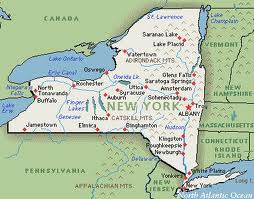
 

nystateIn an unusual development in a closely watched case, K2 Investment Group, LLC v. American Guarantee & Liability Ins. Co., the New York Court of Appeals has reversed its own June 2013 ruling in the case in which it held that a legal malpractice insurer that breached its duty to defend is barred from relying on policy exclusions to avoid paying a judgment against its insured.


In a February 18, 2014 opinion (here), the Court of Appeals held that its earlier ruling in the case “cannot be reconciled” with its own prior case precedent, and therefore the Court vacated its earlier ruling in the K2 Investment Group case.  Under the Court’s prior precedent, which as now been revalidated, insurers that have breached the duty to defend are not precluded from relying on other policy exclusions in defending against a suit for indemnification.


The revised ruling in the K2 Investment Group case eliminates a holding that had created confusion in the lower courts and left carriers uncertain how to proceed. A February 18, 2014 memo from Kaufman Dolowich Voluck law firm  about the Court of Appeals reversal of its earlier ruling in the K2 Investment Group case can be found here. A February 19, 2014 memo from the Tressler law firm about the case can be found here.


The coverage dispute arises from legal malpractice claims that had been filed against Jeffrey Daniels, who was insured under a professional liability policy issued by American Guaranty & Liability Insurance. The insurer denied that it had a duty to defend Daniels. Daniels defaulted on the underlying claim, resulting in the entry of a default judgment against him. The claimant in the underlying claim then sought to enforce the judgment against the insurer. The insurer asserted that the loss was not covered, relying on two exclusions which it contended precluded coverage. Litigation ensured and the coverage dispute ultimately made its way to the New York Court of Appeals.


As discussed here, in June 2013, the New York Court of Appeals held that having breached its duty to defend, the insurer could not rely on other grounds to contest the duty to indemnify. The Court said that “an insurance company that has disclaimed its duty to defend may litigate only the validity of its disclaimer.” If, the Court said, “the disclaimer is found bad, the insurance company must indemnify the resulting judgment even if policy exclusions would otherwise have negated the duty to indemnify.”


As Joe Monteleone noted on his D&O E&O Monitor Blog (here), the June 2013 decision created confusion in the courts – owing the decision’s apparent conflict with existing New York case law — and left insurers uncertain how to proceed. As discussed in the Kaufman Dolowich memo linked above, the decision also emboldened some policyholders to argue that a breach of the duty to defend stripped an insurer of all rights under the Policy.


Arguing that the June 2013 opinion failed to address existing New York Court of Appeals precedent, the insurer filed a motion for re-argument. Several amici joined the request. The Court agreed to re-hear the case, which was re-argued in January 2014.


In a February 14, 2014 majority opinion written by Judge Robert Smith (who had written the initial opinion in the case in June 2013), the Court held that the earlier opinion in the case “cannot be reconciled” with the Court’s 1985 opinion in the Servidone case, which held that the breach of the duty to defend “does not create coverage” and thus does not prohibit an insurer from relying on applicable policy exclusions. The Court concluded that there was no reason to overrule the Servidone case. Recognizing principles of stare decisis, he Court said that


When our court decides a question of insurance law, insurers and insureds alike should ordinarily be entitled to assume that the decision will remain unchanged unless or until the legislature decides otherwise. In other words, the rule of stare decisis, while it is not inexorable, is strong enough to govern this case.


The Court’s June 2013 opinion in the K2 Investment Group case had been highly criticized by insurer advocates for breaking from existing precedent. For example, in a June 13, 2013 post on its Insurance Law Blog (here), the Traub Lieberman firm said that the Court of Appeals June 2013 opinion in this case “announced a new rule” and that previously “New York courts at both the state and the federal level consistently rejected the notion that by having breached a duty to defend, an insurer is estopped from relying on coverage defenses for purposes of contesting an indemnity obligation.” The June 2013 decision, the law firm memo says, “departs from this long-established jurisprudence.” 


The Court of Appeals February 2014, then, eliminates this apparent departure from the established jurisprudence. As the Tressler law firm put it in the memo linked above, if the Court had not overturned its earliler decision, insurers “would have been stuck with a very unsettled landscape on insurance law in New York.”


While the Court of Appeals decisions eliminates a ruling that insurers had found objectionable, it nevertheless continues to be a good idea for carriers to file a declaratory judgment action when taking the position that they have no duty to defend. The Court of Appeals quoted an earlier case stating that insurers are “well advised” to file a declaratory judgment action in those circumstances, which, the Court noted, “continues to be sound advice.”


rbsIn a reminder that litigation from the credit crisis is still kicking around and that there are still some significant credit crisis cases that are yet to be resolved, Royal Bank of Scotland has agreed to settle the  Harborview Mortgage-Backed Securities litigation for a payment of $275 million dollars. The settlement is subject to documentation and court approval.   A copy of plaintiffs’ counsel’s February 19, 2014 press release about the settlement can be found here. The parties’ February 14, 2014 letter to the court regarding the settlement can be found here.


As discussed in greater detail here, this securities class action lawsuit had been brought in 2008 by institutional investors that purchased certain mortgage backed securities in one of 14 public offerings during 2006 and 2007 of the “Harborview” series of mortgage backed securities, of which a unit of RBS was the primary issuer and underwriter.


As discussed here (scroll down), in March 2010, Judge Harold Baer, Jr. granted in part and denied in part the defendants’ motion to dismiss. Judge Baer denied defendants motions to dismiss related to “misstatements and nondisclosure of mortgage originators’ ‘disregard’ for loan underwriting standards.”


The loan originators in question included certain mortgage lenders whose names “are now synonymous with sub-prime lending and the housing market collapse,” including Countrywide, American Home Mortgage Corporation, IndyMac, BankUnited, and Downey Savings. Judge Baer concluded that “plaintiffs have pled sufficient factual allegations to plausibly infer that the underwriting guidelines were disregarded by mortgage originators, and in conflict with the disclosures made in the Offering Documents.” Judge Baer found the plaintiffs had alleged that the originators “systematically ignored their stated underwriting practices” and that “plaintiffs have also sufficiently, albeit just barely, connected these allegations to the offerings in question.”


In subsequent litigation, the parties disputed which investors had standing to purchase these claims, and Judge Baer entered several order addressing the definition of the class.


According to the plaintiffs’ press release, the $275 million settlement, if approved, would be the third-largest MBS securities class action lawsuit settlement. For those curious about the two larger MBS settlements, as discussed here, the Countrywide MBS securities lawsuit settled in April 2013 for $500 million, and the Merrill Lynch MBS securities lawsuit settled in 2011 for $315 million (refer here).


Neither the press release nor the parties’ letter to the court states how the settlement is to be funded or if any portion of the settlement will be funded by insurance. According to Nate Raymond’s February 19, 2014 Reuters article about the settlement (here), last month RBS announced that it had set aside 3.1 billion pounds(about US $5.2 billion) to cover legal claims against it, including 1.9 billion pounds to resolve claims primarily related to mortgage-backed securities. 


cadaAs if it were not bad enough that hackers are attacking retail businesses like Target and Neiman Marcus to obtain consumer credit card information, it turns out that the bad guys are also targeting health-care records. According to sources cited in a February 18, 2014 Wall Street Journal report entitled “Nursing Homes Are Exposed to Hacker Attacks” (here), investigators have uncovered a Internet file-sharing site where hackers have posted critical health-care organization network systems information that could allow others to access electronic medical records and payment information from health-care providers.


According to sources cited in the Journal article, the networks of about 375 U.S-based health related institutions, including hospitals, physicians’ offices, pharmaceutical companies, and health-plan managers were compromised by hackers in September and October 2013. Some of the information accessed by these intrusions has wound up on a file-sharing site, where hackers dump data. The information on the site details the type of equipment used in computer networks, the internal addresses for computers and other devices, and the passwords to network firewalls run by health-care providers.


Information available on the file-sharing cite drawn from three specific nursing homes identified in the article apparently was obtained by access to the software of a specific medical software vendor that the three institutions used. The article also states that health-care organizations increasingly are having trouble protecting data because medical equipment such as dialysis and imaging machines can be accessed through the Internet. (The machines are attached to the Internet so that the machines’ software can be administered or updated remotely.) There are, the article notes, an increasing number of entry points hackers can use to access health-care facilities to try to access electronic medical records or billing systems containing credit card information.


The incentives for the hackers’ are significant. According to the article, medical records sell for about $60 each on the black market, while credit-card information typically goes for about $20. For that reason, “the bad guys in the cyberuniverse definitely have set their sights on health-care records,” according to one commentator quoted in the article. However, according to a report cited in the article, security practices at health-care providers generally are not keeping pace with the high volume of attacks.


The findings in the article have a number of important implications for health-care providers and their service providers, particularly the importance of assessing network security vulnerabilities and addressing concerns. However, as the sequence of events following the disclosure of the Target breach shows, another concern for these companies is their potential litigation exposure. Target has been hit with a wave of consumer class actions following news of the breach in its systems, as were other retailers whose networks were recently hacked. The hackers’ focus on health-care records underscores that fact that health-care organizations may face the same litigation exposures as the retailers. This exposure is not limited just to hospitals and other patient care facilities (such as nursing homes and diagnostic testing centers), but also includes health care service and equipment providers, including potentially even software firms and medical equipment manufacturers.


These litigation risk exposures, as well as the need for companies hit with a breach to try to deal with notification requirements and remediation issues, highlight the need for companies in these industries to ensure that their insurance program includes a robust program of privacy liability and network security insurance. Nor are these concerns limited just to firms in these health-care related industries – there is not a day that goes by that there is not a report of another company experiencing a breach. Today, it was Kickstarter, the Internet funding portal (about which refer here). Tomorrow it will be another company in another industry.


The point is that we have long since reached the point where privacy liability and network security insurance is an indispensable part of every organization’s insurance program.


It is also important to keep in mind that the litigation exposure associated with a network security breach is not limited to just the possibility of consumer actions. As was evidenced in connection with the Target breach, a significant network security breach can also lead to D&O lawsuits as well (as discussed here).  I suspect that we will find in the months ahead that these kinds of lawsuits may become increasingly common.  As I have noted previously, among the risks of D&O litigation arising from the possibility of a cyber breach includes the prospect of shareholder litigation arising from disclosures regarding the company’s privacy and network security practices.


We are already to the point where companies need to take these litigation possibilities into account when considering such basic issues as how much D&O insurance to purchase.


What “Transactional” Skills Should Lawyers in Training Be Taught?: The American Bar Association and a number of other bar groups are exploring the possibility of establishing minimum requirements within accredited law schools related to building practical skills and competencies. The issue these initiatives present is the question of what topics constitute “skills and competencies,” particularly for transactional attorneys.


To address this issue, the Berkeley Center for Law, Business and the Economy at Boalt Hall Law School, UC Berkeley, has developed an on-line survey to try to establish what competencies professional s in transactional practices consider important. The survey’s authors hope the survey results will help both practitioners and legal educators assess and if appropriate work to amend the current proposed guidelines. Though the survey is directed to practicing attorneys, it is also open to others who work with transactional attorneys (such as bankers, accountants, etc.).


The survey’s authors hoping to get as broad of a response as possible. The authors are asking everyone to complete the survey and to ask colleagues and contacts to complete the survey as well. The survey can be found here. When the survey is complete, the results will be available on the Center’s website, here.


Can You Please Do That Somewhere Else?: I frequently think newspaper editors don’t read their own headlines. The latest example of this appeared  in the February 18, 2014 issue of USA Today, which carried an article headed “Monster Asteroid Whizzes by Earth.”

alaskaIn a February 8, 2014 article entitled “A Shrunken Giant” (here), the Economist magazine examined BP’s efforts to regain its footing after the disastrous April 2010 Deepwater Horizon explosion and oil spill. The article concludes by stating that “Repairing the balance sheet and books is one thing. Repairing BP’s reputation for management excellence will take longer.” While the article tracks the need for BP’s management to rehabilitate its reputation only back as far as the 2010 Gulf oil spill, a recent Ninth Circuit decision is a reminder that BP’s environmental challenges and management woes go back even further, to the company’s prior environmental disaster – the company’s 2006 Prudhoe Bay oil spills.


In a February 13, 2014 opinion (here), the Ninth Circuit reversed in part the district court’s dismissal with prejudice of the securities class action lawsuit brought by holders of BP ADRs alleging that the company and certain of its directors and officers had made misleading statements about the condition and maintenance of the company’s Prudhoe Bay pipelines and about the company’s environmental compliance practices.


Rejecting the district court’s suggestion that the plaintiffs’ complaint alleged at most “simple mismanagement, but  not securities fraud,” the Ninth Circuit said that “while we agree that BP’s actions exemplify corporate mismanagement, the pleadings also charge that BP is a company that has publicly shirked responsibility for its role in causing the Prudhoe Bay spills at every step of the way,” adding that while mismanagement “would be a plausible explanation” for the company’s misinformation, the alleged facts “support the inference that BP was, at the very least, deliberately reckless as to the false and misleading nature of their public statements.”


Background 

In March 2006, BP sustained the first of two significant oil spills from pipelines in its Prudhoe Bay operation in Alaska. The spill, which was widely publicized, triggered a government investigation. According to the Ninth Circuit, it quickly came to light that the pipeline that leaked had not had an important corrosion test since 1998. The U.S. Department of Transportation order correction actions in a Corrective Action Order, which were to be completed by June 2006. However, BP failed to complete the action until a month after the deadline. The diagnostic tests, completed in July 2006, showed significant pipeline corrosion. Shortly after that, on August 5 and 6, 2006, the company discovered leaks at a second Prudhoe Bay pipeline. BP was forced to temporarily shut down its Prudhoe Bay operations.


In October 2007, BP’s Alaska unit pled guilty to a misdemeanor violation of the Clean Water Act. In its plea agreement, BP admitted that it was aware of corrosion in the pipeline where the first spill occurred in 2005. In 2011, BP resolved separate civil suits that had been brought by the Department of Justice and the State of Alaska. The company entered consent decrees that required it to take certain remedial and prophylactic measures.


In d addition, certain BP security holders filed complaints alleging that BP and certain of its directors and officers had made misleading statements in violation of the securities laws. The plaintiffs alleged that four specific sets of statements were misleading.


Following the first spill, Margaret Johnson, a senior VP and the head of BP’s Prudhoe Bay operations, made public statements that BP’s most recent inspection data prior to the spill showed that the pipeline where the spill occurred had a “low and manageable corrosion rate.” In a later statement, Johnson said the spill was “anomalous” and that the conditions contributing to the spill were not present at BP’s other Prudhoe Bay pipelines. The company’s CEO stated at an April 2006 news conference that the March spill had occurred “in spite of the fact that BP had world class corrosion monitoring and lead detection systems.” In addition, the company’s 2005 Annual Report (issued on June 30, 2006) stated that management believes that BP was in compliance in all material respects with applicable environmental laws and regulations.


On March 14, 2012, Western District of Washington Judge Marsh Pechman dismissed the plaintiffs’ securities suit with prejudice, finding that while a number of the statements on which the plaintiffs relied were actionably false, the plaintiffs did not plead facts giving rise to a strong inference of scienter. A copy of Judge Pechman’s opinion can be found here.


The Ninth Circuit’s Opinion 

In a February 13, 2014 opinion written by Eastern District of New York Senior Judge Raymond J. Dearie (sitting by designation) for a three-judge panel of the Ninth Circuit, the appellate court reversed in part and affirmed in part the district court’s dismissal of the plaintiffs’ complaint.


The appellate court found that the plaintiffs had adequately alleged both falsity and scienter as to Margaret Johnson’s assurances about the low and manageable corrosion rate at the pipeline where the first spill occurred, and as to Johnson’s statements that the conditions at BP’s other Prudhoe Bay  pipelines were different from the conditions at the pipeline where the spill occurred. The court also found that the plaintiffs had sufficiently alleged falsity and scienter as to the statement in the 2005 Annual Report that management believes that the company is in compliance with environmental laws and regulations. However, the appellate court agreed with the district court that the plaintiff’s had not sufficiently alleged scienter with regard to the CEO’s statements that the company had a “world class” leak detection system and corrosion monitoring program.


In finding contrary to the district court that the plaintiffs had sufficiently alleged that Johnson made the allegedly misleading statements with scienter, the Ninth Circuit relied heavily on Johnson’s education, position and responsibilities, as well as her alleged incentive to misrepresent the facts, based upon which the appellate court concluded that “not only would Johnson be aware of corrosion problems, but she would be among the first to know.  A strong inference of scienter is therefore found in the pled facts.”


In reaching its conclusion that Johnson had made the statements with scienter, the appellate court also relied on the “core operations” inference, noting that because Johnson was the person overseeing operations in the area where the spill took place, “we find it absurd to believe that she did not have knowledge of information contradicting her statements.”


The Ninth Circuit also applied the “core operations” inference in concluding that the statements in the 2005 Annual Report about the company’s environmental compliance were made with scienter. The Court said that “in light of the magnitude of the violations, the immense public attention on BP in the wake of the spills, and the contemporaneous documents demonstrating management’s awareness of the company’s non-compliance with the Corrective Action Order [entered after the first spill], we find it ‘absurd’ that management was not aware of BP’s significant, existing compliance issues that rendered the statement misleading.”


Even though the Ninth Circuit had concluded that the plaintiffs had sufficiently alleged that Johnson’s statements and the statement in the 2005 Annual Report had been made with scienter, the appellate court separately undertook a “holistic” review of the allegations to determine whether the allegations create a strong inference of scienter. The district court had undertaken the same exercise and had concluded that the allegedly misleading statements “more closely resemble simple corporate mismanagement than actionable securities fraud.” The Ninth Circuit said


To some extent, corporate mismanagement would be a plausible explanation for how misinformation travels to the corporate suite. But in this case, facts alleged in the complaint support the conclusion that BP had been aware of the corrosive conditions for over a decade, and yet chose not to address them…. And it suggests that BP had every reason to know, at the very least, that they did not have accurate information regarding the conditions of the Prudhoe Bay pipelines. When we consider the allegations holistically and accept them to be true, as we must, the inference that BP was, at the very least, deliberately reckless as to the false or misleading nature of their public statements is at least as compelling as any opposing inference.


The appellate court concluded by saying that “in the end, we conclude that after six years of preliminary litigation, the allegations should now be tested on the merits.” The case will now go back to the district court for further proceedings.


Discussion 

There are no references in the Ninth Circuit’s opinion to the 2010 Deepwater Horizon disaster. However, it felt to me as if the shadow of the subsequent Gulf oil spill overhung the appellate court’s consideration of the Prudhoe Bay spill securities suit.  Just as the Deepwater Horizon disaster looks even worse in light of the company’s involvement in the prior spills at Prudhoe Bay, the company’s reassuring statements after the first Prudhoe Bay spill take on an even more disturbing quality in light of the subsequent incident in the Gulf of Mexico. I think that as a result there is a tone of barely restrained outrage in the appellate court’s opinion. In some ways, the court arguably got carried away with its indignation – for example, the court’s statement that BP has “publicly shirked its responsibility” for the Prudhoe Bay spill “every step of the way” cannot be squared with the guilty plea the company entered in the environmental enforcement proceeding or the consent decrees (which included numerous admissions) the company had entered with the DoJ and the State of Alaska.


The extent to which the Court relies on circumstantial support for its conclusions on the issue of scienter may be less than satisfying to some readers of the court’s opinion. The Court’s conclusion that Johnson must have know or should have known the information contradicting her statements – as well as the Court’s “core operations” inference that it is “absurd” to suggest that she didn’t know of the contradictory information – is different from direct support for the conclusion that she actually knew the contradictory information or that she intended to mislead.


If nothing else, this decision shows how critically important a company’s statements after it has disclosed bad news can be. The three statements the appellate court concluded were actionable all took place after the first spill. The problem with Johnson’s statements, as the Ninth Circuit viewed them, is that in her effort to sound reassuring, she allegedly understated the extent to which the company was aware of the pipeline conditions that contributed to the spill, as well as the extent to which the conditions might exist in the company’s other pipelines. This case is a reminder that the way the company responds to bad news – and in particular how it manages its communications after bad news – can significantly affect the company’ s potential liability exposures under the federal securities laws.


Those responsible for companies’ disclosure documents will also want to consider the court’s conclusion that the statements about the company’s environmental compliance were actionable. The statement itself seemingly was carefully couched. The statement said only that “management believes” that the company was in compliance, and was further qualified by adding “in all material respects.” The statement also followed a much longer statement referencing the unpredictability of future developments and the environmental risks inherent in the company’s operations.


Nevertheless, the Ninth Circuit concluded that the statement was actionable, basically because of the magnitude of the environmental violations the company subsequently acknowledged. The lawyers whose responsibility it is to draft disclosure document statements of this type will want to consider whether there are ways to craft statements about regulatory compliance that will not be found to be misleading if regulatory issues later arise.


The Economist article cited above suggests that BP still has further to go to rehabilitate the reputation of its management in the wake of the Deepwater Horizon disaster. The Ninth Circuit’s recent opinion is a reminder that BP’s management’s reputational deficit runs further back than the Gulf oil spill. The Ninth Circuit’s revival of the Prudhoe Bay securities suit also means that the company’s costs of extricating itself from the consequences of the past sins will be even greater than the company might have been assuming.


Veritas: This week’s issue of the Economist also has an article about efforts to try to invigorate trade in Ningxia, an autonomous region in China’s northwest. The article reports that “Ningxia is hoping to sell nutritious goji berries to people worried about their bodies, certified Halal foods to Muslims worried about their souls, and fine red wines to people relaxed about both.”


And Finally: In his essay about growing old, entitled “This Old Man,” in the February 17, 2014 issue of the New Yorker (here), Roger Angell (after he admits that he told a friend following his wife’s death that he didn’t know how he was going to get through it): “I am a world-class complainer but find palable joy arriving with my evening Dewar’s, from Robinson Cano between pitches, from the first pages once again of ‘Appointment in Samarra’ or the last lines of the Elizabeth Bishop poem called ‘Poem.’ From the briefest strains of Handel or Roy Orbison, or Dennis Brain playing the early bars of his stunning Mozart concertos. (This Angel recording may have been one of the first things Carol and I acquired just after our marriage, and I hear it playing on a sunny Saturday morning in our Ninety-fourth Street walkup.)”


federal depositIn 2013, the number of lawsuits the FDIC has filed against the directors and officers of failed banks reached the highest annual level during the current wave of failed bank litigation, though the pace of litigation filings peaked in the second quarter and slowed as the year progressed, according to the latest report from Cornerstone Research. The February 13, 2014 report, entitled “Characteristics of FDIC Lawsuits against Directors and Officers of Failed Financial Institutions” (here), contains detailed analysis of the lawsuits that the FDIC has filed as well as the settlements the agency has reached so far. Cornerstone Research’s February 13, 2014 press release regarding the report can be found here.


Among other things, the report contains very interesting analyses of the extent to which former directors and officers have been called upon contribute out of their own pockets toward the settlement of FDIC claims, as discussed below.


According to the report, the FDIC filed 40 D&O lawsuits in 2013, which represents a 54 percent increase over the 26 lawsuits the agency filed in 2012. The FDIC filed more lawsuits (15) during the second quarter of 2013 than it had filed in any quarter since the current wave of bank litigation commenced in 2010. However, the number of D&O lawsuits the agency filed declined each quarter as the year progressed; the agency filed 11 lawsuits in the third quarter and only 3 in the fourth quarter. 


In total, from 2010 through year-end 2013, the FDIC filed 84 lawsuits involving 83 institutions. In January 2014, the agency filed three more lawsuits, but these latest lawsuits are not included in the Cornerstone Research analysis.


The increase in filing activity in early 2013 is consistent with the peak of the bank failures in 2009 and 2010, and in light of the three-year statute of limitations. FDIC lawsuits filed in 2013 primarily targeted institutions that failed in 2010 and to a lesser degree, 2009 (the suits involved with the earlier bank failures likely were the subject of an agreement tolling the statute of limitations). None of the 2013 lawsuits involved banks that had failed in years other than 2009 or 2010.


Overall, 17 percent of the 492 banks that failed between January 1, 2007 and year-end 2013 have been the subject of a D&O lawsuit. However, of the 140 banks that failed in 2009, the directors and officers of 64, or 46 percent, have been the subject of an FDIC lawsuit or have settled claims prior to a lawsuit. For the 157 banks that failed in 2010, the directors and officers of 53 institutions, or 34 percent, have been subject to a D&O lawsuit or have reached a settlement with the agency. Of the 92 bank failures during 2011, only one has been subject of a D&O lawsuit to date.


Though the peak numbers of bank failures was now over three years ago, banks have continued to fail, albeit at a diminished rate. During 2013, 24 institutions failed, representing a 53 percent decline in the annual number of failed banks from 51 in 2012. There were fewer bank failures in 2013 than there were in 2008, at the beginning of the financial crisis.


The number of bank failures declined during 2013 as the year progressed; there were twelve bank failures in the second quarter of 2013, six in the third quarter and only two in the fourth quarter. (There were an additional three bank failures in January 2014.) The banks that have failed more recently are smaller than the ones that failed earlier in the current bank crisis. The median total asset size of banks that failed in 2013 was $96 million, representing a 82 percent decline from the median total asset size of $528 million in 2008.


Of the failed bank lawsuits filed in 2013, 30 of the 40 lawsuits named inside and outside directors as defendants. Outside directors alone were named as defendants only in rare instances – in 8% of all lawsuits filed in 2013.


Fully 63 percent of the lawsuits filed between 2010 and 2013 involved failed banks from just four states – Georgia (19), California (12), Illinois (11), and Florida (11). It is hardly surprising that Georgia has the most failed bank lawsuits, as it is the state with the highest number of failed banks (88 through the end of 2013).  Directors and officers of all three of the failed banks in Puerto Rico have been hit with FDIC lawsuits, and half of the failed Nevada banks have been targeted in D&O lawsuits.


The Cornerstone Research report has very detailed and interesting analysis of the settlements that the FDIC has reached so far – not just in the litigated matters, but in the matters that were settled separately without litigation.  Including litigated matters and also including settlements with parties other than the former directors and officers of failed banks (for example, accountants, lawyers, adjusters, etc.), the agency has reached a total of 501 settlement agreements (which are available on the agency’s website).


The report has very detailed analysis (on page 14) of the 17 litigated matters that have settled so far. Settlements in the D&O lawsuits total $120 million. The agency has also reached settlements of an additional $314 million in claims involving directors and officers that did not involve a lawsuit.


In what may be the single most interesting and important observation in the study, the report notes from a review of the settlement agreements on the agency’s website, 39 of the 82 agreements that involve directors and officers (or 48 percent), involved out-of-pocket payments by the directors and officers. According to the report, directors and officers agreed to pay at least $42 million out of pocket in these cases.


Discussion


The Cornerstone Research has a wealth of interesting information and analysis about the FDIC’s failed bank litigation. However, as noted above, the most interesting observation to me in the report is the statement that in 48 percent of the FDIC’s settlements of lawsuits and claims involving directors and officers, individuals had to contribute toward the settlements out of their own pockets, and that total amount of their contributions is at least $42 million.


Aggregate figures are interesting and important, but they don’t tell much of a story. It is difficult to tell from the bare numbers why the individuals had to pay out of pocket toward the settlement, what underlying circumstances contributed to the need for the individuals to pay, or whether or not the aggregate figure predominantly represents a few large settlements or a series of smaller settlements. More importantly, the aggregate figures don’t capture the pain and financial sacrifice these settlements represent for the individuals involved.


In some (many? most?) cases where the individuals had to contribute out of their own pockets, insurance may not have been available or may not have been adequate to resolve the claims. It is hard to know at this point whether or not these individuals’ banks had insurance options prior to the claim that were available but turned down that might have protected them from having to contribute. It is however indisputable that the individuals at banks that carried adequate limits and more protective terms and conditions would be less likely to be called upon to contribute out of their own pockets toward the settlement of any claims.


The surprising extent to which individuals have been called upon to contribute out of pocket toward the settlement of FDIC claims underscores the importance for banks (and indeed for any enterprise) to ensure that they have adequate D&O insurance limits and that they have the broadest insurance available in the marketplace.


The information about the individuals’ contributions toward settlement highlights the fact that the placement of D&O insurance is an issue that potentially affects every individual director and officer. These individuals will want to ensure that their company has enlisted the assistance of a knowledgeable and experienced insurance broker in the placement of their insurance, to try to reduce to the maximum extent possible the chance that they might be called upon in the event of a claim to contribute out of their own personal assets toward settlement.


eeocDuring the 2013 fiscal year (ended September 30, 2013), the number of charges filed with the U.S. Equal Employment Opportunity Commission was down 5.7% compared with the previous fiscal year, but the EEOC’s FY 2013 monetary recoveries of $372.1 million through administrative processes were the highest ever in any single fiscal year. The EEOC’s February 5, 2014 press release regarding its release of the FY 2013 data can be found here. The charge statistics can be found here and the overall statistics regarding the monetary recoveries can be found here. The statistics regarding the EEOC’s merits lawsuits can be found here.


The Number of Charges and Level of Recoveries  

The total of 93.727 charges filed during FY 2013 was down from the 99,412 charges filed during FY 2012, but nearly ten percent above the 1997-2012 annual average of 85,373. The 2013 filing total was the fifth highest total number of annual filings since 1997. The number of filings did not exceed 90,000 during any one fiscal year prior to FY 2008, but the annual filings levels have stayed well above 90,000 since that point. The elevated filing levels since FY 2008 suggests that the recent levels are related to the economic downturn.  By the same token, it might be assumed that the decline in the number of charges filed during 2013 may reflect the nascent economic recovery.


For the fifth year in a row, allegations of retaliation was the most frequently cited basis for charges of discrimination, both as a matter of number of charges (38,539) and as a percentage of all charges (41.1%).  Both the number of charges and percentages represent an increase of retaliation charges since the year before.


The second most frequently cited bases for charges of discrimination was race discrimination, which was cited in 33,068 charges, representing 35.3 percent of all charges. The next most frequently cited basis was sex discrimination, including sexual harassment and pregnancy discrimination, which was cited in 27,687 charges (29.5 percent of all charges.), followed by discrimination based on disability, which was cited in 25,957 charges (27.7 percent).  Compared to the 2012 fiscal year, both race and disability discrimination charge filings decreased in absolute numbers but increased as percentages of all charges.


As Evan Shenkman  of the Ogletree Deakins law firm points out in his February 10, 2014 memo about the EEOC’s statistics (here), the overall percentage of “reasonable cause” findings (an initial finding in favor of the employee) dipped slightly in FY 2013 (from 3.8 percent to 3.6 percent). Charges brought under the Genetic Information Non-Discrimination Act (GINA) (8.8 percent) and sexual harassment charges (7.6 percent) proved the most likely to result in a cause finding, while race-based charges (2.8 percent) and charges brought under the Age Discrimination in Employment Act  (ADEA) (2.4 percent) were the least likely to result in a cause finding.


The four states with the highest number of EEOC charges were  with 9,068 charges, representing  9.7 percent of all charges filed; Florida, with 7,597 charges; California, with 6,892 charges; and Georgia, with 5,162 charges,


Through its administrative processes, the agency had monetary recoveries during the 2013 fiscal year of $372.1 million, representing an increase of $6.7 over the prior fiscal year. The monetary recoveries for FY 2013 represent the highest annual recoveries in agency history.


Merits Litigation 

During fiscal year 2013, the EEOC filed 131 merits lawsuits alleging discrimination, which represents an increase of about 7% compared to fiscal year 2012. (The term “merits suits” includes direct suits and interventions alleging violations of the substantive provisions of the statutes enforced by the Commission and suits to enforce administrative settlements.) But while the number of merits suits increased in FY2013 compared to the prior fiscal year, the number of merits suits is well below historical levels. During the period 1997 through 2012, the Commission averaged 323 merits suits per fiscal year, so the number of 2013 merits lawsuit filings is nearly 60% below the historical annual average.


During 2013, the most numerous were lawsuits filed under Title VII of the Civil Rights Act of 1964 (78). The EEOC also filed its first three suits asserting GINA claims in FY2013.


During fiscal year 2013, the agency resolved 209 merits lawsuits producing monetary benefits of $38.6 million. Both figures are down from the 2012 fiscal year, when there were 283 merits suits resolutions producing $44.2 million in monetary recoveries. The monetary recoveries in fiscal 2013 through merits lawsuits was well below the 1997-2013 annual average of $86.4 million of monetary recoveries in merits lawsuits.


Discussion  

For employers, there are some important time line takeaways from these figures. That is, even though the overall numbers of charges filed decreased, the number of retaliation charges increased. And the overall consequences for employers hit with charges increased to record levels. These trends underscore the importance for employers of developing and maintaining employment programs to keep their operations in compliance with statutory requirements and to take steps to avoid conduct that could trigger allegations of retaliation. In addition to an effective compliance program, well-advised employers will be sure to maintain a well-designed employment practices insurance policy.

Readers continue to send in pictures of their D&O Diary mugs taken at locations far and near, including some locations that I never could have imagined in a million years.


Readers will recall that in a recent post, I offered to send out a D&O Diary coffee mug to anyone who requested one – for free – but only if the mug recipient agreed to send me back a picture of the mug and a description of the circumstances in which the picture was taken. In previous posts (here, here, here, here, here, here, here, here , here, here, here,  here and here), I published prior rounds of readers’ pictures. I have posted the latest round of readers’ pictures below.


The first of the shots in this round was taken in connection with the recent Super Bowl. As we all know, the Super Bowl itself took place in New Jersey, but the NFL wanted the world to believe that the game was somehow being played in New York City. In the city itself, the media organizations transformed Broadway and Times Square into a sort of football Babylon they called Super Bowl Boulevard. Loyal reader Arthur Washington of the Mendes & Mount law firm sent in this shot of himself in front of the Fox Sports booth in Times Square.


time_square_small[1]


Our next set of pictures is a sort of photo montage sent in to us by Max Wescoe of IMA in Denver. Max describes the pictures, which are arranged clockwise from the top, as follows: “Mugshot of the nation’s largest public mass transit project from the 5th floor of IMA’s new home in Denver, Colorado; the mug viewing our building from the corner of 17th and Wynkoop on a snowy January day; mugging with IMA’s new digs from afar.  Viva Denver!”


denver_small[1]


I have noticed over the last few months that as the seasons changed from spring to fall to winter, many of the mug shots sent in have been darker and less colorful. The winter months may not be the best time for outdoor photography. Fortunately, that is not universally true. There are still places – like, say, Bermuda — where the sun is still shining. Eliza Barry Riker of ACE Bermuda, who reports that “We’ve been enjoying the unseasonably warm weather (for us) here in Bermuda this winter,” sent in this picture of sunny Bermuda. Our warmest congratulations to Eliza on the birth of her child seven months ago.


bermuida_small[1]


Bermuda is not the only place where the sun has been shining while the rest of us have been shivering. Apparently the sun has also been shining in San Diego as well. Cecelia Rutherford of the Johnson & Weaver law firm sent in this picture of the Skyfan at the San Diego Zoo.


sandiegozoosmall[1]


When I came up with the idea of soliciting readers’ mug shots, I had no idea what kind of pictures I might get back. Readers have submitted some really great pictures. People have sent in pictures from some pretty amazing places.  I have to say though that I never in a million years anticipated getting a picture quite like the one sent in by Andrea Brunson, who runs client relations and securities monitoring at the Nix, Patterson & Roach law firm in Dangerfield Texas.  I am not 100% sure what is going on in this picture (and I am not sure that I even want to know), so I will simply reproduce here Andrea’s description of the scene: “My Veterinary Science 4H kids attended an artificial insemination clinic at Stephen F Austin State University in Nacogdoches, Texas.  It was a cold morning that day, but the kids loved the hands-on experience.  These high school kids are enrolled in the Veterinary Science Project offered through 4H.  They have a dream of one day becoming a veterinarian.” So there you have it. I have had the privilege to publish mug shots taken at the Wailing, Wall, Cambodia, India, the U.S. Supreme Court — and at an artificial insemination clinic in Texas.


vet_small__1[1]


I ordinarily only publish one picture that a reader sends in, but I felt that I had to also print this picture that Andrea also sent in of herself seeking inner peace with her D&O Diary mug.


yoga_small_1[1]


Our final entry in this round of pictures does not even include a D&O Diary mug. The fact is, I have run out of mugs! The last of the mugs has already gone out, but I still continue to get mug requests. When I got a recent request from Jason Sacha of the Ricketts Harris law firm in Toronto, I had to tell him that the mugs are all gone. I did invite Jason to submit a picture taken with one of his own firm’s mugs. So Jason sent in this picture of Toronto with his firm’s mug.


torontosmall[1]


I know there may be others who might have wanted a D&O Diary mug. I am sorry that they are all gone. But anyone who wants to is invited to do what Jason did and take a mug shot with one of their own company’s mugs.  If I get enough of these other mug pictures, I will run a separate post featuring alternative mug shots.


I would like to thank everyone who has sent in a mug shot. It has been so much fun getting the pictures and seeing the ways that readers have decided to photograph the mug. I hope those of you who have not yet had a chance to send in a mug shot will be inspired to sent in your own pictures. The mug shots are so much fun. Cheers to all. 


It is hard to prognosticate the outcome of the Halliburton case now before the U.S. Supreme Court. But while we can’t be sure what the outcome will be, we can start to think about what will happen if the Supreme Court overturns Basic. In an interesting February 7, 2014 post on the Harvard Law School Forum on Corporate Governance and Financial Regulation entitled “Halliburton: The Morning After” (here), Boris Feldman of the Wilson Sonsini  law firm take a look at how the plaintiffs’ bar may respond if the Supreme Court dumps the fraud on the market theory.


As Feldman put it, “those who think plaintiffs’ lawyers will go quietly into the night are, in my opinion, ignoring the lessons of history.”  Because of the many possible responses from a plaintiffs’ bar that has over the years proven to be resilient and adaptive, it could be years before the ramifications of a reversal of Basic is fully understood, and therefore “individual companies would be making a serious mistake if, in the face of a reversal of Basic, they cut back on their D&O insurance protection.”


Referring to the way that the plaintiffs bar overcame the hurdles Congress imposed in the PSLRA, Feldman contends that the plaintiffs’ bar has shown “persistence and resilience” as well as “creativity and entrepreneurialism.” Despite the PSLRA’s heightened pleading standards and other procedural impediments for the plaintiffs, securities litigation has continued. Feldman emphasizes that he is not saying that the PSLRA and other legislative reforms have had no impact. But, he says, the legislative reforms “did not put the plaintiffs’ bar out of business.”


Feldman suggests that “if recent history is a guide, then, even a strong decision in Halliburton is unlikely to make the plaintiffs’ bar give up.” The plaintiffs’ lawyers, Feldman contends, will “wage a multifront-war to survive even in the face of judicial abolition of the fraud-on-the-market presumption.”


The plaintiffs’ lawyers’ first line of attack, Feldman suggests, if the Court overturns Basic, is that the plaintiffs’ lawyers could seek to have Congress overturn Halliburton. Given the recent track record in Congress, that could be an uphill battle. But even if it could involve tough prospects, “there is no doubt the plaintiffs’ bar would give it a try.”


The second way plaintiffs might try to fight Halliburton is to try to “undermine it in the lower courts.” Securities plaintiffs’ lawyers, Feldman suggests, are “masters of the disingenuous pleading doctrine. They are skilled at using bad facts to influence judges’ application of precedents unfavorable on their face.” Feldman speculates that if Halliburton is overturned but Affiliated Ute stands, “one can confidently predict that all cases will be pleaded as omissions cases” (a possibility that is discussed at length here). Short of a broad ruling explicitly holding that class action securities class actions are not permitted because questions of individual reliance will always predominate, “plaintiffs will find ways to plead within the decision and persuade some courts not to throw the suit out at the threshold.”


Plaintiffs’ lawyers could also seek to engage the SEC, for example, by trying to get the SEC to amend Rule 10(b)-5 to include the fraud on the market presumption as an explicit way to establish reliance. The plaintiffs could also focus in on disclosure requirements or exchange-listing requirements (for example requiring companies to include in the periodic filings statements whether the company’s shares trade in an efficient market).


The bottom line is that the plaintiffs’ bar is not simply going to throw in the towel even if Basic is overturned. The business community, Feldman says “needs to prepare for the plaintiffs’ responses to the decision.”


Given the likelihood that the plaintiffs’ lawyers will adapt, “individual companies would be making a serious mistake if, in the face of a reversal of Basic, they cut back on their D&O insurance protection.” The fact that it will be some time before the implications are sorted out presents the possibility that for a time “shareholder suits are likely to be even more expensive to litigate than now.” And of course, conservative disclosure practices “should not be eased or abandoned until the promise of Halliburton becomes a reality.”


Feldman is correct when he refers to the plaintiffs’ bar’s adaptability. The plaintiffs’ bar has adapted to the PSLRA and to the adverse Supreme Court cases that have followed. Along those same lines, since the moment that the Supreme Court granted cert in the Halliburton case, there has been extensive commentary on the Internet and elsewhere about the ways the plaintiffs’ bar might be able to persist even if the fraud on the market theory is thrown out. Once the Court has ruled, this process will accelerate.


Feldman is also spot on in his contention that companies should not cut back on their D&O insurance even if Basic is overturned, at least until all of the decision’s  ramifications are fully understood. I would liken the situation (that is, if Basic is overturned) to the circumstances back in 1995 and 1996 after the PSLRA passed. There were those in the D&O insurance industry then who presumed that the PSLRA’s passage meant that the risks associated with class action securities litigation had been substantially diminished. There were even some insurers who jumped into the D&O insurance market with very aggressive pricing based on the ssumptions about the diminished risk of securities litigation. The rest of the D&O insurance market got sucked into a downward pricing spiral. Of course, securities litigation didn’t go away, and the D&O insurance industry pretty much got crushed during the underwriting years 1997 through 2001.  


The lesson from that era – both for insurance buyers and for the D&O insurers — is not to make insurance decisions based on assumptions about what might happen. The key point here is that everyone involved in the insurance process should proceed cautiously even if Basic is overturned. At a minimum, as Feldman states, until the ramifications are understood, it would be unwise for companies to start cutting back on their D&O insurance.


There Are Those Who Still Love the Fraud on the Market Theory: There is of course the possibility that the fraud on the market theory will survive. That is certainly the hope of a wide variety of groups and commentators who have filed amicus briefs urging the court to affirm Basic and uphold the fraud on the market theory. In an interesting February 6, 2014 post in her On the Case blog (here) , Alison Frankel reviewed the amicus briefs that have been filed with the Supreme Court arguing that the fraud on the market theory in securities class action litigation should be preserved. 


Frankel notes that the fraud on the market theory has  “received powerful support in amicus briefs from (among many others) the Justice Department; two former chairmen of the Securities and Exchange Commission (one Republican, one Democrat); 11 current and former members of Congress; and scholars of the doctrine of stare decisis, whose filing was authored by Harvard Law professor Charles Fried – the onetime U.S. solicitor general who wrote the Justice Department brief supporting investors in the original Basic case at the Supreme Court.” 


Frankel says that as a group “these briefs provide compelling legal and policy justifications for leaving Basic alone, arguing, in essence, that this Supreme Court would be overstepping its judicial bounds if it reversed its own precedent, defied Congress, and undermined the regulation and enforcement of the securities laws.”


The brief filed by the former members of Congress argues that, as the Court itself has acknowledged numerous times, including as recently as the Court’s 2013 decision in the Amgen case, that despite revising the securities laws on several occasions since the Supreme Court’s decision in Basic, Congress has left the fraud on the market theory unchanged, which, the former congressmen argue, is evidence that Congress wants Basic to remain good precedent.


The brief filed by Professor Fried argues that under principles of statutory stare decisis, it is not for the Court itself to alter its interpretations of statutes; rather, “the task of modifying decisions like Basic is best left to the branch that is best situated to evaluate the often complicated factual claims underlying the call of its repeal and the unavoidable political judgments those requests entail.” 


idahoIn a recent industry study concluding that health care organizations face increasing rates for management liability insurance, as well as tightening terms, one of the explanations suggested for these restrictive conditions is that the carriers are concerned that as health care organizations respond to the incentives and pressures of the Affordable Care Act – particularly as they seek to form Accountable Care Organizations (ACOs) with other health care providers as a way to try to control costs – that the health care organizations couldrun afoul of the antitrust laws. Among other things, the carriers are concerned that the ACA’s antitrust protections are “untested,” particularly in connection with private antitrust litigation. 


If a recent decision from the District of Idaho is any indication, there may be increased reason to be concerned. In January 24, 2014 findings of fact and conclusions of law (here), which were implemented in a January 28, 2014 order (here), District of Idaho Chief Judge B. Lynn Winmill ordered a hospital to divest itself of a local physicians’ practice it had acquired. As Eduardo Porter wrote in a February 5, 2014 New York Times article entitled “Health Law Goals Face Antitrust Scrutiny” (here), the ruling “underlined a potentially important conflict between the nation’s antimonopoly laws and the Affordable Care Act.”


In 2012, St Luke’s Health System, which operates multiple hospitals and other healthcare facilities in Idaho, acquired the Saltzer Medical Group (SMG), in Nampa, Idaho. Two competitors of St. Luke’s, as well as the FTC and the Idaho AG, filed lawsuits against St Luke’s and SMG, alleging that the acquisition violated the federal antitrust laws, and seeking to have the Court unwind the deal.


In its defense in the antitrust lawsuit, St. Luke’s contended that its acquisition of SMG was a critical part of its long-term plans, specifically arguing that it sought to improve care coordination and the development of an Accountable Care Organization (ACO) through the SMG acquisition. Judge Winmill acknowledged the value of the hospital’s efforts, saying that St. Luke’s “is to be complemented on their foresight and vision” and “to be applauded for its efforts to improve the delivery of health care.”


Judge Winmill nevertheless ordered the divestiture of the affiliation between St. Luke’s and SMG based on the conclusion that the acquisition would have “anticompetitive effects.” Specifically, Judge Winmill found that “Although possibly not the intended goal of the Acquisition, it appears highly likely that health care costs will rise as the combined entity obtains a dominant market position which will enable it to (1) negotiate higher reimbursement rates from health insurance plans that will be passed on to the consumer, and (2) raise rates for ancillary services (like x-rays) to the higher hospital-billing rates.”


According to a February 6, 2014 memo from the McGuire Woods law firm (here), the ruling represents the first time that a federal district judge has required the unwinding of a hospital’s acquisition of a physician group practice based on antitrust concerns. As a minimum, the ruling shows that hospitals’ acquisitions of physician group practices “are not immune from antitrust scrutiny and may require careful analysis under the antitrust laws.”  


But as the law firm memo also notes, the decision may also suggest that “health reform’s goals do not trump antitrust concerns,” and that even though Affordable Care Act encourages providers to form ACOs through horizontal and vertical integration “courts have not found these arguments to be sufficient justifications to overcome concerns of reduced competition on a given geographic area.” 


In a post on St. Luke’s hospital’s blog, St. Luke’s CEO David C. Pate says that “The court’s decision calls into question whether accountable care can be an option for the people of Idaho, and specifically those who live in towns like Nampa.”


The Court’s decision highlights the fact that, in the words of one of the ACA’s architect’s quoted in the Times article, “there is a tension between the benefits of coordinated care and the possible consequences of market power.”


The challenge for health care organizations is that economic reality and the incentives of the ACA both militate in favor of consolidation. The Times article underscores the fact that hospitals have been acquiring physician networks to improve their bargaining power with health insurers and to capture a larger share of the patient pool. The ACA provided extra motivation and a potential justification as well.


Given the economics and atmospherics, consolidation seems likely to continue. The challenge for the health care organizations – and for their insurers—is that the combinations could attract antitrust scrutiny, even if a combination is undertaken in order to form an accountable care organization under the ACA.


As I noted in my earlier post about the current insurance marketplace conditions for healthcare organizations, the management liability insurers active in this space have already been raising their rates for health care organizations, as well as restricting the coverage available under their policies for antitrust claims. Premiums have been increasing steadily since the fourth quarter of 2011. Coverage restrictions include in some instances the introduction of sublimits and/or coinsurance for antitrust claims. In addition, the insurers’ underwriting practices have changed as well. Insurers are seeking a great deal more renewal underwriting information, particularly with respect to ACO formation and strategy.


In an environment where the carriers are already proceeding defensively, the court’s decision in the St. Luke’s case can only serve to reinforce concerns. The Times article hopefully suggests that regulators could introduce regulations to complement the antitrust laws. For now, however, it seems likely that carriers will now proceed even more cautiously, and that increasingly restrictive conditions in the marketplace will continue. Health care organizations should be prepared to face additional rate increases as they renew their D&O insurance program in 2014 and to address underwriters’ questions about their strategies for the formation of ACOs.