 The SEC imposed fines on U.S. exchange-listed publicly traded companies at the highest levels in years during fiscal year 2022 (which ended September 30, 2022), according to an analysis published Saturday by the Wall Street Journal. As the Journal noted, the fines imposed during the fiscal year on firms accused of wrongdoing “underscore the Biden Administration’s tougher regulatory stance.” The October 29, 2022 Wall Street Journal article, entitled in the online edition “Under Biden Administration, Wall Street Watchdog’s Fines Surge,” can be found here. Continue Reading Massive SEC Fines Surged During the Most Recent Fiscal Year
Delaware Court Holds D&O Insurance Covers Fraudulent Transfer Claim Settlement
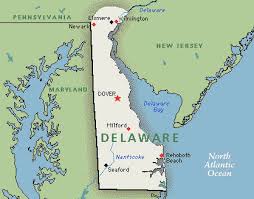 In the latest development a long-running D&O insurance coverage dispute, a Delaware Court has held that Verizon’s D&O insurance program covers the company’s $95 million settlement of a bankruptcy Trustee’s fraudulent transfer claim. In reaching this conclusion, the Court held, among other things, that the fraudulent transfer claim was a “Securities Claim” within the meaning of Verizon’s primary D&O insurance policy. The specifics of the court’s analysis of this issue underscores how complicated the question of what constitutes a “Securities Claim” can be. A copy of Delaware Superior Court Judge Eric Davis’s October 20, 2022 opinion can be found here. Continue Reading Delaware Court Holds D&O Insurance Covers Fraudulent Transfer Claim Settlement
Guest Post: Australian High Court OKs Foreign Shareholders In BHP Collective Investor Action


In the following guest post, Jeff Lubitz, Managing Director, ISS Securities Class Action Services, and Jarett Sena, Director of Litigation Analysis, ISS Securities Class Action Services, review an important recent Australian High Court decision in which the court paved the way for foreign shareholders to join the collective investor action pending in Australia against BHP Billiton Limited. I would like to thank Jeff and Jarett for allowing me to publish their article as a guest post on this site. I welcome guest post submissions from responsible authors on topics of interest to this blog’s readers. Please contact me directly if you would like to submit a guest post. Here is the authors’ article. Continue Reading Guest Post: Australian High Court OKs Foreign Shareholders In BHP Collective Investor Action
Court Denies in Part Motion to Dismiss SPAC-Related Securities Suit Against EV Company
 As I have previously noted, plaintiffs’ lawyers have over the last several months filed a plethora of securities class action lawsuit against companies that became publicly traded through a merger with a Special Purpose Acquisition Company (SPAC). Since these cases have only just been filed, few of the cases have yet reached the initial pleading hurdles. However, in a ruling last week, Central District of California Judge Christina A. Snyder denied in part the defendants’ motion to dismiss the securities suit pending against electric vehicle company Faraday Future Intelligent Electric, Inc., which became a public company through a June 2021 merger with a SPAC. As discussed below, the ruling may have significance for a number of the recently filed SPAC-related securities suits. A copy of Judge Snyder’s October 20, 2022 order can be found here. Continue Reading Court Denies in Part Motion to Dismiss SPAC-Related Securities Suit Against EV Company
Guest Post: How To Structure a Board to Oversee Mission-Critical Activities


 As readers of this blog know, there have been important case law developments in Delaware concerning boards’ duty of oversight. In the following guest post, the authors review the key recent developments and consider the practical implications for boards. The authors of this paper are: Sebastian M. Alia, Deputy General Counsel, Hudson Insurance Group; H. Stephen Grace, Ph.D., President, H.S. Grace & Company, Inc.: Alvin H. Fenichel, CPA, Senior Advisor, H.S. Grace & Company, Inc.; and Joseph P. Monteleone, Esq., Partner, Weber Gallagher. A version of this article previously was published in the ACC Docket. I would like to thank the authors for allowing me to publish their articles on this site. I welcome guest post submissions from responsible authors on topics of interest to this blog’s readers. Please contact me directly if you would like to submit a guest post. Here is the authors’ article. Continue Reading Guest Post: How To Structure a Board to Oversee Mission-Critical Activities
Court Holds Fraud Exclusion with “Final Adjudication” Language Precludes Coverage for Post-Conviction Appeal
 Most D&O insurance policies preclude loss resulting from fraudulent or criminal misconduct. However, most policies specify that the exclusion applies only if there has been a judicial determination that the precluded misconduct has taken place. What specific judicial determination is required in order to trigger the exclusion is a matter of policy wording. In an interesting recent ruling, Southern District of New York Judge Denise Cote reaffirmed her prior conclusion that a credit union executive’s criminal conviction precluded coverage for the executive’s cost of appeal – even though his appeal remains pending and even though the applicable policy had the “final adjudication” language. A copy of Judge Cote’s October 18, 2022 opinion can be found here. Continue Reading Court Holds Fraud Exclusion with “Final Adjudication” Language Precludes Coverage for Post-Conviction Appeal
ESG’s “Biggest Risk”?
 In prior posts on this site (for example here), I have expressed my concern that the current hot topic of ESG has a fundamental underlying flaw in that the term lacks definition and that this lack of precision has led to a great deal of sloppy thinking. A recent post on the Harvard Law School Forum on Corporate Governance provides a good examination of these ESG-related concerns. In an October 14, 2022 post (here), Douglas Chia of Soundboard Governance LLC, shows, using cybersecurity as an example, that one of the “biggest flaws” of ESG is “the subjective open-endedness of what counts as E, S, or G.” Continue Reading ESG’s “Biggest Risk”?
Guest Post: When Public Companies Take a Stand, Will Their D&O Carriers Take a Fall?

As I have noted on this site, though companies face pressure from a number of constituencies to establish their ESG credentials, taking the ESG initiative can have a number of consequences, including, for at least some socially active companies, the possibility of litigation (as discussed, for example, here). In the following guest post, Sarah Abrams, the Head of Professional Liability Claims at Bowhead Specialty, takes a closer look at these issues potentially affecting socially active consequences and considers the potential consequences for D&O insurers. I would like to thank Sarah for allowing me to publish her article as a guest post on this site. I welcome guest post submissions from responsible authors on topics of interest to this blog’s readers. Please contact me directly if you would like to submit a guest post. Here is Sarah’s article.
****************************
Perhaps stemming from the 2010 U.S. Supreme Court Citizens United v. FEC[i] decision finding corporations have a right to free speech (in that case political speech), more and more companies have come out publicly in favor of, or against a variety of social and political issues. In the past two years, US companies have found themselves under pressure to take stands on racial equality, COVID-19 vaccinations, voting rights, the war in Ukraine, gun regulation and, in the wake of the Dobbs v. Jackson Women’s Health Organization decision, women’s reproductive rights.[ii]
Once a corporation, especially a publicly traded one, vocalizes its support or opposition, lawsuits are immediately filed. Aside from follow-on litigation having the ability to impair management liability insurance, making a statement on a particular social or political policy often leads to shareholder litigation. As opined by Utpal Dholakia P.h.D.[iii] in a “The Science Behind Behavior” Psychology Today post “when a [public company] decides to take a stance, it alienates a significant fraction of the company’s customers, employees, investors, and other constituents.[iv]
Certainly the profile of litigation filed just within the summer months of 2022 against Unilever[v], Wells Fargo[vi] and Starbucks[vii] supports Dr. Dholakia’s theory. Each suit arose out of a public position on a particular social issue and, in the case of Wells Fargo and Starbucks, had shareholder plaintiffs on both sides of the diversity, equity and inclusion debate. It is too early to determine whether this new round of litigation will go the route of the Board Diversity derivative litigation dismissals in 2021.[viii] Either way, costs incurred to defend litigation, particularly if separate counsel is required for executives, impair director and officer liability retentions and/or limits.
Despite the clear correlation between public position statements and lawsuits, companies have began to consider the prospective fall out as the “cost of doing business.” Notably, however, that cost is one often put on insurers. Certainly in underwriting, the history of a public company taking a stance on social issues should be considered alongside a loss run history of shareholder lawsuits. The specific platform itself seems to further inform the risk to subsequent litigation.
The Conference Board, a nonpartisan 501(c)(3) think tank published a recent survey of 300 US public, private and non profit corporation insights on how companies are responding to high profile social issues.[ix] The largest percentage of companies reported taking a public stance on Racial Equality (61%), followed by LGBTQ+ rights (44%), Vaccination and other COVID-related issues (40%) and Gender Equality (39%).
There is a significantly large number of shareholder derivative and recent securities class action suits stemming from corporate positions on racial equality. Especially in light of the “anti ESG” shareholder proposals, with the National Center for Public Policy Research (NCPPR) filing ten “civil rights and non-discrimination” proposals.[x]
On the other hand when a company like Dick’s Sporting Goods takes a position on gun safety and Dobbs, both issues ranking among the lowest in percentage for companies to take a stance on[xi], civil rights suits were filed[xii], but no shareholder derivative or securities class action have yet to follow. Similarly, when chief executives of Atlanta-based Delta Air Lines and Coca-Cola forcefully condemned Georgia passing a restrictive voting bill[xiii] no adverse action was taken.[xiv] There were, however, threats by Coca-Cola Co shareholders against the company’s board unless it ended policies to promote diversity among outside lawyers.[xv]
Just looking at survey responses from The Conference Board and recent lawsuits, there appears to be a correlation between the type of social issue that a company decides to take a position on and the number of follow-on lawsuits. For example, when a larger number of companies take a public stance on racial equality, a larger number are sued by plaintiff shareholders alleging the company was either not doing enough or doing too much.
Notably, 61% of the companies cited the issue’s relationship “to the company’s core values” as criterion for deciding whether to take a stand on issues raised by the Supreme Court’s decision. Only 29% cite the relationship to the company’s business. Given this statistic, it would seem prudent for public company director and officer underwriters to start asking what the company core values are and whether it plans to take a public stance in support of them.
________________________________________________
[i] https://transition.fec.gov/law/litigation/cu_sc08_opinion.pdf, U.S. Supreme Court No. 08-205
[ii] https://www.conference-board.org/
[iii] Utpal Dholakia Ph.D. | Psychology Today
[iv] Why (Most) Companies Should Avoid Taking Political Stances | Psychology Today
[v] City of St. Clair Shores Police and Fire Retirement System, et. al v. Unilever, et. al (USDNY 1:22-cv-05011); Securities Complaint alleging that Ben & Jerry’s board resolution to end sales considered to be Palestinian territories illegally occupied by Israel was politically sensitive and that Unilever delayed announcement of the resolution because Unilever was “aware of the negative consequences.”
[vi] Khorsow Ardalan, et. al v. Wells Fargo & Company, et. al (USDC ND Cal 3:22-cv-03811); Securities Class Action alleging that Wells Fargo, as part if its efforts to diversify its work force, instituted a “Diverse Search Requirement,” also referred to as a diverse slate hiring policy which apparently was not effectuated; leading to fake interviews of diverse candidates and eventually paused.
[vii] National Center for Public Policy Research v. Howard Schultz, et. al (WA, Spokane County 22-2-02945-32); Shareholder complaint alleging that the Starbucks DEI policies “required Starbucks to discriminate based on race” and facilities “Starbucks’ active discrimination based on race in its employment decisions”; requires Starbucks to discriminate in its compensation of its officers based on the race of their workforce; and requires the company to discriminate in its contracting with its suppliers and media companies, based on the race of potential vendors’ ownership.”
[viii] See Oceguda v. Zuckerberg, USDC ND CA 20-cv-04444; Lee v. Fisher, et. al USDC ND CA 20-cv-06163-SK; Klein v. Ellison, et. al, USDC ND 3:20-cv-04439; City of Pontiac General Employees’ Retirement System v. Joyce, et. al, USDC DC 1:20-cv-02445; Lee, et. al v. Frost, et. al USDC SDFL 21-20885; Toronto ESA v. NortonLifelock Incorporated, USDC ND CA 20-cv-05410; Kiger v. Mollenkopf, USDC DE 21-409; City of Pontiac General Employees’ Retirement System v. Bush, et. al, USDC ND CA 20-cv-06651.
[ix] https://www.conference-board.org/
[x] 2022 Proxy Season Review: Increased Shareholder Focus on Racial Justice | WilmerHale
[xi] Only 10% of The Conference Board companies had addressed the Dobbs v. Jackson Women’s Health Organization decision externally and 38% reporting they had addressed it internally with 31% stating that they would not plan on responding.
[xii] Tyler Watson, who claimed that Dick’s violated the state’s discrimination statutes after they refused to sell him a rifle because he was not at least 21 years old, has reportedly reached an agreement to end a pending lawsuit. The terms of the settlement have not been released but the man had sought $1 million in damages. Dick’s settles age discrimination suit over refused gun sale to man under 21 :: Guns.com. After the decision in Dobbs v. Jackson Women’s Health Organization, which overturned Roe v. Wade, Dick’s announced a special employment benefit of “up to $4,000” in travel reimbursement for an employee, spouse, or dependent enrolled in their medical plan, along with one support person, to obtain an abortion. America First Legal (AFL) immediately filed a civil-rights lawsuit arguing Dick’s policy discriminates against female employees who choose to give birth. Dick’s Sporting Goods hit with civil rights complaint over reimbursing workers for abortion travel – Washington Times
[xiii] MLB moves All-Star Game out of Atlanta over voting law controversy – ABC News (go.com)
[xiv] Dick’s Sporting Goods hit with civil rights complaint over reimbursing workers for abortion travel – Washington Times
[xv] IN BRIEF: Coca-Cola investors threaten suit over law firm diversity policy | Reuters
Video: The Changing U.S. D&O Insurance Market
On October 11, 2022, I participated in a Tuesdays with Lloyd’s seminar with Michele Comtois of Marsh & Mclennan Agency and Johnathan Tritton of Acrisure London Wholesale, in which we discussed the current state of the D&O Insurance market in the U.S., including the implications of the current market changes for buyers, brokers, and underwriters. The 40-minute session was recorded and the Tuesdays with Lloyd’s team has graciously allowed me to share the video of the session with my readers on this site. The video is embedded below. I think you will find the panel’s discussion interesting. My thanks to Michele and JT for their participation and their comments and to the Tuesday with Lloyd’s team for inviting me to be a part of this event.
Guest Post: D&O Insurer Challenges Amid Market, Economic Turbulence


As I have noted in prior posts on this site (here, for example) D&O insurers confront a number of underwriting challenges in the current financial environment, including a host of macroeconomic factors that are complicated affairs for their policyholders and that could even lead to claims. In the following guest post, Nessim Mezrahi and Stephen Sigrist take a look at the challenging factors the D&O insurers are facing and consider the implications. Mezrahi is co-founder and CEO and Sigrist is Vice President of Data Science at SAR LLC. A copy of this article previously was published on Law360. I would like to thank the authors for allowing me to publish their article on my site. I welcome guest post submissions from responsible authors on topics of interest to this blog’s readers. Please contact me directly if you would like to submit a guest post. Here is the authors’ article. Continue Reading Guest Post: D&O Insurer Challenges Amid Market, Economic Turbulence