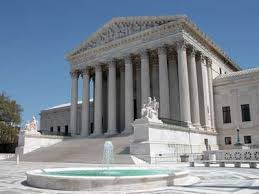
In the latest in a series of decisions in which it has upheld the enforceability of arbitration agreements, the U.S. Supreme Court ruled on June 20, 2013 that an arbitration agreement with a class action waiver is enforceable even it meant that an individual’s cost of pursuing a claim exceeded the economic value of the individual’s potential recovery. A copy of the Court’s opinion in American Express Co. v. Italian Colors Restaurant can be found here.


Although the decision is consistent with other recent Supreme Court rulings, it has its own important implications – and it also raises question about just how far the principle of broad enforceability of arbitration agreements can be taken. In particular, it question whether the broad enforceability of arbitration agreements reaches far enough to include the enforceability of arbitration agreements and class action waivers in corporate articles of incorporation or by-laws.


The American Express case involved a purported antitrust class action filed by a group of vendors against American Express in which the vendors alleged that AmEx’s credit card policy constitutes an illegal tying arrangement because it forces the vendors to accept debit and credit cards at the same fee level. American Express sought to invoke the arbitration clause in its contractual agreement with the vendors.


The case has a long, tortuous procedural history and the specific decision on appeal to the Supreme Court represented the third separate opinion by the Second Circuit in the case. In what is known as the American Express III decision (here), the Second Circuit refused to enforce the class action waiver in the AmEx contractual agreement on the ground that it would effectively preclude the plaintiffs from prosecuting their federal antitrust claims, because the costs of economic experts would be far in excess of their individual damages.


In an opinion written by Justice Scalia for a 5-3 majority, the U.S. Supreme Court reversed the Second Circuit and held that the Federal Arbitration Act does not permit courts to invalidate a contractual waiver of class arbitration on the grounds that the plaintiff’s cost of individually arbitrating a federal statutory claim exceeds the potential recovery. The opinion also dramatically narrowed the “effective vindication” exception to the enforceability of arbitration agreements, stating that the exception, while valid, would apply only in the event of a provision “forbidding the assertion of certain statutory rights” or the inclusion of fees so high “as to make access to the forum impracticable.”


In light of the Court’s recent decisions supporting the enforceability of arbitration agreements, the outcome in the American Express case arguably comes as no surprise. Justice Scalia suggested as much in his opinion when he commented that “truth to tell, our decision in [AT&T Mobility v. Concepcion] all but resolves this case.”


The majority opinion was written over a spirited dissent written by Justice Kagan, in which Justices Ginsburg and Breyer joined. (Justice Sotomayor did not participate in the decision.) Justice Kagan characterized the outcome as holding that “the monopolist gets to use its monopoly power to insist on a contract effectively depriving its victims of all legal recourse.” She added “here is the nutshell version of today’s opinion, admirably flaunted rather than camouflaged: Too darn bad.”


Though the American Express decision follows a line of recent Supreme Court cases upholding the enforceability of arbitration agreements and class action waivers, it nevertheless also represents a significant development. The decision not only greatly narrowed the “effective vindication” exception. It also made it clear that courts will enforce arbitration agreements even if the agreement is not customer friendly and even if the individual’s cost of pursuing an individual arbitration claim is certain to exceed the potential recovery.


And though this case arose in the context of an antitrust claim, it obviously has broad applicability to a wide variety of claims. It clearly will be valuable in the employment context, as employers will be better able to count on the enforceability of arbitration clauses and class action waivers in employment agreements and thereby avert class-action litigation.


The decision obviously will have wide applicability to many other types of commercial and consumer agreements. Clearly, businesses that want to avoid class actions have wide latitude to include waivers of class actions in arbitration clauses.


An obvious question is exactly how far that latitude extends. Does the Supreme Court’s support for the enforceability of arbitration agreements extend far enough to include the enforcement of arbitration clauses in corporate charters?


The question of whether or not a company can impose an arbitration requirement through its articles of incorporation or its by-laws drew a great deal of attention when The Carlyle Group, which was preparing to go public at the time, specified in its partnership agreement that all limited partners would be required to submit any claims to binding arbitration. (I discussed Carlyle’s initiative in a prior blog post, here.) Ultimately, the SEC used its control of the registration process to prevent Carlyle from including this provision. But as illustrated in an April 22, 2012 article by Carl Schneider of the Ballard Spahr law firm on the Harvard Law School Forum on Corporate Governance and Financial Regulation (here), the idea continues to have its advocates and it seems likely that sooner or later there will be a case or circumstance testing the permissibility of arbitration provision in articles of incorporation or corporate by-laws.


As I am sure others will be quick to point out, it isn’t at all clear that the line of cases in which the Supreme Court has upheld the enforceability of arbitration agreements would support the enforcement of an arbitration agreement in a corporate charter. Among other things, the cases all relate to arbitration clauses in bi-lateral contractual agreements. A corporation’s charter documents represent a different type of legal instrument and involve a different kind of legal relationship.  And though the Supreme Court cases sweep broadly, the still allow room to raise arguments even about contractual arbitration agreements about contract formation and procedural unconscionability.


In any event, we certainly can expect to see arbitration clauses with class action waivers proliferating in commercial and consumer contracts of all kinds. In this environment, where it seems likely that businesses will actively be seeking to drive disputes out of the courts and into arbitration, it seems probable that there are going to be businesses that try to drive shareholder disputes into arbitration as well. The day may not be far off where court will have to address the question of enforceability of arbitration clauses and class action waivers in corporate charter documents.


Another FDIC Failed Bank Lawsuit: On June 18, 2013, the FDIC as receiver for the failed Southern Community Bank of Fayetteville, Georgia filed a lawsuit in the Northern District of Georgia against nine of the bank’s former directors and officers. The FDIC’s complaint, which can be found here, alleges that the individual defendants were negligent and grossly negligent by approving loans that violated the Bank’s internal policies, regulations and prudent lending practice, allegedly resulting in damages of $10.3 million. The bank failed on June 19, 2009, meaning that the FDIC did not initiate its suit until well after the third anniversary of the bank’s failure, and suggesting that the parties may have entered into some form of tolling agreement.


The latest lawsuit is the 68th that the FDIC has filed against former directors and officers of failed banks as part of the current bank failure wave. The agency has filed 24 so far in 2013, compared to only 26 in all of 2012.


How to Continue to Access The Content from One of the Internet’s Top Blogs: Readers of this site know that I am a huge fan of Alison Frankel’s On the Case blog. It is reliably interesting and well-written. Unfortunately for all of us, Alison’s blog has now been moved behind the Westlaw pay wall. (I have noted elsewhere the increasing and increasingly unfortunate encroachment of pay walls and toll booths into the previously free Internet.)


The good news is that we are not losing Alison’s great content entirely. One of her blog post per day will continue to be available at a free Reuters.com site, here. I have already changed the URL in the link on my blogroll. While I am sorry that we will not be able to follow Alison’s great content as completely as we have in the past, I am grateful that we will all be able to access at least one of her posts every day.


Whether overseas or in the heart of our Nation’s Capitol, whether at work or at play, The D&O Diary always fits right in, at least if the “mug shots” that readers have been sending in are any indication. Readers will recall that in a recent post, I offered to send out to anyone who requested one a D&O Diary coffee mug – for free – but only if the mug recipient agreed to send me back a picture of the mug and a description of the circumstances in which the picture was taken.


We have shipped out nearly 150 mugs to readers (special thanks here to Mrs. D&O Diary for her assistance with the mug mailing). In a prior post (here), I published the  first round of readers’ pictures. The “mug shots” have continued to come in, presenting a broad array of sights and scenes. I have published a selection of the second round of mug shots below.


Long-time readers know that The D&O Diary’s reach is global, with a readership that spread far and wide around the world — even all the way to the antipodes. Jarrett Jeppesen of the Sydney, Australia office of Chubb sent along this photo of The D&O Diary Mug posing down under.


I guess because we mailed out the mugs during the spring and early summer, several readers have sent in baseball-related photos. The first picture below depicts “Slider,” the mascot of the “five-time Atlantic League Champion Somerset Patriots” of the minor league baseball Atlantic League.  The picture, sent in by Neil Waser of Everest Global Corporate Services, was taken at TD Bank Ballpark in Bridgewater, New Jersey, during a game between the Patriots and the Bridgewater Bluefish that was also a fundraiser for Special Olympics.


This picture shows Judith Baum-Baron of the Simsbury, Connecticut Chubb office, who took her D&O Diary mug to a game at Fenway Park between the Red Sox and the Los Angeles Angels. She reports that she paid $18 for two beers. The mug, however, was free.  


 Although The D&O Diary mug fits in well at sporting venues, it is also appropriate at scenes of power. John Mulligan and Joe Costello of ICI Mutual Insurance Company (a risk retention group), sent in this photo of their mugs taken at  the “White House Press Room.” Never under estimate the power of a blog.


And to round out the Washington power scene mug shots, we have these pictures sent in by April Gassler of the Sperduto Thompson law firm, taken at the U.S. Supreme Court. Apparently, Gassler took her D&O Diary mug with her the day she was sworn in to the Supreme Court (seriously, who wouldn’t want to have a D&O Diary mug at hand for an appearance at the country’s highest court). The first picture shows Gassler on the Court’s steps. The second photo was taken during the photo opportunity following the swearing-in ceremony. If you look at the group of people across the room, you will see Justice Ruth Ginsburg at the center of the group. From the photo, it looks as if the Justice is not fully aware that she is in the presence of the mug. Too bad, I am sure it would have meant so much to her.


Two readers sent me detailed photo studies of their cities that they assembled while roaming around town. First, Blaise Chow of the Ropers, Majeski, Kohn & Bentley law firm sent me a gallery of city views he assembled while jogging around New York city on a particularly picturesque day.


Finally, Justin Kudler of XL Professional assembled  a collection of photos while strolling around Boston. His city tour included the historical Freedom Trail and the original Cheers bar, each of which in their own way are particularly appropriate places to take a mug shot of a D&O Diary mug.


 My thanks to everyone who has sent in pictures. We are now down to our last few mugs, but if there is anyone else out there who still wants one, please let me know, we will send them out on a first-come, first-served basis. I hope to be able to publish many more mug shots.


My thanks to all of this blog’s readers for their loyal support. Cheers.


An insured’s guilty plea to criminal charges relieved his professional liability insurer of its duty under the policy to defend him against related civil claims, according to a June 18, 2013 Order by Southern District of Florida Judge Daniel Hurley. Judge Hurley’s decision is interesting because it addresses the question whether the court can consider extraneous matter (i.e., the guilty plea) in determining the insurer’s defense duty, and because it considers the degree of relationship between the criminal conviction and the separate civil claims required for the policy exclusion to be triggered.   A copy of Judge Hurley’s order can be found here.


Background

At the times relevant to this dispute, Steven Brasner was a life insurance agent who procured life insurance policies intending to sell the policies to third party investors. The life insurance company sought to avoid ths type of insurance actiivity to avoid issuing policies insuring the lives of persons who were strangers to the benficiaries. The life insurance company later alleged that Brasner had obtained the policies through misrepresentations in the certificates he provided to the life insurer. Among other things, he allegedly cerified that he did not intend to sell the policies in the secondary market. When the life insurer discovered the misrepresentations, it voided the policies.


In a criminal proceeding, Brasner pled guilty to grand theft and to participation in an organized scheme to defraud. Two civil actions were also filed against Brasner: the life insurer sued to recover over $1 million in commissions it had paid to Brasner; and an investor that had purchased policies that were voided sued to recover the amounts it lost..


Brasner submitted the two civil lawsuits as claims to his Professional Errors and Omissions Insurer. The E&O insurer denied that it had any duty to defend or indemnify Brasner for the claims, in reliance on the policy’s criminal misconduct exclusion, which states, inter alia, that “we will not defend any Claim … directly or indirectly relating to or in any way involving … conduct which is fraudulent, dishonest or criminal.” The E&O policy further states that the exclusion does not apply “unless there is a finding or adjudication in any proceeding of such conduct.”


The E&O insurer filed an action seeking a judicial declaration that it had no duty to defend or indemnify Brasner. The E&O insurer moved for partial summary judgment that it has no duty to defend Brasner in the two lawsuits. Brasner and the investor who had sued him (GIII) opposed the motion.


The June 18 Ruling

In his June 18 Opinion, Judge Hurley granted the E&O insurer’s motion for partial summary judgment, holding that Branser’s criminal conviction triggered the policy’s criminal misconduct exclusion, relieving the E&O insurer of a duty under its policy to defend Brasner.


The investor, GIII, had opposed the E&O insurer’s motion, arguing that it was improper for the court to consider facts that go beyond the allegations in the underlying civil actions in determining the duty to defend, and that even if the court considered the guilty pleas, the E&O insurer could not establish that the Brasner’s criminal conviction following his guilty pleas relate to the allegations against Branser in the civil actions.


With respect to the question whether or not the court could consider Branser’s guilty pleas in determining the E&O insurer’s defense duty, Judge Hurley said “The Court finds that when as in the instant case the duty to defend is contested based on facts that are (a) easily verified and (b) will not be resolved by the underlying litigation because they are irrelevant to the underlying claims, a court may consider facts outside of the underlying pleadings in determining whether an insurer is subject to a duty to defend.” Accordingly, Judge Hurley considered Branser’s guilty pleas and ensuing criminal conviction in determining the E&O insurer’s defense duty.


Judge Hurley then compared the criminal charges to the allegations underlying the civil claims in the two lawsuits against Brasner. He concluded that “the claims against Brasner in the underlying cases arise from the exact same misrepresentations that Bransner had been convicted of committing.”


He did note that though the investor’s separate lawsuit against Brasner pertained not to Branser’s misrepresentations to the life insurer (which had been the basis of the criminal conviction), but rather to Branser’s separate misrepresentations to the investor, the exclusion still applied to preclude a defense obligation for the investor’s lawsuit as well as the life insurer’s lawsuit.


Judge Hurley said “even though GIII’s claims are not the direct civil analogue of the criminal charges the way that [the life insurer’s] claims are, they plainly arise at least indirectly from Branser’s criminal conduct.”


Discussion

Many courts restrict the materials a court may consider in determining an insurer’s defense obligation under a liability insurance policy. Although the formulation differs from jurisdiction to jurisdiction, many courts will often say things such as that the court  may only consider the four corners of the underlying complaint and the four corners of the policy. (This principle is sometimes called the “eight corners rule.”) Had this rule been strictly applied here, the E&O insurer could well have been compelled to defend Brasner, notwithstanding his guilty pleas and ensuing conviction.


The criminal misconduct exclusion clearly contemplates that the insurer has no defense obligation in the event that the insured has engaged in criminal misconduct, if an adjudication has established that the misconduct occurred.  This exclusion would not be worth very much if the insurer were unable to rely on extrinsic evidence of a criminal conviction to context a defense duty under the policy. Judge Hurley’s pragmatic conclusion that the E&O insurer here could rely on the extrinsic evidence of Brasner’s conviction is interesting – you don’t often think about it, but it isn’t self-evident from the policy what the insurer may rely on to substantiate that an adjudication of preclusive conduct has occurred. Judge Hurley’s opinion provides at least some guidance in that regard.


Judge Hurley’s conclusions about the extent of the elationship between the criminal conviction and the underlying claims necessary in order for the exclusion to be triggered is also interesting, particularly his conclusion that the exclusion precluded coverage even for the investor’s claims against Brasner. The fact that the criminal conviction was based on misrepresentations to the life insurer but that the investor’s civil lawsuit was based on separate misrepresentations to the investor was not enough of a difference to avoid the exclusion’s preclusive effect. The exclusion’s use of the work “indirectly” was a critical aspect of Judge Hurley’s opinion in that regards, which is a reminder that the specific wording of policy exclusions can have a significant effect on coverage.


Though Judge Hurley found the relationship between the criminal conviction and the underlying claims was sufficient to preclude coverage, the fact that the question was asked and had to be answered is a reminder that the mere fact that an insured person had pled guilty to a criminal charge is not alone by itself enough to preclude coverage. There must be a connection between the criminal conviction and the separate allegations to preclude coverage for the separate claim. There must be a factual connection between the conviction and the separate allegation to preclude coverage. Judge Hurley did not consider how direct that connection must be in order to preclude coverage, he found only that the connection was sufficient here to trigger the exclusion. But the implication is that there could be circumstances where the connection was too tenuous for the exclusion to be triggered, even if there had been a criminal conviction.  


The Latest FDIC Failed Bank Lawsuit – With an Interesting Twist: On June 17, 2013, the FDIC, in its capacity as a receiver of the failed Advanta Bank, filed a lawsuit against Dennis Alter, the bank’s former Chairman, and William Rosoff, the bank’s former Vice Chairman. Even though the bank was chartered in Utah and had its headquarters in Draper, Utah, the FDIC filed its lawsuit in the Eastern District of Pennsylvania. The FDIC claimed that venue was proper in Philadelphia because, it alleges, that both Alter and Rosoff reside in the Eastern District of Pennsylvania. The Bank failed on March 19, 2010, so the parties must have entered some sort of a tolling agreement; otherwise the FDIC’s lawsuit was not filed until after the three-year statute of limitations had expired.


In its complaint, which can be found here, the FDIC asserts claims for both gross negligence and breach of fiduciary duty. The FDIC seeks damages of in excess of $219 million. The FDIC accuses the defendants of having driven off the Bank’s customer base by “increasing credit card interest rates to unprecedented levels.” The FDIC alleges that the two defendants were grossly negligent and breached their fiduciary duties by “failing to investigate or consider how their re-pricing campaigns would cost the Bank in terms of customer outrage, attrition, credit losses and governmental sanctions.” The FDIC alleges that the two ignored the bank’s own prior bad experience with re-pricing, as well as warning from others within the bank, from consultants, and from more than 35,000 customer complaints. The complaint further alleges that the re-pricing notices sent to customers were deficient and cost the bank $21 million in the form of a restitution order. The re-pricing allegedly caused many customers to leave the bank or to default on their accounts, which allegedly caused the bank millions in losses.


Alter and Rosoff apparently concluded that the best defense is an aggressive offense. On June 17, 2013, the same day as the FDIC filed its lawsuit, the two individuals filed a lawsuit against the FDIC in the Central District of Utah. A copy of the individuals’ complaint can be found here. The individuals allege that the bank “was destroyed by the actions” of the FDIC. They further allege that in an “effort to cover up its own wrongdoing that destroyed the bank and inflicted grievous losses on thousands of people and businesses … the FDIC has embarked on a campaign to blame” them for the bank’s failure. The two individuals allege that the FDIC “concocted” its claims against them despite an earlier settlement agreement and release between the FDIC and all of the bank’s directors and officers. The two individuals alleged they are being “scapegoated” for re-pricing efforts that were forced on the bank the deteriorating economic conditions. The two defendants assert claims against the FDIC for breach of contract, for violating the alleged settlement agreement, and to recover damages that the individuals assert that the FDIC caused the bank.


The two complaints frame what looks like what will be a spirited dispute. Whether or not the individuals’ complaint will succeed remains to be seen, but it is clear that they intend to put up a serious fight. These two cases could prove to be interesting to follow.


With the filing of this lawsuit against the two former Advanta bank officials, the FDIC has now filed a total of 67 lawsuits against former directors and officers of banks that failed during the current bank failure wave, including 23 so far during 2013, compared to 26 during all of 2012.


Special thanks to a loyal reader for sending me copies of both of the Advanta bank complaints.


In recent years, Stanford Law School Professor Michael Klausner has led research on several critical issues involved with class action securiteis litigation and SEC enforcement actions.In the guest post below, Professor Klausner and his colleague Jason Hegland describe the two databases they have built in support of their research efforts and detail some additional findings their research has produced. The authors also invite comments and inquirites regarding their research tools and their analysis. I would like to thank Professor Klausner and Jason Hegland for their willingness to publish their article on this site. Here is their guest blog post: 


            In two recent articles in the PLUS Journal, we presented some simple statistics from the database we have been building over the past few years. One article is on the extent to which D&O insurance proceeds are paid into settlements. The other is on the timing of settlements and dismissals. The two articles can be found on the PLUS website through their search bar or here and here. Our plan is to follow up with a series of more detailed and sophisticated statistical analysis of both securities class actions and SEC enforcement actions. In this post, we summarize some additional findings and invite comments from those of you who are involved in litigating, underwriting, brokering, and paying claims. We begin by describing two databases that we have built and which we intend to maintain going forward. One covers securities class actions and the other covers SEC enforcement actions.


The Securities Class Action Database

            This database covers all securities class actions since 2000 and includes over 50 categories of data. The basic data items include, for example:


·        Names and positions of all individual defendants

·        Names of third party defendants

·        Names of lead plaintiffs and lead counsel

·        Comprehensive case history, including details of all complaints filed, motions to dismiss and for motions summary judgment.

·        Settlements, including individual payments, third party payments, and attorneys’ fees

·        Courts and judges


In addition, we have some unique data points:


·        The amount that insurers paid into settlements

·        The stage of the proceedings at which a case settled (e.g. before the first motion to dismiss was ruled on, after the first motion was ruled on but before a later motion was finally denied)

·        The nature of the misstatement (e.g. financial or nonfinancial misstatement, restatement involved) 

·        Evidence of scienter alleged (e.g. insider sales, confidential witnesses, parallel regulatory actions)


The SEC Enforcement Action Database

            Our database on SEC enforcement actions covers civil and administrative actions involving public company misstatements filed from 2000 forward.  The following are some examples of the data we have collected:


·        Names of all individual, corporate and third party defendants

·        Specific violations alleged (e.g. Sections 10(b), 17, 13(b)(5)).

·        Allegations regarding evidence of scienter

·        Whether cases were tried, settled or dismissed

·        Case history

·        Timing of settlement (e.g. upon filing, following motion for summary judgment)

·        Penalties imposed on each defendant in settlement or following trial

·        Courts and judges


Some Findings Regarding Dismissals

            Dismissal rates range from 31% to 59% in any given year. Among cases filed in the years 2000 through 2005, 39% were dismissed, and among cases filed in the years 2006 through 2010, 45% of cases were dismissed. This difference, however, is not statistically significant.


Most cases (68%) were resolved on the basis of a single consolidated complaint. Thirty percent of cases were either dismissed with prejudice on the basis of the first consolidated complaint, or dismissed without prejudice and not refiled.  Nine percent of cases were voluntarily dropped before the motion to dismiss was made.  So a total of 37% of cases were dismissed or dropped without a second consolidated complaint being filed. Another 31% of cases were settled either before the ruling on the first motion to dismiss or after the ruling but before a second complaint was filed. 


Courts vary somewhat with respect to dismissals, but since the nature of cases varies geographically, it is difficult to separate the court from the nature of the case. Figure 1 below shows the distribution of final dismissals (with prejudice) across first, second and third consolidated complaints for the four high-volume courts and for the remainder of courts as a group. Of the courts with a relatively high volume of securities class actions, the Southern District of New York dismisses cases disproportionately on the basis of the first consolidated complaint, and it rarely allows a plaintiff to file a third consolidated complaint. The other three high-volume courts more frequently give plaintiffs more opportunities to file second or third complaints. In the remainder of the country, courts are similar to the SDNY.


Figure 1


Some Findings Regarding the Timing of Class Action Settlement

            Because the timing of settlements has a substantial impact on the cost of litigation, we collected detailed data on when settlements occur—at what stage of the litigation process and after how much time has passed. To simplify the presentation here, we divide the litigation process into three phases:


·        Early Pleading: Anytime prior to a ruling on the first motion to dismiss.

·        Late Pleading:   After the first motion to dismiss has been granted without prejudice but before a later motion has been denied. This is the period during which a plaintiff is filing a second or later consolidated complaint.

·        Discovery: Anytime after a motion to dismiss has been denied and a case heads into discovery. This phase includes cases settled soon after the motion has been denied and cases that settle on the eve of trial or even pending appeal.


Roughly half of all settlements occur in one of the two pleading stages—that is, before a court has finally denied a motion to dismiss and allowed a case to proceed to discovery. The other half of settlements occur after the motion has been denied and a case heads toward discovery. Among those cases, on average, settlement occurs 16 months after the motion was denied. 


            As shown in Figure 2, there is a slight difference in settlement timing across courts, with cases in the Central District of California settling in the Early Pleading Phase more often than cases in other court, and cases in the Northern District of California settling in the Discovery Phase more often than in other courts. These differences do not seem to be related to the patterns we see above with respect to differences in dismissals across courts.


Figure 2


D&O insurer payments into settlements also vary with settlement timing. This is shown in Figure 3, below. The lowest percentage paid is for settlements at the Early Pleading Stage, which is probably attributable to retentions. Earlier settlements tend to be lower than later settlements (though not across the board), and of course litigation expenses are lower for cases that settle early. An interesting finding, however, is that across settlements in all phases, insurer contributions to settlements were higher among cases filed in the second half of the past decade than in the first half. Figure 3 shows insurer contributions across the three phases for cases filed between 2000 and 2005 and cases filed from 2006 to 2010. (Many cases filed after 2010 are still ongoing, so we omit those).


Figure 3


Individual Liability in Class Actions and SEC Enforcement Actions

            Individual liability is obviously a concern of directors and officers. In earlier research, one of use showed that outside directors’ risk of liability is extremely low, in class actions or in any other type of suit.  Officers make made out-of-pocket contributions to class action settlements more often. In cases filed from 2006 to 2010, officers made payments into settlements in 2% of settlements (less than 1% of all cases filed).  It is difficult to say whether these were cases where evidence of misconduct was strong, but to get some perspective on whether individual liability is a danger in the absence of strong evidence, we look at officers’ payments in class actions with parallel SEC actions—cases presumably with relatively strong evidence of misconduct. As shown in Figure 4, among the 60 pairs of resolved cases filed between 2006 and 2010 in which the SEC imposed a serious penalty, there were only 5 class actions in which the officers made an out-of-pocket payment. This suggests that even when the merits are relatively strong in class actions, the likelihood of a personal payment is low.


Figure 4


            In class actions, the mean and median individual payments are $11.7 million and $600,000, respectively. In SEC actions, penalties against individuals involved in the 60 cases reflected in Figure 4 are shown in Figure 5, below.


Figure 5


Note: Frequencies refer to cases, which can involve multiple defendants. Means and medians refer to penalties per person.


Finally, we thought data on the duration of SEC actions, once filed, would be of interest. The mean and median duration of a case against an individual officer (as opposed to cases against the company, which settle more quickly) are 14 months and 8 months, respectively. This, however, includes a large number of cases that are settled simultaneously with filing or within a month of filing. Figure 6 provides a more detailed breakdown. Note, however, that these figures do not include the length of time that the SEC spends investigating a case.


Figure 6


          We have provided here a relatively small sampling of the sorts of basic information we can extract from our database. We would welcome comments, questions, and explanations on what we have described here as well as questions that D&O Diary readers think would be interesting to address with the data we are collecting. We would be happy to follow up with additional blog posts.


There days, virtually every M&A transaction attracts litigation, usually involving multiple lawsuits. These cases have proven attractive to plaintiffs’ lawyers because the pressure to close the deal affords claimants leverage to extract a quick settlement, often involving an agreement to publish additional disclosures and to pay the plaintiffs’ attorneys’ fees.


As Doug Clark of the Wilson Sonsini law firm notes in his June 6, 2013 article, “Why Merger Cases Settle” (here), there is a “general perception” — which he describes as “accurate” — that “the lawsuits are just opportunistic strike suits that amount to tax on sound transactions.” Clark asks, given this general perception that these cases “have no merit,“ why do they usually settle? Why are the parties willing to pay off the plaintiffs’ lawyers and increase the transaction costs of the deal for lawsuits they perceive to be meritless?


Clark suggests two reasons the cases settle. The first is that the litigation is time=consuming and expensive. Most targets of this type of litigation just “want someone to make it go away,” and the settlement allows the defendants to avoid the irksome and expensive litigation activity. Based on these considerations, the decision for most defendants in this type of litigation is “pretty clear” because “settling makes a lot of sense.”


But, according to Clark, there is a second reason these cases settle. Clark’s observations about this additional reason is the more interesting part of Clark’s analysis. According to Clark, another reason the cases settle is that post-merger litigation can drag on interminably because it can be difficult to resolve. The difficulty of resolving the litigation post-close provides another incentive for the defendants to try to resolve the case prior to the transaction closing.


As Clark points out, if the plaintiffs fail as an initial matter to enjoin the transaction and the deal closes, the case isn’t over – the litigation often continues. (Indeed, as Clark’s partner at Wilson Sonsini, Boris Feldman, noted in a November 9, 2012 blog post on the Harvard Law School Forum on Corporate Governance and Financial Reform, here, at least some plaintiffs’ lawyers have “refined their business model” and now they aim to “keep the litigation alive post-close.”)


There are a number of reasons why the post-close case can be difficult to resolve. The first is that the post-merger case is neither time-sensitive nor interesting. There is no longer any sense of urgency. The defendants may begin to feel “disconnected” from the case, which is “unsurprising as the company at issue and the board seats of the defendant directors no longer exist.”


Another reason that it is harder to settle the case post-close is that the acquiring company and its officers and directors are in charge of the case after the merger. The acquiring company’s directors are not defendants and so the dynamics change.


A third reason the post-merger cases are “very difficult, if not impossible, to settle” is that the easy settlement options available prior to the merger (like agreeing to some additional disclosures in the proxy) are no longer available. The most “obvious way” to settle the case post-close is to increase the amount that the acquiring company pays for the target, with the additional amounts to be distributed to the shareholders of the acquiring company. The problem with this option is that increased deal consideration will not be insured under the acquired company’s D&O policy – though the ongoing defense fees will be.


Because the defense fees are covered, the continuing case is not a burden on the acquiring company, but if the acquiring company were to increase the deal consideration post-close in order to try to resolve the case, it would be to “the detriment of their balance sheet, share prices and stockholders.” At the same time, however, there is a risk to the directors of the acquired company if the case does not settle and if it were to go to trial; there could be liability determination that would preclude the directors’ indemnification and insurance.  


As Clark puts it, given “the difficulty of settling cases post-close, and the risk of a judgment that is neither insurable nor indemnifiable, one understands why merger cases settle before the deal closes.”


Clark proposes a number of ways to try to address this situation. He suggests amendment to the Delaware appraisal statute, to encompass post-merger claims. This remedy would entail a post-merger appraisal of the shares as the exclusive remedy for post-merger claims. In order to be a member of the post-merger appraisal class, the claimant would be required to vote “no” on the merger or to decline to tender shares in response to a tender offer.


As an alternative to this appraisal remedy, Clark suggests changing Delaware law to limit the classes of persons who can pursue post-merger claims to those who voted “no” on a merger or who did not tender their shares. This would “limit theoretical damages” and reduce the plaintiffs can extract from the mere continued existence of the claim.


Clark suggests another option, which is to make the class a post-merger claim an “opt-in” class (as opposed to the current procedural model where classes are organized on an “opt-out” basis) This would require prospective class members to affirmatively choose to be a part of the class.


Another suggestion is to “take a harder look at the plaintiffs in these cases to see if they are proper representatives” and that they are “bona fide plaintiffs,” as “the merger litigation landscape is littered with “bad plaintiffs” who may be small holders with no real financial interest in the case or repeat “professional” plaintiffs who serve as “nothing but a figurehead for plaintiffs’ counsel.”


Finally, Clark suggests that Delaware should (as California and other states already do) make the post-merger consideration cases derivative cases so that post-merger the plaintiffs would lose their derivative plaintiff standing, as they are no longer shareholders.


Clark’s observations about the difficult of settling cases post-merger and the incentives these difficulties provide the defendants to try to settle the cases prior to the merger are interesting. His description of the post-close dynamics and the difficulties they create to try to settle the cases are quite sobering. It is hard to read this description without reaching the conclusion that something has to change.


Clark’s proposed solutions are also quite interesting, even creative. However, they also represent significant legal or procedural changes. The magnitude of the change required could be a barrier, as legislatures might draw back from changes to remedies or established procedures. However, even if the Delaware legislature were willing to go along, the changes would only prove beneficial when the post-merger litigation goes forward in Delaware. Plaintiffs’ lawyers, eager to circumvent these kinds of restrictions, would have every incentive to press their litigation elsewhere.


One of the great curses of the current wave of M&A-related litigation is that competing groups of plaintiffs are already pursuing litigation in multiple jurisdictions. If Delaware’s legislature were to make its courts less amenable to post-merger cases, the various plaintiffs would have even greater incentives to press their claims outside Delaware.


Just the same, there is still good reason to consider trying to implement reforms. Perhaps if Delaware were to take the lead, others states might follow. Of course, even that optimistic outcome would take considerable time, and meanwhile the curse of post-merger litigation would continue.


For now, many litigants caught up in post-merger lawsuits may conclude they have only one practical alternative to costly capitulation – and that is to fight these cases. Indeed, that is the suggestion raised by Clark’s law partner, Boris Feldman, in his earlier blog post cited above. Feldman suggests that defendants may want to push for summary judgment; he suggests that more courts may be willing to grant summary judgment in post-close cases. Feldman argues that owing to the general weakness of these cases and the scope of the exculpatory provisions in the Delaware Corporations Code, even if the plaintiffs keep their cases alive post-merger, they will have difficulty figuring out “a way to monetize them that survives judicial scrutiny.”


Though there are legislative reforms that might help and though fighting the cases might be successful, the likelier outcome for now is that defendant companies caught up in these kinds of cases will, as the plaintiffs’ undoubtedly hope, tire of the cases and seek some type of compromise — which increases the likelihood that the plaintiffs will continue to file these cases and continue to pursue them, even post-merger.


We can only hope that eventually a consensus will emerge in legislatures or the courts to make this racket less rewarding for the plaintiffs’ lawyers.  


D&O Insurance for U.S.-Listed Chinese Companies: As readers of this blog well know, securities class action lawsuits against U.S.-listed Chinese companies surged in 2011 and even continued into 2012. As a result of this flood of litigation and of the nature of the accounting violations raised in many of the cases, “the cost of insurance to cover directors and officers of Chinese companies against lawsuits has skyrocketed,” according to a June 17, 2013 Bloomberg article entitled “Directors Refuse to Go Naked for Chinese IPOs” (here).


The article details the way that the insurance marketplace reacted to the surge in litigation involving Chinese companies. The article further describes how, as the insurers cranked up the rates and restricted coverage, some Chinese companies reacted by scaling back their coverage, by acquiring insurance with lower limits of liability. However, the article quotes several non-Chinese members of Chinese company corporate boards as saying that they would refuse to serve if their companies did not carry D&O insurance (that is, if their companies went “naked”).


These questions about the cost and availability of coverage for U.S. companies have taken on a renewed relevance as Chinese companies now return to the U.S. for listings on the U.S. exchanges. According to the article, there has already been one U.S. IPO of a Chinese company in 2013, and apparently there are more in the pipeline. Even though the wave of scandals involving U.S.-listed Chinese companies appears to have played itself out, these new IPO companies continue to have to pay “about two-to-three times more than what a comparable U.S.-domiciled company would pay.” Just the same, according to commentators quoted in the article, some carriers “are going back in” to the marketplace for U.S.-listed Chinese companies.


From my perspective, the article’s general observation about the D&O insurance market for U.S.-listed Chinese companies is more or less accurate. Insurers continue to perceive Chinese companies as a tough class of business. The article is also accurate when it says that some Chinese companies reacted to the price rises by cutting back. Indeed, in some instances, the companies simply declined to purchase the insurance because they found it so costly. However, companies that take that step will have difficulty attracting and retaining the most highly qualified non-Chinese directors, who, like several individuals quoted in the article, will refuse to serve if the company “goes naked” and discontinues its D&O insurance. 


Cyber security and related privacy issues increasingly dominate the headlines. And for good reason: according to statistics cited in a recent Wall Street Journal article, cyber attacks –ranging from malicious software to denial of service attacks – increased 42% in 2012. The trend has only accelerated in 2013. As the possibility and potential scope of these types of attacks increases, these issues represent an increasing challenge for all companies and their management – and increasingly, their boards, as well.


The banking industry is the latest to receive the emphatic message that companies need to be taking steps to protect against cyber threats. According to a June 14, 2013 Wall Street Journal article entitled “A Call to Arms for Banks” (here), regulators are “stepping up calls for banks to better-arm themselves against the growing online threat that hackers and criminal organizations pose.” Regulators are increasingly concerned about attacks that might not only disrupt an individual bank but also the entire financial system.


Among other things, the Journal article reports that the OCC recently hosted a call with more than 1,000 community bankers “warning that cyber attacks are on the rise – particularly among small banks – as the number of potential targets expands.” Among other things, the banks were advised that they will be “judged on their preparation against cyber attacks when examiners gauge a bank’s operational risk.”


The message from regulators is not only that they expect the regulated institutions to take steps to guard against cyber exposures, but that the institutions will be held accountable for their shortcomings in this area. The expectations and the accountability are not limited just to the banking sector. According to the Journal article, last year the FTC filed a lawsuit against Wyndham Worldwide Corp. alleging that the hotel chain “failed to protect the credit-card information of its consumers.” (For those readers who may be interested, the FTC’s complaint in the action against Wyndham can be found here. )


Yet another recent Journal article underscored the extent to which cyber exposure involves companies in many industries. In a disturbing June 13, 2013 article entitled “Patients Put at Risk by Computer Viruses” (here), the Wall Street Journal reported the apparently increasing risk that medical devices could be infected with viruses or malware that could impair the devices’ function or expose potentially sensitive patient information by sending it to outside servers. The article cites several examples including an instance where in infected radiology device was sending mammography information to outside servers, including patent names, records of procedures and X-ray images.


These latter examples underscore how extensive and dispersed cyber threats have become in an era where devices are increasingly interconnected. Moreover, it is clear that regulators (among others) expect companies to take steps to protect against cyber exposures – and that regulators intend to hold companies accountable.


Given the extent of the operational and reputational risk that cyber exposures represent, these issues should be a priority topic for company managers – and for company boards. As on any other critical topic, directors should be asking questions and demanding accountability.  This is going to be particularly true for companies whose products might be involved in the kinds of cyber incidents described in the Journal article about infiltrated medical devices.


In this environment, directors should be asking the questions to determine what steps their company is taking to assess and to protect against cyber exposures. One particular question directors should be asking their senior managers is what steps the company has taken to put insurance in place to protect against the problems that can arise when cyber incidents occur.


In the guidance that the SEC recently provided companies with respect to cyber-related disclosures, one item the SEC specifically emphasized that companies should be disclosing with respect to their potential cyber exposures is a “description of relevant insurance coverage.” Behind this disclosure requirement is the implicit assumption that companies will have insurance in place to respond to cyber incidents. With regulators bearing down on these issues and even filing regulatory actions, it is a matter of simple prudence for companies to have insurance in place designed to address these risks.


For that reason, as part of their overall assessment of these issues, directors will want to ask company management what insurance the company has in place to protect their company from loss arising from cyber-related exposures. In particular, because traditional insurance alone is not sufficient to protect against these risks, directors should determine that the company has a cyber liability insurance policy in place that provides protection against both first party costs (such as forensic IT services, notification costs, call center costs, and credit monitoring services) and third –party costs (such as might arise in a third-party liability lawsuit.


A good introductory summary to the limitations of traditional insurance and the need for the specialized cyber liability insurance to protect against these risks can be in a two part series by Roberta Anderson of the K&L Gates law firm entitled “Insurance Coverage for Cyber Attacks, ” which can be found here and here.


ICYMI: SEC Make Second Whistleblower Award: On June 12, 2013, the SEC made its second award under the Dodd-Frank whistleblower provisions. Under the provisions, whistleblowers whose tips to the SEC lead to enforcement judgments and awards over $1 million are potentially eligible for an award of from 10 to 30 percent of the sanctions. As reflected here, the SEC made its first award on August 21, 2012.


In a June 12, 2013 order in a Whistleblower Award Proceeding (here), the SEC determined that each of three whistleblowers is to receive an award of five percent of monetary sanctions collected. The three unnamed individuals had “voluntarily provided original information to the Commission that led to the successful enforcement” of an action against Audrey C. Hicks and Locust Offshore Management. (The SEC denied a whistleblower bounty award to a fourth person). In the enforcement action, which resulted in disgorgement and penalties total about $7.5 million, the SEC alleged that the defendants had sold shares in a fictitious offshore fund. The SEC’s press release announcing the award can be found here.


Even though the recent award was relatively modest and is only the second so far under the Dodd-Frank whistleblower provisions, observers believe the award indicates further awards will soon be forthcoming. Indeed, as reported in Bruce Carton’s June 12, 2012 Compliance Week article (here), the SEC official in charge of the agency’s whistleblower program recently told an industry conference that in the coming months the whistleblower program will produce “incredibly impactful cases” with “some extremely significant whistleblower awards.”


Upcoming Securities Litigation Webinar: On Wednesday June 19, 2013, at 2:00 am EDT, Financial Recoveries Technologies will be hosting a webinar entitled “The Evolving Securities Class Action Industry.” This free webinar will address the legal environment affecting class actions, fiduciary obligations for asset managers and standards in the claim filing industry. Speakers will include Boston University Law Professor David Webber, who recently posted an interesting article entitled “Institutional Investor Lead Plaintiffs in Mergers and Acquisitions Litigation” on the Harvard Law School Forum on Corporate Governance and Financial Regulation. The webinar panel will also include our good friend Adam Savett, who is CEO and Founder of TXT Capital. Registration Information for the webinar can be found here.


As I discussed in a recent post (here), in a June 11, 2013 opinion, the New York Court of Appeals held that J.P Morgan (which had acquired Bear Stearns) is not barred from seeking insurance coverage for a $160 million portion of an SEC enforcement action settlement labeled as “disgorgement,” where Bear Stearns’ customers rather than Bear Stearns itself profited from the alleged misconduct. The Court of Appeals opinion can be found here.


In the following guest post, Peter Gillon of the Pillsbury law firm offers his views about the Court of Appeals opinion in the J.P Morgan case, as well as about the decision’s implications. Readers are encouraged to add their comments on Peter’s guest post using the comment feature in this blog’s right hand column. I would like to thank Peter for his willingness to publish his article on this site. I welcome guest posts from responsible commentators on topics of interest to this site’s readers. Please contact me directly if you are interested in publishing a guest post. Here is Peter’s guest post:


In a case closely watched by industry observers, the New York Court of Appeals, in J.P. Morgan Securities v. Vigilant Insurance Company, No. 113 (NY, June 13, 2013), issued an important ruling in the field of Directors & Officers Liability Insurance, curtailing to some extent insurers’ ability to use a phantom exclusion to deny coverage. Insurers increasingly have argued that their policies do not cover damages that can be characterized as restitutionary in nature, even where the policy may be silent on the issue. The contention is based on two theories: (1) that notwithstanding contract language providing coverage, the policy is unenforceable in that respect because in some states coverage for damages in the form of restitution (or disgorgement of ill-gotten gains) is unenforceable as a matter of public policy; and (2) from an economic standpoint, when a policyholder returns monies it has obtained improperly, there is no basis for coverage because the policyholder has not incurred any “Loss.”


The New York high court called foul on this encroachment on policyholders’ contractual rights, holding that policyholder Bear Stearns was entitled to pursue its claim to coverage for a $160 million payment incurred as a result of settlement of an SEC enforcement proceeding, even though the agreement expressly characterized the payment as “disgorgement.” As the Court made clear, there is no public policy in the State of New York barring coverage for restitution or disgorgement; and the limited public policy exception to the enforceability of contracts for “intentionally harmful conduct” could not be sustained by insurers on the record before the court. (Slip Op. at 9-11). More important to policyholders, the Court also held that the bulk of the payment characterized in the settlement agreement as “disgorgement” was actually compensation for profits improperly received by Bear Stearns’ hedge fund customers, not the result of gain by Bear Stearns. Given that the “policy rationale for precluding indemnity for disgorgement – to prevent the unjust enrichment of the insured by allowing it to, in effect, retain the ill-gotten gains by transferring the loss to its carrier,” was not implicated because Bear Stearns was “not pursuing recoupment for the turnover of its own improperly acquired profits,” the Court denied insurers’ motion to dismiss. As Justice Smith put it during oral argument before the appellate court, “how can you disgorge something that you haven’t ‘gorged’?”


The ruling is critically important in that it curtails the use of the unwritten “restitution defense” by D&O insurers subject to New York law, unless the restitution payments at issue corresponded to benefits actually received by the insured. Under this test, the restitution defense would not apply to any claim, such as a claim for breach of fiduciary duties by directors or officers, where the individuals did not receive the benefit of a distribution or other transaction. Likewise, this matching test should limit use of the restitution defense in response to Side B claims (reimbursing a company for amounts paid as indemnity to individual directors or officers), where the company has paid restitution to a third party, but individual directors or officers did not actually benefit from the funds being disgorged.


Left unaddressed by the New York court, however, is one of the nagging issues in this area: whether the restitution defense requires the insurer to prove not only that the insured was the actual beneficiary of the amount being disgorged, but also that the gains were “ill-gotten.” In many cases, the recipient actually earned the amounts being disgorged, lawfully and properly, but is required to turn over its gains for technical legal reasons, regardless of fault. This may occur in a fraudulent transfer action brought by a bankruptcy trustee under Section 548 of the Bankruptcy Code (allowing avoidance of certain types of payments, such as severance payments to executives, made by an insolvent company less than two years prior to the bankruptcy petition date, in return for less than reasonably equivalent value). At least one court has held that in a fraudulent transfer action brought by a debtor company’s bankruptcy trustee against the company’s former CEO, the employee severance payment the CEO was ordered to disgorge did not constitute “Loss” within the meaning of the D&O policy. In re Transtexas Gas Corp., 597 F.3d 298, 310 (5th Cir. 2010)(“Payments fraudulent as to creditors that must therefore be repaid due to bankruptcy court order [are] a disgorgement of ill-gotten gains and a restitutionary payment.”). Other courts have rejected such an approach as an overbroad application of vague notions of public policy. In Federal Ins. Co. v. Continental Casualty Co., 2006 WL 3386625 (W.D. Pa. Nov. 22, 2006), a case arising from an action to recover alleged fraudulent transfers to former directors and officers under the Bankruptcy Code, the court refused to find that public policy rendered the preferential transfers uninsurable under state law. The court recognized that because liability in a fraudulent transfer action is strict, without regard to fault, “allowing the insured to collect under its insurance policy would not encourage others to intentionally engage in unlawful activity with the purpose of reaping a benefit from such activity through its insurance.” Id. at 23. The court observed that the insurance company already had a safeguard in place to prevent the insureds from reaping a windfall, namely, the Illegal Profit Exclusion. Id. Thus the court properly refused to second guess an expressly stated term of the policy based on public policy arguments. 


In light of the J.P. Morgan ruling, insurers and insureds alike are well advised to take a fresh look at their policy wordings. The expanding use of the restitution defense, and the inherent difficulty in applying policy language to contractual terms such as restitution and disgorgement, strongly suggest that policyholders should demand clearer policy language. On the negative side, a few policies now expressly exclude restitution and disgorgement from the definition of Loss, without defining those terms. Some policies are silent and some exclude from Loss any damages that are uninsurable as a matter of state law. From a policyholder’s standpoint, it makes good sense to insist on coverage for restitution/disgorgement to the fullest extent insurable under the law, absent final adjudication that the disgorgement was to remedy illegal profit or criminal conduct. Even in the unlikely event that a state’s “public policy” would prohibit enforcement of such contracts, an insurer can surely stipulate in its policy that it will not assert that restitutionary damages are uninsurable unless there is a final adjudication of illegal profit or conduct. It is already widely accepted wording in almost every D&O policy (usually in the definition of “Loss”) that the insurer will not assert that (restitutionary) damages imposed under Sections 11 or 13 of the Securities Act are uninsurable as a matter of law; so this recommendation is in no way a “stretch.” Given the decade of litigation over these issues, for insurers to continue to assert this phantom exclusion instead of setting forth a clear statement in their policies is the real violation of public policy.


© Peter M. Gillon 2013

nystateAn insurer that breached its duty to defend may not later rely on policy exclusions to escape its duty to indemnify the insured for a judgment against him, according to a June 11, 2013 decision from the New York Court of Appeals. The Court of Appeals opinion can be found here.


A legal malpractice insurer had disclaimed a defense duty under its policy and a default judgment was entered against its insured. When the judgment creditor sought to enforce the judgment against the insurer, the insurer asserted coverage defenses based on policy exclusions other than it asserted in disclaiming its defense duty. The Court of Appeals ruled that the insurer that had denied its duty to defend could litigate only the validity of its disclaimer and could not rely on other policy exclusions to dispute its indemnification obligations.


Background

Goldan, LLC borrowed $2.83 million from two other companies. The loans were to be secured by mortgages. Goldan defaulted on the loans. The lenders then learned that the mortgages had not been recorded. The lenders sued Goldan and two of its principles, Mark Goldman and Jeffrey Daniels. The plaintiffs asserted a claim against Daniels for legal malpractice, alleging that Daniels had acted as the plaintiffs’ attorney with respect to the loan and that his failure to record the mortgages was “a departure from good and accepted legal practice.”


Daniels notified his legal malpractice carrier of the claim, which refused to provide either a defense or indemnity, stating that the allegations against Daniels “are not based on the rendering or failing to render legal services for others.”


The plaintiffs made a $450,000 settlement demand on Daniels (an amount well below the malpractice policy’s $2 million policy limit), which Daniels transmitted to the insurer. The insurer rejected the demand on the same ground on which it had denied coverage. Daniels then defaulted on the underlying claim and the plaintiffs obtained a default judgment against him in excess of the policy limit. Daniels assigned his rights under the malpractice policy to the plaintiffs, who then filed suit against the insurer for breach of contract and bad faith.


The insurer moved for summary judgment in reliance on two policy exclusions, the “insured’s status” exclusion (which precludes coverage for claims against an insured in his capacity as an officer, director or employee of a business enterprise) and on the “business enterprise” exclusion (precluding coverage for claims based on acts or omissions by any insured for any business enterprise in which the insured has a controlling interest). The plaintiffs cross-moved for summary judgment.


The trial court granted summary judgment for the plaintiffs on the breach of contract action, but granted the insurer’s motion for summary judgment on the bad faith claim. The intermediate court affirmed both rulings; the appellate court affirmed the breach of contract ruling on the grounds that the policy exclusions on which the insurer sought to rely were inapplicable. Two intermediate appellate judges dissented, arguing that there was an issue of fact whether the exclusions applied. The parties cross-appealed.


The June 11 Opinion

In a ten-page opinion written by Judge Robert S. Smith for a unanimous court, the Court of Appeals affirmed as to both claims, although with respect to the breach of contract issue, the Court of Appeals affirmed on different grounds than relied upon by the intermediate appellate court. The Court of Appeals did not reach the question of whether or not the exclusions on which the insurer relied precluded coverage here. Instead, the Court of Appeals held that when a liability insurer has breached its duty to defend its insured, the insurer may not later rely on policy exclusions to escape its duty to indemnify the insured for a judgment against him.


The Court of Appeals first confirmed that the insurer had a duty to defend the underlying claim. The Court of Appeals noted that the plaintiffs’ claim against Daniels “unmistakably pleads a claim for legal malpractice.” The allegations that Daniels had acted as the plaintiffs’ lawyers in the loan transaction were “unusual” and may even have been “groundless,” but that “does not allow” the insurer “to escape its duty to defend.” It might have been different “if the claim were collusive,” but the insurer did not assert collusion.


The Court then went on to hold that, having breached its duty to defend, the insurer could not rely on other grounds to contest a duty to indemnify its insured. The Court said that “an insurance company that has disclaimed its duty to defend may litigate only the validity of its disclaimer.” If, the Court said, “the disclaimer is found bad, the insurance company must indemnify its insured for the resulting judgment, even if policy exclusions would otherwise have negated the duty to indemnify.”


The Court justified this rule by saying that it “will give insurers an incentive to defend the cases they are bound by law to defend, and thus to give insureds the full benefit of their bargain.” The Court added that “it would be unfair to insureds, and would promote unnecessary and wasteful litigation, if an insurer, having wrongfully abandoned its insured’s defense, could then require the insured to litigate the effect of policy exclusions on the duty to indemnify.”


The Court did allow that “perhaps there are exceptions” to this rule. The Court noted that perhaps an insurer should not be barred from asserting that its insured injured the plaintiff intentionally. However, the Court noted, “no such public policy argument is available to [the insurer[ here.” Here, the insurer “having chosen to breach its duty to defend, cannot rely on policy exclusions to escape its duty to indemnify.”


Finally, the Court affirmed the lower court’s dismissal of the plaintiffs’ bad faith claims. Although the plaintiffs alleged that the insurer had failed to settle the underlying claim, the Court of Appeals noted that their claim was really not for a bad faith failure to settle, but for a bad faith failure to defend. The Court of Appeals said that “we need not decide …whether such an allegation could ever support a claim for damages in excess of the policy limit,” as “such a claim would require the insured to show, at a minimum, that the judgment against him would not have been entered if the insurer had defended the case,” which had not been alleged here.


Discussion

At the heart of the Court of Appeals decision seems to be a view that this insurer should have defended its insured.  The Court of Appeals clearly did not even consider the defense duty to be a close question. The underlying claims may have been both odd and groundless, but the insurer still had the obligation to defend its insured. (Not only that, but it seems pretty clear that the insurer would have been way better off if it had just defended its insured.) 


At first blush, this seems like a very adverse decision for insurers. But closer review suggests a reading that is a little less threatening for the insurers. One possible message from the Court of Appeals ruling is that this insurer was simply too terse when it denied it had an obligation to defend; it does seem that if the insurer had cited all of the alternative grounds on which it eventually sought to rely, it would have been able to rely on those grounds in contesting coverage. Certainly, going forward, any insurer denying the duty to defend under a liability insurance contract to which New York law applies will want to comprehensively state the basis on which it is denying a defense duty.


On the other hand, even if the insurer here had provided a more comprehensive basis for its rejection of the duty to defend, and thus preserved its right to rely on the two policy exclusions, it likely wouldn’t have helped the insurer in the end. A majority of the judges at the intermediate appellate court – the only court to consider the applicability of the exclusions on which the insurer sought to rely – concluded that the exclusions did not apply. Even though two judges dissented, the message seems to be that the insurer lacked a basis to disclaim a duty to defend. And so, again, the main message from this case seems to be that insurers should be very wary of disclaiming the duty to defend (rather than any arguable alternative message about taking greater care and being more comprehensive when disclaiming a defense duty).


Even if insurers consider the rule the Court of Appeals enunciated here to be harsh, the Court did provide one (small) escape hatch. The Court did acknowledge that there could be public policy exceptions to the preclusive rule it defined in this case. How broad this public policy exception might prove to be is unclear. However, I suspect there will be a host of cases in the future in which this exception will be better defined.


In a June 13, 2013 post on its Insurance Law Blog (here), a memo from the Traut Lieberman law firm states that the Court of Appeals decision “announced a new rule,” and that previously “New York courts at both the state and federal level consistently rejected the notion that by having breached a duty to defend, an insurer is estopped from relying on coverage defenses for the purposes of contesting an indemnity obligation.” The Court of Appeals decision “departs from this long-established jurisprudence.”


FDIC Launches Another Failed Bank Lawsuit: On June 10, 2013, the FDIC as receiver for the failed Sun American Bank of Boca Raton, Florida, filed a lawsuit in the Southern District of Florida against seven former directors and officer of the bank. The FDIC’s complaint can be found here. The bank failed on March 5, 2010, well over three years ago, suggesting that the parties had previously reached some type of tolling agreement. The FDIC asserts claims against the defendants for negligence and gross negligence. The FDIC alleges that the defendants failed to use safe and sound banking practices and failed to adhere to prudent underwriting practices in approving a total of seven loans.


According to news reports about the FDIC’s lawsuit against the former bank directors and officers, this latest suit represents the seventh that the agency has filed in connection with a failed Florida bank. The FDIC has now filed a total of 66 lawsuits against former directors and officers of banks that failed during the current bank failure wave, including 22 so far during 2013.


Is it possible that we seen the last of “Say-On-Pay” lawsuits? Or are we just awaiting the next round of post-Dodd Frank executive compensation-related litigation? Those are the questions asked in a June 12, 2013 memorandum entitled “Has Another Wave of ‘Say-On-Pay’ Litigation Come to an End?” (here) by Nicholas Even of the Haynes and Boone law firm. Whatever may lie ahead, the latest round of Say-On-Pay litigation seems to have come to a close.


First, a little background. One of the changes introduced in Dodd-Frank’s many provisions was a requirement that reporting companies hold a periodic shareholder vote on executive compensation. Even though the vote was, by the Act’s terms, to be purely advisory, and even though the Act expressly stated that the shareholder vote “may not be construed” to “create or imply any change to the fiduciary duties of such issuer or board of directors” or to “create or imply any additional fiduciary duties for such issuer or board of directors,” shareholder plaintiffs (and their attorneys) sought to pursue breach of fiduciary duty lawsuits against companies whose shareholder votes resulted in a “no” vote on executive compensation issues.


These “first wave” say-on-pay lawsuits, mostly filed in 2011, proved to be unsuccessful. So in 2012, the shareholder plaintiffs tried a different approach. Borrowing a page from the M&A-related litigation play book, the shareholder plaintiffs (largely represented by a single law firm) filed lawsuits seeking to enjoin the annual meeting unless the company made additional compensation related disclosures. Ultimately, more than 20 of these “new wave’ say on pay lawsuits were filed.


The second wave of say on pay lawsuits proved largely unsuccessful as well. As outlined in the law firm’s memo, there were two injunctions issued and those cases were quickly settled. Several other companies chose to settle by issuing supplemental disclosures. Generally, in the other cases, the courts denied the injunctive relief and/or dismissed the cases. (Refer here for further discussion of these issues.)


As the 2013 proxy season began, there was significant concern that there would be further waves of executive compensation-related litigation. As the law firm memo notes, a number of companies were put on notice that they were under “investigation” over compensation related issues. But a funny thing has happened. According to the law firm memo, “no injunctive lawsuits materialized, either challenging the say-on-pay or equity incentive plans.”  Specifically, “no companies appear to have been targeted for say-on-pay injunctive suits in advance of annual meetings during the 2013 proxy season.”


The law firm memo’s author speculates that the reason for the absence of litigation could be that “the attorneys previously responsible for these suits have simply turned their attention to different issues or have become distracted with other matters.” It could also be that after the many denials of injunctive relief in the 2012 say-on-pay cases, the plaintiffs’ counsel “discovered that the threat of injunctive action has lost its in terrorem effect.”


Whatever the reason, the “latest attempt to refashion Dodd-Frank’s say on pay requirement into an annual litigation phenomenon appears to have waned.” Nevertheless, even if the immediate injunctive threat has “diminished,” it remains that “the combination of Dodd-Frank, executive compensation, and annual meetings remains fertile ground for potential shareholder action.” The law firm memo’s author concludes with the question whether “a ‘third wave’ of say-on-pay litigation” is “inevitable?”


Among its many provisions, the Dodd-Frank created a new Federal Insurance Office within the U.S. Department of Treasury. The Act requires the FIO’s Director to provide a report each year to the President and to Congress “on the insurance industry and any other information deemed relevant by the Director or requested [by a Congressional] Committee.” The initial report was due in January 2012; like many of the regulatory actions required under the Dodd-Frank Act, the initial report was delayed. However, on June 12, 2013, the FIO finally released its first report, which can be found here. The Treasury Department’s June 12, 2013 press release about the report can be found here.


Though the report weighs in at a slim 53 pages (including endnotes), the report covers a lot of ground. It not only provides a financial overview of the U.S. insurance industry, but it also reviews, from the perspective of the U.S. insurance industry, the efforts that have been undertaken in the wake of the financial crisis to try to improve financial stability.


Among other things, the report notes that the U.S. insurance industry’s aggregate 2012  premiums totaled more than $1.1 trillion, or about 7 percent of U.S. gross domestic product. The industry directly employs 2.3 million people or 1.7 percent of the country’s nonfarm payrolls. (Those employment figures do not include the additional 2.3 million licensed insurance agents and brokers). The U.S. insurance industry also reports total assets of $7.3 trillion, of which $6.8 trillion represents invested assets.


The industry has shown recovery and improvement since the financial crisis. Both the Life and Health and the Property and Casualty sectors reported improved profitability in 2012. Moreover, at year-end 2012, reported surplus levels were at record highs for both the Life and Health and for the Property and Casualty sectors. At year end, the Life & Health sector reported surplus of about $329 billion and the Property and Casualty Sector reported surplus of about $597 billion.


Amidst all of these positive developments there are also some challenges – particularly the interest rate environment and the level of natural catastrophes.


 As the report notes, “despite near record net investment income in 2012, insurers’ investment yields remained low as a percentage of invested assets.” The low interest rates pose a “challenge for insurers seeking to balance investment risk and return.” The low interest rate environment poses a particular challenge for life insurers offering annuities with guaranteed benefits. The low interest rates also affects the present value of insurer contract obligations, particularly those of life insurers; as interest rates have decreased, the present value of future obligations have increased.


But though increased interest rates would produce improved investment returns, a sudden increase would involve other threats. Were interest rates to increase suddenly, interest rate levels would increase unrealized losses in insurer fixed income portfolios and could also prompt policyholders of interest bearing contracts to surrender the contracts for higher yield elsewhere.


Natural catastrophes also continue to pose a significant challenge to insurers. 2011 was the second costliest year on record for natural catastrophes in the United States, with insured losses estimated to be about $44.2 billion (the most significant losses were during 2005, the year of Hurricane Katrina and other hurricanes). The estimate for catastrophic losses during 2012 is about $43 billion, only slightly below 2011.


The body of the report contains several other items of interest, including several tables listing the largest insurers (by premium volume) within various industry sectors. The report also includes detailed financial information divided by sector, including aggregate information on the various sectors’ annual underwriting results. Among other things, the underwriting results information shows that during the catastrophe-driven years of 2011 and 2012, the Property and Casualty sector experienced underwriting losses. (The P&C industry combined ratio for 2011 was 108.3 and for 2012 was 103.3.)


My own observation about the interest rate environment is that it is directly affecting insurers’ underwriting behavior. Ordinarily, the expectation at a time when insurers are reporting record levels of surplus would be that there would be a great deal of competition in the marketplace, particularly on price. However, because the low interest rate environment means that investment income is under pressure, the insurers are forced to try to make their calendar year profitability from their underwriting operations. In order to try to produce an underwriting profit, the insurers are under pressure to try to increase pricing. The end result for insurance buyers is that they are facing pricing increases – particularly in the commercial insurance arena, where catastrophic losses in the P&C sector have meant consecutive years of underwriting losses.  


Natural catastrophes have been part of life throughout history. But as insured values increase and possibly as climate change produces more extreme weather events, the human (and therefore the insurance) impact from catastrophes has increased. It is far too early to tell how this year will turn out from a catastrophe perspective, but with the recent tornadoes in Oklahoma and with the Hurricane season just underway, we all have reason to be watchful and wary.


More About Insurance Coverage for Cyber Breaches: In a recent two-part series, Roberta D. Anderson of the K&L Gates law firm reviews the availability of insurance coverage to protect against losses arising from cyber breaches. The two installments can be found here and here.


The first installment provides background regarding the exposure and reviews the limitations associated with trying to obtain insurance coverage for cyber breaches under Commercial General Liability policies. The second installment goes on to discuss the limitations associated with trying to obtain insurance coverage for cyber breaches under property policies and other traditional insurance policies. The second installment then goes on to discuss the advent and development of purpose built cyber policies in the insurance marketplace. The article describes the first-party and third-party protection available under the cyber policies and the specific ways that the policies are designed to respond to various types of cyber incidents. The article reviews and compares various policies’ specific terms and conditions.


The two articles provide a quick but comprehensive overview of this emerging area of liability and insurance.