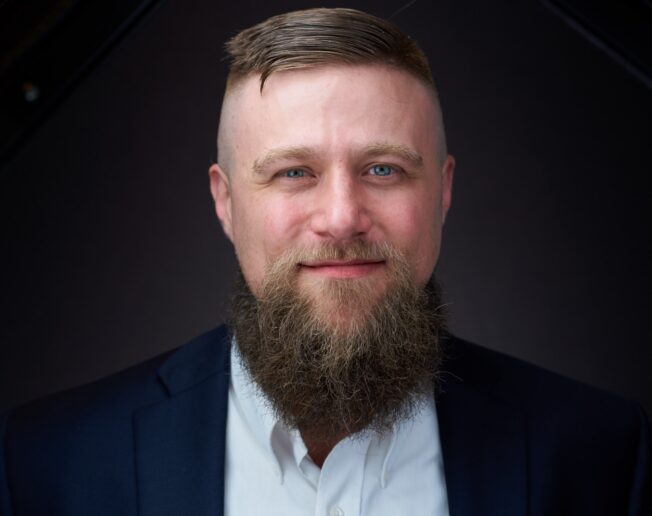

Photo of Kevin LaCroix

Kevin M. LaCroix is an attorney and Executive Vice President, RT ProExec, a division of RT Specialty. RT ProExec is an insurance intermediary focused exclusively on management liability issues.

Sarah Abrams

There is no doubt that in many ways cryptocurrency is going mainstream. It is showing up in a surprisingly wide variety of places for a wide variety of reasons. In the following guest post, Sarah Abrams, Head of Claims Baleen Specialty, a division of Bowhead Specialty, takes a look at recent suggestions that merchants could substitute stablecoin rewards as a form of customer loyalty payment and considers the potential D&O insurance underwriting implications. I would like to thank Sarah for allowing me to publish her article as a guest post on this site. I welcome guest post submissions from responsible authors on topics of interest to this site’s readers. Please contact me directly if you would like to submit a guest post. Here is Sarah’s article.Continue Reading Guest Post: Rewarding Stablecoins

The D&O Diary was on assignment in Europe this past week, with a final stop in the beautiful city of Amsterdam, which — with its canals, its streets of bicyclists, its 17th century façades — has its own unique and essential charm.Continue Reading Amsterdam

The D&O Diary is on assignment in Europe this week, with the first stop in the great city of London. London is always one of my favorite places to visit, and it is particularly nice to visit this time of the year. Continue Reading London

Sarah Abrams

Securities class action lawsuits in the U.S. are very much subject to the rules of civil procedure regarding class action certification. In the following guest post, Sarah Abrams, Head of Claims Baleen Specialty, a division of Bowhead Specialty, examines a recent district court class action certification decision and considers its implication. I would like to thank Sarah for allowing me to publish her article as a guest post on this site. I welcome guest post submissions from responsible authors on topics of interest to this site’s readers. Please contact me directly if you would like to submit a guest post. Here is Sarah’s article. Continue Reading Failure to Launch

Lucas Roberts

The difficulty of relatedness determinations is a recurring topic on this site. The difficulty is in determining what degree of similarity between two claims is sufficient to make them “related” for purposes of insurance coverage determinations. In the following guest post, Lucas Roberts, Wholesale Broker, Anzen Insurance Solutions,  considers two recent specific cases to highlight the difficulty of reconciling relatedness cases. I would like to thank Lucas for allowing me to publish his article as a guest post on this site. I welcome guest post submissions from responsible authors on topics of interest to this site’s readers. Please contact me directly if you would like to submit a guest post. Here is Lucas’s article.Continue Reading Guest Post: The Unpredictable World of Related Claims Determinations

Sarah Abrams

President Trump has made it clear that advancing efforts in the U.S. to develop artificial intelligence (AI) is a priority of his administration. But a recent criminal enforcement action and civil litigation raises the question whether the increasing prevalence of AI may pose significant new litigation risks that could have important implications for D&O insurance underwriters. In the following guest post, Sarah Abrams, Head of Claims Baleen Specialty, a division of Bowhead Specialty, takes a closer look at the recent enforcement and litigation developments and considers the potential underwriting lessons. I would like to thank Sarah for allowing me to publish her article as a guest post on this site. I welcome guest post submissions from responsible authors on topics of interest to this site’s readers. Please contact me directly if you would like to submit a guest post. Here is Sarah’s article.Continue Reading Guest Post: AI-Bot D&O Risk

As noted in @Sarah Abrams’s recent guest post (here), President Trump last week proposed in a social media post changing the periodic reporting requirements for public companies from quarterly to semi-annual. Based on a separate interview of SEC Chair Paul Atkins published last week, it appears that the agency is prepared to move forward quickly with this proposal. We can expect to hear a lot of debate in the coming days about whether the proposed changed reporting requirements are a good idea. The Wall Street Journal had an interesting article on Saturday about the proposed change, clearly coming down on the side that the proposed change is not a good idea. As discussed below, the article also had some interesting information and comparisons that will add to the discussion about the proposal.Continue Reading All the Problems with Eliminating Quarterly Reporting

The idea that companies might be able to avoid securities class action litigation through the adoption of bylaws requiring securities law claims to be submitted to arbitration has been around for years.

Traditionally, the SEC has opposed these types of bylaw provisions. However, in an interesting development, on September 17, 2025, the Commission, in a new policy statement approved by a 3-1 vote along party lines, announced that the decision whether or not to “accelerate the effectiveness of a registration statement” will “not be affected” by the presence of provision requiring the arbitration of investor claims arising under the federal securities laws.

This development suggests that in the future IPO investors could find themselves compelled to arbitrate securities law claims rather than being able to file a securities class action, although, as noted below, there is a lot more that is yet to be told on these issues.Continue Reading SEC Revises Policy on Arbitration Provisions in IPO Companies’ Bylaws

Sarah Abrams

In a social media post earlier this week, President Trump proposed eliminating quarterly reporting for public companies. In the following guest post, Sarah Abrams, Head of Claims Baleen Specialty, a division of Bowhead Specialty, takes a look at the President’s proposal and considers its prospects and potential implications. I would like to thank

Ommid C. Farashahi
Melissa Y. Gandhi

By this point, I think all of us have seen stories about lawyers who have gotten in hot water because they relied on AI to come up with legal authority, only for the AI-generated citations turning out to be phony. In the following guest post, Ommid C. Farashahi and Melissa Y. Gandhi of the BatesCarey LLP law firm take a look at this recent phenomenon and consider the ethical and profesional implications. I would like to thank Ommid and Melissa for allowing me to publish their article as a guest post on this site. I welcome guest post submissions from responsible authors on topics of interest to this site’s readers. Please contact me directly if you would like to submit a guest post. Here is the author’s article.Continue Reading Guest Post: Courts Crack Down on AI Misuse in the Legal Profession