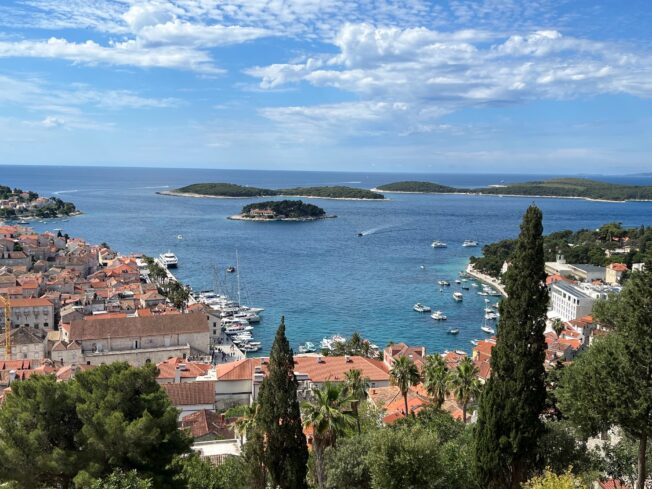
Hvar, Croatia

The D&O Diary’s European assignment continued this week with a long weekend visit to Croatia, the southeastern European country located along the Adriatic Sea with a long, irregular coastline marked by numerous islands. This was a long overdue return visit to Croatia for us, after a memorable 2018 visit to Dubrovnik.

Croatia is about the geographic size of the U.S. state of West Virginia (roughly 22,000 sq. mi.) and has a national population of roughly 3.8 million (about the same as Los Angeles). The locals name for their country is Republika Hrvatska (which means Croatian in the local language). The country is in the Eurozone. Just about everybody we encountered during our trip spoke English. It is also a really beautiful place with a great climate and great people.

Our first stop in Croatia was a brief visit to Zagreb, the country’s and largest capital city. The city is divided between its older Upper Town (Gornji Grad), consisting primarily of the formerly separate districts of Gradec and Kaptol, and its newer Lower Town (Donji Grad).
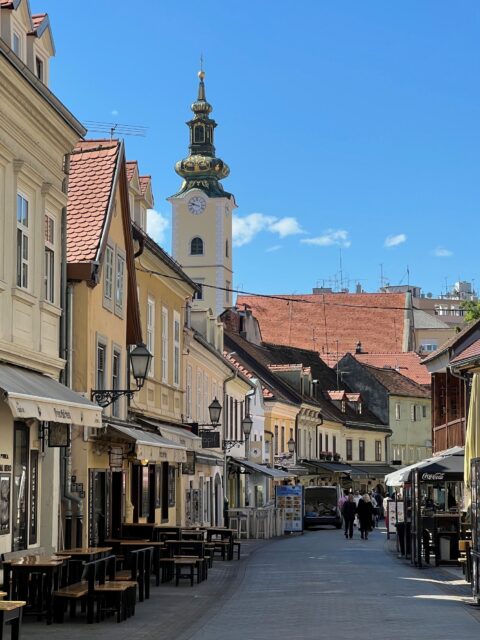
Zagreb’s Upper Town is the city’s historic core, with a dense web of narrow, winding streets, small squares. This picture shows Tkalčićeva Street, a pedestrian-only strip that runs through the historic center and is lined with restaurants, cafes, and bars. It is the place to go in the evening in Zagreb.
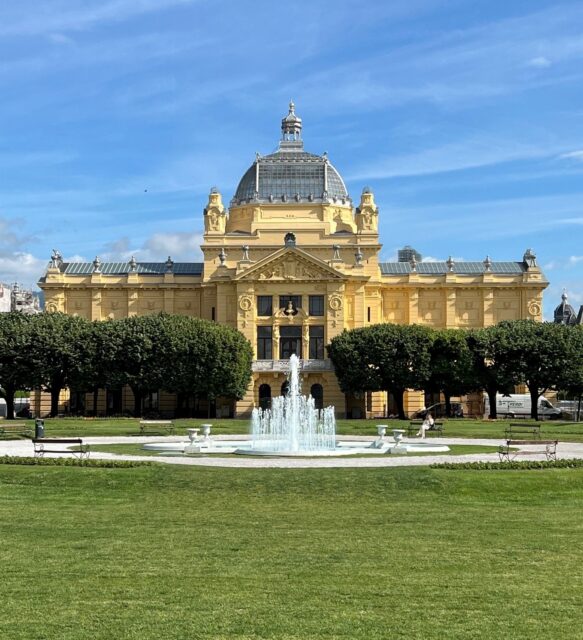
The modern city of Zagreb is in the city’s Lower Town, which is laid out in more of a grid and includes a signifcant architectural heritage of Habsberg- era buildings from the late 19th century. This picture shows the Zagreb’s Art Pavilion, which was completed in 1898.

There is one very important thing you need to know about Zagreb, and that is that on March 22, 2020 (at a time when the rest of the world was preoccupied by other things), the city was hit with a massive earthquake, at 5.5 on the Richter Scale. The result was extensive damage to many of the city’s buildings, including, in particular, many of its historic structures.
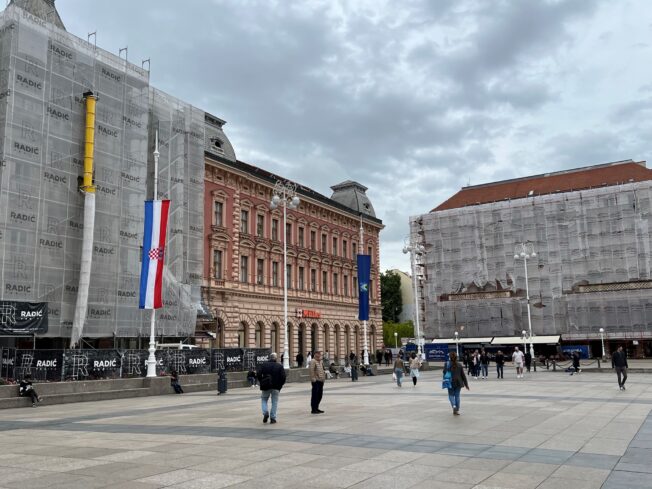
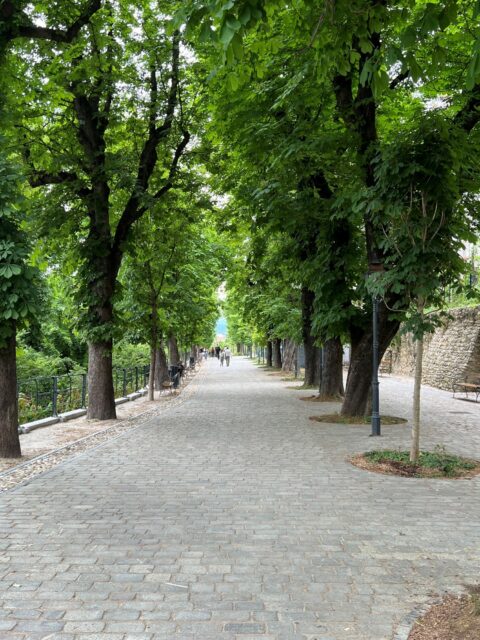
This is a picture of Ban Jelačić Square, the city’s central square. Due to damage from the 2020 earthquake, the buildings in the square, and, indeed throughout the city, are undergoing repairs and renovations and are covered in scaffolding and construction netting. A significant number of Zagreb’s buildings are closed, including many of the museums; for example, the Art Pavilion shown in the preceding picture was damaged in the earthquake and is closed for restoration.
Zagreb is still an interesting city to walk around in, notwithstanding the earthquake damage. This picture shows the Strossmeyer Promenade, a cobble-stone paved walkway on the Gradic hill that provides panoramic views of the city’s rooftops.
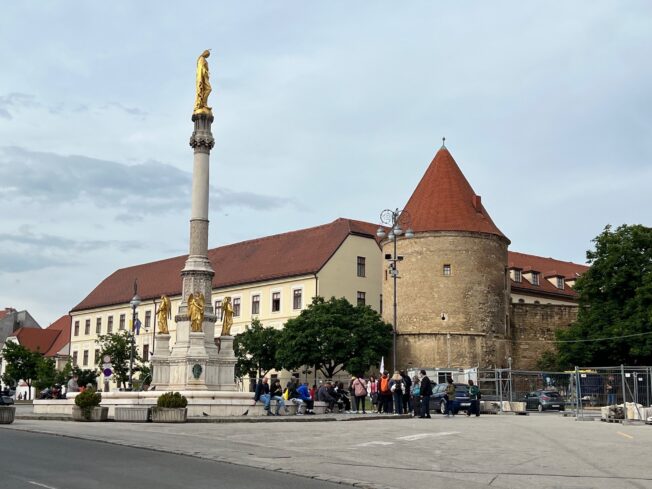
One area of the city that has been mostly restored is the cathedral square, with its 19th century monument to the Virgin Mary. (The cathedral itself, and in particular, the cathedral’s spires, is covered in scaffolding.) The city’s open air market is just downhill and to the west from the cathedral square. The conical tower in this picture is one of the remaining battlements from the defensive walls that formerly surrounded the cathedral.
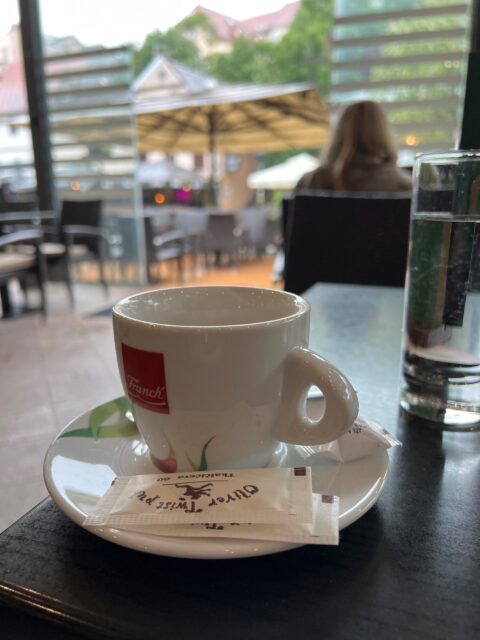
Another very important thing to know about Zagreb is that the city has a very vibrant sidewalk-cafe culture. This proved to be very important to us, as one full day of our visit to was a total rain out. We spent the better part of the rainy afternoon at a very pleasant cafe watching a soccer match while the rain poured down and the cold winds blew.
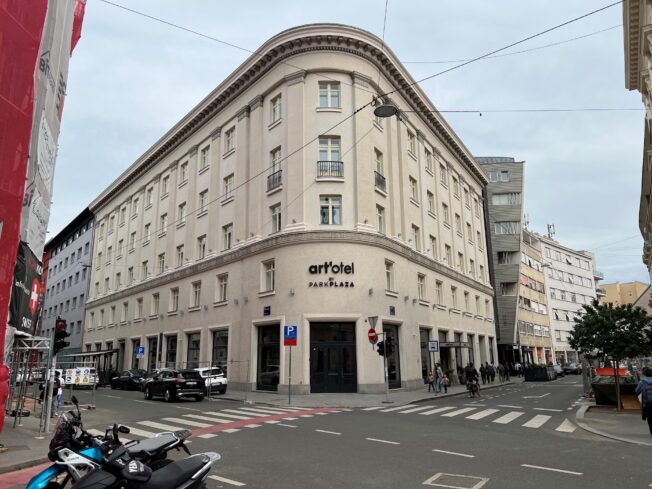
For anyone visiting Zagreb any time soon, I have a hotel recommendation. It is the Art’otel Zagreb, located in the Lower Town on a quiet side street just a short city block away from the central square, two blocks from the cathedral, and a few short blocks from the sidewalk cafes on Tkalčićeva Street. The hotel is new, modern, clean, and quiet, the rooms are comfortable, and it is a good value.

Our visit to Zagreb was short and we were soon off to Split, Croatia’s second largest city, located on the Adriatic Coast. Though we had some rain in Zagreb, the weather in Split was just about perfect. Split is centered around the remarkably well-preserved Diocletian’s Palace, a Roman imperial palace complex that forms the heart of its old town.
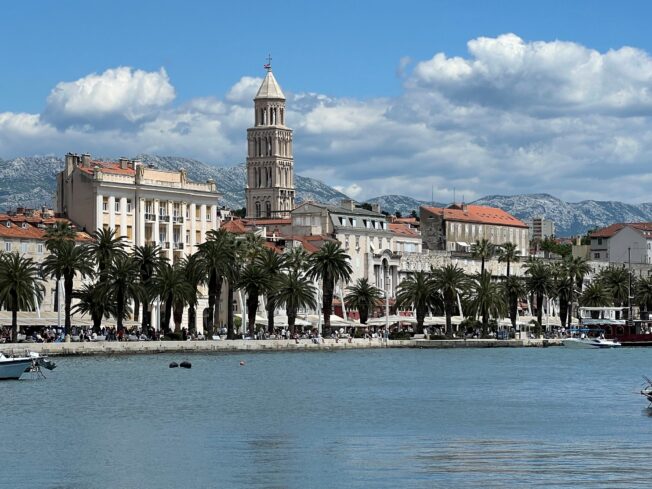
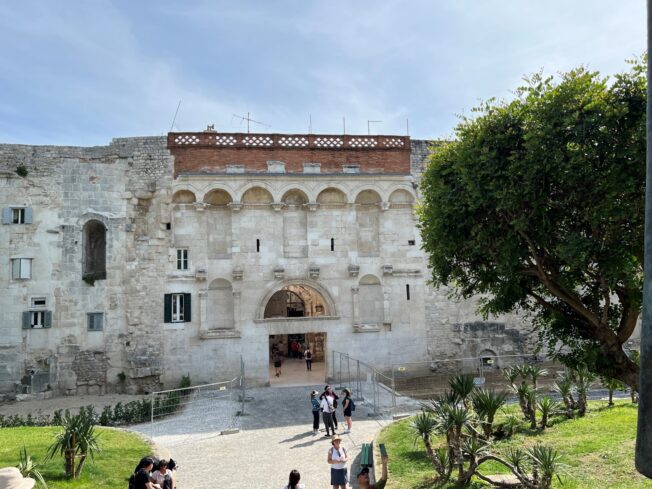
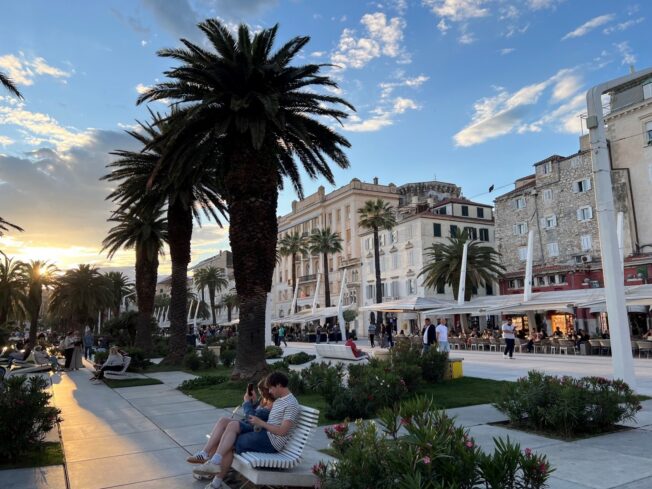
Here’s a harborside view of Split, including the waterfront walkway known as the Riva, lined with palm trees and sidewalk cafes, and just beyond the seaside face of Diocletian’s Palace.
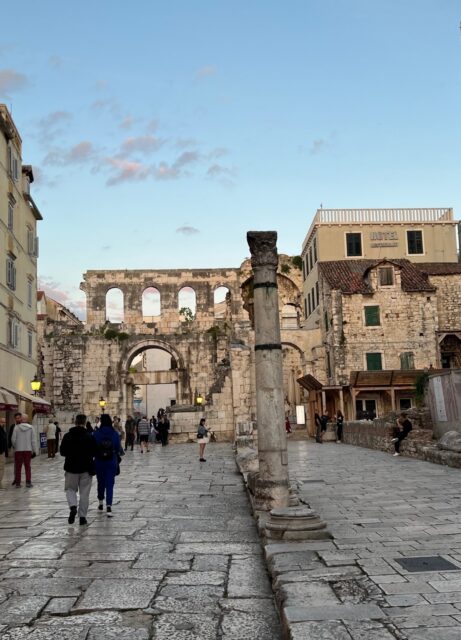
Here’s a view of the landward side of Diocletian’s Palace. The Palace is enormous — it covers eight acres and its large enough that over a thousand people once lived inside. It was built in the late third century/early fourth century AD as a retirement home by the Roman Emporer Diocletian, who was a native of the Dalmatian coast and who grew up nearby.

The Palace is noteworthy not just because of its size and because it is remarkably well-preserved, but also because it has been continuously inhabited since it was first built 1,700 years ago. Hundreds of people still live within the palace structure. Indeed, we stayed at a small hotel inside the palace.
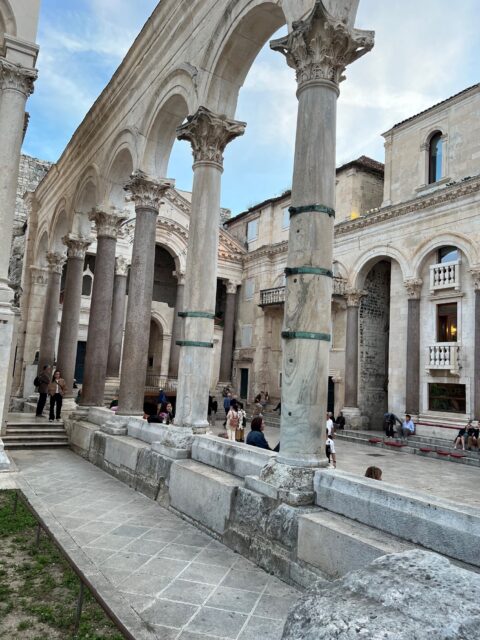
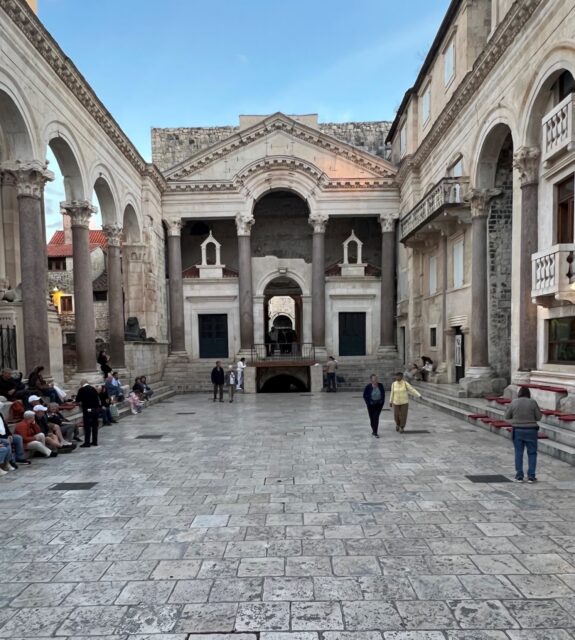
This is the palace’s Peristyle, which is the palace’s central open courtyard. It is literally the center of the palace complex and it was the ceremonial center of the building as well. You will note that I took this picture in the evening. During the day, this space and the palace in general are jammed with crowds from the tour buses and cruise ships.
When the crowds have left, the palace is an extraordinarily pleasant place just to walk around. The building’s many alleys and passageways have small restaurants and cafe. That is the top of our hotel in the upper right hand corner of the picture.
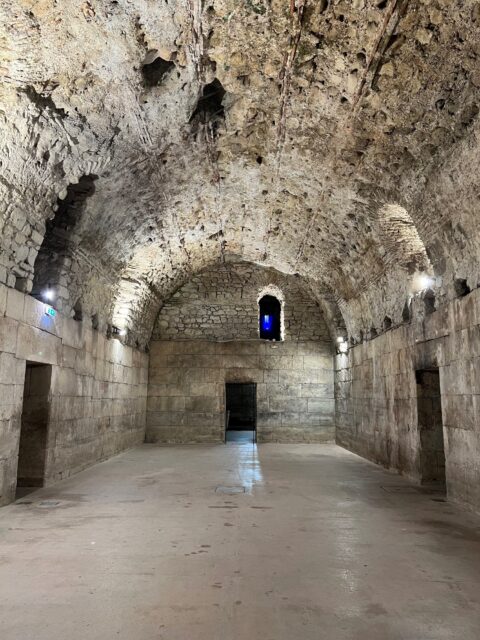
This is a view of the palace’s subterranean cellars, which have taken on a sort of life of their own, after they were used as a location for The Game of Thrones. These areas served as the dungeon where Daenerys Targaryen locked up and kept her dragons, and the catacombs where her Unsullied army secretly plotted their rebellion.
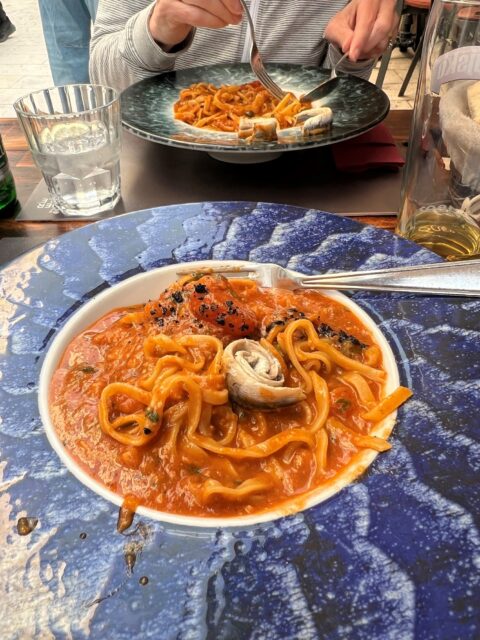
In addition to a lot of history, Split also has a lot of great food. On our first night in the city, we found this great small restaurant in the old town near the fish market called Corto Maltese Freestyle Food featuring food from Malta. This picture shows a particularly excellent dish we enjoyed, with tagliatelle pasta and a tomato sauce with anchovies and shrimp scampi, garlic, onions, and a host of spices. Flat out great.

On the peninsula to the west of Split’s old town is a huge, pine-covered park, known as Marjan Forest Park. We had originally intended just to walk up to the view point on the hillside above the city, but it was such a beautiful day and such a great walk that we wound up hiking the length of the park peninsula, about seven miles round trip.
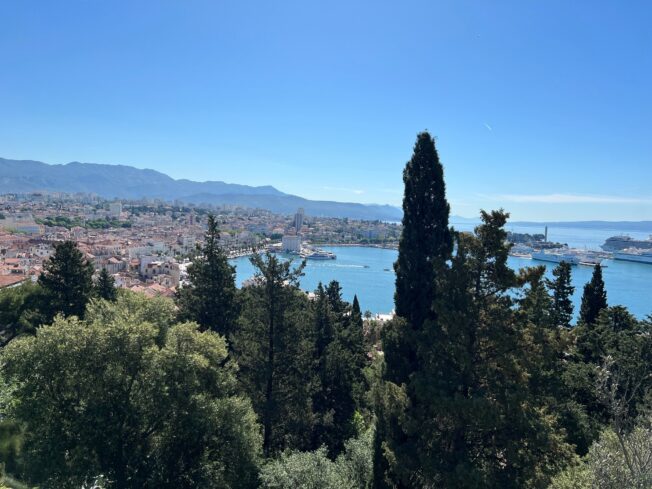
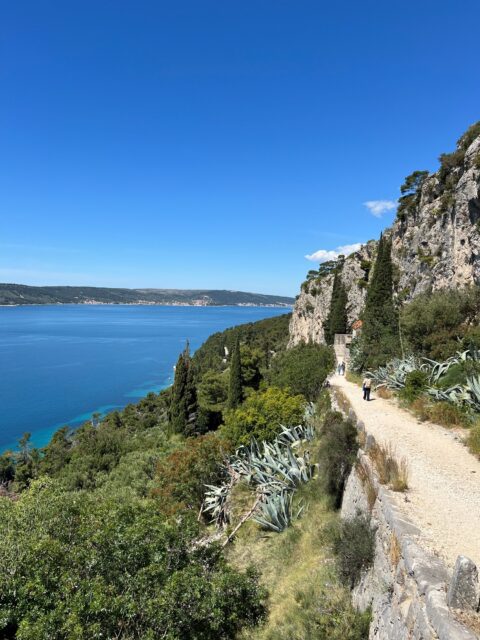
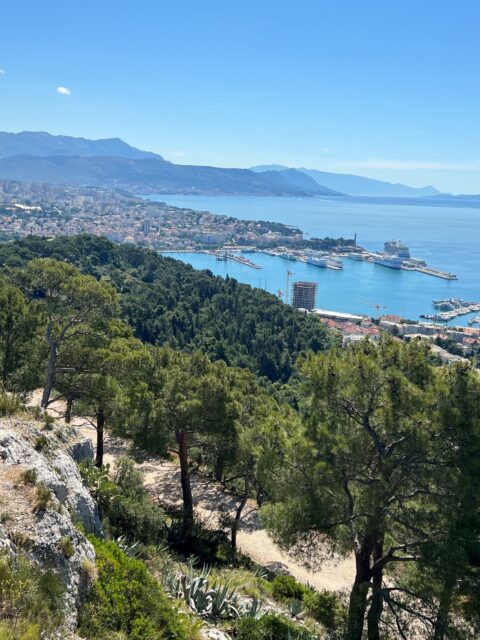
The view of Split from Marjan Park. We wound up walking the length of the park because we found the view of the sea and of the surrounding area increasingly beautiful was we walked deeper into the park.

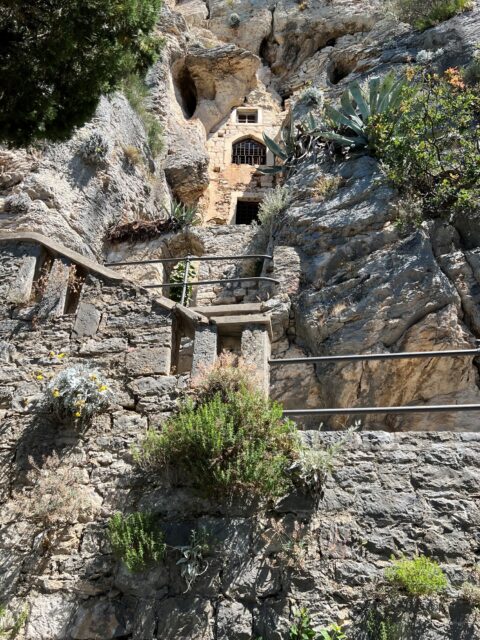
This is the Hermitage of St. Cyriacus, an oratory carved into the limestone cliffs in Marjan Park. The oratory is only open three times a year, and it happened to be open the day we visited. The inside didn’t photograph well (it is dark), but it was still pretty amazing to be able to see it.
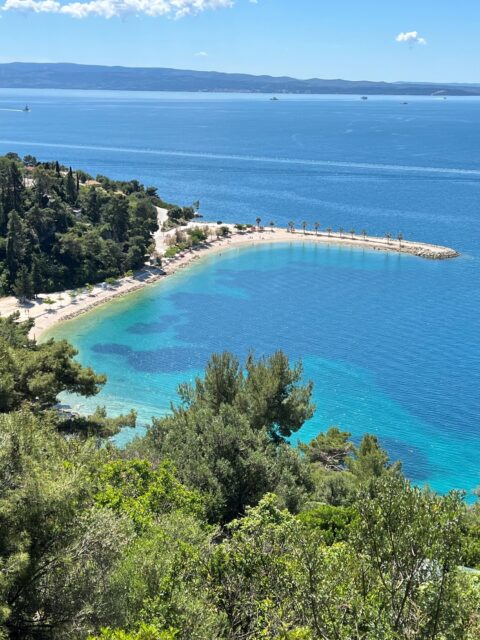
A view from the hillcrest in Marjan park down to one of the beaches at the far end of the peninsula.
Another view of Split from the Marjan Park.

On our final day in Croatia, we took a passenger ferry from Split to Hvar (pronounced “Far,” sort of), a large (115 sq. mi.) island located about 22 miles from Split. The ferry, which takes about 50 minutes, goes directly to the town of Hvar. The town has a scenic harbor, a central square, a hilltop fortress overlooking the town, and a promenade that goes along the shoreline for quite a distance.
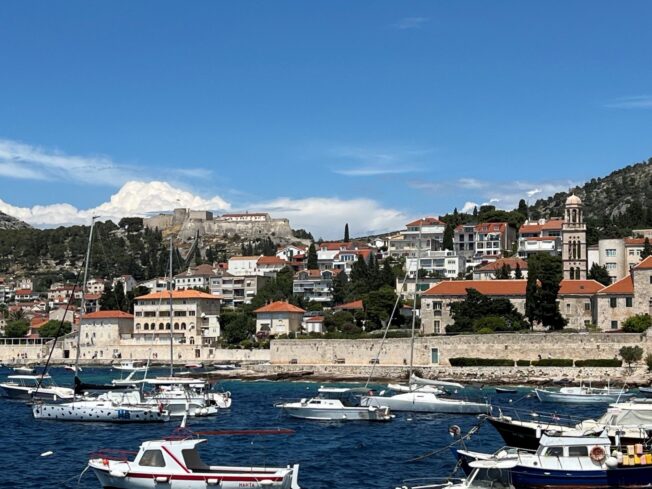
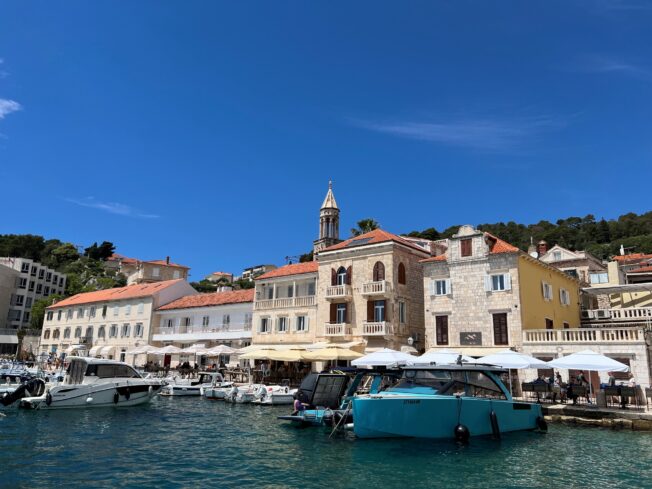
The town of Hvar with the fortress looming above on the hillside.

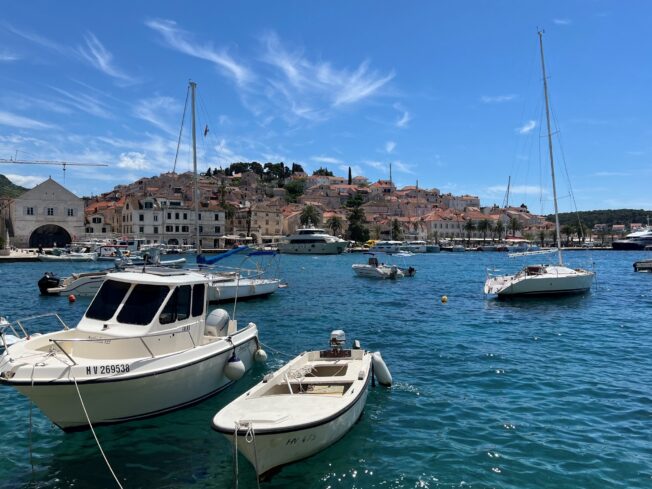
The harborfront in Hvar.

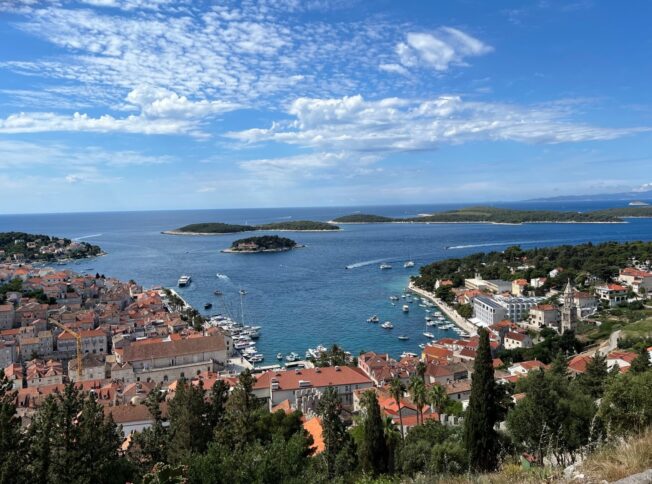
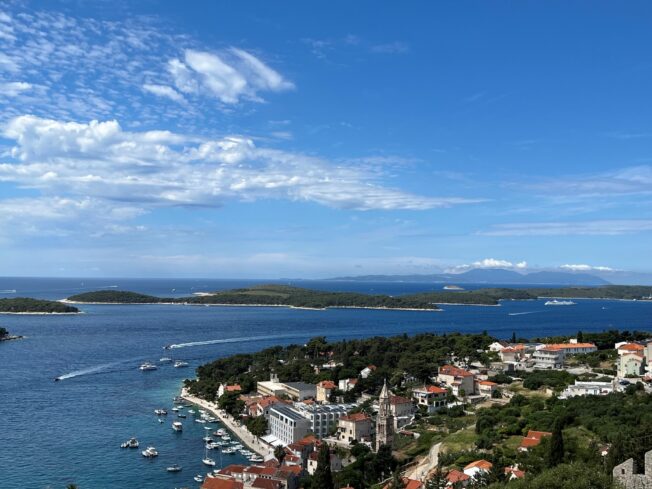
The view of the Hvar Harbor from the hilltop fortress.

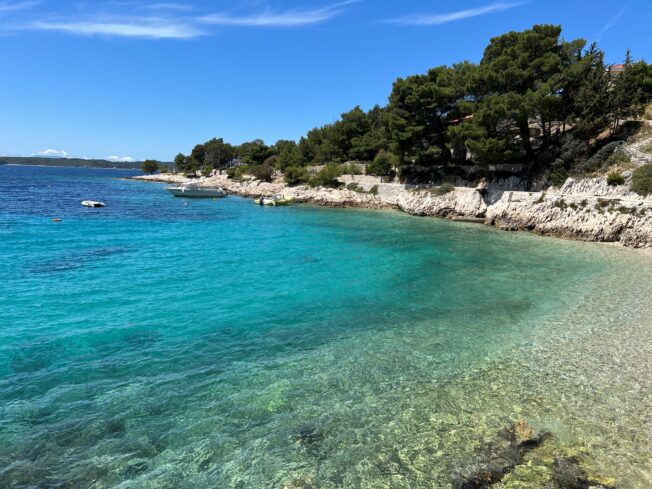
Along the seaside promenade to the west of the town of Hvar
Another view of Hvar
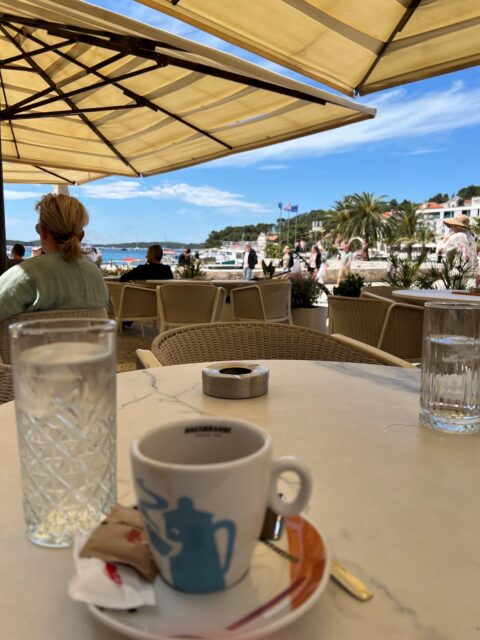
Just enough time for a quick double espresso at a sidewalk cafe in Hvar’s central square before heading back to Split on the passenger ferry.

We had one last evening in Split before it was time to head home. We had a light meal at an outdoor cafe on the Riva, and then we joined the evening promenade along the Riva. We were sorry to leave, we had a great visit to Croatia, and we returned with a long list of islands and other destinations we have to see on our next visit. What a great place.