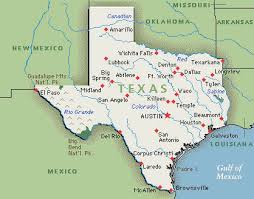
One of the more noteworthy recent trends in corporate law has been the push for companies (particularly companies incorporated in Delaware) to consider reincorporating elsewhere (primarily Texas or Nevada). A number of companies have in fact changed their state of incorporation. Arguably the biggest move of all is ExxonMobil’s recent action to reincorporate in Texas, which the company’s shareholders approved in May. The company’s change in its state of incorporation after roughly 140 years of corporate existence is a noteworthy development, and worth considering further.
One of the main reasons Exxon’s move is worth further examination is that Exxon’s move is different in key ways from the actions of many of the other companies that have reincorporated in recent months.
For starters, Exxon’s move is not a “DExit” – Exxon was not previously incorporated in Delaware, it was a New Jersey corporation. Its predecessor company (Standard Oil of New Jersey) incorporated in New Jersey in 1882, at a time when New Jersey was a leading state for incorporations and the state’s laws were perceived as permissive.
The fact that Exxon’s reincorporation is not a move away from Delaware is worth considering. Much of the current dialogue about whether or not states should reincorporate originates in reactions against certain recent Delaware court decisions. Exxon’s move has nothing to do with any of that. Indeed, Exxon’s move not only doesn’t have anything to do with Delaware, it really doesn’t have anything to do with New Jersey, either. Exxon may have had its reasons for making the move to reincorporate in Texas, but the move really does not represent a move away from New Jersey. It is mostly a move toward Texas.
One reason Exxon frequently cited for reincorporating in Texas is to align its legal existence with its operational reality. The company moved its corporate headquarters to Texas in 1989. The company portrayed this aspect of its move as “real world alignment.” However, as discussed further below, there definitely were legal as well as practical motivations for the company’s decision to reincorporate in Texas.
Before I get into the legal considerations of Exxon’s move, there is one other way in which Exxon is different from many of the other companies that in recent months have chosen to reincorporate to Texas or Nevada.
With respect to the other companies, I want to alert readers to a great resource. University of Nevada Las Vegas Law Professor Benjamin Edwards has been tracking company reincorporations on the Business Law Prof Blog. On June 1, 2026, Edwards posted the latest update to his list of company reincorporations. Professor Edwards’s list shows that 36 companies have reincorporated in 2026 (inclusive of four companies that decided to move in 2025 but whose shareholders approved the move in 2026).
A quick review of Edwards’s list shows that many of the companies that have chosen to move their state of incorporation are smaller, founder-controlled companies, and companies that have faced corporate litigation. Exxon arguably represents something quite a bit different. (Although Exxon certainly has had its share of litigation.) Exxon is a large, widely-held mainstream company. It is not founder controlled.
The significance of Exxon’s move is not in its move away, rather, the significance is in what it was moving toward. What Exxon’s move signifies is that we are now in an era of competition between the states to be companies’ legal homes. And with the entry of Exxon into the lists, the state competition has now gone mainstream. The question we all need to ask in the wake of Exxon’s move is: will Corporate America follow in Exxon’s footsteps?
In considering whether there are implications for Corporate America in Exxon’s move, it is important to consider some of the other reasons Exxon chose to move. It was not just the practical consideration of aligning the company’s legal existence with its operational reality. Exxon chose Texas for legal reasons as well. Those reasons included such things as Texas’s recently modernized business code, and its newly established dedicated business courts. Texas’s laws arguably allow companies to better manage litigation risk and reduce the likelihood of shareholder litigation. The case for Texas is that it is – in the eyes of some — innovative and business-friendly. Exxon also argued that Texas is a jurisdiction that understands its business better. It could be argued that Exxon’s move legitimizes Texas’s recent bid to become a magnet for company incorporations.
To be sure, there were those (including for example, the leading proxy advisors) who opposed the company’s move, precisely because, as the opponents saw it, the move to Texas would weaken corporate governance controls and potentially even entrench company management. Indeed, much of the argument against Exxon’s move was precisely due to concerns that it could legitimize Texas (or other jurisdictions) as corporate alternatives, and thereby encourage other participants in Corporate America to consider the same or a similar move as Exxon just did.
Policy theorists can debate all they want about whether the move toward corporate reincorporations is a good or a bad thing. But the reality is, as the Wall Street Journal noted in a June 1, 2026 editorial (here), “the policy differences between the states are becoming wider.” Companies, like Exxon, are considering making a move based on a perception that there are differences between the states, and those differences matter.
What I think Exxon’s move does is that it puts on the table the question whether or not legal domicile is, as the Journal editorial puts it, “an issue in corporate governance.” Indeed, the Journal article goes further, and affirmatively raises the question: “Is it becoming a corporate governance duty to leave states that punish business for states that don’t?”
I doubt there is a legitimate legal basis for corporate boards to be sued for choosing (or failing to choose) one state as compared to another state as the company’s legal domicile. However, there nevertheless is a valid question about whether companies in different jurisdictions face different levels of litigation risk. This is a question that has always been involved in the choice of the state of incorporation. And it is a question that potentially matters a lot more now, if Exxon’s move does have implications for the rest of Corporate America.
To be sure, there has been some legitimate concern that the entire “DExit” debate is overblown. At most, to date, it has involved a few dozen companies. There have, so far, been few signs of some kind of mass migration away from Delaware. Indeed, in 2025, incorporations in Delaware actually increased sharply, rising about 30 percent compared to 2024. Not only are many companies choosing Delaware, there is a good case to be made that companies should choose Delaware – its traditions, its deep and established case law, its experienced judiciary, and so on.
For D&O insurance professionals, there is an embedded question in all of this – if companies are choosing where to incorporate based, among other things, on perceptions of varying litigation risk between the states, should the state of incorporation be a factor in D&O insurance risk selection and pricing? I think this is a question worth asking, but we are nowhere near having enough data to actually answer the question. Until there is more experience and case law demonstrating that companies incorporated in Nevada and Texas have a measurably reduced litigation risk, I don’t think the insurers will be in a position to confidently use the state of incorporation as a risk selection or pricing factor. At least not yet. Maybe someday? Soon?
But while we may not yet be in the position to answer the question, there is a chance that the question may start to matter a whole lot more, if Corporate America does sit up and take notice of what Exxon has done, and more mainstream companies start to make the move to other states that are perceived as business-friendly – and in particular are perceived as having a better litigation environment.