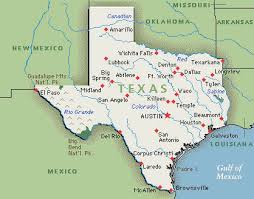
One of the more noteworthy recent trends in corporate law has been the push for companies (particularly companies incorporated in Delaware) to consider reincorporating elsewhere (primarily Texas or Nevada). A number of companies have in fact changed their state of incorporation. Arguably the biggest move of all is ExxonMobil’s recent action to reincorporate in Texas, which the company’s shareholders approved in May. The company’s change in its state of incorporation after roughly 140 years of corporate existence is a noteworthy development, and worth considering further.

Continue Reading Thinking About Exxon’s Reincorporation in Texas

D&O insurance provides coverage for individuals to the extent they are acting in their capacities as directors and officers of their companies. The policies do not provide coverage when the individuals are acting in other capacities. A recent decision from a New Jersey appellate court highlights the coverage questions that can arise when individuals are alleged to be acting in multiple capacities. The court concluded that coverage was entirely precluded for an individual who was acting multiple capacities. As discussed below, the decision raises interesting questions.

Continue Reading D&O Insurance Coverage Precluded for Individual Acting in Dual Capacities

new jerseyAs anyone involved in D&O insurance knows, policyholders’ late provision of notice of claim is a recurring problem. All too often, delays in providing notice result in a preclusion of coverage, an outcome that I find in many cases to be troubling. Because of concerns about policyholders’ loss of coverage, some courts have held that an insurer must show that the late provision of notice prejudiced its interests in order to disclaim coverage. However, a number of other courts have also held that the “notice prejudice rule” does not apply to claims made policies.

Along these lines, on February 11, 2016, the New Jersey Supreme Court held that, at least where a “sophisticated” insured is involved, an insurer that contends that it was not provided with timely notice of claim under a claims made insurance policy does not have to show that it was prejudiced by the delayed provision of notice in order to disclaim coverage. The New Jersey Supreme Court’s opinion can be found here.

As I commented at the time when the intermediate appellate court reached the same conclusion in this case, I have some issues with this case and the way it all played out.
Continue Reading N.J. Sup. Ct.: Notice Prejudice Rule Does Not Apply to “Sophisticated” Insured’s Claims Made Policy