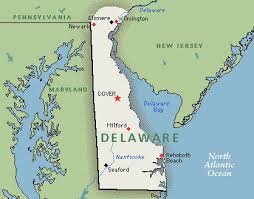
In recent years, the D&O Diary has followed the growing debate over whether companies should reincorporate outside Delaware, particularly in states such as Nevada and Texas. We have also followed Delaware’s efforts to address the trend through measures including the enactment of SB 21 and the Delaware Supreme Court’s decision upholding the statute.
And we queried whether DExit could prove to be a new source of D&O exposure. A newly amended class action complaint against Dropbox may provide yet another example of that risk, as shareholders are challenging Dropbox’s reincorporation to Nevada, alleging that the move was undertaken to protect management and the controlling stockholder from accountability for underlying business and governance decisions.
I want to thank Anthony Rickey of the Margrave Law LLC, who brought this latest DExit-related litigation to my attention with his LinkedIn post here. A copy of the amended complaint can be found here.
Dropbox Litigation
On April 3, 2025, Plumbers & Fitters Local 295 Pension Fund filed a Delaware Chancery Court action against Dropbox, founder and CEO Andrew Houston, and the company’s directors, challenging Dropbox’s planned reincorporation from Delaware to Nevada. The plaintiff alleged that the move was a controller-driven transaction that would reduce shareholder rights while increasing protections for Houston and the board, and also sought a declaration that recent amendments to Section 144 of the Delaware General Corporation Law were unconstitutional. The case is styled Plumbers & Fitters Local 295 Pension Fund v. Dropbox, Inc., et al., C.A. No. 2025-0354.
On July 6, 2026, the plaintiff filed a substantially expanded amended complaint based in part on documents obtained through a Section 220 books-and-records demand. The amended pleading alleges that Dropbox pursued the Nevada reincorporation while undergoing an AI-focused business transformation and facing pressure from activist investor Half Moon Capital, which had challenged both the company’s strategy and Houston’s control through its dual-class voting structure. According to the complaint, the reincorporation was a defensive measure designed to preserve Houston’s control, reduce litigation risk, and shield management from challenges to the company’s strategic and governance decisions.
The amended complaint further alleges that the reincorporation was part of a broader effort by Houston to strengthen his influence over Dropbox. Among other things, it challenges the company’s debt-funded stock repurchase programs, alleges that Houston sold approximately $69 million of stock while the reincorporation was under consideration, and contends that the move deprived shareholders of important Delaware-law protections while expanding protections for directors and officers. The complaint also challenges the board’s decision to exempt Houston from Nevada’s business-combination statutes, arguing that the exemption uniquely benefited him as a controlling stockholder.
The amended complaint also challenges the process and disclosures surrounding the reincorporation. It alleges that the board’s evaluation committee lacked independence, relied on advisors predisposed toward a Nevada outcome, and issued a materially misleading Information Statement that overstated the benefits of Nevada law while failing to disclose legislative developments in Delaware and Nevada that allegedly undercut the stated rationale for the move. The plaintiff seeks rescission of the Nevada reincorporation and restoration of Dropbox’s Delaware domicile or, alternatively, rescissory and compensatory damages for the alleged loss of stockholder rights and benefits conferred on Houston and the other defendants.
Discussion
The Dropbox lawsuit is the latest in a series of shareholder challenges to corporate reincorporations outside Delaware, following notable litigation involving TripAdvisor and Liberty TripAdvisor, The Trade Desk, and Tesla. For D&O insurers, these kinds of claims may create exposure even where the underlying business strategy is not being challenged, because the reincorporation decision itself can become the subject of fiduciary-duty, disclosure, and governance litigation.
Prior reincorporation cases provide important context for the Dropbox litigation. For example, in Maffei v. Palkon, shareholders challenged TripAdvisor’s and Liberty TripAdvisor’s move from Delaware to Nevada, arguing that the reincorporation benefited directors and controlling stockholders by reducing potential liability exposure. The Delaware Supreme Court rejected that argument, holding that a reincorporation approved on a “clear day”—without pending or threatened litigation or an effort to shield a specific transaction—is reviewed under the business judgment rule, and that any future reduction in litigation risk is too speculative to constitute a material non-ratable benefit.
Against that backdrop, the Dropbox case may be viewed as an effort by shareholder plaintiffs to distinguish the circumstances surrounding Dropbox’s Nevada reincorporation from those presented in Maffei. Dropbox shareholders argue that Delaware’s legislative reforms, including SB 21, undercut the company’s rationale for leaving Delaware by addressing many of the concerns that proponents of reincorporation had cited. The amended complaint contends that, if Delaware was already moving in the direction companies claimed to want, the justification for abandoning Delaware became far less compelling. If this argument gains traction, D&O underwriters may need to consider that companies contemplating reincorporation to Nevada or Texas could face heightened scrutiny of both the decision-making process and the rationale for departing Delaware.
Another notable aspect of the amended complaint against Dropbox is the plaintiff’s challenge to Nevada’s oft-cited “predictability” advantage. The Dropbox shareholders argue that the company undercut that rationale when, after reincorporating, it sought to amend its Nevada charter to eliminate jury trials in certain corporate disputes—an alleged acknowledgement that Delaware’s Court of Chancery offers a more predictable forum for resolving fiduciary-duty claims. The case therefore highlights a potential governance paradox: companies leaving Delaware may later seek to recreate some of the procedural protections they abandoned.
Like the earlier TripAdvisor, Trade Desk, and Tesla cases, the Dropbox action suggests that reincorporation may shift litigation risk rather than eliminate it. Instead of challenging operational performance or strategic decisions, plaintiffs may focus on the reincorporation transaction itself, particularly where controlling stockholders receive unique benefits, shareholders lose perceived litigation rights, or the rationale for leaving Delaware can be questioned. As a result, governance features such as dual-class structures, controlling stockholders, activist pressure, significant share repurchases, and changes to shareholder rights may become important indicators of potential D&O exposure.
As Nevada and Texas continue to compete with Delaware for corporate charters, D&O underwriters could increasingly find themselves evaluating not only the legal risks associated with a company’s chosen domicile, but also the litigation exposure arising from the decision to change domiciles in the first place. As the latest chapter in the developing body of reincorporation litigation, the Dropbox lawsuit may be closely watched by companies, shareholders, and D&O insurers alike for further guidance on when a decision to leave Delaware may give rise to viable fiduciary-duty claims.