In the months since the current Trump administration first announced the so-called “Liberation Day” tariffs, some companies have struggled to deal with the tariffs’ economic impacts, and in at least some cases, companies’ tariff-related problems have led to securities class action litigation (as discussed, most recently, for example, here). In the latest example of this phenomenon, earlier this week the social media company Pinterest was hit with a securities suit after the company announced that tariff-related headwinds had caused its business partners to cut back on advertising on the company’s site. A copy of the March 30, 2026, Pinterest complaint can be found here.Continue Reading Tariff-Related Securities Suit Hits Social Media Platform Pinterest


In the wake of the February 20, 2026, U.S. Supreme Court decision to invalidate tariffs imposed under the current Administration’s use of the International Economic Emergency Powers Act (IEEPA), litigation has been filed by companies seeking tariff refunds and by shareholders alleging securities violations against a company whose operations and financial results were impaired by “tariff headwinds.”   A new category of litigation is also beginning to appear: consumer class actions alleging that companies improperly passed tariff costs on to customers.Continue Reading Tariff Pass-Through Litigation Expands

In the immediate aftermath of the U.S. Supreme Court’s ruling that President Trump lacked authority to impose tariffs under the International Economic Emergency Powers Act (IEEPA), the President defiantly issued an Executive Order imposing new global 10% tariffs (later raised to 15%) in reliance on the Section 122 of the Trade Act of 1974. No President previously has used Section 122 to impose tariffs. Now a coalition of 24 states’ Attorneys General and Governors has filed a lawsuit in the United States Court of International Trade against the President and certain of administration officials challenging the President’s Section 122 tariffs. The plaintiffs argue that the circumstances under which the President has authority under Section 122 to impose tariffs not only does not exist now, but has not existed for over 50 years following changes in the global monetary exchange system in the 1970s. The likelihood is that the President will have to find yet another basis on which he can impose tariffs – which he seems likely to continue to try to do.Continue Reading State AGs Challenge President’s Trump’s Section 122 Tariffs

While there have been dramatic developments in recent days related to the Trump administration’s tariff-policies – including the U.S. Supreme Court striking down the administration’s IEEPA tariffs and the Trump administration announcement of new across-the-board Section 122 tariffs – the uncertainty companies have faced related to the tariffs continues, and indeed may even have been exacerbated. A new securities suit filed earlier this week against Lakeland Industries, a company whose operations and financial results were impaired by “tariff headwinds,” illustrates how the continuing tariff uncertainty may translate into corporate and securities litigation in the weeks and months ahead. A copy of the February 23, 2026, Lakeland Industries complaint can be found here.Continue Reading Protective Clothing Company Hit with Tariff-Related Securities Suit

Sarah Abrams

Following the Supreme Court’s recent decision striking down President Trump’s IEEPA tariffs, many companies will now have to consider whether and how they might seek a refund. Indeed, the first of what undoubtedy will be many refund actions has already been filed. In the following guest post, Sarah Abrams examines the refund-related questions corporate executives now face, and considers the D&O risks involved. My thanks to Sarah for allowing me to publish her article as a guest post on this site. Here is Sarah’s article.Continue Reading Guest Post: Tariff Whiplash, Refund Strategy, and D&O Risk

Last Friday, the U.S. Supreme Court issued its much-anticipated ruling in the case challenging the tariffs President Trump imposed in reliance on the International Economic Emergency Powers Act (IEEPA). By a 6-3 majority, the Court ruled in Learning Resources v. Trump that the IEEPA does not authorize the President to impose tariffs. However, even though the Court has now ruled, questions and uncertainty remain. As discussed below, the continuing questions have important implications for companies’ tariff-related D&O risk. The Court’s February 20, 2026 opinion can be found here.Continue Reading What Does the Supreme Court’s Tariffs Decision Mean?

Sarah Abrams

The Trump administration has already demonstrated that it intends to actively pursue tariff enforcement, as discussed in prior posts on this site (most recently here). One of the enforcement tools the administration is using is the False Claims Act. In the following post, Sarah Abrams, Head of Claims Baleen Specialty, a division of Bowhead Specialty, takes a look at the ways the administration is using the False Claims Act as an enforcement tool, in the context of two recent enforcement actions. My thanks to Sarah for allowing me to publish her article as a guest post on this site. Here is Sarah’s article.Continue Reading Guest Post: False Claims Act Tariff Enforcement

The directors’ and officers’ liability environment is always changing, but 2025 was a particularly eventful year, with important consequences for the D&O insurance marketplace. The past year’s many developments also have significant implications for what may lie ahead in 2026 – and possibly for years to come.  I have set out below the Top Ten D&O Stories of 2025, with a focus on future implications. Please note that on Thursday, January 15, 2026 at 11:00 am EST, my colleagues Marissa Streckfus, Chris Bertola, and I will be conducting a free, hour-long webinar in which we will discuss The Top Ten D&O Stories of 2025. Registration for the webinar can be found here. Please join us for the webinar.Continue Reading The Top Ten D&O Stories of 2025

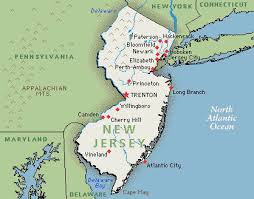
The imposition of tariffs is a key component of the current Trump administration’s trade policies. A corollary of the tariff policies is that the administration is also giving high priority to enforcement of the tariffs. In the latest illustration of the administration’s tariff enforcement approach, the U.S. Attorney’s Office for the District of New Jersey has brought criminal tariff evasion charges against an Indonesian jewelry firm, the company’s founder, and two company employees, based on allegations that the company engaged in a multi-year scheme to evade payment tariffs due on over $1 billion of jewelry and gold the company imported to the U.S. A copy of the November 17, 2025, criminal complaint can be found here. The U.S. Attorney’s Office’s November 17, 2025 press release about the complaint can be found here.Continue Reading U.S. Brings Criminal Tariff Evasion Enforcement Action

The Trump Administration’s tariff policies have unquestionably had an impact on the global economy, as well as on the operations and financial performance of at least some individual companies. However, the overall impact has turned out to be less than economists and other observers feared at the time of President Trump’s “liberation day” announcement earlier this year. As discussed below, a number of factors have contributed to the tariffs’ muted impact. However, there are reasons to be concerned that the full effect of the tariffs is yet to kick in so far but may be felt in 2026, with potential consquences for D&O insurance underwriters. Continue Reading Big AI Investments Have Muted the Tariff Impact. But Will it Continue?