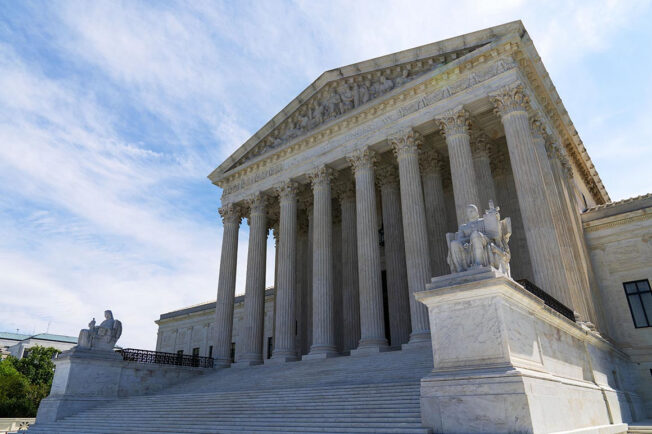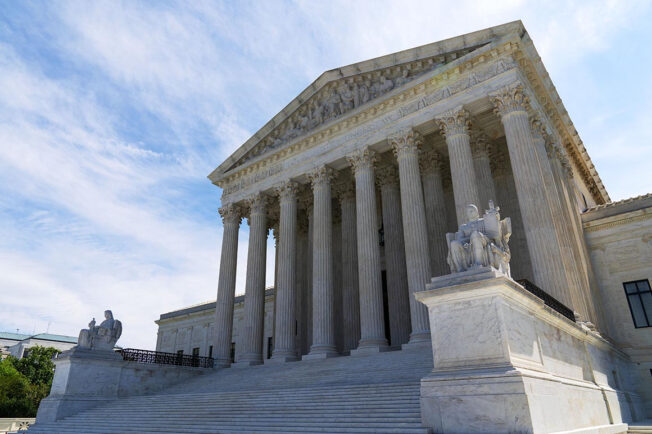
The U.S. Supreme Court only rarely agrees to take up consideration of cases involving securities law issues, so it was a noteworthy event when the Court agreed late last week to take up a case involving the SEC’s enforcement powers. As discussed below, the case involves questions of what the SEC has to prove in order to secure disgorgement from alleged wrongdoers. The Court’s ruling in the case, which is captioned Sripetch v. SEC, will address a split in the Circuit Courts on the question of whether the SEC must prove that investors were harmed by the wrongdoers’ acts in order to obtain disgorgement.Continue Reading Supreme Court Agrees to Consider SEC’s Disgorgement Remedy Rights


In the same
In a terse, unsigned one-sentence April 23, 2019 per curiam opinion, the U.S. States Supreme Court has just one week after oral argument dismissed the grant of certiorari in the case of Emulex Corporation v. Verjabedian as “improvidently granted.” The Court
In a June 21, 2018 decision, the U.S. Supreme Court held that the SEC’s administrative law judges (ALJs) are not merely “employees” but rather are “officers” who must be appointed to their position by the “Heads of Departments” under the Constitution’s Appointments Clause. The Court’s decision at one level represents a rather straightforward application of the Court’s existing case law regarding ALJs. However, the decision raises a number of troublesome issues for the SEC, and leaves a number of other important questions unanswered. The decision also raises a number of questions for other agencies as well. The ultimate questions in the wake of Lucia v. Securities and Exchange Commission may be whether and to what extent the SEC (and even perhaps other agencies) will continue to use administrative processes to pursue enforcement action. The Court’s opinion in the case can be found