In my recent year-end roundup of the top D&O stories of 2025, one key topic I noted was the significance of AI-related corporate and securities litigation during the year. 2026 has only just started, but it already seems likely that AI-related litigation will be an important theme again in the new year, as well. In the latest example of this phenomenon, earlier this week a plaintiff shareholder filed a securities class action lawsuit against AI infrastructure company CoreWeave. As discussed below, there are a number of interesting features to this latest lawsuit. A copy of the January 12, 2026, CoreWeave complaint can be found here.Continue Reading AI Infrastructure Company Hit with AI-Related Securities Suit
There’s lots to worry about as we enter the New Year, not least a newly emboldened and militarily active U.S. There are also things to worry about in the financial markets, even as the various indices trade at or near record levels. Much of the recent run-up in market valuations is due to investor enthusiasm for artificial intelligence (AI). Some commentators worry that the current investor AI enthusiasm may prove to be a bubble – that is, that valuations have gotten out of whack and that infrastructure investment have run far ahead of any possible (or profitable) need. Some (including me) are concerned that things could get messy if investors sour on AI or lose confidence or patience.

One of the possible consequences from an AI bubble burst could be a wave of corporate and securities litigation. A lawsuit filed earlier this week against the start-up AI energy support company Fermi, which just completed an IPO in October, may suggest what post AI-bubble litigation might look like. A copy of the complaint can be found here.Continue Reading Worried About a Possible AI Bubble Burst?

The directors’ and officers’ liability environment is always changing, but 2025 was a particularly eventful year, with important consequences for the D&O insurance marketplace. The past year’s many developments also have significant implications for what may lie ahead in 2026 – and possibly for years to come.  I have set out below the Top Ten D&O Stories of 2025, with a focus on future implications. Please note that on Thursday, January 15, 2026 at 11:00 am EST, my colleagues Marissa Streckfus, Chris Bertola, and I will be conducting a free, hour-long webinar in which we will discuss The Top Ten D&O Stories of 2025. Registration for the webinar can be found here. Please join us for the webinar.Continue Reading The Top Ten D&O Stories of 2025

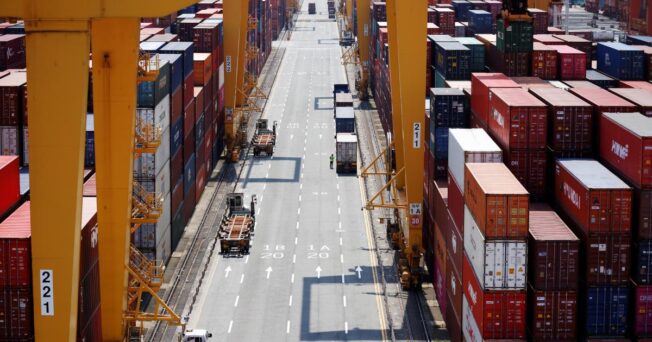
The Trump Administration’s tariff policies have unquestionably had an impact on the global economy, as well as on the operations and financial performance of at least some individual companies. However, the overall impact has turned out to be less than economists and other observers feared at the time of President Trump’s “liberation day” announcement earlier this year. As discussed below, a number of factors have contributed to the tariffs’ muted impact. However, there are reasons to be concerned that the full effect of the tariffs is yet to kick in so far but may be felt in 2026, with potential consquences for D&O insurance underwriters. Continue Reading Big AI Investments Have Muted the Tariff Impact. But Will it Continue?

Sarah Abrams

The incidence of AI-related securities litigation is by this point well-established. But as the laws, regulations, and legal environment relating to AI have continued to evolve, so too has the AI-related litigation risk. In the following guest post, Sarah Abrams, Head of Claims Baleen Specialty, a division of Bowhead Specialty, examines the recent settlement of the securities class action litigation involving Snapchat and considers its potential implicationd for future AI-related litigation risk. I would like to thank Sarah for allowing me to publish her article as a guest post on this site. I welcome guest post submissions from responsible authors on topics of interest to this site’s readers. Please contact me directly if you would like to submit a guest post. Here is Sarah’s article. Continue Reading Guest Post: Will the Snapchat Settlement Become a Benchmark For AI-Related Risk?

AI-related news dominates the business pages these days. Many companies increasingly are adapting their business processes to incorporate AI-related operations, and an growing number of companies are adjusting their business strategies to accommodate AI. While these changes present a host of opportunities, they also involve risks. A securities lawsuit recently filed against the integrated circuit (IC) design software company Synopsys shows how these kinds of AI-related risks can translate into securities litigation. In the complaint, the company is alleged to have understated the additional customization requirements that its customers’ AI-adapted operations would entail. A copy of the October 31, 2025, complaint can be found here.Continue Reading AI-Related Securities Suit Filed Against IC Design Software Firm

It is frequently the case that securities class action lawsuits are accompanied by a parallel shareholder derivative lawsuit involving substantially similar allegations. But what happens to the derivative lawsuits when the related securities class action lawsuit is settled? An August 2025 study from Cornerstone Research analyzes the settlements of these parallel derivative lawsuits during the period 2019 through 2024. The Cornerstone Research report can be found here.Continue Reading Settlement of Parallel Derivative Actions

In my recent write-up about the number of securities class action lawsuit filings in the first half of 2025, I noted that there had been a significant drop off in the number of COVID-19-related securities suit filings in the first six months of 2025 compared to last year. The interesting thing is that though there has been an unmistakable drop off in the number of COVID-related securities suit filings, the fact is that now – even after more than five years since the initial COVID outbreak in the U.S. — new COVID-related securities suits are still being filed. In the latest example, late last month a shareholder filed a securities suit against Petco Health and Wellness, alleging the pet supply company had misleadingly contended that the company’s pandemic-related tailwinds could be sustained post-pandemic. A copy of the new Petco complaint can be found here.Continue Reading Pet Supply Company Hit with COVID-Related Securities Suit

In recent months, a number of companies have been hit with AI-washing securities class action lawsuits alleging that the defendant companies overstated their AI-related capabilities or opportunities (such as, for example, the securities suit filed late last week against Tempus AI, as discussed here). While there have been quite a number of AI-washing related securities suits, I have long though that the larger and longer-term AI-related securities litigation risk is not as much with respect to allegations that companies overstated their AI capabilities, as from allegations that companies understated their AI-related risks.

In a new securities class action lawsuit that reflects these latter kinds of risk, last week a plaintiff shareholder sued online platform Reddit, alleging that the company misled investors by downplaying the impact on the company’s site traffic and ad revenue from Google’s adoption of artificial intelligence search results. As discussed below, these kinds of AI-risk related allegations could represent a potential new area of AI-related securities litigation risk. A copy of the June 18, 2025, complaint against Reddit can be found here.Continue Reading Reddit Downplayed Impact of Google’s AI-Related Changes, Suit Alleges

Among the many executive orders launched at the outset of the current Trump administration was the January 23, 2025 Executive Order that declared the administration’s commitment to maintaining the U.S. at the “forefront of artificial intelligence (AI) innovation.” The Executive Order set out the administration’s commitment to removing policies and directives that “act as barriers to American AI innovation.”

The Executive Order meant a variety of things when it referred to removing barriers, and the statement does at least raise the question about what the administration’s – and in particular, the SEC’s – enforcement approach to AI will be, if the goal is to remove barriers. As discussed below, there are signs to suggest that the administration will continue to monitor and address AI-related misrepresentations, notwithstanding its commitment to removing barriers to AI innovation.  Continue Reading What About AI-Related Enforcement Under the Trump Administration?