
I think we all recognize that the disruptions from the COVID pandemic continue to reverberate through the economy. Many industries and many companies are still trying to get back to equilibrium. The pandemic continues to impact companies, their operations, and their financial results. A new lawsuit filed against the sporting goods retailer Dick’s Sporting Goods(DSG)  illustrates how the pandemic-related factors continue to affect companies and translate into securities litigation. DSG was one of the companies that prospered at the outset of the pandemic; when conditions normalized, the company claimed it would be able to keep the positive momentum going. However, after the company announced disappointing results, its share price declined, and now a shareholder plaintiff has filed a securities class action lawsuit, in the latest in a series of COVID-related securities suits. A copy of the February 16, 2024, lawsuit against the company can be found here.

Continue Reading COVID-Related Results Lead to Securities Suit    
One of the perennial D&O insurance coverage issues is the question of whether two or more claims are or are not interrelated. Under the operation of provisions typically found in most D&O insurance policies, if two or more claims are interrelated within the meaning of the policy, they are deemed to be a single claim first made when the first of the claims was filed. This seemingly technical determination can have important implications for the determination of which of the two potentially related insurance programs applies to a claim.

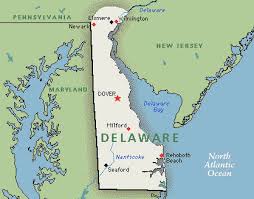
These recurring issues arose in connection with a dispute over which of two potentially applicable D&O insurance programs apply to the securities class action lawsuit filed against Alexion Pharmaceuticals. Insurers in the different towers argued over whether an earlier SEC subpoena, issued to Alexion during an earlier policy period, was related to the later securities suit, which was filed during a later period. In an interesting February 15, 2024, opinion (here), Delaware Superior Court Judge Paul R. Wallace, applying Delaware law, held that, despite some overlap, the subpoena and the securities suit were not related.

Continue Reading Prior SEC Subpoena and Later Securities Suit Held Not to Be Related

Readers undoubtedly are aware that late last week the judge presiding over the New York civil fraud trial against Donald Trump, the Trump Organization and related entities, and various Organization’s executives (including two of Trump’s sons) entered a post-trial verdict against the defendants that, together with pre-judgment interest, exceeds $450 million in value. In making the award, the judge concluded that Trump and the other defendants had fraudulently misrepresented the Organization’s and Trump’s financial condition to banks, insurance companies, and public officials. Of interest to readers of this blog, among the allegedly fraudulent acts was the procurement of D&O insurance, as well as surety insurance, through alleged misrepresentations. As discussed below, there are several interesting things about the insurance part of the court’s verdict. A copy of the February 16, 2024, Decision and Order of New York (New York County) Supreme Court Justice Arthur F. Engoron can be found here.

Continue Reading The Insurance Part of the Massive Trump Civil Fraud Verdict
Priya Huskins

On January 30, 2024, Delaware Chancellor Kathaleen McCormick issued a 200-page post-trial opinion voiding the $55 billion compensation package that the Tesla board had approved for the company’s CEO, Elon Musk. In the following guest post, Priya Huskins, Esq., Senior Vice President at Woodruff Sawyer, takes a detailed look at Chancellor McCormick’s opinion and considers the opinion’s practical implications. A version of this article was previously published in the D&O Notebook. I would like to thank Priya for allowing me to publish her article as a guest post on this site. I welcome guest post submissions from responsible authors on topics of interest to this blog’s readers. Please contact me directly if you would like to submit a guest post. Here is Priya’s article.

Continue Reading Guest Post: Lessons from the Rescission of Elon Musk’s $55.8B Option Grant

The D&O Diary was on the road again this week, albeit this time for domestic travels only. The main event this week was a stop in Nashville to attend Arch Insurance’s Executive Assurance Division’s 2024 Offsite Meeting. At least by contrast to some of my recent international travel, this was a quick trip; because it was such a quick trip, I didn’t get a chance to see much of Nashville itself, but the trip was still a lot of fun.

Continue Reading Nashville

A frequently recurring insurance claims handling challenge is the problem of “too many insureds, not enough insurance.” Different insureds can have competing and even incompatible interest in the limited insurance funds. As a recent insurance coverage dispute in the Southern District of New York showed, these problems are magnified when the competing insureds also have conflicting interests in the underlying claim. Judge Jennifer Rochon’s February 8, 2024, opinion rejecting one insured’s attempt to block the competing demands to the insurance proceeds of another insured can be found here. Paul Curley’s February 11, 2024 LinkedIn post about the decision can be found here.

Continue Reading One Insured Can’t Block Insurance for Another Insured’s Settlement Based on Consent Clause
Dan Aronowitz

Many of you may have seen the February 5, 2024 Wall Street Journal article (here) describing the new lawsuit filed against Johnson & Johnson accusing the company of mismanaging its workers’ prescription-drug benefits. The new complaint, a copy of which can be found here, arguably represents a new direction in ERISA liability litigation, perhaps the next big thing after all of the ERISA excess fee litigation. In the following guest post, Dan Aronowitz, President of Encore [formerly Euclid] Fiduciary, examines the new lawsuit and assesses what it may represent. He also considers the company’s defenses as well as the need for a vigorous response to lawsuits of this kind. A version of this article previously was published on the Fid Guru Blog. I would like to thank Dan for allowing me to publish his article on this site. I welcome guest post submissions from responsible authors on topics of interest to this site’s readers. Please contact me directly if you would like to submit a guest post. Here is Dan’s article.

Continue Reading Guest Post: Flipping the Script on the New Excess Health Plan Fee Case Against Johnson & Johnson
Tower of London

The D&O Diary’s European Sojourn finished up last week with a return visit to London. I returned to London in order to attend an event postponed from the week before. Although the postponement required me to extend my travels for a few more days, it did also mean that I got a bonus day in London, as reflected in the pictures below.

Continue Reading Back in London
Palais du Luxembourg

The D&O Diary’s European assignment continued last week with a long weekend stopover in the French capital city of Paris. February is not the month usually associated with the French city’s romantic image, but the weather was not too bad and it turned out to be a fine time for a visit.

There were two primary purposes for our visit. The first was to attend the Van Gogh exhibit at the Musée d’Orsay and the second was to attend the Opera at the Théâtre des Champs-Élysées on Friday evening. Both events far exceeded expectations.

The Van Gogh exhibit was extraordinarily well done. The exhibit concentrated on the artist’s works completed in what turned out to be his final weeks, while he was living in Auvers-sur-Oise. The exhibition showed a keen appreciation of the artist’s struggles and helped highlight how his artistic work reflected his difficulties.
The Musée d’Orsay occupies a grand formal rail station building on the left bank of the Seine. The building itself is quite interesting and ornate. (If you look closely through the clock in this picture, you can see La Louvre across the river.)
The Opera at the Théâtre des Champs-Élysées on Friday evening was a great experience. We were fortunate to see a truly brilliant performance of Handel’s Opera, Rinaldo. We appreciated the show all the more because the week before we had just visited Handel’s house in London (where Handel lived when he wrote the opera).
After the Opera, we walked across the river to catch our train back to our hotel, and we were treated to a nighttime light show at the Eiffel Tower.

Our Paris tour also included visits to several lesser-know museums in the city. For example, on the recommendation of a work colleague, we visited the Musée National de la Marine, which is located in the Palais de Chaillot, across the river from the Eiffel Tower.

We really enjoyed the Maritime museum. Many of the exhibits are interactive and the displays are quite interesting. We wound up staying much longer at the museum than we had planned.
The other great thing about the Maritime Museum is that it is located just across the river from the Eiffel Tower, and we were fortunate that on the day we visited the overcast skies cleared and we were afforded great views of the Tower and of the city beyond. We wound up having a picnic lunch on the steps overlooking the tower, which was something we weren’t expecting at all in February.

We also went to several smaller art museums throughout the city. Among Paris’s many great treasures are these numerous small little jewel box museums, many of which are full of unexpected delights.

The Musée Cognacq-Jay in the Marais preserves the private collection of Théodore-Ernest Cognacq and Marie-Louise Jaÿ, the founder of La Samaritaine department store and his wife. The museum has a particularly fine collection of paintings from the eras of Louis XV and Louis XVI, as well as period furniture and decorative art.
The Musée de la Vie Romantique, which is located in the 9th arrondissement at the foot of Montmartre, preserves the former home of the Dutch-born painter, Ary Scheffer. His home was the Parisian gathering-spot for the prominent artists and writers in the 1830s, including George Sand, Frédéric Chopin, Eugène Delacroix, and many others. The Museum preserves the paintings and drawings of many visitors who came to the house. It is a really interesting little museum.
The Musée de Montmartre is located in a preserved house that served as the residence and studio for a number of artists in the late 19th and early 20th century, including Pierre-Auguste Renoir, Suzanne Valadon, her son Maurice Utrillo, and numerous others. The museum and its grounds preserve a substantial slice of older Montmartre, and the many paintings in the museum’s collection preserve a record of a certain time and place. Of all the hidden jewels we discovered on this trip, this museum might have been the one we enjoyed the most. I would highly recommend this to anyone interested in Montmartre’s artistic history.

The only bad part about visiting Paris is that eventually you have to leave — in my case, to go back to London for the event that had been postponed from the week before. But we did establish, as if there were any doubt, that even in February, Paris is still Paris.

The early morning scene at the Gare du Nord, where I caught the Eurostar train back to London.

In what is apparently the largest privacy and cybersecurity-related securities class action lawsuit settlement ever, the parties to the Alphabet Google+ user data securities suit have agreed to settle the action for $350 million. As discussed below, this massive settlement, which is subject to court approval, is significant for a number of important reasons. A copy of the parties’ February 5, 2024, Stipulation of Settlement can be found here. The plaintiffs’ February 5, 2024, motion for preliminary settlement approval can be found here.

Continue Reading Alphabet Google+ User Data Privacy-Related Securities Suit Settles for $350 Million