As I discussed in a recent post (here), in a June 11, 2013 opinion, the New York Court of Appeals held that J.P Morgan (which had acquired Bear Stearns) is not barred from seeking insurance coverage for a $160 million portion of an SEC enforcement action settlement labeled as “disgorgement,” where Bear Stearns’ customers rather than Bear Stearns itself profited from the alleged misconduct. The Court of Appeals opinion can be found here.


In the following guest post, Peter Gillon of the Pillsbury law firm offers his views about the Court of Appeals opinion in the J.P Morgan case, as well as about the decision’s implications. Readers are encouraged to add their comments on Peter’s guest post using the comment feature in this blog’s right hand column. I would like to thank Peter for his willingness to publish his article on this site. I welcome guest posts from responsible commentators on topics of interest to this site’s readers. Please contact me directly if you are interested in publishing a guest post. Here is Peter’s guest post:


In a case closely watched by industry observers, the New York Court of Appeals, in J.P. Morgan Securities v. Vigilant Insurance Company, No. 113 (NY, June 13, 2013), issued an important ruling in the field of Directors & Officers Liability Insurance, curtailing to some extent insurers’ ability to use a phantom exclusion to deny coverage. Insurers increasingly have argued that their policies do not cover damages that can be characterized as restitutionary in nature, even where the policy may be silent on the issue. The contention is based on two theories: (1) that notwithstanding contract language providing coverage, the policy is unenforceable in that respect because in some states coverage for damages in the form of restitution (or disgorgement of ill-gotten gains) is unenforceable as a matter of public policy; and (2) from an economic standpoint, when a policyholder returns monies it has obtained improperly, there is no basis for coverage because the policyholder has not incurred any “Loss.”


The New York high court called foul on this encroachment on policyholders’ contractual rights, holding that policyholder Bear Stearns was entitled to pursue its claim to coverage for a $160 million payment incurred as a result of settlement of an SEC enforcement proceeding, even though the agreement expressly characterized the payment as “disgorgement.” As the Court made clear, there is no public policy in the State of New York barring coverage for restitution or disgorgement; and the limited public policy exception to the enforceability of contracts for “intentionally harmful conduct” could not be sustained by insurers on the record before the court. (Slip Op. at 9-11). More important to policyholders, the Court also held that the bulk of the payment characterized in the settlement agreement as “disgorgement” was actually compensation for profits improperly received by Bear Stearns’ hedge fund customers, not the result of gain by Bear Stearns. Given that the “policy rationale for precluding indemnity for disgorgement – to prevent the unjust enrichment of the insured by allowing it to, in effect, retain the ill-gotten gains by transferring the loss to its carrier,” was not implicated because Bear Stearns was “not pursuing recoupment for the turnover of its own improperly acquired profits,” the Court denied insurers’ motion to dismiss. As Justice Smith put it during oral argument before the appellate court, “how can you disgorge something that you haven’t ‘gorged’?”


The ruling is critically important in that it curtails the use of the unwritten “restitution defense” by D&O insurers subject to New York law, unless the restitution payments at issue corresponded to benefits actually received by the insured. Under this test, the restitution defense would not apply to any claim, such as a claim for breach of fiduciary duties by directors or officers, where the individuals did not receive the benefit of a distribution or other transaction. Likewise, this matching test should limit use of the restitution defense in response to Side B claims (reimbursing a company for amounts paid as indemnity to individual directors or officers), where the company has paid restitution to a third party, but individual directors or officers did not actually benefit from the funds being disgorged.


Left unaddressed by the New York court, however, is one of the nagging issues in this area: whether the restitution defense requires the insurer to prove not only that the insured was the actual beneficiary of the amount being disgorged, but also that the gains were “ill-gotten.” In many cases, the recipient actually earned the amounts being disgorged, lawfully and properly, but is required to turn over its gains for technical legal reasons, regardless of fault. This may occur in a fraudulent transfer action brought by a bankruptcy trustee under Section 548 of the Bankruptcy Code (allowing avoidance of certain types of payments, such as severance payments to executives, made by an insolvent company less than two years prior to the bankruptcy petition date, in return for less than reasonably equivalent value). At least one court has held that in a fraudulent transfer action brought by a debtor company’s bankruptcy trustee against the company’s former CEO, the employee severance payment the CEO was ordered to disgorge did not constitute “Loss” within the meaning of the D&O policy. In re Transtexas Gas Corp., 597 F.3d 298, 310 (5th Cir. 2010)(“Payments fraudulent as to creditors that must therefore be repaid due to bankruptcy court order [are] a disgorgement of ill-gotten gains and a restitutionary payment.”). Other courts have rejected such an approach as an overbroad application of vague notions of public policy. In Federal Ins. Co. v. Continental Casualty Co., 2006 WL 3386625 (W.D. Pa. Nov. 22, 2006), a case arising from an action to recover alleged fraudulent transfers to former directors and officers under the Bankruptcy Code, the court refused to find that public policy rendered the preferential transfers uninsurable under state law. The court recognized that because liability in a fraudulent transfer action is strict, without regard to fault, “allowing the insured to collect under its insurance policy would not encourage others to intentionally engage in unlawful activity with the purpose of reaping a benefit from such activity through its insurance.” Id. at 23. The court observed that the insurance company already had a safeguard in place to prevent the insureds from reaping a windfall, namely, the Illegal Profit Exclusion. Id. Thus the court properly refused to second guess an expressly stated term of the policy based on public policy arguments. 


In light of the J.P. Morgan ruling, insurers and insureds alike are well advised to take a fresh look at their policy wordings. The expanding use of the restitution defense, and the inherent difficulty in applying policy language to contractual terms such as restitution and disgorgement, strongly suggest that policyholders should demand clearer policy language. On the negative side, a few policies now expressly exclude restitution and disgorgement from the definition of Loss, without defining those terms. Some policies are silent and some exclude from Loss any damages that are uninsurable as a matter of state law. From a policyholder’s standpoint, it makes good sense to insist on coverage for restitution/disgorgement to the fullest extent insurable under the law, absent final adjudication that the disgorgement was to remedy illegal profit or criminal conduct. Even in the unlikely event that a state’s “public policy” would prohibit enforcement of such contracts, an insurer can surely stipulate in its policy that it will not assert that restitutionary damages are uninsurable unless there is a final adjudication of illegal profit or conduct. It is already widely accepted wording in almost every D&O policy (usually in the definition of “Loss”) that the insurer will not assert that (restitutionary) damages imposed under Sections 11 or 13 of the Securities Act are uninsurable as a matter of law; so this recommendation is in no way a “stretch.” Given the decade of litigation over these issues, for insurers to continue to assert this phantom exclusion instead of setting forth a clear statement in their policies is the real violation of public policy.


© Peter M. Gillon 2013
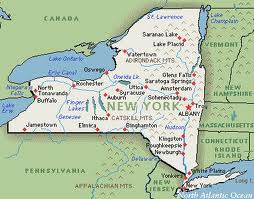
nystateAn insurer that breached its duty to defend may not later rely on policy exclusions to escape its duty to indemnify the insured for a judgment against him, according to a June 11, 2013 decision from the New York Court of Appeals. The Court of Appeals opinion can be found here.


A legal malpractice insurer had disclaimed a defense duty under its policy and a default judgment was entered against its insured. When the judgment creditor sought to enforce the judgment against the insurer, the insurer asserted coverage defenses based on policy exclusions other than it asserted in disclaiming its defense duty. The Court of Appeals ruled that the insurer that had denied its duty to defend could litigate only the validity of its disclaimer and could not rely on other policy exclusions to dispute its indemnification obligations.


Background

Goldan, LLC borrowed $2.83 million from two other companies. The loans were to be secured by mortgages. Goldan defaulted on the loans. The lenders then learned that the mortgages had not been recorded. The lenders sued Goldan and two of its principles, Mark Goldman and Jeffrey Daniels. The plaintiffs asserted a claim against Daniels for legal malpractice, alleging that Daniels had acted as the plaintiffs’ attorney with respect to the loan and that his failure to record the mortgages was “a departure from good and accepted legal practice.”


Daniels notified his legal malpractice carrier of the claim, which refused to provide either a defense or indemnity, stating that the allegations against Daniels “are not based on the rendering or failing to render legal services for others.”


The plaintiffs made a $450,000 settlement demand on Daniels (an amount well below the malpractice policy’s $2 million policy limit), which Daniels transmitted to the insurer. The insurer rejected the demand on the same ground on which it had denied coverage. Daniels then defaulted on the underlying claim and the plaintiffs obtained a default judgment against him in excess of the policy limit. Daniels assigned his rights under the malpractice policy to the plaintiffs, who then filed suit against the insurer for breach of contract and bad faith.


The insurer moved for summary judgment in reliance on two policy exclusions, the “insured’s status” exclusion (which precludes coverage for claims against an insured in his capacity as an officer, director or employee of a business enterprise) and on the “business enterprise” exclusion (precluding coverage for claims based on acts or omissions by any insured for any business enterprise in which the insured has a controlling interest). The plaintiffs cross-moved for summary judgment.


The trial court granted summary judgment for the plaintiffs on the breach of contract action, but granted the insurer’s motion for summary judgment on the bad faith claim. The intermediate court affirmed both rulings; the appellate court affirmed the breach of contract ruling on the grounds that the policy exclusions on which the insurer sought to rely were inapplicable. Two intermediate appellate judges dissented, arguing that there was an issue of fact whether the exclusions applied. The parties cross-appealed.


The June 11 Opinion

In a ten-page opinion written by Judge Robert S. Smith for a unanimous court, the Court of Appeals affirmed as to both claims, although with respect to the breach of contract issue, the Court of Appeals affirmed on different grounds than relied upon by the intermediate appellate court. The Court of Appeals did not reach the question of whether or not the exclusions on which the insurer relied precluded coverage here. Instead, the Court of Appeals held that when a liability insurer has breached its duty to defend its insured, the insurer may not later rely on policy exclusions to escape its duty to indemnify the insured for a judgment against him.


The Court of Appeals first confirmed that the insurer had a duty to defend the underlying claim. The Court of Appeals noted that the plaintiffs’ claim against Daniels “unmistakably pleads a claim for legal malpractice.” The allegations that Daniels had acted as the plaintiffs’ lawyers in the loan transaction were “unusual” and may even have been “groundless,” but that “does not allow” the insurer “to escape its duty to defend.” It might have been different “if the claim were collusive,” but the insurer did not assert collusion.


The Court then went on to hold that, having breached its duty to defend, the insurer could not rely on other grounds to contest a duty to indemnify its insured. The Court said that “an insurance company that has disclaimed its duty to defend may litigate only the validity of its disclaimer.” If, the Court said, “the disclaimer is found bad, the insurance company must indemnify its insured for the resulting judgment, even if policy exclusions would otherwise have negated the duty to indemnify.”


The Court justified this rule by saying that it “will give insurers an incentive to defend the cases they are bound by law to defend, and thus to give insureds the full benefit of their bargain.” The Court added that “it would be unfair to insureds, and would promote unnecessary and wasteful litigation, if an insurer, having wrongfully abandoned its insured’s defense, could then require the insured to litigate the effect of policy exclusions on the duty to indemnify.”


The Court did allow that “perhaps there are exceptions” to this rule. The Court noted that perhaps an insurer should not be barred from asserting that its insured injured the plaintiff intentionally. However, the Court noted, “no such public policy argument is available to [the insurer[ here.” Here, the insurer “having chosen to breach its duty to defend, cannot rely on policy exclusions to escape its duty to indemnify.”


Finally, the Court affirmed the lower court’s dismissal of the plaintiffs’ bad faith claims. Although the plaintiffs alleged that the insurer had failed to settle the underlying claim, the Court of Appeals noted that their claim was really not for a bad faith failure to settle, but for a bad faith failure to defend. The Court of Appeals said that “we need not decide …whether such an allegation could ever support a claim for damages in excess of the policy limit,” as “such a claim would require the insured to show, at a minimum, that the judgment against him would not have been entered if the insurer had defended the case,” which had not been alleged here.


Discussion

At the heart of the Court of Appeals decision seems to be a view that this insurer should have defended its insured.  The Court of Appeals clearly did not even consider the defense duty to be a close question. The underlying claims may have been both odd and groundless, but the insurer still had the obligation to defend its insured. (Not only that, but it seems pretty clear that the insurer would have been way better off if it had just defended its insured.) 


At first blush, this seems like a very adverse decision for insurers. But closer review suggests a reading that is a little less threatening for the insurers. One possible message from the Court of Appeals ruling is that this insurer was simply too terse when it denied it had an obligation to defend; it does seem that if the insurer had cited all of the alternative grounds on which it eventually sought to rely, it would have been able to rely on those grounds in contesting coverage. Certainly, going forward, any insurer denying the duty to defend under a liability insurance contract to which New York law applies will want to comprehensively state the basis on which it is denying a defense duty.


On the other hand, even if the insurer here had provided a more comprehensive basis for its rejection of the duty to defend, and thus preserved its right to rely on the two policy exclusions, it likely wouldn’t have helped the insurer in the end. A majority of the judges at the intermediate appellate court – the only court to consider the applicability of the exclusions on which the insurer sought to rely – concluded that the exclusions did not apply. Even though two judges dissented, the message seems to be that the insurer lacked a basis to disclaim a duty to defend. And so, again, the main message from this case seems to be that insurers should be very wary of disclaiming the duty to defend (rather than any arguable alternative message about taking greater care and being more comprehensive when disclaiming a defense duty).


Even if insurers consider the rule the Court of Appeals enunciated here to be harsh, the Court did provide one (small) escape hatch. The Court did acknowledge that there could be public policy exceptions to the preclusive rule it defined in this case. How broad this public policy exception might prove to be is unclear. However, I suspect there will be a host of cases in the future in which this exception will be better defined.


In a June 13, 2013 post on its Insurance Law Blog (here), a memo from the Traut Lieberman law firm states that the Court of Appeals decision “announced a new rule,” and that previously “New York courts at both the state and federal level consistently rejected the notion that by having breached a duty to defend, an insurer is estopped from relying on coverage defenses for the purposes of contesting an indemnity obligation.” The Court of Appeals decision “departs from this long-established jurisprudence.”


FDIC Launches Another Failed Bank Lawsuit: On June 10, 2013, the FDIC as receiver for the failed Sun American Bank of Boca Raton, Florida, filed a lawsuit in the Southern District of Florida against seven former directors and officer of the bank. The FDIC’s complaint can be found here. The bank failed on March 5, 2010, well over three years ago, suggesting that the parties had previously reached some type of tolling agreement. The FDIC asserts claims against the defendants for negligence and gross negligence. The FDIC alleges that the defendants failed to use safe and sound banking practices and failed to adhere to prudent underwriting practices in approving a total of seven loans.


According to news reports about the FDIC’s lawsuit against the former bank directors and officers, this latest suit represents the seventh that the agency has filed in connection with a failed Florida bank. The FDIC has now filed a total of 66 lawsuits against former directors and officers of banks that failed during the current bank failure wave, including 22 so far during 2013.


Is it possible that we seen the last of “Say-On-Pay” lawsuits? Or are we just awaiting the next round of post-Dodd Frank executive compensation-related litigation? Those are the questions asked in a June 12, 2013 memorandum entitled “Has Another Wave of ‘Say-On-Pay’ Litigation Come to an End?” (here) by Nicholas Even of the Haynes and Boone law firm. Whatever may lie ahead, the latest round of Say-On-Pay litigation seems to have come to a close.


First, a little background. One of the changes introduced in Dodd-Frank’s many provisions was a requirement that reporting companies hold a periodic shareholder vote on executive compensation. Even though the vote was, by the Act’s terms, to be purely advisory, and even though the Act expressly stated that the shareholder vote “may not be construed” to “create or imply any change to the fiduciary duties of such issuer or board of directors” or to “create or imply any additional fiduciary duties for such issuer or board of directors,” shareholder plaintiffs (and their attorneys) sought to pursue breach of fiduciary duty lawsuits against companies whose shareholder votes resulted in a “no” vote on executive compensation issues.


These “first wave” say-on-pay lawsuits, mostly filed in 2011, proved to be unsuccessful. So in 2012, the shareholder plaintiffs tried a different approach. Borrowing a page from the M&A-related litigation play book, the shareholder plaintiffs (largely represented by a single law firm) filed lawsuits seeking to enjoin the annual meeting unless the company made additional compensation related disclosures. Ultimately, more than 20 of these “new wave’ say on pay lawsuits were filed.


The second wave of say on pay lawsuits proved largely unsuccessful as well. As outlined in the law firm’s memo, there were two injunctions issued and those cases were quickly settled. Several other companies chose to settle by issuing supplemental disclosures. Generally, in the other cases, the courts denied the injunctive relief and/or dismissed the cases. (Refer here for further discussion of these issues.)


As the 2013 proxy season began, there was significant concern that there would be further waves of executive compensation-related litigation. As the law firm memo notes, a number of companies were put on notice that they were under “investigation” over compensation related issues. But a funny thing has happened. According to the law firm memo, “no injunctive lawsuits materialized, either challenging the say-on-pay or equity incentive plans.”  Specifically, “no companies appear to have been targeted for say-on-pay injunctive suits in advance of annual meetings during the 2013 proxy season.”


The law firm memo’s author speculates that the reason for the absence of litigation could be that “the attorneys previously responsible for these suits have simply turned their attention to different issues or have become distracted with other matters.” It could also be that after the many denials of injunctive relief in the 2012 say-on-pay cases, the plaintiffs’ counsel “discovered that the threat of injunctive action has lost its in terrorem effect.”


Whatever the reason, the “latest attempt to refashion Dodd-Frank’s say on pay requirement into an annual litigation phenomenon appears to have waned.” Nevertheless, even if the immediate injunctive threat has “diminished,” it remains that “the combination of Dodd-Frank, executive compensation, and annual meetings remains fertile ground for potential shareholder action.” The law firm memo’s author concludes with the question whether “a ‘third wave’ of say-on-pay litigation” is “inevitable?”


Among its many provisions, the Dodd-Frank created a new Federal Insurance Office within the U.S. Department of Treasury. The Act requires the FIO’s Director to provide a report each year to the President and to Congress “on the insurance industry and any other information deemed relevant by the Director or requested [by a Congressional] Committee.” The initial report was due in January 2012; like many of the regulatory actions required under the Dodd-Frank Act, the initial report was delayed. However, on June 12, 2013, the FIO finally released its first report, which can be found here. The Treasury Department’s June 12, 2013 press release about the report can be found here.


Though the report weighs in at a slim 53 pages (including endnotes), the report covers a lot of ground. It not only provides a financial overview of the U.S. insurance industry, but it also reviews, from the perspective of the U.S. insurance industry, the efforts that have been undertaken in the wake of the financial crisis to try to improve financial stability.


Among other things, the report notes that the U.S. insurance industry’s aggregate 2012  premiums totaled more than $1.1 trillion, or about 7 percent of U.S. gross domestic product. The industry directly employs 2.3 million people or 1.7 percent of the country’s nonfarm payrolls. (Those employment figures do not include the additional 2.3 million licensed insurance agents and brokers). The U.S. insurance industry also reports total assets of $7.3 trillion, of which $6.8 trillion represents invested assets.


The industry has shown recovery and improvement since the financial crisis. Both the Life and Health and the Property and Casualty sectors reported improved profitability in 2012. Moreover, at year-end 2012, reported surplus levels were at record highs for both the Life and Health and for the Property and Casualty sectors. At year end, the Life & Health sector reported surplus of about $329 billion and the Property and Casualty Sector reported surplus of about $597 billion.


Amidst all of these positive developments there are also some challenges – particularly the interest rate environment and the level of natural catastrophes.


 As the report notes, “despite near record net investment income in 2012, insurers’ investment yields remained low as a percentage of invested assets.” The low interest rates pose a “challenge for insurers seeking to balance investment risk and return.” The low interest rate environment poses a particular challenge for life insurers offering annuities with guaranteed benefits. The low interest rates also affects the present value of insurer contract obligations, particularly those of life insurers; as interest rates have decreased, the present value of future obligations have increased.


But though increased interest rates would produce improved investment returns, a sudden increase would involve other threats. Were interest rates to increase suddenly, interest rate levels would increase unrealized losses in insurer fixed income portfolios and could also prompt policyholders of interest bearing contracts to surrender the contracts for higher yield elsewhere.


Natural catastrophes also continue to pose a significant challenge to insurers. 2011 was the second costliest year on record for natural catastrophes in the United States, with insured losses estimated to be about $44.2 billion (the most significant losses were during 2005, the year of Hurricane Katrina and other hurricanes). The estimate for catastrophic losses during 2012 is about $43 billion, only slightly below 2011.


The body of the report contains several other items of interest, including several tables listing the largest insurers (by premium volume) within various industry sectors. The report also includes detailed financial information divided by sector, including aggregate information on the various sectors’ annual underwriting results. Among other things, the underwriting results information shows that during the catastrophe-driven years of 2011 and 2012, the Property and Casualty sector experienced underwriting losses. (The P&C industry combined ratio for 2011 was 108.3 and for 2012 was 103.3.)


My own observation about the interest rate environment is that it is directly affecting insurers’ underwriting behavior. Ordinarily, the expectation at a time when insurers are reporting record levels of surplus would be that there would be a great deal of competition in the marketplace, particularly on price. However, because the low interest rate environment means that investment income is under pressure, the insurers are forced to try to make their calendar year profitability from their underwriting operations. In order to try to produce an underwriting profit, the insurers are under pressure to try to increase pricing. The end result for insurance buyers is that they are facing pricing increases – particularly in the commercial insurance arena, where catastrophic losses in the P&C sector have meant consecutive years of underwriting losses.  


Natural catastrophes have been part of life throughout history. But as insured values increase and possibly as climate change produces more extreme weather events, the human (and therefore the insurance) impact from catastrophes has increased. It is far too early to tell how this year will turn out from a catastrophe perspective, but with the recent tornadoes in Oklahoma and with the Hurricane season just underway, we all have reason to be watchful and wary.


More About Insurance Coverage for Cyber Breaches: In a recent two-part series, Roberta D. Anderson of the K&L Gates law firm reviews the availability of insurance coverage to protect against losses arising from cyber breaches. The two installments can be found here and here.


The first installment provides background regarding the exposure and reviews the limitations associated with trying to obtain insurance coverage for cyber breaches under Commercial General Liability policies. The second installment goes on to discuss the limitations associated with trying to obtain insurance coverage for cyber breaches under property policies and other traditional insurance policies. The second installment then goes on to discuss the advent and development of purpose built cyber policies in the insurance marketplace. The article describes the first-party and third-party protection available under the cyber policies and the specific ways that the policies are designed to respond to various types of cyber incidents. The article reviews and compares various policies’ specific terms and conditions.


The two articles provide a quick but comprehensive overview of this emerging area of liability and insurance.


In a June 11, 2013 opinion, the New York Court of Appeals held that Bear Stearns is not barred from seeking insurance coverage for a $160 million portion of an SEC enforcement action settlement labeled as “disgorgement,” where Bear Stearns’ customers rather than Bear Stearns itself profited from alleged misconduct.  The Court’s opinion reversed the ruling of an intermediate appellate court which had held that Bear Stearns could not seek insurance coverage for the settlement amount labeled as “disgorgement.” The opinion of the Court of Appeals can be found here.


Background

In 2006, the SEC notified Bear Stearns that the agency was investigating late trading and market timing activities units of Bear Stearns had undertaken for the benefit of clients of the company. The agency advised the company that it intended to seek injunctive relief and monetary sanctions of $720 million.


Bear Stearns ultimately made an offer of settlement and –without admitting or denying the agency “findings” – consented to the SEC’s entry of an Administrative Order, in which, among other things, Bear Stearns agree to pay a total of $215 million, of which $160 million was labeled “disgorgement” and $90 million as a penalty.


At the relevant time, Bear maintained a program of insurance that, according to the subsequent complaint, totaled $200 million. Bear Stearns sought to have the carriers in the program indemnify the company for the SEC settlement. However, the carriers claimed that because the $160 million payment was labeled “disgorgement” in the Administrative Order, it did not represent a covered loss under the insurance policies.


In 2009, J.P. Morgan (into which Bear Stearns merged in 2008) filed an action seeking a judicial declaration that the insurers were obliged to indemnify the company for the amount of the $160 million payment in excess of the $10 million self insured retention. The company argued that notwithstanding the Administrative Order’s reference to the amount as “disgorgement,” its payment to resolve the SEC investigation constituted compensatory damages and therefore represented a covered loss under the insurance program. The carriers moved to dismiss the company’s declaratory judgment action.


In a September 14, 2010 order (here), New York (New York County) Supreme Court Charles E. Ramos denied the carriers’ motion to dismiss. He held that the Administrative Order’s use of the term “disgorgement” did not conclusively establish that the settlement amounts were precluded from coverage.


In reaching this conclusion, he noted that the Administrative Order “does not contain an explicit finding that Bear Stearns directly obtained ill-gotten gains or profited by facilitating these trading practices,” and he found that the provision of the Order alone “do not establish as a matter of law that Bear Stearns seeks coverage for losses that include the disgorgement of improperly acquired funds." Judge Ramos rejected the insurers’ argument that they were entitled to dismissal.


As discussed here, in a December 13, 2011 opinion (here), the N.Y. Supreme Court, Appellate Division, First Department, reversed the lower court’s holding, granted the motions to dismiss and directed the entry of judgment in favor of the insurers. The appellate court concluded that the “SEC Order required disgorgement of funds gained through that illegal activity,” and that “the fact that the SEC did not itemize how it reached the agreed upon disgorgement figure does not raise an issue as to whether the disgorgement payment was in fact compensatory.”


The intermediate appellate court  further noted that in generating revenue of at least $16.9 million, “Bear Stearns knowingly and affirmatively facilitated an illegal scheme which generated hundreds of millions of dollars for collaborating parties and agreed to disgorge $160,000,000 in its offer of settlement.”  Bear Stearns appealed the intermediate appellate court’s ruling.


The June 11 Court of Appeals Decision

In a June 11 opinion written by Judge Victoria Graffeo for a unanimous court, the Court of Appeals reversed the intermediate appellate court and reinstated Bear Stearns’  complaint.


The insurers had argued that coverage for the “disgorgement” amount was precluded on two different coverage ground; first, that public policy prohibits insurance when an insured has engaged in conduct “with the intent to cause injury;” and second, that public policy prohibits insurance for disgorgement amounts.


The Court of Appeals first rejected the intentional injury argument, holding that though the SEC’s order recited that Bear Stearns has willfully violated federal securities laws, the Court of Appeals could not conclude that the public policy coverage preclusion applied. The SEC order, “while undoubtedly finding Bear Stearns’ numerous securities law violations to be willful, does not conclusively demonstrate that Bear Stearns also had the requisite intent to case harm.”


The Court of Appeals also rejected the insurers’ argument that public policy prohibits insurance for the “disgorgement” amounts. The Court of Appeals found that the SEC Order “does not establish that the $160 disgorgement payment was predicated on moneys that Bear Stearns itself improperly earned.” Rather, the order recites that Bear Stearns’ misconduct allowed its customers to profit.


The Court of Appeals found that the cases on which the insurers sought to rely in arguing that insurance coverage is precluded for disgorgement amounts linked the disgorgement payment to improperly acquired funds in the hands of the insured. The cases, the Court of Appeals said, “directly implicated the public policy rationale for precluding indemnity – to prevent the unjust enrichment of the insured by allowing it to, in effect retain the ill-gotten gains by transferring the loss to its carrier.” In this case, the Court said, “Bear Stearns alleges that it is not pursuing recoupment for the turnover of its own improperly acquired profits and, therefore, it would not be unjustly enriched by securing indemnity.”


The carriers, the Court of Appeals said, had not identified a single case where coverage was prohibited when the disgorgement payment was, at least according to Bear Stearns’ allegations, linked to gains that went to others.


The Court of Appeals also rejected the insurers’ argument that the improper profit exclusion precluded coverage for Bear Stearns’ claims. The Court said that because Bear Stearns alleged that its misconduct profited others, not itself, “the exclusion does not defeat coverage.”


Discussion

Bear Stearns faced an uphill battle trying to argue, that a portion of the SEC settlement expressly labeled as “disgorgement” is not precluded from coverage based on case law establishing that public policy bars insurance coverage for “disgorgement” amounts.


Nevertheless, Bear Stearns was able to successfully argue that because at least $140 million of the disgorgement amount represented its customers’ profits, not its own, the company was not seeking to retain its own ill-gotten gains. The Court of Appeals observation that the insurers were unable to cite a single case in which coverage had been precluded under these kinds of circumstances is interesting.


The Court of Appeal’s holding suggests that there may be circumstances in which an insured might seek insurance coverage for an amount labeled as “disgorgement,” at least where the insured itself did not profit from the improper conduct that was the basis of the disgorgement. However, this holding is only going to be useful for insured’s seeking coverage in a limited range of circumstances. The Court of Appeals opinion will be of no help to insureds seeking coverage for “disgorgement” under the more typical circumstances where the insured is alleged to have profited from the wrongful conduct that was the basis of the disgorgement.


Nevertheless, the Court of Appeals decision does provide at least one example where an insured was permitted to seek insurance coverage for amounts labeled as a “disgorgement.”  Insureds will undoubtedly seek to rely on this decision when trying to seek insurance coverage for disgorgement amounts and insurers undoubtedly will argue that the insured’s claim does not involved the kind of circumstances presented here.


It probably should be noted that the Court of Appeals did not rule that the insurers’ policies covered the disgorgement amount. The Court of Appeals held only that Bear Stearns was not, based on the allegations in its complaint, precluded from seeking insurance coverage. The parties must now return to the trial court, where there will be further proceedings to determine whether or not there is coverage under the policies for the “disgorgement” amount.


A June 11, 2013 Memorandum by the Troutman Sanders law firm discussing the Court of Appeals decision can be found here.


The bankruptcy context is particularly ripe for D&O claims, and it also represents a particularly difficult claims context for D&O insurers. Anyone with any doubts about just how complicated bankruptcy claims can be will want to take a look at the settlement that the various concerned parties recently reached in the bankruptcy of defunct Florida homebuilder, TOUSA, Inc.


As discussed below, various D&O insurers will be paying a total of $67 million to settle claims that had been asserted against former directors and officers of TOUSA and related entities. According to the motion papers, the settlement agreement is part of a “grand bargain” to resolve claims among the various parties in adversary proceedings filed in the bankruptcy matter, as a part of larger efforts to facilitate the entry of a liquidation plan for the TOUSA bankruptcy estate. The parties’ June 4, 2013 settlement agreement can be found here. The parties’ June 6, 2013 motion for court approval of the settlement can be found here.


The $67 million aggregate settlement amount does not include additional funds that will be contributed by at least one other D&O insurer that reportedly will be entering a separate settlement agreement, and also does reflect an additional $8.5 million that two of the insurers involved have agreed to pay toward incurred but as yet unpaid defense expenses. One of TOUSA’s D&O insurers declined to participate in the settlement, and the settlement contemplates an assignment to the bankruptcy estate and to secured lenders committee of the debtors’ and the insured persons’ rights against the non-settling insurer. The settlement agreement is subject to bankruptcy court approval.


Background

On January 29, 2008, TOUSA and related entities filed a voluntary bankruptcy petition in the Southern District of Florida. In the years prior to the bankruptcy, related TOUSA entities had entered into a joint venture known as Transeastern JV to acquire another Florida homebuilder. In connection with the JV various TOUSA entities entered into certain debt financing agreements. The joint venture later failed.


On June 14, 2008, the unsecured creditors committee filed an adversary proceeding in the bankruptcy matter against a total of 19 former directors and officers of TOUSA and related entities. The committee alleged that the defendants had breached their fiduciary duties by failing to act in the best interests of the various TOUSA corporate entities and of the entities’ constituencies, including the creditors, and that certain of the defendant aided and abetted these breaches. During the course of ensuing proceedings, the individual defendants filed a total of six motions to dismiss the fiduciary duty claims, each of which was denied by the bankruptcy court.


The debtors and the individual defendants submitted the fiduciary duty matter as a claim to TOUSA’s D&O insurers. Certain of the insurers denied coverage for the claim. The debtors and the individuals filed an insurance coverage action as an adversary proceeding  in the bankruptcy matter seeking a judicial declaration of coverage  After the coverage action was commenced, the parties entered into an interim funding agreement that allowed for the payment of the defense fees of the individual defendants in the fiduciary duty action.


In addition, in December 2009 certain of the lenders involved in financing the failed Transeastern JV sent demand letters to the debtors and to the individual directors and officers asserting claims against them in connection with the various JV lending transactions. The debtors submitted these demands as claims to TOUSA’s D&O insurance carriers, for which several of the D&O insurers denied coverage.


In August 2010, the court ordered the parties to mediation. The list of participants in the mediation is long; it includes various creditors committees, the various debtor entities, the various entities that were involved in proving the joint financing of the failed JV, the individual defendants themselves, and as many as 12 D&O insurers.


The Settlement Agreement

It is some measure of the complexity of this matter and the number of moving parts that the mediation commenced in August 2010 only finally resulted in a settlement that could be submitted to the court in June 2013.


A total of ten of TOUSA’s D&O insurers participated in the settlement agreement submitted to the court. The ten participating insurers (and their respective contributions to the $67 million settlement and also toward additional defense expenses) are listed on page 11 of the settlement agreement. An eleventh insurer (apparently from Bermuda) reportedly will be entering a separate agreement in an amount that is not specified in the motion papers. A twelfth insurer (identified in footnote 1 on page 3 of the settlement agreement) declined to participate in the settlement, and one feature of the settlement is the debtors’ and the individual defendants’ assignment of their rights against this one non-settling insurer.


The list of the various parties and participants to this “grand bargain” settlement consumes more than two pages of the settlement agreement. As might be expected with a list of participants that long, the settlement agreement is complicated. As explained on page 9 of the motion for approval of the settlement, the $67 million settlement amount will be divided, with almost $48 million going to the unsecured creditors in connection with the breach of fiduciary duty claims; and a total of about $19 milliongoing to the various JV lenders, with this amount to be further divided among the lenders in differing amounts according to their respective interests. Presumably the separate settlement agreement with the Bermuda insurer will contribute additional amounts toward these various settlement funds.


Discussion

The settlement documents does not detail how TOUSA’s D&O insurance program was arranged, but the D&O insurers’ varying payment amounts specified in the settlement agreement suggests that the insurance was arranged as a tower and that the various insurers contributed toward the settlement according to their respective attachment point in the tower, with each succeeding insurer in the tower contributing a correspondingly smaller amount.


It is not clear from the settlement papers, but it appears that the insurance programs from more than one policy year may have been implicated here  (for example, the description of the complications involved with defense counsel payments suggests that there was a dispute between at least two carriers that might have been the primary carriers). Obviously, the involvement of more than one insurance tower and questions whether only one or both of the towers had been triggered represented a further complicating factor in trying to reach a settlement agreement.


Given the bankruptcy context, it seems probable that the insurance was funded as a loss under the D&O insurance policies’ Side A coverage (providing coverage for amounts that are not indemnified, whether due to insolvency or legal prohibition). This detail may have been relatively unimportant to the various “traditional” D&O insurers. But to the extent that any of the excess D&O insurers were providing only excess Side A insurance (or Excess Side A/DIC) insurance, this is a very important distinction, because if these losses were not Side A losses the Excess Side A insurers’ coverage would not have been triggered. From outward appearances (and it is always hard tell from the outside) at least some of the contributing D&O insurers were Excess Side A insurers. If that is the case, then this represents yet another recent example where the Excess Side A limits have been called upon to contribute toward a major D&O loss.


I can only imagine how difficult it was for the various parties to reach a settlement understanding in this case.Actually, that isn’t quite right – I really can’t imagine how they reached a settlement understanding.


With all of the competing claimants and the varying and competing interests, and the various insurers – many of them disputing whether there coverage was even involved owing to questions whether more than one tower of insurance was involved – trying come up with a framework for settlement, figuring out how much each insurer would contribute, and then deciding how the various contributions would be divided among the various claimants, had to have been an absolute nightmare. Just to add to the mix, there were further complications owing to the Bermuda insurer and to the one remaining excess insurer that declined to participate in the settlement. And throughout all of this, defense costs that would erode the amount of limits remaining for settlement were being incurred.


There is probably much more besides that could be said about this settlement, particularly by someone with an inside perspective (and I encourage anyone with a perspective on this settlement to add their comments to this post, using this blog’s comment feature if possible and posting anonymously if necessary).


The one last thing I will say is that this massive settlement is yet another example of a jumbo D&O settlement outside of the context of securities class action litigation. As I have noted numerous times in recent years on this site, the mix of corporate and securities litigation is changing, and while securities class action litigation remains important, it is now one of multiple sources of significant corporate and securities litigation. Increasingly, these other types of corporate and securities lawsuits are contributing significantly to the severity of losses in this arena. The number of jumbo D&O settlements that do not involve securities class action litigation continues to grow.


Typically, the FDIC updates the professional liability lawsuits page about once a month, but on June 7, 2013, only about two weeks after its last update, the FDIC again updated the page to include new lawsuit information. According to the information in the latest update, the FDIC has now filed a total of 65 lawsuits against the directors and officers of failed banks as part of the current bank failure wave, including a total of 21 new lawsuits during 2013.


In the FDIC’s most recent update, the agency including information about its two most recently filed lawsuits. The FDIC filed the first of these two lawsuits on May 24, 2013 in the District of Nevada, in the agency’s capacity as receiver for the failed Sun West Bank of Las Vegas, Nevada. The bank failed on May 28, 2010, meaning that the agency filed its lawsuit just before the third anniversary of the bank’s closure. As reflected in the agency’s complaint (here), the FDIC as receiver for the failed bank has named nine of the bank’s former officers and directors as defendants, asserting claims against them for gross negligence and for breaches of fiduciary duties. The agency alleges that each of the defendants approved “certain high risk loans in violation of the Bank’s existing loan policies and prudent lending practices.” The agency seeks to recover “damages in excess of $8 million” that it claims the defendants’ misconduct caused.


Interestingly, the individual defendants not only served as bank directors and officers, but they also each had substantial ownership interests in the Bank’s holding company. Collectively, the individual defendants allegedly owned or controlled 59.3 percent of the holding company’s stock.


The FDIC filed the second of its two latest lawsuits on May 31, 2013. The agency filed the action in the District of Nebraska against eight former directors and officers of the failed TierOne Bank of Lincoln, Nebraska. The bank failed on June 4, 2010 in what was, according to press reports, the largest bank failure ever in Nebraska. The agency filed its lawsuit just before the third anniversary of the bank’s failure. The FDIC’s complaint, which can be found here, asserts claims against the defendants for gross negligence and for breach of fiduciary duty for approving “eight poorly underwritten acquisition, development and construction loans from April 21, 2006 through September 17, 2008.” The complaint alleges that the defendants’ ignored the bank’s own loan policies and prudent banking practices in approving “risky” loans in Las Vegas.


There are a couple of interesting things about these two lawsuits. The first is that both of the complaints assert claims only for gross negligence and for breaches of fiduciary duties. Many of the other D&O lawsuits the FDIC has filed have not only asserted these claims but also asserted claims for negligence as well. Much of the early skirmishing in the lawsuits involving negligence allegations involves motions filed by the individual defendants in those cases asserting that mere claims of negligence are not sufficient to hold them liable. In these two latest cases, by contrast, the FDIC has sidestepped this issue entirely, seeking recovery only for claims of gross negligence and for breach of fiduciary duty.


The other thing about these cases is that they both are based primarily on loans made in the deteriorating Las Vegas real estate market five or more years ago. The collapse of the Las Vegas real estate market, as well as the collapse of other regional real estate markets that had surged during the boom years last decade, contributed to the closure of many banks. Although the agency’s filing of these lawsuits apparently met the strict requirements of the statute of limitations, there does seem to be a sense in which the agency’s lawsuits increasingly involve stale allegations. As time goes by, questions about loans made into the real estate bubble a long time seem increasingly pointless. The events from that time are starting to seem like ancient history.


Though the FDIC updated its professional liability lawsuits page to add these two latest lawsuits, the agency did not update the information about the number of authorized lawsuits. The number of authorized lawsuits remains unchanged from the May update; the agency has authorized suits in connection with 114 failed institutions against 921 individuals for D&O liability. With the addition of the two latest lawsuits, the agency has 65 filed D&O lawsuits naming 505 former directors and officers as defendants. The implication is that there are as many 49 yet-to-be-filed lawsuits in the pipeline.


Even though the current bank failure wave is now well into its sixth year, banks continue to fail. As reflected on the agency’s failed bank list, the agency closed two more banks last week, the 1st Commerce Bank of North Las Vegas, Nevada (which the agency closed in an unusual Thursday night closure on June 6, 2013) and Mountain National Bank of Sevierville, Tennessee, which the agency close in a more conventional Friday night closure on June 7, 2013. These two latest closures bring the total number of bank failures so far this year to 16 (compared to 51 in all of 2012), and the total since January 1, 2007 to 484.


Unfortunately, despite the gradual economic recovery, bank failures may continue. As noted here, in the FDIC’s most recent Quarterly Banking Profile, the agency reported that it still continues to rate 8.7% of the depositary institutions as “problem institutions,” and though both the number and percentage of problem institutions has declined, the number of problem institutions remains stubbornly high.


We make it our business to cover a lot of ground here at The D&O Diary, and apparently so do this blog’s readers, at least judging by the first round of pictures readers have sent in as “mug shots” of The D&O Diary coffee mug. Readers will recall that in a recent post, I offered to send out to anyone who requested one a D&O Diary coffee mug – for free – but only if the mug recipient agreed to send me back a picture of the mug and a description of the circumstances in which the picture was taken.


We have mailed out dozens and dozens of mugs (and I would be remiss if I did not pause here to express my thanks to Mrs. D&O Diary, whose assistance in helping to mail the mugs has been indispensable). The early picture returns are starting to come in. If the first batch of pictures is any indication, the collective “mug shots” will constitute a formidable gallery. Here a few pictures culled from the first batch.


The D&O Diary writes about issues affecting the liabilities of corporate directors and officers, and that means this blog’s beat includes the world of corporate and securities litigation. In light of this blog’s business litigation bailiwick, what better place is there to picture The D&O Diary mug than on Wall Street itself, outside the New York Stock Exchange? The photo below was taken by Gregory Del Gaizo of the Robbins Arroyo law firm of San Diego, who took this mug shot while visiting the East Coast on business.


With nearly 40% of its readership outside the United States, The D&O Diary has a global reach. So the D&O Diary mug fits in abroad just as well as at home. Our good friend Aruno Rajaratnam, of Ince & Co. law firm’s Singapore office, took this “mug shot” of these musicians at Indira Gandhi Airport in New Delhi. Aruno reports that “The musicians just gave me a cursory nod at first when I said I wanted a photo of them…..then when I placed the mug in front of them, they were very amused!”


The D&O Diary also knows how to relax. George Washington University Law Professor Larry Cunningham sent in the following rooftop shot from East Hampton, New York (Cunningham’s name will be familiar to readers as he is the editor of a volume of Warren Buffett’s essays that I reviewed in a recent post, here):


Loyal reader (and frequent blog post commentator, as well as occasional guest post contributor) Donna Ferrara of Gallagher Management Liability sent in this shot from the McFaul Environmental Center, in Bergen County, New Jersey, near her home.


And finally, Jeff Gauthier of the Great American Executive Liability Division sent in this picture taken at the Pinehurst Country Club in Pinehurst, North Carolina.  Jeff’s explanation for this, well, unusual picture, taken at the famous Pinehurst No. 2 course, is set out below the picture:


Bobby Jones described Pinehurst as the St. Andrews of United States golf. Pinehurst is the site of Ben Hogan’s first professional win; the 1940 North and South Open. Home of the 1951 Ryder Cup where play was suspended midway through the match so both teams could attend the North Carolina vs. Tennessee college football game in Chapel Hill, NC.

Pinehurst No. 2 (there are 8 courses in the Pinehurst family) was completely renovated in 2011 (led by Ben Crenshaw’s design team) in an effort to restore it to Donald Ross’ original design. No rough, larger playing areas, more strategic shot options and a return to the natural aesthetics of sand, hardpan and native wire grass. * Caddies note: wire grass is more commonly referred to as “love” grass because everyone getting involved with it gets screwed.

Pinehurst No. 2 hosts both the men’s and women’s U.S. Open, back to back, in 2014. This is the first venue ever to host both events in succession.

In 1999 Payne Stewart jarred the longest winning putt in U.S. Open history on the 18th green of Pinehurst No. 2. Payne’s celebratory pose is now immortalized in bronze not far from his accomplishment. The D&O coffee mug does its best to replicate the pose …


My thanks to everyone who has sent in pictures so far. Even with over one hundred mugs mailed out already, I still have a few left for anyone who is interested – and who is willing to send back a picture – on a first-come, first-served basis. Just let me know if you would like one of the well-traveled and world famous D&O Diary mugs.


As I said in the title of my original post about the mugs, the best things in life are free. I don’t know if you have noticed, but it seems that lately more and more of the Internet is going behind pay walls and toll booths. You can be assured, however, that The D&O Diary will remain free. Always has been and always will be.


My thanks to all of this blog’s readers for their loyal support. Cheers.


On June 4, 2013, the Second Circuit, in an insurance coverage action involving the defunct Commodore International computer company, affirmed that excess D&O insurance is not triggered even if losses exceed the amount of the underlying insurance, where the underlying amounts have not been paid due to the insolvency of underlying insurers. The Second Circuit’s June 4, 2013 opinion can be found here.


The Second Circuit’s opinion is important because it represents the first time the Circuit has revisited its venerable and influential 1928 opinion in the Zeig v. Massachusetts Bonding & Insurance Co.


As I noted in my discussion of the district court’s decision (here), this is a tale haunted by the ghosts of several long-lost companies – not only the ghost of Commodore itself (the manufacturer of the classic Commodore 64 computer), but also the ghosts of Reliance Insurance Company, which went into regulatory liquidation in 2001, and of The Home Insurance Company, which went into liquidation in 2003. This case not only analyzes the requirements to trigger the obligations of excess insurers, but it also serves as an important reminder of the chaos that can follow when carriers become insolvent.


Background

Commodore filed for bankruptcy in 1994. In the bankruptcy proceeding, various claims were asserted against the company’s former directors. The individuals sought insurance protection for these claims from Commodore’s D&O insurers. Commodore had a D&O insurance program with total limits of $51 million, arranged in nine layers, consisting of a primary layer of $10 million and eight excess layers in varying amounts. Unfortunately for Commodore’s former directors, the first and fourth level excess layers were provided by Reliance and the third and sixth level excess layers were provided by The Home.


The primary D&O insurance was exhausted by payment of losses. However, due to Reliance’s insolvency, the individuals were unable to obtain insurance for losses that went into the next layers of insurance. The individuals sought to have the solvent excess insurers that provided the insurance layers above the insolvent carriers pay their defense expenses and other loss costs. These “next level” excess insurers filed an action seeking a judicial declaration that they had no obligation to “drop down” to fill the gaps created by the insolvent insurers, and also seeking a declaration that their excess insurance obligations had not been triggered because the underlying layers had not been exhausted by payment of loss. The individual directors contended that the excess insurers’ payment obligation had been triggered because their liabilities exceeded the amount of the underlying insurance.


The solvent excess insurers’ policies all contained a similar provision essentially providing that the payment obligation under the policies is triggered only “in the event of exhaustion of all of the limit(s) of liability of such Underlying Insurance solely as a result of payment of losses.”


As discussed here, on September 28, 2011, Southern District of New York Judge Richard Sullivan granted the insurers’ motion for summary judgment. He ruled that the “next level” excess insurers had no obligation to drop down to fill the gaps caused by the insolvency of Reliance and of The Home. (Judge Sullivan’s ruling on the “drop down” issue was not appealed and was not before the Second Circuit). Judge Sullivan also concluded that the “next level” excess insurers obligations had not been triggered merely because the individuals’ liabilities exceeded the amount of the underlying insurance.


Judge Sullivan found that the “express language” in the excess insurers’ policies required exhaustion of the underlying limits by actual payment of loss in order to trigger coverage. He said that it is “clear from the plain language of the Excess Policies … that the excess coverage will not be triggered solely by the aggregation of Defendants’ covered losses. Rather the Excess Policies expressly state that coverage does not attach until there is payment of the underlying losses.”


Following further proceedings in the District Court, the individual directors appealed Judge Sullivan’s summary judgment ruling.


The June 4 Opinion

In June 4, 2013 Opinion written by Judge José Cabranes for a unanimous three-judge panel, the Second Circuit affirmed Judge Sullivan’s ruling. The appellate court said that “the plain language of the insurance policies supports the view of the insurer appellees.”


The individual directors had argued that the excess insurers’ payment obligation attached when defense or indemnity obligations reached the excess insurers’ respective attachment points. The Second Circuit said that “’obligations’ are not synonymous with ‘payments’ on those obligations,” adding that “to hold otherwise would make the ‘payment of’ language in these excess liability contracts superfluous.” The appellate court added that “because the plain language of the contracts specifies that the coverage obligation is not triggered until payments reach the respective attachment points, the District Court properly denied the Directors’ request for a declaration that coverage obligations are triggered once the Directors’ defense and indemnity obligations reach the relevant attachment point.”


Interestingly, the Second Circuit noted that the District Court had never actually said that the underlying insurers must make the payments before the excess insurers’ obligations were triggered. The appellate court noted that the District Court, echoing the excess policies’ themselves, “described the requirements in the passive voice and did not specify which party was obligated to make the requisite payments.” The District Court, the appellate court noted, “did not err in doing so,” as denying the directors’ request “did not require ruling on whether the underlying insurers, in particular, were required to made the payments; the Directors simply sought a declaration that the excess policies’ coverages are triggered once the respective attachment points were reached.”


The Second Circuit also rejected the individual directors attempt to rely on the Second Circuit’s 1928 Zeig opinion. (Zeig had held that an insured under a property insurance program could obtain the benefits of an excess policy where the insured’s loss exceeded the amount of the underlying insurance.) The appellate court did not overrule Zeig; rather, the Second Circuit distinguished Zeig.


First, the Second Circuit differentiated between the “context” in Zeig, in which the prior Court had been interpreting a first-party property policy, and the context in this this case, in which the Court was interpreting a third-party excess liability policy. The relevance of the question whether or not the amount of loss exceeded the amount of underlying insurance is clearly different in the context of a property policy than in the context of a third-party liability policy. The Second Circuit noted, quoting with approval from the Judge Sullivan’s opinion, that a third party liability insurer was within its right to require actual payment of the underlying amounts, so as to protect against collusive settlements.


Though the Second Circuit did not overrule Zeig, it did comment in a footnote that “though not relevant to our decision, it bears recalling that the freestanding federal common law that Zeig interpreted and applied no longer exists. See Erie R.R. Co. v. Tomkins, 304 U.S. 64 (1938), overruling Swift v. Tyson, 41 U.S. 1 (1842).”  


Discussion

If nothing else, this case serves as a reminder of the critical importance of carrier solvency. Carriers do not become insolvent frequently, but when they do, it is a mess. Here we are fully twelve years after Reliance went into liquidation (and nearly twenty years after Commodore went into bankruptcy) fighting about the problems caused when the carriers went bust. Unfortunately for the former Commodore directors, their insurance program had doubled down on the carriers that went insolvent; its insurance program included two layers of excess insurance each for both Reliance and The Home.


The Second Circuit’s holding that the excess insurers’ payment obligations were not triggered even though the individuals’ losses exceeded the amount of the underlying insurance is consistent with other recent decisions in which courts have interpreted the excess insurer’s trigger language to require exhaustion of the underlying insurance by the actual payment of loss (refer for example here and here).


Though the Second Circuit’s decision is consistent with other recent decisions on this topic, there are still a number of interesting things about this opinion. First of all, as noted above, this case apparently represents the first occasion on which the Second Circuit has revisited its venerable Zeig decision, a case on which policyholders have relied for years to try to compel their excess insurers to pay losses that exceeded the excess insurers’ layers.


The Second Circuit did not overturn Zeig, it merely distinguished the case. (For that matter, the Second Circuit didn’t even make clear which state’s law it was applying; in a footnote, the appellate court noted that the parties disputed whether Pennsylvania law or New York law applied, observing that “because there is no conflict between the relevant substantive law in these states however, we dispense with any choice of law analysis.”)


Just the same, I question whether or not Zeig remains good law after this decision in the Commodore case. As I noted above, the Second Circuit expressly noted that that “freestanding common law” that Zeig interpreted “no longer exists.” In light of this statement, I doubt whether Zeig represents reliable authority that could be cited and relied upon for the propositions it otherwise represents.


It is worth noting that for several years now, the D&O insurance marketplace has featured the availability of excess insurance policies with trigger language that allows the amount of the underlying limits of liability to be paid either by the insurer or the insured for the excess insurer’s payment obligation to be triggered. However, even if the policies of the solvent excess carriers in this case had included this modern language, the excess carriers’ payment obligations might not have been triggered; the clear suggestion of the Second Circuit’s analysis of the “payment of” language is that the underlying amounts had not been paid here, either by the insolvent insurers or by the insured persons — which serves as a reminder that even the modern language does not solve every excess trigger problem.


It was interesting in the Second Circuit’s opinion that the appellate court expressly did not reach the question of whether the individual directors’ payment of the losses would have been sufficient to satisfy the “payment of” triggers of the excess policy. The Second Circuit’s commentary on this issue, and its analysis of the passive voice “payment of” language in the excess policy’s trigger, will give policyholders in coverage cases involving excess policies that lack the modern trigger a basis on which to argue for coverage. The policyholders could argue, if they have in fact themselves paid the underlying loss, that their payment of the loss satisfies the “payment of” trigger where the excess policy uses the passive voice and does not specify who must make the payment in order for the excess coverage to be triggered. 


Owing to the insolvency of Reliance and The Home, the individual directors here are left to face the underlying claims without the benefit of insurance. This dire circumstance provides a vivid illustration of the value of Excess Side A/DIC insurance, which by its terms would drop down and provide coverage in the event of the insolvency of an underlying insurer. Excess Side A/ DIC policies were available at the time that Commodore procured its D&O insurance, but the inclusion of these types of policies in a program of D&O insurance was not as common then as now. (The policies available then were more restrictive than those available today, as well.) If Commodore’s insurance program had included an Excess Side A/DIC policy, the individual defendants might have been able to rely on that policy to defend themselves despite the gaps caused by the insurers’ insolvency.


In any event, the time has finally come to draw a curtain on this production. At this point in a Shakespearean play, the stage directions would say: Exeunt stage left. And off into the night would troop the spirits of Commodore, Reliance and The Home – followed by the spirits of the several individual directors who have passed away while this seemingly interminable drama has dragged on. Among them would be the departing spirit of the late Alexander Haig, who during his mortal span of years was a Commodore director and who also served as Secretary of State under Ronald Reagan. He was not in fact “in control” during the tense hours after Reagan’s attempted assassination any more than he is now.


Special thanks to a loyal reader for sending me a copy of the Second Circuit’s opinion.


What is the Quickest Goal Ever Scored in a Soccer Game?:  I don’t know for sure, but I doubt that there have been many goals scored faster than this goal by Enganamouit Gaelle Deborah, a striker for the FC Spartak women’s soccer club in Russia. FC Spartak went on to defeat FC Pozarevac 7-0 in the championship game of the Serbian Women’s League. Pay close attention, because if you blink you might miss the goal. 

The possibility of securities litigation following the disclosure of  a cyber security breach has been a topic of significant recent attention, including on this site. There already have been securities class action lawsuits filed following significant cyber breaches, at least in some cases. More recently, however, the stock prices of several major companies that recently announced that they had experienced cyber attacks barely moved. For example, announcements earlier this year by Facebook, Apple and Microsoft that they have been the target of sophisticated cyber attacks did not affect the companies’ share prices. And despite the high-profile disclosures, these companies were not hit with securities lawsuits about the breaches, either.


Without a significant stock price decline, prospective claimants lack one of the critical predicates for a securities lawsuit. If the stock market shrugs off news of cyber security breaches, there may less securities litigation related to the cyber breaches than some commentators have conjectured.


The question of the market reaction to cyber breach news is the subject of recent paper from three professors at the University of Maryland business school. In their paper entitled “The Impact of Information Security Breaches: Has There Been a Downward Shift in Costs?” (here). The authors – Lawrence A. Gordon, Martin F. Loeb and Lei Zhou – examined 121 security incidents involving 85 firms during the period 1995 to 2007, in order to determine the impact of the disclosure of the cyber breaches on the share prices of the companies involved.


The authors divided their study into three time periods: the 1995 to 2007 period as a whole; the period from 1995 to 2001; and the period from 2001 to 2007. The authors choose to split their study this way based on their desire to determine (in light of the results of prior research) the possible impact of the 9/11 terrorist attacks on the sensitivity of the market to news of cyber breaches. Of the 121 cyber breach events in the study, 60 occurred in the pre-9/11 period and 61 occurred in the post-9/11 period.


The authors found that for the period of the study as a whole the impact of the news of cyber security breaches on the stock price of the involved company is “significant.” As the authors put it, “those who are concerned about the economic impact of information security breaches on the stock market returns of firms apparently have good cause for concern.”


However, the authors found that the results were split between the two subsidiary time periods. During the pre-9/11 time period, “the overall impact of security breaches … on the stock market returns of firms is statistically significant.”


The result for the post-9/11 period differed. That is, “for the second time period, the authors discerned “a significant decrease in the market’s negative reaction to announcements” of security breaches.


Based on the differing results of the two time periods, the authors concluded that the results “support the general argument that investors shifted their attitudes in the way they view information security breaches.” The authors suggested that “investors have grown accustomed to seeing news of a corporate information security breach without major consequences to the firm’s long-term profitability. “ For that reason, “investors appear to have little reaction (in terms of revaluing a firm’s shares) to the news that a firm has had an information security breach.”


The authors did note that their analysis of the post-9/11 results “does not necessarily imply that investors seem to have become totally desensitized to news about corporate information security breaches.” Their analysis is based on average effects; “some news of specific breaches did have a significant impact on the market capitalization of specific firms.” They concluded that “while executives may take some comfort from the fact that average breaches are not a major threat to their firm, they still must be concerned over the possibility of a particular information security breach threatening their firm’s survival.”


The authors’ conclusions about the post-9/11 impact on company share prices of the news of a cyber breach does suggest, at a minimum, that many companies experiencing cyber breaches are unlikely to also have to deal with securities litigation related to the breach.


On the other hand, the authors’ observation that even post-9/11 some companies did experience a significant impact on their share prices from the disclosure of a cyber breach does suggest at the same time that at least some companies announcing a cyber breach could also face the prospect of securities litigation related to the breach.


It would have been interesting if the authors had take their study to the next step, to try to describe what types of companies or what types of breaches were involved in the instances where the companies experiencing the breach did sustain a significant stock price decline. Unfortunately, the authors’ analysis does not reach those issues.


It is noteworthy that nearly six years has elapsed since the end of the period that was the focus of the authors’ study. The intervening period has been characterized by rapid technological change; the rise of global cyber spying activities arguably sponsored by national governments; and even the rise in cyber warfare activities. It is hard to know, one way or the other, whether the results for the intervening time period would be consistent with the results of the time period that was focus of the study.


The authors’ conclusion that, on average, companies disclosing cyber breaches do not experience significant share price declines does raise the question of whether cyber breach-related securities litigation will prove to be as widespread as some have conjectured. On the other hand, the authors’ conclusion that, notwithstanding the average figures, some companies in some circumstance disclosing cyber breaches are experiencing significant stock price declines  suggests that a threat of cyber breach-related securities litigation remains a possibility for a least some companies disclosing cyber breaches.


Even in the absence of a significant stock price decline and ensuing securities litigation, companies disclosing a security breach and their directors and officers could still face the possibility of corporate litigation related to the breach.  Companies that do not experience a share price decline following a cyber security incident may not get hit with securities class action litigation, but they are still susceptible to derivative lawsuits alleging, for example, that company directors breached their fiduciary duties by failing to ensure adequate security measures. Shareholder may claim that senior management and directors were either aware of or should have been aware of the breach and the company’s susceptibility to cyber incidents. (Of course, any lawsuit of this type would face significant hurdles, including the requirement to make a formal demand on the board as well as the business judgment rule.)


The authors of the report expressed their own unease with the suggestion that investors may have become desensitized the new of cyber security breaches. They questioned whether “corporate executives are likely to see this as a cue from investors to keep their firms’ information security investments at the status quo.” This view “seems misguided in light of the fact that an unforeseen major breach …has the potential to threaten a firm’s survivability.”


In other words, corporate officials must remain vigilant, as the failure to do so could have serious consequences for their companies. The management of these cyber security risks remains a significant responsibility. The failure to manage these risks continues to represent a significant liability exposure – whether or not a significant liability breach will include the risks of breach-related securities litigation.


Special thanks to Bill Boeck of Lockton Financial Services for providing me with a link to the academics’ study.


Insuring Against Cyber Risks: Separate and apart from the liability exposures of companies’ directors and officers, cyber security risks also present a host of related first-party and third-party exposures for companies. In response to these company liability concerns, the insurance industry has evolved an insurance product to protect against these cyber risks. This evolving insurance industry response is the subject of a short May 22, 2013 New York Law Journal article entitled “Insuring Against Cyber Risks: Coverage, Exclusions, Considerations” (here) by Howard Epstein and Theodore Keys of the Schulte Roth & Zabel law firm.


The authors conclude that “Insurance products that address these cyber risks are still evolving. However, for directors and officers seeking to address these risks, these insurance products should be part of the equation.”


Welcome Aboard: We are pleased to announce that Keith Loges has joined RT ProExec, a division of RT Specialty. Keith is a proven and well recognized professional with over 25 years experience in the Executive and Professional Liability industry.  Keith represents RT Specialty’s commitment to further establishing itself as the premier Executive and Professional Liability wholesaler. Keith will be located in the RT Specialty Atlanta office and you can reach him at:

5565 Glenridge Connector, Suite 550

Atlanta, GA 30342

Office: 678-981-6487

Cell: 678-833-8483

E-mail: keith.loges@rtspecialty.com