In parallel actions last week, the U.S. Attorney for the Southern District of New York and the SEC charged a tech exec with securities fraud in connection with fundraising for his company based on misrepresentations about the company’s AI capabilities. The exec, Albert Saniger, allegedly raised over $42 million by misrepresenting to investors that his company’s app used AI technology to complete online shopping purchases, when in fact the purchases were completed manually by contract workers located in the Philippines and elsewhere. As discussed below, there are several interesting features to these AI-related allegations.

Continue Reading Tech Exec Charged with AI Washing-Related Securities Fraud
As I have noted in prior posts (most recently here), courts have over time evinced a continuing skepticism of securities class action lawsuit allegations based on short-seller reports. The short sellers’ financial incentives and their reliance on anonymous sources have caused courts to be wary of securities suit allegations based on their reports. In a recent Fourth Circuit decision in a case in which the plaintiffs’ allegations were largely relied on a short-seller’s report, the appellate court affirmed the district court’s dismissal of the case, based on the plaintiffs’ failure to adequately allege loss causation. The court’s opinion provides several interesting observations about securities suit allegations based on short sellers’ reports.

Continue Reading 4th Circ.: Short Seller Report’s Allegations Insufficient to Establish Loss Causation

The preclusive effect of the “bump-up” exclusion typically found in most D&O insurance policies has been frequently litigated topic. In the following guest post, Barry Buchman, Michael Scanlon, and Jake Todd review recent case law developments relating to the scope of the bump-up exclusion’s preclusive effect. Buchman is a partner, Scanlon is a counsel, and Todd is an associate in the insurance recovery group of Haynes and Boone, LLP. This article is an update of the authors’ prior guest post about the bump-up exclusion on this site, here. I would like to thank the authors for allowing me to publish their author as a guest post on this site. I welcome guest post submissions from responsible authors on topics of interest to this site’s readers. Please contact me directly if you would like to submit a guest post. Here is the authors’ article.

Continue Reading Guest Post: Bump-Up Exclusion: Recent Delaware Decisions Support Policyholders

Readers of this blog know well that the current administration has been issuing a significant number and wide variety of memos and orders, including a March 22, 2025 memo pertaining to alleged law firm misconduct and Executive Orders focused on specific law firms. The law firm memo and the Executive Orders potentially represent a significant concern for affected firms. The following guest post – written by E. Theresa Panensky, West Region Leader, Claims Advocate of the Claims & Legal Group – WTW FINEX; Scott M. Lupiani, Partner, Litigation, Pierson Ferdinand, LLP; and Larry Fine, Management Liability Coverage Leader, WTW FINEX – examines the law firm-related memorandum and orders and considers the insurance implications for affected firms. A version of this article previously was published as a WTW client alert. I would like to thank the authors for allowing me to publish their article as a guest post on this site. I welcome guest post submissions from responsible authors on topics of interest to this site’s readers. Please contact me directly if you would like to submit a guest post. Here is the authors’ article.

Continue Reading Guest Post: Insurance Issues Related to Executive Orders

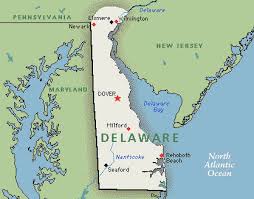
In late March, in order to try to stop a perceived flood of Delaware companies reincorporating in other states (in particular, Nevada and Texas), the Delaware legislature enacted a significant re-write of important sections of its General Corporation Law (DGCL).  Even though it has just been a few short weeks since the Delaware legislation was enacted, it is not too early to start asking whether the legislative changes will stop Delaware companies from reincorporating in other states. As discussed below, early indications seem to suggest that notwithstanding the legislative changes, at least some Delaware corporations will continue to seek to reincorporate elsewhere.

Continue Reading Will Delaware’s Recent Corporate Law Revisions Stop Reincorporations?

In what is a reminder that potential liabilities based on alleged ESG-related overstatements remains a significant corporate risk, DWS, the asset management arm of Deutsche Bank has agreed to pay a €25 million fine to settle greenwashing allegations related to its ESG-focused investment products. The fine, imposed by the Frankfurt Public Prosecutor’s Office, follows an earlier $19 million SEC fine the firm agreed in 2023 to pay based on similar charges. The firm’s April 2, 2025, statement about the Frankfurt Public Prosecutor’s Office fine can be found here.

Continue Reading Deutsche Bank Asset Management Unit Pays €25m Greenwashing Fine

In a move that the Wall Street Journal described as having the effect of “bringing down the curtain on U.S. support for the turbocharged globalization that powered the world economy for decades,” on April 2, 2025, President Trump announced the imposition of massive new tariff duties on what the Journal described as “trillions of dollars in imports.” The U.S.’s imposition of these tariffs has huge implications for international trade; the U.S. economy; the economies of other countries around the world; and the fortunes and prospects of individual companies seeking to operate in an increasingly fraught global economy. These developments also have significant implications for the potential liabilities of companies and their directors and officers, as discussed below.

Continue Reading Massive New U.S. Tariffs:  What Are the Potential D&O Liability Implications?

Those who follow securities class action lawsuit filing trends know that a significant number of the new securities suit filings each year involve non-U.S. companies with listings on U.S. exchanges. The number of lawsuit filings fluctuate year to year, but the long-term trends are important to follow for those advising non-U.S. companies with U.S. securities litigation exposure. A recent report from the Dechert law firm takes a detailed look at the 2024 securities suit filings against non-U.S. companies. The March 2025 report, which is entitled “U.S. Securities Fraud Class Actions Against Non-U.S. Issuers: 2024 Developments” can be found here.

Continue Reading A Closer Look at U.S. Securities Litigation Against Non-U.S. Companies

Long-time observers of securities class action litigation filing patterns know well that life sciences companies are frequent targets of securities suit, reflecting a litigation frequency pattern that has been well-established for years. While in more recent years the overall number of securities suits filed against life sciences has shown a marginal decline, in 2024, the number of securities suits filed against life sciences companies increased to the highest level in several years, according to the latest annual report from the Sidley law firm. A copy of the law firm’s recent memo, entitled “Securities Class Actions in the Life Sciences Sector: 2024 Annual Survey” can be found here. A two-page summary of the report can be found here.

Continue Reading A Detailed Look at the 2024 Securities Litigation Against Life Sciences Companies