Those who follow securities class action lawsuit filing trends know that a significant number of the new securities suit filings each year involve non-U.S. companies with listings on U.S. exchanges. The number of lawsuit filings fluctuate year to year, but the long-term trends are important to follow for those advising non-U.S. companies with U.S. securities litigation exposure. A recent report from the Dechert law firm takes a detailed look at the 2024 securities suit filings against non-U.S. companies. The March 2025 report, which is entitled “U.S. Securities Fraud Class Actions Against Non-U.S. Issuers: 2024 Developments” can be found here.

Continue Reading A Closer Look at U.S. Securities Litigation Against Non-U.S. Companies

Long-time observers of securities class action litigation filing patterns know well that life sciences companies are frequent targets of securities suit, reflecting a litigation frequency pattern that has been well-established for years. While in more recent years the overall number of securities suits filed against life sciences has shown a marginal decline, in 2024, the number of securities suits filed against life sciences companies increased to the highest level in several years, according to the latest annual report from the Sidley law firm. A copy of the law firm’s recent memo, entitled “Securities Class Actions in the Life Sciences Sector: 2024 Annual Survey” can be found here. A two-page summary of the report can be found here.

Continue Reading A Detailed Look at the 2024 Securities Litigation Against Life Sciences Companies

In prior posts (most recently here), I have noted the ways the new Trump administration’s policies and actions could affect the D&O liability and insurance arena. In the current rapid-fire environment, with daily developments that threaten to overturn established practices and norms, just trying to keep up – much less understand the significance of events – can be a challenge. In an effort to try to keep the scoreboard up to date, I have noted below some of the most recent key developments and tried to describe their significance for the D&O environment.

Continue Reading Trump 2.0: The Latest D&O Update

The number of securities class action lawsuit settlements increased in 2024 compared to the year prior, but the median, total, and average settlement amounts decreased during the year, according to a new report from Cornerstone Research. Cornerstone Research’s March 26, 2025 press release about the report can be found here. The report itself, which is entitled “Securities Class Action Settlements — 2024 Review and Analysis,” can be found here.

Continue Reading More Securities Suit Settlements in 2024, Settlement Amounts Decline

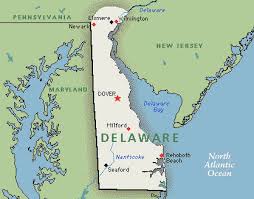
On Tuesday, March 25, 2025, the Delaware House of Representatives passed S.B. 21, the legislation designed to try to fight back against the move by some Delaware companies to reincorporate elsewhere, particularly in Texas or Nevada. The Delaware Senate previously passed the bill, which has been called the “most significant single-year revision of Delaware’s corporate code since at least 1967.   Delaware Governor Matt quickly signed the legislation the same day as the House passed the bill. While the legislation is primarily intended to try to stem the departures of Delaware companies to other states, it could also have a significant impact on future litigation in the state, as discussed below.

Continue Reading Delaware Bill Meant to Stem Corporate Departures Enacted
The Palace of Westminster

The D&O Diary is on assignment in Europe this week, with the first stop over the weekend in London. I happened to arrive in London on the day of the Vernal Equinox, and I was fortunate on at least a few of the days while there to be able to enjoy some spring sunshine — along with a few gloomier days as well.

The primary purpose of my visit to London was to participate as a panelist at the “Evolving Liability Conference 2025” held by of The Geneva Association. The panel was entitled “Cybersecurity Governance — An Increasing Source of Corporate Liability.” Christopher Cates of Intact Financial Services moderated the panel, which also included Samantha Ward of Clifford Chance and Aaron Belair of RSA. It was a honor to be a part of this first-class event and to be able to participate as a speaker on the panel. I would like thank the Geneva Association and in particular Darren Pain for inviting me to be on the panel and Casey Gilchrist for organizing the event. It was a pleasure to meet the many guests and other speakers.

With my distinguished fellow panelists, from left to right, Aaron Belair, Sam Ward, and Christopher Cates.
It was a great panel, and I really enjoyed the opportunity to exchange ideas with the other panelists. I think what is happening in this picture is that I am explaining why my NCAA Men’s bracket is doing so well.

Despite my various commitments in London, I did have a chance to spend a little time enjoying the city. Upon arrival, I allowed myself a jetlag recovery day in Richmond, the riverside suburb southwest of London. The weather was just great the day I arrived, perfect for a long walk. I managed to hike all the way from Richmond Green, through Richmond Park, to Wimbledon Common, and then to Putney Heath — and then back again. The app on my phone informed me that I walked nearly 34,000 steps, roughly 15 miles or so. The weather was spring like, sunny, and warm.

Here’s a view of the Richmond waterfront and the Thames River, taken from Richmond Bridge.
A view of one of the Pen Ponds in Richmond Park.
Wimbledon Common
Putney Heath
Richmond Green
Another view of the Thames riverside in Richmond.
A view of the Thames river valley from Richmond Hill.

There was one particular reason I wanted to be in London over the weekend, and that was to see the special exhibition at the National Gallery entitled “Sienna: The Rise of Painting 1300-1350.” The exhibit gathered paintings from galleries around the world that were created in the Italian City during the 14th century, focusing in particular on the paintings of Duccio, Simone Martini and the brothers Pietro and Ambrogio Lorenzetti. The paintings selected were marvelous, particularly when viewed together. The collection underscored that the artists opened up a world of expression in an era before the High Renaissance later in the 15th century.

A sign for the Sienna exhibit at the National Gallery.
A Madonna and Child from Duccio. Though quite small, this painting served as the centerpiece for the exhibit.
A view down Whitehall from Trafalgar Square, just in front of the National Gallery. That’s Nelson’s column in the foreground, and in the background you can just see Big Ben.
On Saturday evening, I attended a choral concert at Cadogan Hall, in Sloan Square.
I attended a performance of Mozart’s Requiem, which is such a great, moving piece of music. It was a particular pleasure to hear it performed at Cadogan Hall, which has such excellent acoustics.
On Sunday morning, I attended a choral worship service at St. Bride’s, the Christopher Wren-designed church just off Fleet Street.
The warm, beautiful interior of St. Bride’s. The congregation was also very friendly and welcoming. I was struck by one of the items offered by the celebrant during the Prayers of the People; the congregation was called upon to pray for “countries whose system of checks and balances are under threat from arrogance, malice, ignorance, or indifference.”

More Pictures of London

I did enjoy the early spring weather while in London. I took this picture in Green Park. That’s Lancaster House in the background.
Flowering trees in St. James’s Park.
A view of Kentish Town from Parliament Hill in Hampstead Heath
This sign was posted in the Earl’s Court Tube Station, near my hotel. Fortunately for me, the mess at Heathrow last Friday did not affect my travel. I had safely arrived several hours before the electrical fire that caused the airport closure. The disruptions at Heathrow did make a mess of things but fortunately only for a short time.
I always enjoy a chance to visit London. It a familiar enough place for me by now that I have certain routines, and one of them is that whenever I visit I must make time for a pint at my favorite pub, the Anglesea Arms, which is close to the South Kensington underground station — the pub is my favorite because it is located in a quiet neighborhood and has an outdoor terrace. A great place to stop on a pleasant spring day in London. It is always great just to have a chance to visit London, as well. All too soon though I was off to other destinations.

Paul Atkins, President Donald Trump’s nominee to serve as SEC Chair, has not even yet assumed his new office – his nomination apparently is scheduled to go before the relevant Senate committee on March 27 – but big changes are already underway at the agency under Mark Uyeda, the agency’s acting Chair. Indeed, based on the changes so far, a group of five leading academics including Columbia Law Professor John Coffee Jr. and calling themselves the “Shadow SEC” has already raised the alarm, warning in a March 13, 2025 post on the CLS Blue Sky Blog  that as a result of current and proposed staffing and budget cuts,  the agency is well on the way to becoming a “shell of its former self,” as it “becomes an agency with little power, capacity, or independent judgment.”

Continue Reading Big Changes are Already Underway at the SEC

In the immediate aftermath of the Delaware Supreme Court’s 2019 decision in Marchand v. Barnhill, which revitalized so-called Caremark claims for breach of the duty of oversight, one question I was asked was whether claimants might seek to assert breach of the duty of oversight claims in the context of cybersecurity and data privacy issues. Claimants did, in fact, subsequently raise Caremark claims in connection with the high-profile date breaches at Marriott and SolarWinds, but in each case, the Delaware Chancery Court granted the defendants’ motions to dismiss (as discussed here and here, respectively), raising questions about the viability of duty of oversight claims in the cybersecurity context.

Notwithstanding the less than promising track record for these kinds of claims, in a recent article, NYU Law Professor Jennifer Arlen argues that cybersecurity-related claims for breach of the duty of oversight should support Caremark liability in at least one class of cases – that is, cases relating to companies for whom cybersecurity is a “mission critical legal risk” and in which it is alleged that the company had inadequate cybersecurity that risked (and later caused) substantial harm to businesses and government agency customers, and that the company had misled the customers through statements that were designed to defraud the customers into believing that the company’s cybersecurity systems were materially better than they were. Professor Arlen’s March 18, 2025, post on the Harvard Law School Forum on Corporate Governance about Caremark claims in the cybersecurity context can be found here.

Continue Reading Cybersecurity and the Duty of Oversight

Regular readers know that a recurring topic on this site is the question of the proper scope of the contractual liability exclusion found in many professional liability and management liability insurance policies. In prior posts I have argued that insurers sometimes apply the exclusion overly-broadly so as to exclude matters I believe should otherwise be covered under the policy. A recent Delaware Superior Court decision once again considered these issues in the context of an underlying qui tam action alleging violations of federal law. As discussed below, the court concluded that the applicable policy’s contractual liability did not preclude coverage for the underlying claim. A copy of the Delaware Superior Court’s March 12, 2025, opinion in the case can be found here.

Continue Reading Del. Court: Contract Exclusion Does Not Preclude Coverage for Qui Tam Action