 In the second in a series of podcasts discussing the impact of the new Biden Administration on the world of directors’ and officers’ liability and insurance, Megan Brown of the Wiley law firm and Rob Yellen of Willis Towers Watson and I recently recorded a session that is now available in a May 3, 2021 post on the PLUS Blog, here. In this 30-minute recording, we discuss the possible impact of President Biden’s early appointments on the D&O environment, and Megan discusses in detail the potential impact of the recent appointments on issues arising from privacy and cybersecurity. Both Megan and Rob make a number of interesting observations and comments in the session. My thanks to PLUS for hosting, recording, and distributing the recording. The first session in the series can be found here.
Please also see my preceding blog post about the upcoming PLUS Singapore Chapter webinar event.
 On Tuesday, May 18, 2021, I will be participating as a panelist in a webinar sponsored by the PLUS Singapore Chapter entitled “State of the Market for D&O: The View from Across the Globe.” This free, 90-minute session will take place at 9 am Singapore time/ Monday May 17, 2021 at 9 pm EDT. The session will be moderated by Jessica Schappell of Beazley Group, and the panel will include Jenny Wilhelm of Allianz Global Corporate & Specialty, who will discuss the D&O market in Asia; Carmen Elder of DLA Piper Australia, who will discuss the market for D&O in Australia; and Jason Kelly of AIG, who will discuss the D&O market in the U.K. and Continental Europe. I will be discussing the D&O market in the U.S. With the dynamic and evolving claims environment and the challenging insurance marketplace, there will be much to discuss. Further information about this event, including registration details, can be found
 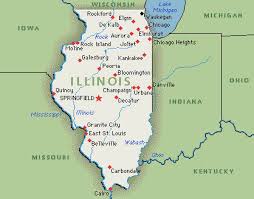 A federal district judge has denied the defendants’ motion to dismiss in a securities class action lawsuit arising out of an electric utility’s eight-year involvement in a domestic bribery scheme. The court’s ruling has several interesting features relating to the securities litigation exposures from domestic corruption. Northern District of Illinois Judge Virginia M. Kendall’s April 21, 2021 opinion in the Exelon Corporation securities suit can be found here. An April 28, 2021 memo about the ruling from the Shearman & Sterling law firm can be found
  Is the SEC staff about to issue guidelines specifying that the safe harbor for forward looking statements does not apply to SPAC merger transactions? An April 28, 2020 exclusive report on Reuters (
 Regular readers of this blog know that I have been following the developing SPAC-related litigation closely. Readers also know that the cast of defendants in these cases can be extensive, diverse, and in some cases overlapping. For example, the defendants may include former directors and officers of the SPAC; former directors and officers of the acquired company; and current directors and officers of the company formed by the merger. Some of the individuals named may be sued in more than one capacity. These features of the suits will complicate the litigation. These features will also complicate the application of insurance to the defense and settlement of this litigation, as well.
 In the second dismissal motion ruling in one of the many board diversity lawsuits filed in recent months, a magistrate judge has granted the defendants’ dismissal motion in the suit against the board of clothing retailer The Gap. This latest ruling follows the
  The number of SEC and PCAOB accounting and auditing enforcement actions decreased in 2020 relative to 2019, but monetary settlements increased year-over year, according to a recent report from Cornerstone Research. The report, entitled “Accounting and Auditing Enforcement Activity – 2020 Review and Analysis” (
 In what is a notable development in the emerging SPAC-related securities class action litigation scene, the parties to a SPAC-related securities suit involving the streaming media company Akazoo company have reached a partial settlement in the aggregate amount of $35 million. The deal is a partial settlement because claims remain pending against other defendants. As discussed below, the settlement has a number of interesting features. It is, in any event, a noteworthy data point for the discussion about SPAC-related litigation exposures.
  After more than a year of lockdowns, social distancing, and sheer disruptions of life, we are all more than ready to be done with the coronavirus outbreak and to move on. Unfortunately, the virus is not done with us yet. In places like Brazil and India, COVID-19 continues to exact a grim toll. Just as I, like all of the rest of you, had assumed in the early stages of the outbreak that we would be done with the coronavirus by now, I also thought we would be done with coronavirus-related litigation by now as well. However like COVID-19 itself, coronavirus-related litigation continues on despite our expectations. As discussed below, in the past week, two more coronavirus-related securities class action lawsuits were filed, as the pandemic-related litigation phenomenon continues.
  Readers of this blog know that there have been several SPAC-related securities class action lawsuits filed in 2021, with the suits mostly coming in after the de-SPAC transaction has been completed. Even readers who think they get the idea already will want to be sure to take a look at the new SPAC-related lawsuit that came in earlier this week. What makes this one different is that, though the lawsuit names both the SPAC and the SPAC merger target company as defendants, the merger, though announced, has not yet even taken place. And, mind you, this is not your garden variety merger objection lawsuit, it is a full blown 10b-5 class action lawsuit. Interested? Read on.