
Photo of Kevin LaCroix

Kevin M. LaCroix is an attorney and Executive Vice President, RT ProExec, a division of RT Specialty. RT ProExec is an insurance intermediary focused exclusively on management liability issues.

Some D&O insurance policy exclusions are written with the broad “based upon, arising out of, in any way relating to” preamble. These exclusions sweep broadly, precluding coverage for a wide range of claims. The ever-present question when insurers seek to rely on these exclusions’ sweeping reach is: how broad of a reach it too broad? What is the outer limit of these exclusions’ preclusive effect?

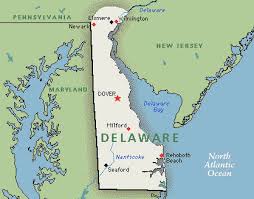
In a decision that is worth reading closely, the Delaware Supreme Court recently concluded that, despite its broad preamble, a management liability insurance policy’s professional services exclusion did not apply to preclude coverage for the underlying claim. The decision not only explores important questions about the reach of exclusions with the broad preamble, but it also underscores the deeper question about the use of the broad preamble for these types of exclusions in the first place. The Delaware Supreme Court’s September 14, 2023, opinion in the case can be found here.

Continue Reading The “Broad Preamble” Problem in D&O Insurance Exclusions

I have been writing this blog for a long time now, and the one thing that I know from the experience is that there is always something new. The latest novelty to develop is the emergence of class action litigation related to employers’ alleged violation of statutorily mandated pay range disclosure requirements. Several states, including the state of Washington, have enacted laws requiring the disclosure in job postings of salary or wage ranges. Class action plaintiffs’ attorneys are quickly targeting employers for alleged violations of these laws, with an at least theoretical potential for massive damage awards. As discussed below, this newly and quickly emerging class of litigation could present some interesting insurance questions. An October 17, 2023, memo from the Ogletree Deakins law firm discussing the new statutory requirements and emerging litigation can be found here.

Continue Reading Emerging Pay Range Disclosure Class Action Suits and Related Insurance Issues

In a lengthy and detailed opinion, the Fifth Circuit has rejected two petitions challenging the SEC’s approval of Nasdaq’s board diversity rules. The rules require most Nasdaq-listed companies to have women and minority directors on their boards or explain why they don’t. The petitioners had argued that the rules violated constitutional free speech and equal

I have long thought that privacy-related issues represent one of the important emerging areas of D&O liability exposure. One case that I thought represented an example of this emerging risk was the securities class action lawsuit brought against Facebook related to the Cambridge Analytica user data privacy scandal. However, when the court granted the motion to dismiss in the case, the relevance of the Cambridge Analytica case to the discussion of privacy-related issues seemed diminished. But the appellate court has now reversed in part the lower court’s dismissal, restoring the relevance of the case to the privacy-related discussion and highlighting the importance of privacy concerns as an area of emerging D&O liability risk. The Ninth Circuit’s October 18, 2023, opinion in the case can be found here.

Continue Reading Ninth Circuit Revives in Part Facebook Privacy-Related Securities Suit

The reach and scope of the federal securities laws is a concern most obviously relevant to publicly traded companies. However, as I have emphasized previously, private companies are not immune from scrutiny under the federal securities laws. The SEC has in fact an extensive history of pursuing enforcement actions against private companies for alleged federal securities laws violations; one needs to go back no further than the high-profile enforcement action brought against the supposed blood testing company Theranos for an example of this phenomenon in action.

A recent memo from Wiley law firm underscores these points about the exposures of private companies; as the memo’s authors put it, “private entities should be aware that an aggressive SEC can investigate and penalize them (and their executives), even if they are not directly involved in issuing securities.” The law firm’s September 23, 2023, memo, entitled “Think Because You Are a Private Company the SEC Is Not Your Problem? Think Again,” can be found here.

Continue Reading Private Companies and SEC Enforcement Actions
Francis Kean

In the following guest post, Francis Kean, Partner in Financial Lines Team at McGill and Partners, reviews the developments surrounding the proceedings brought against the non-executive directors of Carillion plc and considers their implications. This article was first published online on 16th October 2023 by The Chartered Governance Institute for UK and Ireland.

On September 28, 2023, the SEC announced that it had filed charges against and entered into a settlement agreement with the Illinois electric utility Commonwealth Edison (ComEd) and its corporate parent Exelon Corporation in connection with an alleged scheme to influence the then-speaker of the Illinois House of Representatives, Michael Madigan. The SEC separately filed a complaint against ComEd’s former CEO in connection with the same allegations. In an October 12, 2023 post on the Cooley law firm’s PubCo blog (here) Cydney Posner wrote about the SEC enforcement actions and raised the interesting question of whether Political Corruption is Securities Fraud? It is a question well worth asking. However, as I discuss below, there is a long-standing connection between corruption and bribery allegations and securities class action lawsuits and other types of claims.

Continue Reading Can Corrupt Political Activities Support Securities Fraud Allegations?

A host of macroeconomic factors continue to weigh on the U.S. economy, including rising interest rates, economic inflation, and supply chain and labor supply disruption. Geopolitical factors such as the War in Ukraine and now the Gaza war in Israel further complicate the picture. These various factors have serious ramifications for the operations of many businesses and for their financial performance. In some cases, the impact of these factors on companies can also translate into securities litigation. In the latest example of this phenomenon, the auto parts company Advance Auto Parts has been hit with a securities class action following a decline the price of the company’s share price after the company announced that its “strategic pricing initiative” was not sufficient to avert the impact of inflation and other macroeconomic factors on the company’s financial performance. A copy of the October 9, 2023, complaint filed against the company can be found here.

Continue Reading Inflation Weighs on Company Performance, Leads to Securities Suit

Dividend recapitalization is a tool that enables private equity firms to extract liquidity from portfolio companies without the need to complete a sale or IPO. In the following guest post, the authors explore this funding technique, which is not without its risks and exposures and which may raise important insurance issues as well. This article is co-authored by Sarah Abrams, Head of Professional Liability Claims, Bowhead Specialty Underwriters, Inc., Elan Kandel, Member, Bailey Cavalieri LLC and James Talbert, Associate, Bailey Cavalieri LLC. I would like to thank the authors for allowing me to publish their article as a guest post on this site. I welcome guest post submissions from responsible authors on topics of interest to this blog’s readers. Please contact me directly if you would like to submit a guest post. Here is the authors’ article.

Continue Reading Dividend Recaps: Potential Risks for Private Equity Firms and Their Insurers

One phenomenon I have been tracking over the years is the rise in jurisdictions outside of the U.S. of procedural mechanisms for collective redress, particularly in the U.K (as noted, for example, here) and the E.U. (as noted here). While I have always been careful to note the important differences between these collective action mechanisms and the U.S.-style class action approach, it may be the case that as time has passed and as procedures have developed and evolved, the mechanisms many jurisdictions are adopting increasingly are coming to resemble the U.S.-style class actions model.

As an October memo from the Jones Day law firm puts it, class action litigation “is no longer a US-specific phenomenon.” The law firm memo, which is entitled “The Rise of US-Style Class Actions in the UK and Europe,” states that the growth in the UK and EU of group litigation has been “exponential” and the rise of these actions is a “key corporate risk that will only continue to increase.” The law firm’s memo can be found here.

Continue Reading The Rise of Group Actions in the U.K and the E.U.