The Bay of Kotor

The D&O Diary’s European assignment continued last week with a long weekend visit to the Balkan country of Montenegro. Montenegro is a small country with rugged mountains and an interesting history, tucked along the Adriatic coast on the Balkan peninsula. It was my first time in the country, and I wasn’t sure what to expect. What I discovered was a pleasant surprise. It turns out, Montenegro is an absolute gem.

Montenegro has only been a standalone country since it completed its split in 2006 from the former federation of Serbia and Montenegro. Its name in the Montenegrin language is Crna Gora, meaning “Black Mountain.” The territory gained its Italianate name in the 15th century when it was part of the Venetian Republic. It is small geographically – it is only about the size of the U.S. state of Connecticut. Its population of about 630,000 is roughly equivalent to that of Detroit.

My first stop in Montenegro was the country’s capital city, Podgorica (pronounced “Pod-GOR-eets-uh”), a city of only about 150,000. The city, which over the years has had a variety of different names (including, most recently, from 1946 until 1992, as “Titograd”), is set in a basin in a ring of mountains. The city was built in Roman times at the juncture of two rivers, the larger Morača river and smaller Ribnica. The city itself is mostly flat, making it pleasantly walkable.
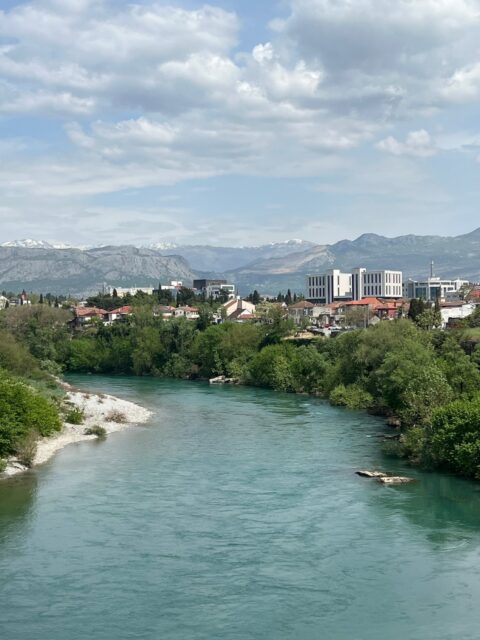
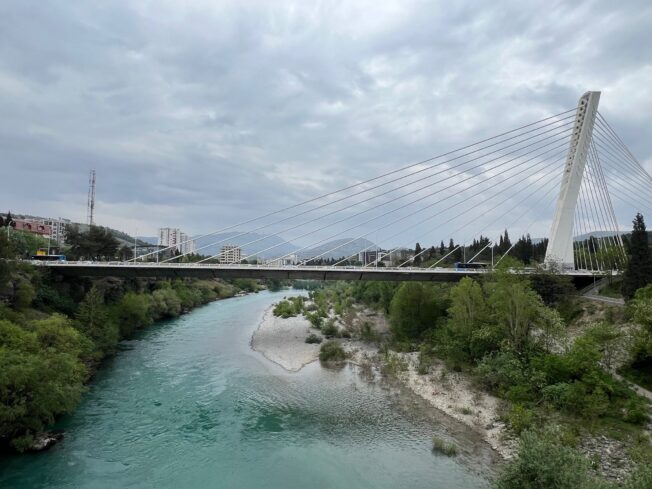
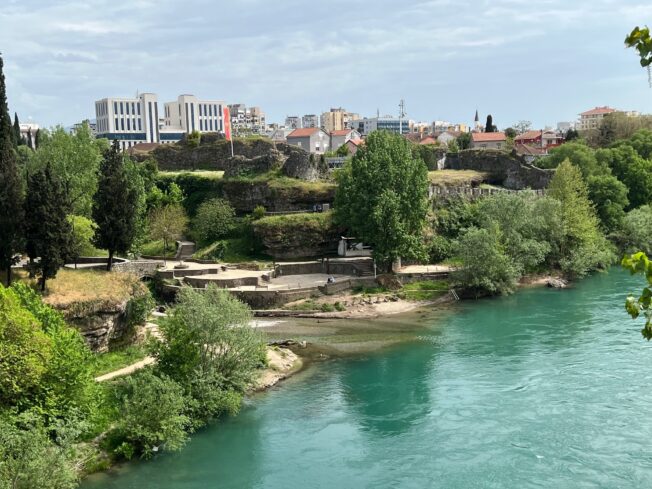
A view of Podgorica, of the naturally green-tinted Morača River, and of the Dinaric Alps beyond. Note the snow on the taller peaks.
The Millenium Bridge, a new cable-stayed traffic bridge that was completed in 2005, crossing the Morača.
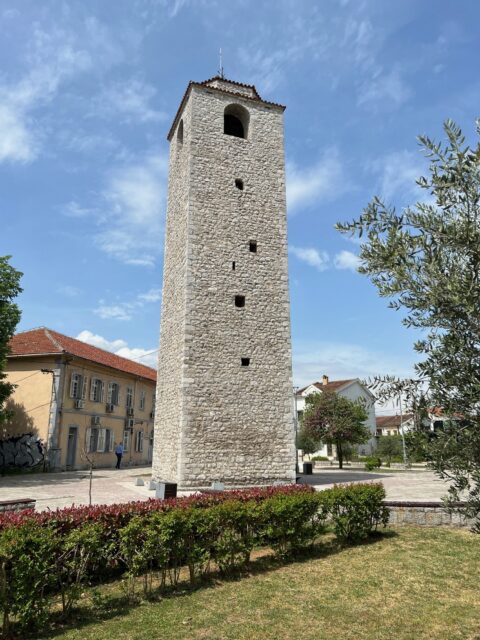
Podgorica was very badly damaged in World War II, with little of the city’s historic architecture surviving. One of the few remaining buildings in the city’s Stara Varoš (old city) is the Ottoman-era Clock Tower.

The name “Podgorica” means “under the hill or mountain.” There actually is a hill — the “Gorica” on the northeast side of the city — and it is now a thickly wooded park. Early on my first full day in the city, I walked through the park and to the top of the hill.
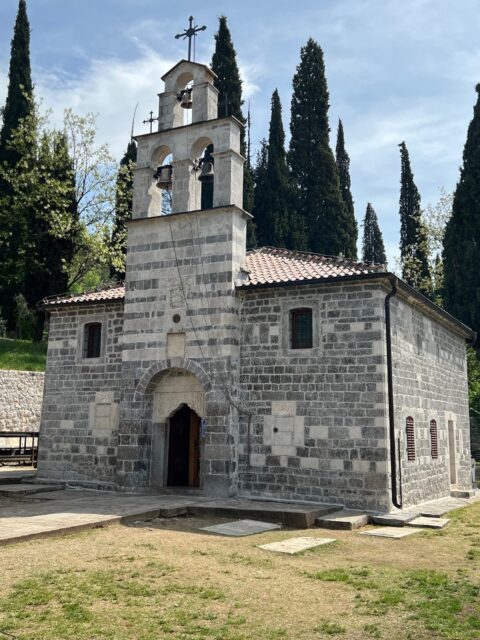
At the park’s entrance at the foot of the hill sits St. George’s church, which dates to the 11th Century and is the oldest church in the city.
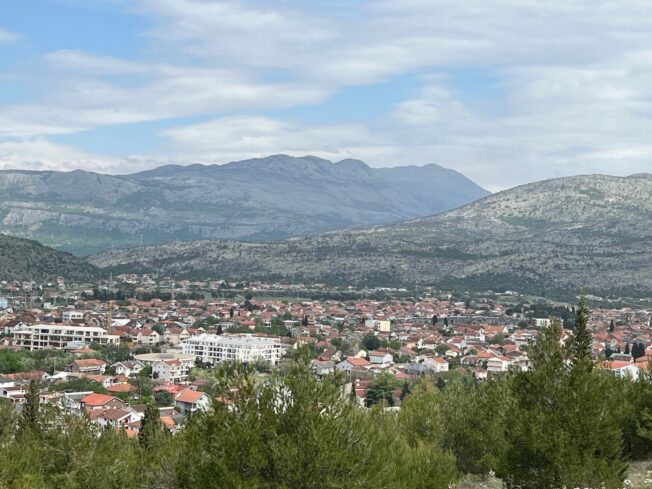
The top of Gorica hill provides a sweeping view of the city and of the mountains beyond. It is too bad that this picture doesn’t include a soundtrack, because the woods on the hilltop were full of the sounds of birdsong. My Merlin app told me that the singing birds were blackbirds, warblers, finches, and jays. Marvelous music.
At the confluence of the two rivers are the ruins of the 15th century Ribnica Fortress, an Ottoman-era fortification that can only be fully appreciated when viewed from a distance.
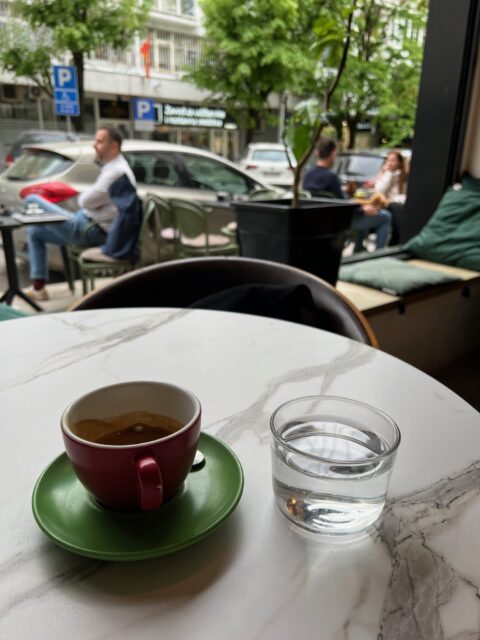
My stay in Podgorica was brief, and I was soon off to other destinations. I was there long enough to appreciate that the city has a very pleasant sidewalk-café vibe. On the other hand, the city undeniably has some scruffy edges. There are areas of the city that seem to reflect the old Titograd era. On the other hand, the city also has a pleasantly undiscovered feel to it. Podgorica has to be the only national capital city in Europe that doesn’t have a Starbucks.

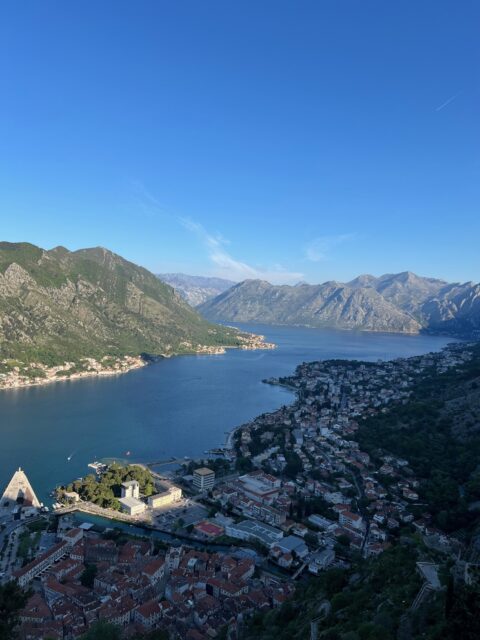
The next stop in my visit to Montenegro was the historic walled city of Kotor, a UNESCO World Heritage site set deep within the Bay of Kotor, at the foot of dramatic limestone mountains, along the country’s Adriatic coast.
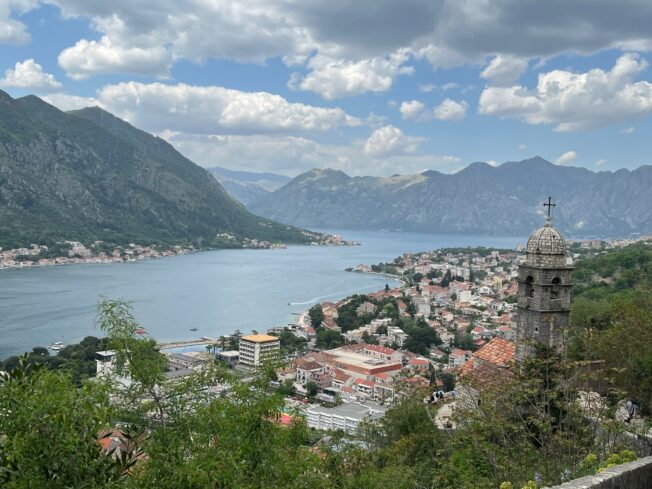
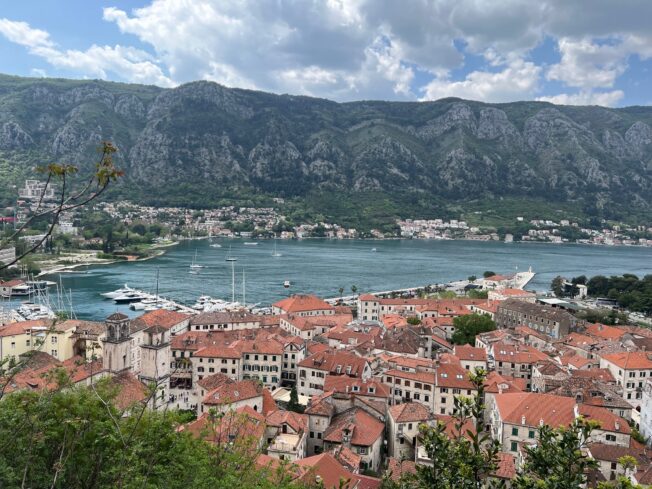
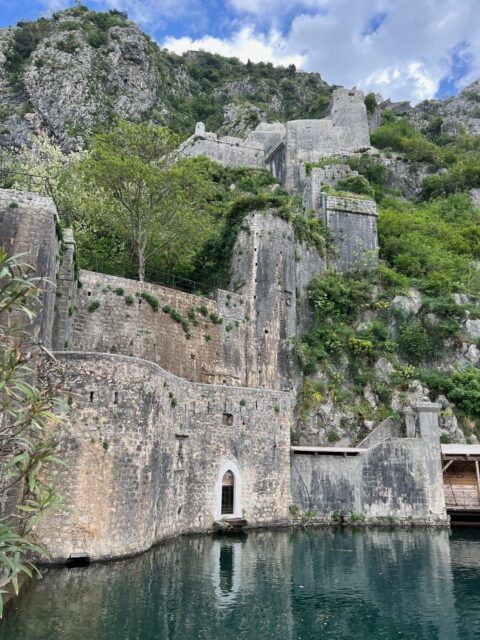
The view from the steep walkway to the fortifications of Kotor. The picture of the top of the post shows the view from the actual fortifications.
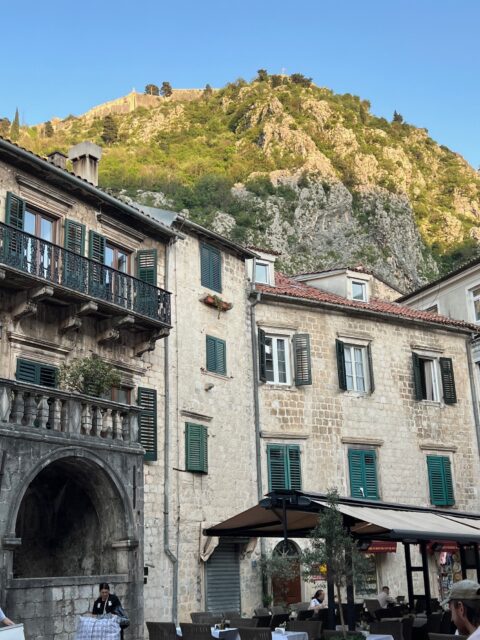
Here’s a view from the steep walkway of the well-preserved medieval city of Kotor itself. The city’s streets are a maze of narrow passageways spilling into open squares, with Romanesque churches, Baroque façades, and solid stone Venetian palazzi. The city’s venerable defensive walls still surround the city, preserving the old city’s historic feel.
Here’s a view from the city walls looking back toward the fortifications. Those of you who have read the Master and Commander novels may recall the book in the series entitled The Ionian Mission, in which Captain Jack Aubrey bombards the French within the fortress of Kotor (then known as Cattaro) by having his ship’s cannons hauled, using only block and tackle, to a point above the fortress stronghold. Seeing the steepness of the slopes and the heights of the mountains today, this story seems wildly implausible to me, except that it turns out it was based on an actual incident during the Napoleonic Wars, in which the British captain William Hoste did that very thing, using his ship’s cannons to bombard the French garrison for ten days until they surrendered. Just the same, the very idea of hauling the cannons up the slope seems impossible.
A view from inside the city walls. These days, the atmospheric streets are full of cafés, restaurants, and bars, and small shops selling souvenirs.
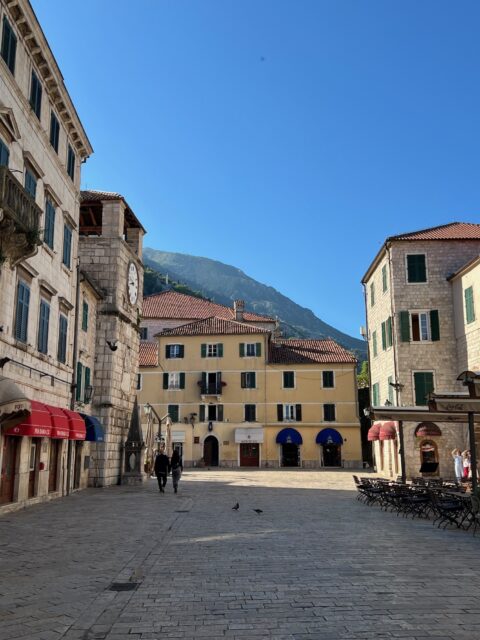
This is the central square in old town Kotor, the Piazza of the Arms. This picture was taken early in the day, before arrival of the crowds from the tour buses and cruise ships. In the middle of the day, the streets and square are quite crowded, but early in the morning and in the late afternoon and evening, the streets are quieter.

On Saturday, I took a boat excursion from the main waterfront in Kotor, through the Bay of Kotor, and out into the Adriatic. The entire experience was just terrific. I think a took about a million pictures, but I can only reproduce a small sample here.
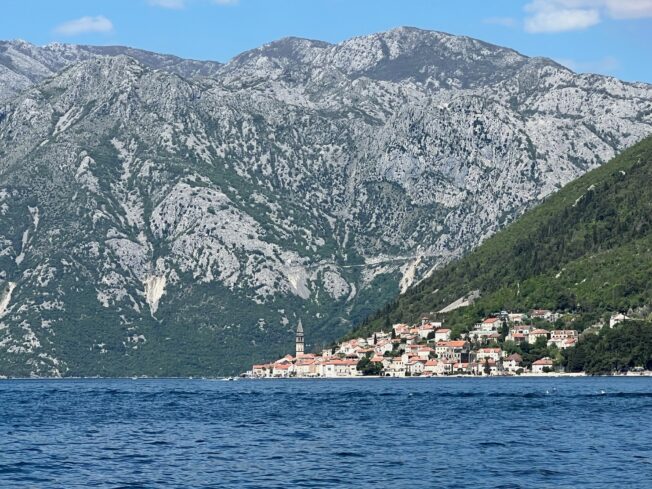
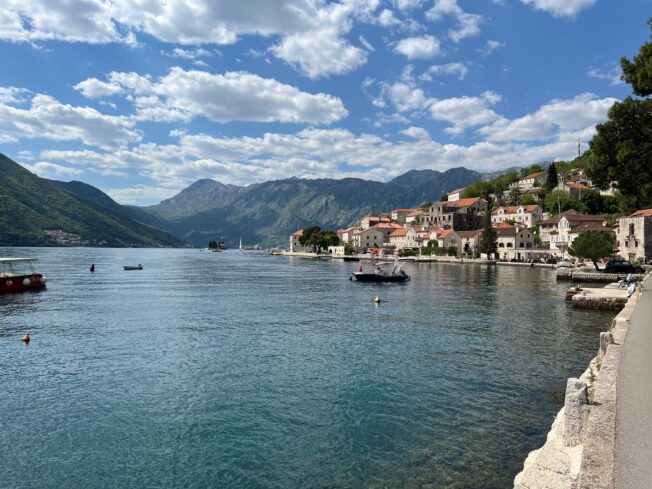
There are a number of picturesque cities along the Bay of Kotor, including, as shown in this picture, Perast.
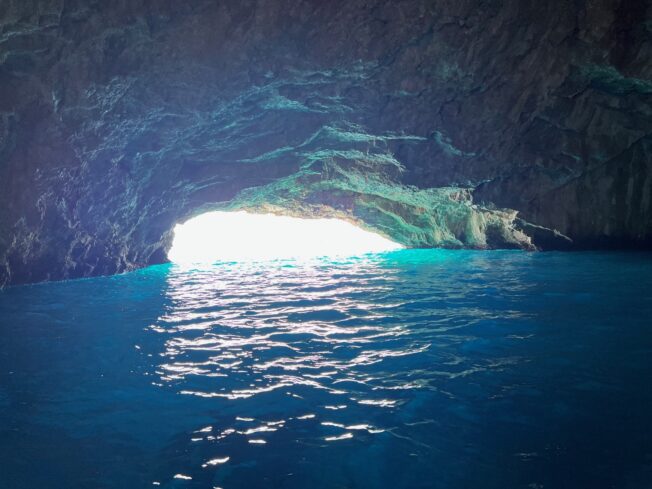
The high point of the boat tour was a visit to the famous Blue Cave, along the Adriatic Coast. The cave can only be reached by boat. The water appears blue because of the sunlight reflecting off of the bottom in the cave’s deep waters.
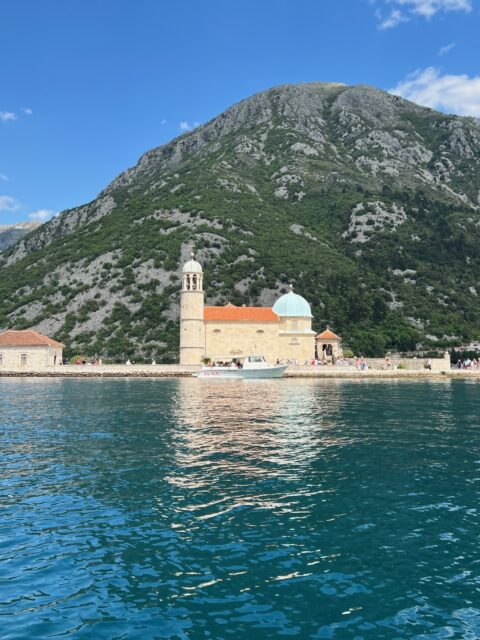
After we returned from the Adriatic into the Bay of Kotor, our tour boat went past Our Lady of the Rocks church, on an island off of the coast near Perast.
Before the tour boat returned to Kotor, we stopped briefly in Perast for a look around (and to take some pictures).
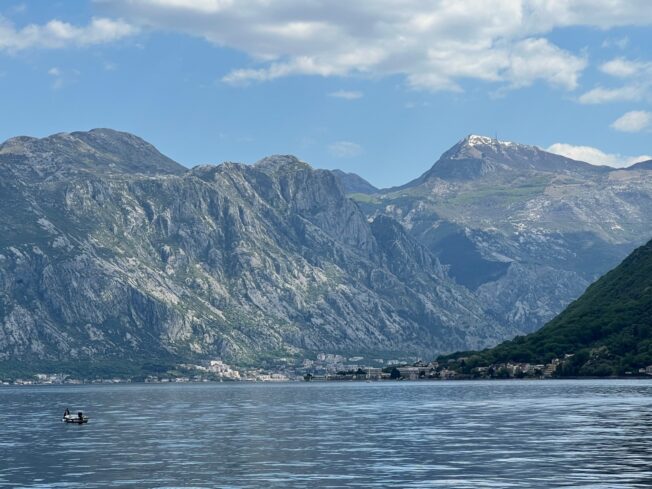
This was the view as we returned to Kotor. That is Lovćen, a nearly 5,800 ft. mountain, looming up ahead. The snow covers the mountain’s peak. The mountain is the inspiration for the names Montenegro and Crna Gora, both of which mean ‘Black Mountain’ and refer to the appearance of Mount Lovćen when covered in dense forests.
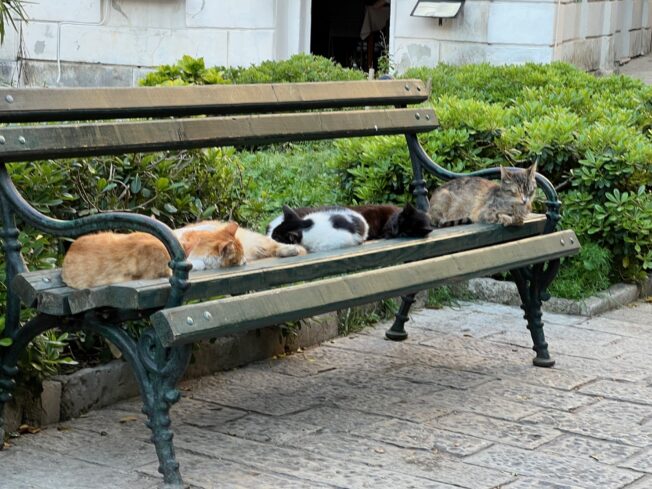
There is one more important thing you need to know about Kotor, and that is that the Old Town is full of cats. Lots and lots and lots of cats. There is even a Cat Museum. There is a local charity that cares for the cats, which are feral. The charity catches the cats and gives them their shots and spays them. I frequently saw people (tourists, mostly) feeding the cats. The cats seemed pretty content with the whole arrangement.

For anyone planning a trip to Kotor any time soon, I do have a hotel recommendation. The name of the hotel is Boutique Hotel Astoria. It is one of only a few hotels inside the old city walls and the only one on the sea wall side (and therefore with views of the Bay). I had an absolutely lovely room with a balcony and with views of the water. Honestly, it is one of the nicest hotel rooms I have stayed in anywhere, ever. Also, friendly, helpful staff, and really nice breakfasts.
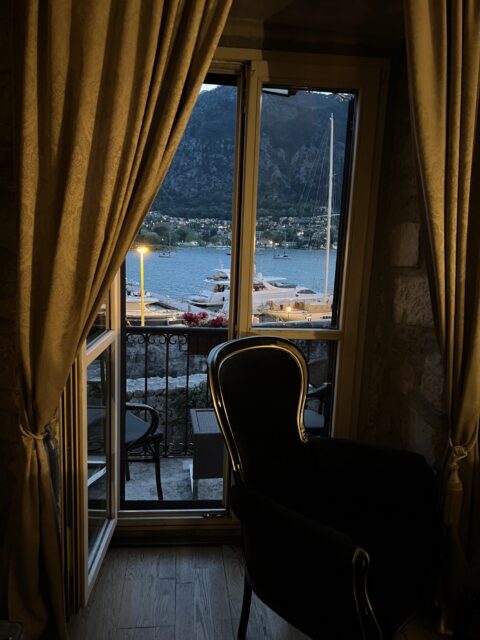
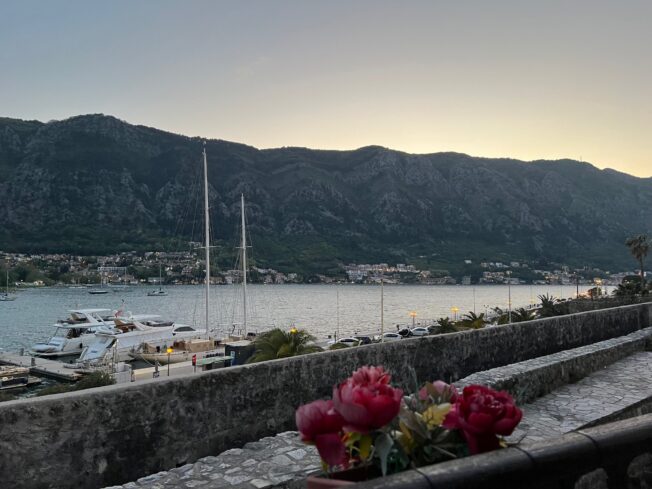
The view from my hotel room.
The view from my hotel room balcony.

All too soon, I had to leave Kotor and Montenegro for other destinations. The one thing I know for sure is that if I had it to do over again, I would have programmed a lot more time in Montenegro, and especially in Kotor. What an absolutely fantastic place.