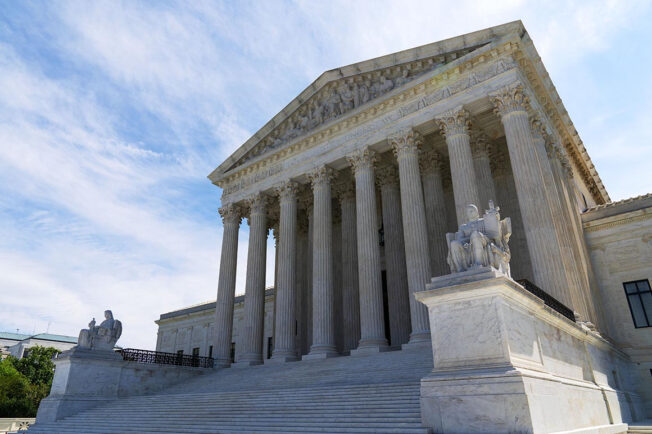
The U.S. Supreme Court only rarely agrees to take up consideration of cases involving securities law issues, so it was a noteworthy event when the Court agreed late last week to take up a case involving the SEC’s enforcement powers. As discussed below, the case involves questions of what the SEC has to prove in order to secure disgorgement from alleged wrongdoers. The Court’s ruling in the case, which is captioned Sripetch v. SEC, will address a split in the Circuit Courts on the question of whether the SEC must prove that investors were harmed by the wrongdoers’ acts in order to obtain disgorgement.
The Court’s January 9, 2026 order granting the petitioner’s petition for a writ of certiorari can be found here. The SCOTUSblog’s entry on the Sripetch case can be found here.
Background
Ongkaruck Sripetch was one of fifteen defendants named in a civil enforcement lawsuit, in with Sripetch was charged with six counts of securities fraud and one count of selling unregistered securities. Sriptech agreed to a consent judgment on the merits but resisted the SEC’s disgorgement request. The district court granted the SEC’s disgorgement request, stating that it “assumed without deciding” that a showing of investors’ pecuniary harm was required in order for disgorgement to be ordered, concluding that the SEC “had made the requisite showing.”
The court ordered disgorgement of approximately $2.5 million, as well as prejudgment interest of over $1 million. Sripetch appealed the district court’s order regarding disgorgement.
The Ninth Circuit affirmed the district court but on differing grounds. The Ninth Circuit, unlike the district court, addressed the statutory question on what the SEC must show in order to obtain disgorgement, holding that “pecuniary harm” to investors was not a “precondition” to disgorgement under the relevant statutory provisions, stating that it did not matter whether the SEC established pecuniary harm.
The Ninth Circuit expressly recognized that a split between the circuits exists on the question of whether or not the SEC must show the existence of pecuniary harm to investors in order to obtain disgorgement. The First Circuit, with which the Ninth Circuit agreed, has held that a finding of pecuniary harm is not required. The Second Circuit, whose rulings the Ninth Circuit rejected, had found that the disgorgement remedy is only available if an individual or entity suffered pecuniary harm as a result of the defendant’s wrongdoing. The Ninth Circuit, agreeing with the First Circuit and rejecting the Second Circuit, found that under the relevant statutory provisions “a claimant need not show any loss whatsoever, let alone a pecuniary loss.”
Sripetch filed a petition to the United States Supreme Court for a writ of certiorari. In urging the Court to take up the case, Sripetch argued that there is a direct split between the First and Ninth Circuits, on the one hand, and the Second Circuit, on the other hand. Sripetch argued that the as a result of the circuit split, “the SEC’s enforcement powers are in disarray.” The lack of clarity surrounding the SEC’s power is a problem because requests of disgorgement in SEC enforcement actions are “ubiquitious,” yet the SEC’s power to obtain the disgorgement remedy is subject to conflicting rules, most significantly in the Second and Ninth Circuits “where the enforcement actions are most prominent.” There are, Sripetch argued, “millions (if not billions) of dollars at stake.”
Interestingly, in its response to Sripetch’s petition, the SEC, noting that the question presented is “recurring and important,” did not oppose the petition; rather, the SEC urged that, given the stakes, “the SEC should therefore grant the petition for a writ of certiorari.” With the SEC agreeing that the Court should take up the case, the Court granted the petition.
The question presented in the case the Court has agreed to take up is “Whether the SEC may seek equitable disgorgement under 15 U.S.C. 78(u)(d)(5) and (7) without showing investors suffered pecuniary harm.”
Discussion
Because the U.S. Supreme Court only rarely agrees to take up securities law cases, it is always interesting when the Court does agree to take up a case. To be sure, one of the reasons it is interesting is because of the possibility that the Court will say something re-defining about the securities laws or that will have a significant impact on securities cases going forward.
While it certainly is interesting that the Court has agreed to take up this case, the case is likely to have only a narrow impact affecting only the SEC’s statutory authority to seek disgorgement in cases in which there is no showing of pecuniary harm to investors. (There does not seem to be any dispute about the SEC’s authority to seek disgorgement when there is pecuniary harm.)
The narrow statutory question the court will address will be important in a narrow category of SEC enforcement cases, but it is unlikely to have any impact outside of that narrow category.
To be sure, there unquestionably is a split between the circuits, a split that could make an outcome difference between California (where the SEC does not have to show investor pecuniary harm in order to obtain disgorgement) and New York (where the SEC now does have to show pecuniary harm). California and New York are of course states in which there is significant investment and corporate activity and in which a great deal of SEC enforcement activity takes place. As the petitioner urged here, depending on the outcome of this case, there could be millions, and perhaps billions of dollars at issue.
This case does present the unusual circumstance where both the petitioner and the respondent (here, the SEC) agreed that the Court should take up the case. The petitioner is interested in having the Court take up the case in order to argue that disgorgement could not have been ordered against him in the absence of a showing of pecuniary harm, while the SEC wants to be able to argue that it does not have to show pecuniary harm in order to obtain disgorgement. Though the parties seek different outcomes, they both agreed that the Court should decide the issue.
Oral argument in the case should be heard and the case decided before the end of the Court’s current term in June 2026.