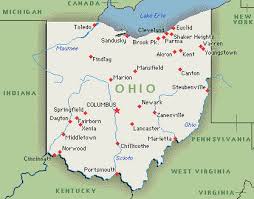
One of the recurring D&O insurance coverage issues is the question of the extent of the preclusive effect of professional services exclusions. These issues can be particularly acute in connection with service businesses, as just about every activity of these businesses involves their performance of services in some way. In a recent Northern District of Ohio decision, the Court, applying Ohio law, rejected an insurer’s attempt to extend an exclusion to preclude coverage for all of the activities alleged in the underlying lawsuit, saying that such an interpretation is not only inconsistent with the underlying allegations but also would impermissibly render coverage under the policy illusory. A copy of the court’s June 24, 2025, opinion can be found here.Continue Reading Court Rejects Overly Broad Application of Services Exclusion

 As I have previously noted (
 In what is one of the largest ever shareholder derivative settlements, the parties to the Cardinal Health opioid-related shareholder derivative litigation have agreed to settle the suit for $124 million. The Cardinal Health settlement, which is subject to court approval, is the latest massive settlement of opioid-related derivative litigation. It also represents another example of a massive settlement of a breach of the duty of oversight claim. The settlement is to be funded entirely by Cardinal Health’s D&O insurers. A copy of the plaintiffs’ May 25, 2022 unopposed motion for preliminary approval of the settlement can be found
  In a pattern that is becoming familiar, Lordstown Motors, an electric vehicle company that recently merged into a publicly traded SPAC and that was the subject of an even more recent short seller report, has been hit with a securities class action lawsuit. The defendants named include only executives of the vehicle company and do not include any former officers of the SPAC. A copy of the March 18, 2021 complaint can be found
  Under claims made insurance policies, policyholders must provide timely notice of claim to their insurers in order to trigger coverage. Late notice is among the most common reasons that insurers deny coverage for claims. In order to try to avoid a coverage denial for late notice, policyholders have tried to argue that late notice should not preclude coverage where the policyholder renewed the coverage and where successive policies with the same insurer are in place. In a recent decision, an Ohio appellate court, applying Ohio law, rejected a policyholder’s attempt to rely on this kind of continuity of coverage argument. The court’s decision raises some interesting issues, as discussed below.
 A standard D&O insurance policy provision specifies that the term “Claim” means, in part, a “written demand for monetary damages or non-monetary relief.” A recurring question that arises under this language is: what exactly is “non-monetary relief”? In a recent case, an Ohio intermediate appellate court considered the question whether a demand for a software audit from a software industry group alleging unauthorized software copying constituted a written demand for non-monetary relief; the court concluded that it did and that it therefore that the demand represented a claim under the applicable D&O policy. The court also considered the applicability of the policy intellectual property (IP) infringement exclusion. A copy of the Ohio Court of Appeals, Third Appellate District’s October 11, 2016 opinion can be found