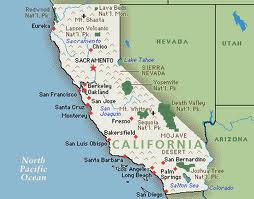
Section 533 of the California Insurance Code provides that an insurer is not liable for loss caused by an insured’s willful act. The applicability and impact of Section 533 are frequently litigated issues in insurance coverage cases to which California law applies. The following guest post surveys the recent significant case law involving Section 533. The article’s authors are Marisa DeMartini, Vice President, Management Claims Liability Manager, Ascot Insurance Company, James Talbert, Associate, Bailey Cavalieri LLC and Elan Kandel, Member, Bailey Cavalieri LLC. I would like to thank the authors for allowing me to publish their article as a guest post on this site. I welcome guest post submissions from responsible authors on topics of interest to this site’s readers. Please contact me directly if you would like to submit a guest post. Here is the author’s article.
Continue Reading Guest Post: 2023 Survey of Significant Decisions Involving California Section 533


 In most instances, corporate officers cannot be held personally liable for the misconduct of the company they serve. However, there are occasions when corporate officers can be held personally liable in their individual capacities for corporate acts or omissions. A recent decision by a California intermediate appellate court held that an individual who served as a company’s CEO and CFO can be held liable for the claimants’ unpaid wages. As discussed below, the ruling represents an interesting example of the circumstances in which individuals can be held liable for company misconduct. A copy of the California Court of Appeal’s June 28, 2022 decision can be found
 In the wake of the U.S. Supreme Court’s Cyan decision, corporate defendants faced the risk of wasteful and duplicative federal and state court securities litigation. In order to address this concern, corporate reformers suggested that companies should adopt provisions in their corporate charters designating an exclusive federal forum for securities litigation. The Delaware Supreme Court upheld the facial validity under Delaware law of federal forum provisions in the Sciabacucchi decision, but the question remained whether the courts in other jurisdictions would enforce the provisions. A number of courts in California and New York did subsequently uphold the provisions, but these were all trial court rulings.
 Many fledgling companies aspire toward completing an IPO. Some succeed, but many others do not. Occasionally when a company falls short of its IPO plan, litigation results, in the form of a “failure to launch” claim. A recent example involving a California-based cannabis company illustrates how these kinds of claims can arise. As discussed below, these possibility for these kinds of claims has insurance implications.