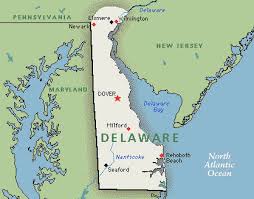
Public company D&O insurance policies provide entity coverage (that is, insurance for the benefit of the insured organization) only for “Securities Claims.” But what is a “Securities Claim”? That is the question that Delaware’s courts have grappled with in a long-running dispute between the telecommunications company Verizon and its insurers.

The Delaware Superior Court had held in the ongoing dispute that a litigation trustee’s state law fraudulent transfer claims against Verizon were derivative claims and therefore qualified as a Securities Claim under the applicable policies. In a detailed December 15, 2023, opinion, the Delaware Supreme Court reversed the Superior Court, holding that the fraudulent transfer claim was a direct claim, not a derivative claim, and therefore did not meet the definition of a “Securities Claim.” As discussed below, the Supreme Court’s opinion, while clarifying, also highlights how intricate the question of what is a “Securities Claim” can be. A copy of the Delaware Supreme Court’s opinion can be found here.

Background

In March 2008, through a complex three-party transaction, Verizon spun-off certain telecommunications assets (landlines) to FairPoint. To accomplish the spin-off, Verizon sold the assets to Spinco, a wholly owned subsidiary of Verizon. In exchange for the assets, Spinco issued corporate debt notes to Verizon. Verizon then divested Spinco by spinning out its stock to Verizon’s stockholders. Spinco and FairPoint then merged, with FairPoint as the surviving entity. Spinco’s stock was cancelled and converted to “new” FairPoint stock. As a result of the transaction, FairPoint acquired ownership of the telecommunications assets, as well as the debt obligation to Verizon on the corporate debt notes Spinco has issued to Verizon. Verizon sold the notes to investment banks which in turn sold the notes to third-party buyers.

Following the completion of the transaction, FairPoint was unable to service its outstanding operating debt and the Spinco notes. In October 2009, FairPoint filed for Chapter 11 bankruptcy. The ensuing plan of reorganization created a trust with an appointed Trustee authorized to pursue litigation, including Spinco-related causes of action. In October 2011, the Trustee filed an action (the “FairPoint action”) against Verizon in which the Trustee sought to avoid alleged fraudulent transfers connected to the landline assets spinoff transaction. Verizon and related entitles ultimately settled the FairPoint action for $95 million. Verizon and related entities incurred approximately $24 million in attorneys’ fees defending the FairPoint action.

The Insurance Coverage Dispute

There were two D&O insurance programs relevant to the Fairpoint action. The first was a program of insurance, consisting of a primary policy and three layers of excess insurance, that was issued to Verizon for the policy period October 31, 2009, to October 31, 2010 (the “Verizon policy”). The second was a transaction-specific program of insurance, consisting of a primary policy and two layers of excess insurance, issued to FairPoint for the policy period March 31, 2008, to March 31, 2014 (the “FairPoint policy”). The primary policy in both programs was issued by the same insurer and the policy terms and conditions of the two primary policies was substantially the same. Significantly. Verizon was a named insured under the transaction-specific FairPoint policy.

Verizon sought coverage under both of the policies for the FairPoint Action settlement and for its defense costs. When the insurers declined to pay these amounts, Verizon filed a breach of contract action against the insurers.

The policies define a “Securities Claim” as a claim made against any Insured:

(1) alleging a violation of any federal, state, local or foreign regulation, rule or statute regulating securities (including but not limited to the purchase or sale or offer or solicitation of an offer to purchase or sell securities) which is: (a) brought by any person or entity alleging, arising out of, based upon or attributable to the purchase or sale or offer or solicitation of an offer to purchase or sell any securities of an Organization; or (b) brought by a security holder of an Organization with respect to such security holder’s interest in securities of such Organization; or

(2) brought derivatively on the behalf of an Organization by a security holder of such Organization.

Verizon argued that the Trustee’s fraudulent transfer claim came within paragraph (2) of the definition, contending that the Trustee was a “security holder” within the meaning of the Bankruptcy Code and that the fraudulent transfer action was brought “derivatively.”  The insurers disputed these arguments.

Relevant Case Law

The Delaware Supreme Court has actually previously addressed the question of the meaning of the definition of the term “Securities Claim” in a public company D&O insurance policy – and not only that, the prior case involved Verizon and arose out of a prior telecommunications asset transfer gone bad. The prior case even involved the exact question of whether or not a bankruptcy trustee’s fraudulent transfer claim came within the applicable policy’s definition of “Securities Claim.”

As discussed here, in the prior case (the Idearc case) the Delaware Supreme Court held in 2019 that underlying bankruptcy trustee’s fraudulent transfer claim did not meet the definition of “Securities Claim” as specified in the applicable policy.

As Delaware Superior Court Eric Davis was to observe as part of his consideration of the issues in the subsequent FairPoint coverage action, the definition of “Securities Claim” at issue in the Idearc case was, in Judge Davis’s view, “critically different” from the definition at issue with respect to the FairPoint action. The definition at issue in the earlier case provided as follows:

(1) alleging a violation of any federal, state, local or foreign regulation, rule or statute regulating securities (including but not limited to the purchase or sale or offer or solicitation of an offer to purchase or sell securities) which is: (a) brought by any person or entity alleging, arising out of, based upon or attributable to the purchase or sale or offer or solicitation of an offer to purchase or sell any securities of an Organization; or (b) brought by a security holder of an Organization with respect to such security holder’s interest in securities of such Organization; or

(2) brought derivatively on the behalf of an Organization by a security holder of such Organization, relating to a Securities Claim as defined in paragraph (1) above.

As Judge Davis noted, the policy language at issue in the FairPoint action dispute did not contain the italicized phrase shown above in the paragraph (2).

The Superior Court’s Rulings in the FairPoint Action

In two sets of rulings (discussed here and here) Judge Davis held that, notwithstanding the Delaware Supreme Court’s prior ruling in the Idearc case that a bankruptcy trustee’ fraudulent transfer action did not meet the applicable definition of “Securities Claim,” that the trustee’s fraudulent transfer action in connection with the Fairpoint bankruptcy did meet the applicable policy definition of “Securities Claim.”

Crucial to his decision as Judge Davis’s determination that the difference in policy language between the definition of “Securities Claim” in the policy at issue in Idearc action and the definition of the term in the FairPoint action. As noted in the preceding section, the policy at issue in the Idearc policy had the italicized phrase at the end of the definition while the policy at issue in the Fairpoint did not.

Judge Davis concluded because of the difference, Verizon, in arguing that the underlying fraudulent transfer claim met the definition of “Securities Claim,” did not have show a “regulating securities” element. Judge Davis concluded because the underlying fraudulent transfer action met the applicable policy’s definition of “Securities Claim,” the policies at issue covered the Verizon’s costs incurred in defending and settling the underlying action. The insurers appealed.

The December 15, 2023, Opinion

In an opinion written by Chief Justice Collins J. Seitz, Jr. for a unanimous five-judge panel, the Delaware Supreme Court reversed Judge Davis’s rulings, holding that the bankruptcy trustee’s fraudulent transfer claims were direct, and not derivative, as understood by securities and corporate law, and therefore were not “Securities Claims” within the meaning of the policies.

The Supreme Court concluded that the underlying fraudulent transfer claims were direct, not derivative, because “the creditors suffered the harm by the fraudulent transfer, and the remedy benefits the creditors, not the business entity.” The court added that “a business entity’s insolvency does not convert direct claims like fraudulent transfer claims into derivative claims.”

The Supreme Court also directly addressed Judge Davis’s differentiation between the language at issue in the Idearc case and the language at issue in the FairPoint case. The Supreme Court noted that the Judge Davis had concluded that the difference in language meant that Section 2 of the definition of the term “Securities Claim” (the section on which Verizon sought to rely in arguing that the underlying claim was a “Securities Claim”) “was no longer tethered exclusively to securities law-related claims.”

The Supreme Court disagreed, noting that the difference between the policy language in the two policies did not “transform the definition of a Securities Claim into a new definition that imports bankruptcy law.”

The Supreme Court added that “by isolating one section of the definition and ignoring the other, it is easy to lose sight of the bigger picture – both sections of the definition relate to a Securities Claim as understood by securities law and state corporate law.”

The Court said “As understood under securities and corporate law, Sections (1) and (2) of the Securities Claim definition operate together to provide insurance coverage for direct and derivative securities law claims and follow-on state corporate derivative claims based on the same allegations. The Litigation Trust’s direct state law fraudulent transfer claims do not fall within either definition of a Securities Claim.”

Discussion

If nothing else, the scope and long history of this case shows just how intricate the interpretation of the term “Securities Claim” can be. On the other hand, the Supreme Court’s decision does have a common sense element to it – that is, the meaning of the term Securities Claim is to be determined by reference to the meaning of the term as commonly understood under corporate and securities law. The Supreme Court underscored this point when it emphasized the word “Securities” in referring to a Securities Claim.

Judge Davis had found that the definition of “Securities Claim” is broad enough to encompass the underlying bankruptcy trustee’s fraudulent transfer claim. In doing so, he had to deal with the Supreme Court’s prior decision in the Idearc case. To do so, he concluded that the differences in policy language between the policies at issue in the prior case and the language at issue in the present case was sufficient to bring the fraudulent transfer claim within the definition of Securities Claim.

In reversing Judge Davis, the Supreme Court in effect concluded that the differences in wording between the two policies was still not enough to transform the underlying fraudulent transfer claim into a Securities Claim. Even more fundamentally, the Supreme Court concluded that the fraudulent transfer claim was a direct, and not derivative, action, and therefore regardless of the differences in policy wording, the bankruptcy trustee’s fraudulent transfer claim was not a “Securities Claim.” (It probably is worth noting that Justice Seitz, who wrote the opinion for the Supreme Court in this case, also wrote the majority opinion in the Idearc case as well.)

This is not the first time the Delaware Supreme Court has cleaned up some of the more policyholder-friendly decisions of the Delaware Superior Court. Among other cases, the Supreme Court reversed a decision for policyholders in Idearc case. As discussed here, in 2021, the Delaware Supreme Court reversed a Superior Court ruling that an appraisal action is a “Securities Claim,” and is therefore covered under a D&O Insurance policy.

While I am sure it is reassuring to insurers that they can pursue appeals to the Supreme Court and that at the high court the Superior Court’s more policyholder-favorable decisions can be reconsidered and even in some cases reversed, I am also sure that to the insurers the entire process is burdensome, expensive, and vexing. Notwithstanding the outcome of this latest Delaware coverage foray, I suspect many insurers are still considering whether they ought to modify their policies so as to avoid the Delaware court coverage ordeal.

Special thanks to a loyal reader for providing me with a copy of the Delaware Supreme Court’s opinion.

For some time now, one of the hottest bets in the U.S. economy has been the electric vehicle industry. Until recently, manufacturers struggled to meet consumer demand. However, as 2023 progressed, something unexpected happened. Consumer demand for electric vehicles began to decline. A number of factors – including heightened interest rates – contributed to this development, but the perception of declining demand has set off alarm bells, particularly among EV manufacturers’ suppliers.

In an example both of how the declining demand can affect EV suppliers and the way that the decline can translate into securities litigation, on December 13, 2023, a plaintiff shareholder filed a securities suit against electric vehicle semiconductor supplier ON Semiconductor after the company announced declining sales of its automotive business segment products because of declining consumer EV demand. A copy of the plaintiff’s complaint can be found here.

Continue Reading Semiconductor Company Hit with Securities Suit as EV Demand Declines

While academics and others may be asking whether it is time to “say RIP to ESG,” the fact is that though some observers may be done with ESG, ESG is not done with us. A recent action by a U.K. regulator shows that companies remain susceptible to investigations and other regulatory actions for their sustainability and other product or business-related claims. In a December 12, 2023 press release (here), the U.K. Competition and Markets Authority (CMA) announced that it has started a formal investigation into the London-based consumer products company Unilever to examine the company’s “green” claims about “a number” of its products.

As discussed below, this latest regulatory action underscores the fact that companies seeking to burnish their green credentials could be subject to scrutiny and even possible regulatory action. A December 13, 2023, Wall Street Journal article about the CMA’s investigation can be found here.

Continue Reading Unilever Under U.K. Investigation for Possible “Greenwashing” Product Claims

Today it is time for a post from the Annals of Securities Fraud. That is because Monday, December 11, 2023, marked the 15th anniversary of the arrest of Bernie Madoff in connection with one of the largest securities frauds in U.S. history. The scale of Madoff’s Ponzi scheme fraud is still, even after all of these years, just astonishing. Prosecutors estimated that the paper losses totaled nearly $65 billion, and have said they believe that the scheme defrauded as many as 37,000 people in 136 countries.  

What has been interesting in the scheme’s wake has been the efforts to recover funds to compensate Madoff’s victims. Irving Picard, the court-appointed trustee overseeing the liquidation of Madoff’s firm, has recovered approximately $14.6 billion. And perhaps even more interesting, Picard’s recovery efforts are continuing to this day, 15 years after Madoff’s arrest, as reported in David Thomas’s December 12, 2023 Reuters article, here.

Continue Reading Bernie Madoff Ponzi Scheme: Still Crazy After All These Years

As I have documented on this site, many COVID-related securities suits have been filed since the initial outbreak of the pandemic in March 2020. At the core of many of these lawsuits are corporate claims that the defendant companies were positioned to profit from the pandemic. The U.S. Department of Justice now reports that a biotech executive has pleaded guilty to securities fraud and other charges in connection with his company’s false claims at the outset of the pandemic that it had developed a new blood-based test for COVID-19. A copy of the Department of Justice’s December 8, 2023, press release about the guilty plea can be found here.

Continue Reading Biotech Exec Pleads Guilty to COVID-Related Securities Fraud

There was a time, not that long ago, when class action securities lawsuits were mostly about accounting and financial disclosure-related issues. In more recent years, securities suits increasingly are about operational issues, in which unfortunate business developments are the basis of securities fraud allegations — a phenomenon that has been called “event-driven litigation.” In the latest example of this kind of litigation, a plaintiff shareholder has filed a securities class action lawsuit against General Motors alleging that the company, which sustained a product recall related to its vehicle airbags and suffered a significant setback in its driverless vehicle development efforts when one of its driverless vehicles struck a pedestrian, misled investors about vehicle safety issues. A copy of the plaintiff’s December 8, 2023, complaint can be found here.

Continue Reading Vehicle Safety Issues Trigger Securities Suit Against GM

The risks and opportunities that AI presents have emerged quickly and may be evolving even faster; the whole AI phenomenon has developed much more quickly than legislators’ and regulators’ ability to respond. Among the many AI effects that regulators and other observers are struggling to assess is the extent of the AI-related litigation potential, including but not limited to the prospects for AI-related corporate and securities litigation.

Continue Reading SEC Chair Warns Against “AI Washing”

On November 16, 2023, a jury convicted two executives of an appliance sales and distribution company for conspiracy and for failing to report a consumer product defect under the Consumer Product Safety Act (CPSA). According to the U.S. Department of Justice, the case represents the first-ever prosecution of corporate executives under the act. The DOJ’s November 17, 2023, press release about the prosecution can be found here. The Hyman, Phelps, & McNamara law firm’s November 28, 2023 memo about the prosecution can be found here.

Continue Reading Execs Convicted in First-Ever Consumer Product Safety Reporting Prosecution

Here at The D&O Diary, we cover the liabilities of corporate directors and officers. Geopolitical concerns are not typically part of our beat. But as we all finish up the year and get ready to start 2024, geopolitical concerns are necessarily part of what we are worried about in the current climate. That is true as a general matter and within the specific context of this blog; as the evidence has shown this year, geopolitical concerns have translated into corporate and securities lawsuits, and there is plenty to worry about for next year as well.

Continue Reading Geopolitical Issues and D&O Risk Exposure

Throughout 2023, I have noted examples of securities class action lawsuit filings involving companies whose operations or financial results were undercut by adverse macroeconomic conditions. The specific adverse economic conditions involved have included, for example, rising interest rates, heightened economic inflation, and supply chain and labor supply disruptions.

In yet another example of this phenomenon, a plaintiff shareholder has this week sued the software company Expensify in a lawsuit alleging not that a single adverse macroeconomic factor undercut the company’s results, but rather that adverse macroeconomic conditions in general hurt the company’s financial results and caused it to fall short of the growth projections it made in its IPO. As discussed below, the overall macroeconomic conditions that hurt this company and that were such a factor in securities class action litigation frequency overall in 2023 likely will continue as we head into 2024. There also is a D&O practitioner’s pointer below for those willing to read all the way to the end of this post. A copy of the November 2, 2023, complaint filed against the company can be found here.

Continue Reading Securities Suit Alleges “Macroeconomic Headwinds” Undercut IPO Company