A new wave of AI-powered scams is targeting companies by impersonating their most trusted leaders – the CEO, the CFO, and other senior executives. Cybercriminals are now using generative AI tools to create hyper-realistic video and audio deepfakes of company executives to trick lower-level employees into handing over millions of dollars in cash, critical data, and other business assets. While these kinds of scams aren’t necessarily new, AI language and image models are making the scams increasingly effective and more prevalent, according to a recent Wall Street Journal article. The August 18, 2025, article, entitled “AI Drives Rise in CEO Impersonator Scams,” can be found here.
Continue Reading The Growing Threat of AI Deepfake AttacksGuest Post: Illuminating

The cascade of consequences that followed in the aftermath of the recent Coldplay Concert scandal, in which Andy Byron, the CEO of Astronomy, was caught on Kiss-Cam embracing a woman not his wife (and who was at the time also an executive at the same company), represents a very high-profile example of the complications that can arise from the public conduct or misconduct of a company’s CEO. These problems are all magnified when the CEO involved is synonymous with the company they lead. In the following guest post, Sarah Abrams, Head of Claims Baleen Specialty, a division of Bowhead Specialty, takes a look at a recently filed securities class action lawsuit that followed in the wake of a company’s announcement that its CEO was departing after a conduct and ethics investigation. I would like to thank Sarah for allowing me to publish her article as a guest post on this site. I welcome guest post submissions from responsible authors on topics of interest to this site’s readers. Please contact me directly if you would like to submit a proposed guest post. Here is Sarah’s article.
Continue Reading Guest Post: IlluminatingWhat Can Corporate Social Responsibility Scoring Tell Us About Financial Fraud?

Corporate social responsibility (CSR) scores are meant to measure a company’s commitment to ethical practices and social contributions. CSR scores have their critics. Among other concerns, the scores are sometimes criticized for their lack of uniformity, their reliance on subjective or qualitative measures, and their lack of verifiability. A recent Wall Street Journal column criticizes CSR scores on yet another ground, which is, according to the author, that CSR scores may serve as a way for companies to mask financial fraud.
Continue Reading What Can Corporate Social Responsibility Scoring Tell Us About Financial Fraud?Guest Post: Inigo’s 2025 Defense Counsel Survey

In the following guest post, Ed Whitworth, the Head of Financial Lines at Inigo, and Yera Patel, Head of Casualty & Financial Lines Claims and Analytics for Inigo, summarize the results of a recent survey Inigo conducted of U.S. securities litigation defense counsel. The original of the survey summary previously was published on Inigo’s blog, here. I would like to thank Ed, Yera, and Inigo for allowing me to publish the report summary on this site. I welcome guest post submissions from responsible authors on topics of interest to the blog’s readers. Please contact me directly if you would like to submit a guest post. Here is the authors’ article.
Continue Reading Guest Post: Inigo’s 2025 Defense Counsel SurveyWhat Happens if Parent Rather than “Named Insured” Subsidiary Pays the Retention?
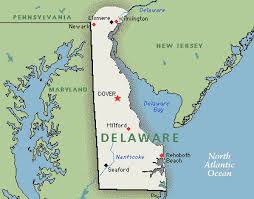
In a ruling that is sure to provoke controversy in the insurance community, the Delaware Supreme Court held in a split decision that, because the corporate parent was not a Named Insured under the applicable Commercial General Liability (CGL) policies, the corporate parent’s payment of the self-insured retentions (SIRs) did not satisfy the SIR requirements, and therefore that the insurers’ coverage obligation was not triggered. As discussed below, there is a lot to say about the Court’s decision, which is, in my opinion, a doozy. The Court’s August 12, 2025, opinion can be found here.
Continue Reading What Happens if Parent Rather than “Named Insured” Subsidiary Pays the Retention?False Claims Act Defendant Hit with Follow-On Securities Suit

Regular readers undoubtedly have noticed that I have been writing a lot lately about the False Claims Act (FCA). That is because the Trump Administration has decided to deploy the FCA as one of its principal legal tools to enforce and advance its policy objectives. Insurers wondering what the administration’s enforcement approach may mean for their claims portfolios may want to take a look at the securities class action lawsuit recently filed against online insurance broker SelectQuote. The company, whom the DOJ sued in May in a False Claims Act suit alleging the company received “illegal kickbacks” from insurers, has now been hit with a follow-on securities suit relating to the FCA allegations. As discussed below, the new follow-on lawsuit suggests that D&O insurers will want to consider the implications of the administration’s active deployment of the FCA as an enforcement tool. A copy of the August 11, 2025, lawsuit against SelectQuote can be found here.
Continue Reading False Claims Act Defendant Hit with Follow-On Securities SuitGuest Post: When Fraud Leads to Fraud
In the following guest post, Sarah Abrams considers the potential D&O liability and insurance implications of a class action lawsuit Meta’s social media platform users recently brought against the company alleging that advertisements on the company’s sites enabled a stock manipulation scheme. Sarah is Head of Claims Baleen Specialty, a division of Bowhead Specialty. I would like to thank Sarah for allowing me to publish her article as a guest post on this site. I welcome guest post submissions from responsible authors on topics of interest to this site’s readers. Please contact me directly if you would like to submit a guest post. Here is Sarah’s article.
Continue Reading Guest Post: When Fraud Leads to FraudCybersecurity and False Claims Act Liability Exposure

Well-advised companies know that among their key corporate risks are potential liability exposures arising from or related to cybersecurity. A recent U.S. Department of Justice enforcement action highlights the fact that corporate cybersecurity risk may take a number of forms, including, as was the case in the recent matter, potential False Claims Act (FCA) liability for cybersecurity vulnerabilities in products sold to the federal government. The fact that the recent case, involving life sciences company Illumina, settled for $9.8 million, underscores the seriousness of this cybersecurity-related liability FCA exposure.
Continue Reading Cybersecurity and False Claims Act Liability ExposureTrump 2.0 and the Judicial Appointment Power

One of the important ways that a U.S. President can maintain influence long after his or her term of office has ended is through exercise of the judicial appointment power. Because federal judges enjoy lifetime tenure, the judges he or she appoints determine legal outcomes for decades after the end of the President’s administration.
When President Trump took office again in January, he arrived with a judicial appointment track record from his first administration. He had appointed generally well-pedigreed judges that enjoyed the support and even the backing of the conservative Federalist Society. Now, in his second administration, where many of his Presidential initiatives are facing judicial challenges, Trump has soured on his first term appointments and turned on the Federalist Society. He has also adopted a transparently political approach to judicial appointments. Trump’s changed approach to judicial appointments could have significant implications for legal developments for decades to come.
Continue Reading Trump 2.0 and the Judicial Appointment PowerGuest Post: Meta Derivative Litigation Hits Reputation Risk Governance

In the following guest post, Nir Kossovksy examines the issue of corporate governance for reputational risk, through the lens of the recently settled Meta derivative suit. Nir is the CEO of Steel City Re. I would like to thank Nir for allowing me to publish his article as a guest post on this site. I welcome guest post submissions from responsible authors on topics of interest to this site’s readers. Please contact me directly if you would like to submit a guest post. Here is Nir’s article.
Continue Reading Guest Post: Meta Derivative Litigation Hits Reputation Risk Governance