
Photo of Kevin LaCroix

Kevin M. LaCroix is an attorney and Executive Vice President, RT ProExec, a division of RT Specialty. RT ProExec is an insurance intermediary focused exclusively on management liability issues.

Sarah Abrams

One of the more interesting emerging phenomena involving cryptocurrencies has been the recent rise of crypto treasury companies – that is, companies whose primary purpose is acquiring and holding cryptocurrencies as part of their corporate treasury. There arguably are a host of concerns with these kinds of firms. Among other things, and as discussed in the guest post below from Sarah Abrams, there may be issues for these kinds of firms in connection with FDIC deposit insurance disclosure requirements. Sarah is Head of Claims Baleen Specialty, a division of Bowhead Specialty. I would like to thank Sarah for allowing me to publish her article as a guest post on this site.Continue Reading Guest Post: FDIC Advertising Rule and Crypto Treasuries

Just about every company these days is grappling with the arrival of Artificial Intelligence (AI). But what should companies be telling their investors about the impact of AI deployment on their operations and financial results? At a recent meeting, the SEC’s Investment Advisory Committee recommended that the agency issue guidance requiring issuers to provide disclosures about the impact on the company from AI. As discussed below, while the committee’s recommendations may be unlikely to cause the agency to issue AI disclosure rules or guidance, the committee’s recommendations do provide a useful framwork to consider corporate AI-related disclosure best practices.Continue Reading SEC Investor Advisory Committee Recommends AI-Related Disclosure Guidelines

Alexander Hopkins

One of the most important developments in the business, economic and financial arenas has been the recent emergence of Artificial Intelligence (AI). The advent of the AI era has also presented novel legal issues and has presented regulators with a host of potential challenges. In the following guest post, Alexander Hopkins takes a look at the developing efforts of a variety of governmental regulators to address the issues that AI presents, and considers the implications of these regulatory developments for the liabilities of corporate directors and officers. Alex is Of Counsel at the Saxe Doernberger & Vita, P.C. law firm. I would like to thank Alex for allowing me to publish his article as a guest post on this site.Continue Reading Guest Post: Global AI Regulations: D&O Liability Implications in a Changing Legal Landscape

It is already well understood that there has been a change in direction at the SEC under the current Trump Administration and SEC Chair Paul Atkins. In a speech earlier this week at the New York Stock Exchange entitled “Revitalizing America’s Markets at 250,” Atkins described the ways in which he thought the agency in recent times has lost its direction, particularly with respect to its public company disclosure requirements. With the stated aim of restoring its original mission, Atkins identified two main public company disclosure reform goals for the agency. He also set out “three pillars” to “make IPOs great again.” Atkins’s IPO-related remarks include brief but noteworthy comments about securities class action litigation reform that have largely been overlooked in the press coverage of his speech.Continue Reading SEC Chair Paul Atkins and Public Company Disclosure Reform

The Trump Administration’s tariff policies have unquestionably had an impact on the global economy, as well as on the operations and financial performance of at least some individual companies. However, the overall impact has turned out to be less than economists and other observers feared at the time of President Trump’s “liberation day” announcement earlier this year. As discussed below, a number of factors have contributed to the tariffs’ muted impact. However, there are reasons to be concerned that the full effect of the tariffs is yet to kick in so far but may be felt in 2026, with potential consquences for D&O insurance underwriters. Continue Reading Big AI Investments Have Muted the Tariff Impact. But Will it Continue?

Sarah Abrams

In the coroporate law context, a “poison pill” — formally known as a shareholder rights plan — is a corporate defense strategy used to deter hostile takeover attempts. But what if the poison pill is designed to entrench incumbent senior company management rather than to deter unwanted takeover suitors? In the following guest post, Sarah Abrams, Head of Claims Baleen Specialty, a division of Bowhead Specialty, examines this question and considers the D&O insurance underwriting implications. My thanks to Sarah for allowing me to publish her article as a guest post on this site. Here is Sarah’s article. Continue Reading Guest Post: Poison Pill

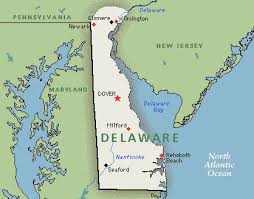
In the current heated DExit debate over whether companies incorporated in Delaware should reincorporate elsewhere (usually Texas or Nevada), one factor often cited is the expense of litigating in Delaware, usually as a shorthand reference to a contention that plaintiffs’ counsel’s fee awards in Delaware’s court are out of control. This argument typically cites to a few recent cases in which the fees awarded unquestionably were large; recent academic studies have taken the argument further to contend that the fees awarded in some cases were excessive.

However, a more recent study, based on a comprehensive overview of all Delaware court fee awards in the last ten years, challenges the premise that fee awards are out of control; the study finds, rather, that fee awards generally have been within reasonable bounds, and argues that a very small number of outliers should not drive the analysis of the issues. The study concludes that Delaware’s flexible approach to fee awards provides the appropriate incentives for plaintiffs’ counsel and includes safeguards to protect against excessive fee awards. Perhaps most significant in light of the current controversy is the study’s authors’ finding that “we find no evidence that Delaware fees are systematically excessive.”Continue Reading But ARE Plaintiffs’ Counsel Fee Awards in Delaware Excessive?

In a recent post, I noted the significant downturn in the amount of SEC enforcement activity during the 2025 fiscal year (ended September 20, 2025). What was true FY 2025 with respect to SEC enforcement activity in general was also true in particular with respect to SEC enforcement activity involving publicly traded companies. According to a new report, SEC enforcement activity against public companies and their subsidiaries also declined significantly during FY 20225. The report, written by Cornerstone Research in conjunction with the Securities Enforcement Empirical Database (SEED) of the NYU Pollack Center for Law & Business, contains a number of interesting observations about the level of enforcement activity in the agency’s final days under outgoing SEC Chair Gary Gensler, compared to the activity levels under the agency’s current Chair, Paul Atkins.Continue Reading Cornerstone Research: SEC Public Company Enforcement Actions Decline

Sarah Abrams

A recent series of U.S. Department of Justice actions highlights the agency’s focus on combatting so-called “pig-butchering” — a type of online financial scam where fraudsters build a long-term relationship with a victim to gain trust and then convince the victim to invest in fake cryptocurrency or trading schemes. In the following guest post, Sarah Abrams, Head of Claims Baleen Specialty, a division of Bowhead Specialty, takes a look at how developments in the crypto world coinciding with the DOJ’s crackdown may be creating increased D&O risk arising from pig-butchering schemes. I would like to thank Sarah for allowing me to publish her article on this site. Here is Sarah’s article.Continue Reading Guest Post: Another Emerging Cryptocurrency Risk for D&O Underwriters?