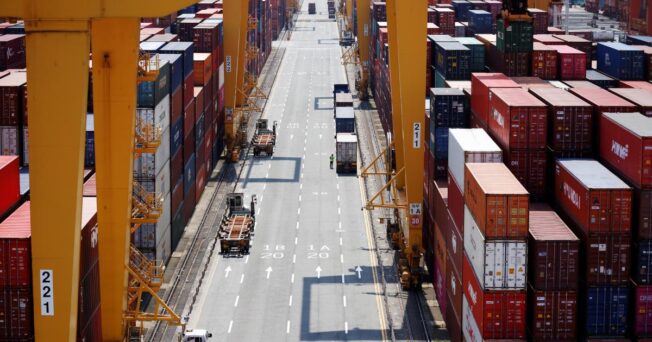
In the immediate aftermath of the U.S. Supreme Court’s ruling that President Trump lacked authority to impose tariffs under the International Economic Emergency Powers Act (IEEPA), the President defiantly issued an Executive Order imposing new global 10% tariffs (later raised to 15%) in reliance on the Section 122 of the Trade Act of 1974. No President previously has used Section 122 to impose tariffs. Now a coalition of 24 states’ Attorneys General and Governors has filed a lawsuit in the United States Court of International Trade against the President and certain of administration officials challenging the President’s Section 122 tariffs. The plaintiffs argue that the circumstances under which the President has authority under Section 122 to impose tariffs not only does not exist now, but has not existed for over 50 years following changes in the global monetary exchange system in the 1970s. The likelihood is that the President will have to find yet another basis on which he can impose tariffs – which he seems likely to continue to try to do.Continue Reading State AGs Challenge President’s Trump’s Section 122 Tariffs