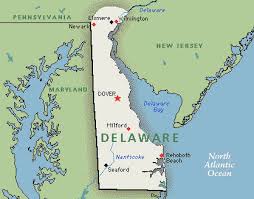
In late March, Delaware enacted S.B. 21, legislation calculated to encourage companies to incorporate in the state, and to stay in the stay, rather than incorporating or reincorporating elsewhere. The bill included measures that could affect corporate litigation in Delaware in ways that may undercut litigation efforts of shareholders (and their lawyers). The plaintiffs’ lawyers apparently are prepared to fight back.

Earlier this week, in a new lawsuit involving Acushnet Holdings Corp., plaintiffs’ lawyers filed a Delaware Chancery Court complaint that, among other things, challenges the constitutionality of S.B. 21. This new suit joins earlier litigation previously filed also challenging S.B. 21’s constitutionality, as discussed below.  A copy of the latest complaint, filed in Chancery Court on May 5, 2025, can be found here. (Hat tip to Anthony Rickey, of Margrave Law LLC, who posted the complaint in a LinkedIn post, here.)Continue Reading Claimants Challenge S.B. 21 Constitutionality

Sarah Abrams

In the wake of the SPAC IPO frenzy in 2021, SPAC activity cratered. However, as detailed in the following guest post from Sarah Abrams, there are signs that SPAC IPOs may be making a comeback, a revival that may raise certain concerns. Sarah is Head of Claims, Baleen Specialty, a division of Bowhead Specialty. I would like to thank Sarah for allowing me to publish her article as a guest post on this site. I welcome guest post submissions from responsible authors on topics of interest to this site’s readers. Please contact me directly if you would like to submit a guest post. Here is Sarah’s article.Continue Reading Guest Post: SPACs are Back

Earlier this month, when President Trump announced comprehensive tariffs, I speculated about whether or not the administration’s new tariff policy could create an environment that could lead to legal claims against some companies and their directors and offices. While I anticipated (and continue to anticipate) the possibility that there will be tariff-related D&O claims, one possibility I had not considered is the prospect that the new U.S. tariff regime could lead to increased number of tariff-related False Claims Act claims.

In an interesting April 16, 2025, memo, the Nixon Peabody law firm explains how “evasion of tariff requirements, including via false representation of countries of origin and undervaluation or misclassification of goods, creates the risk of substantial liability under the False Claims Act.” The law firm’s memo can be found here. (Hat Tip: John Jenkins of The CorporateCounsel.net Blog, who linked to the law firm memo in his April 23, 2025, post on the blog.)Continue Reading Trump’s Tariffs and the Risk of False Claims Act Liability

Sarah Abrams

Recent reports have brought to light the disturbing story that many companies may have unwittingly hired North Korean operatives as outsourced IT professionals. In the following guest post, Sarah Abrams, Head of Claims Baleen Specialty, a division of Bowhead Specialty, considers the potential claims exposure that could arise for companies that have hired the North Korean operatives. I would like to thank Sarah Abrams for allowing me to publish her article as a guest post on this site. I welcome guest post submissions from responsible authors on topics of interest to this site’s readers. Please contact me directly if you would like to submit a guest post. Here is Sarah’s article. Continue Reading Guest Post: North Korean Hiring Exposure

Those trying to gauge what Trump 2.0 means for directors’ and officers’ liability will want to read the Wall Street Journal’s April 13, 2025, article entitled “Trump Administration Retreats from White-Collar Criminal Enforcement” (here). The article contains statements of large law firm partners expressing their anxiety that the administration’s approach to white-collar crime prosecution will mean “significant slowdown” in law firm revenue from criminal defense work. But what may be bad news for law firms could be good news for corporate executives, because the Trump administration’s approach may mean corporate executives could face a reduced risk of criminal prosecution, at least for certain kinds of criminal allegations.Continue Reading Do Trump Admin Policies Mean Reduced Risk of White-Collar Prosecutions?

In late March, in order to try to stop a perceived flood of Delaware companies reincorporating in other states (in particular, Nevada and Texas), the Delaware legislature enacted a significant re-write of important sections of its General Corporation Law (DGCL).  Even though it has just been a few short weeks since the Delaware legislation was enacted, it is not too early to start asking whether the legislative changes will stop Delaware companies from reincorporating in other states. As discussed below, early indications seem to suggest that notwithstanding the legislative changes, at least some Delaware corporations will continue to seek to reincorporate elsewhere.Continue Reading Will Delaware’s Recent Corporate Law Revisions Stop Reincorporations?

In prior posts (most recently here), I have noted the ways the new Trump administration’s policies and actions could affect the D&O liability and insurance arena. In the current rapid-fire environment, with daily developments that threaten to overturn established practices and norms, just trying to keep up – much less understand the significance of events – can be a challenge. In an effort to try to keep the scoreboard up to date, I have noted below some of the most recent key developments and tried to describe their significance for the D&O environment.Continue Reading Trump 2.0: The Latest D&O Update

On Tuesday, March 25, 2025, the Delaware House of Representatives passed S.B. 21, the legislation designed to try to fight back against the move by some Delaware companies to reincorporate elsewhere, particularly in Texas or Nevada. The Delaware Senate previously passed the bill, which has been called the “most significant single-year revision of Delaware’s corporate code since at least 1967.   Delaware Governor Matt quickly signed the legislation the same day as the House passed the bill. While the legislation is primarily intended to try to stem the departures of Delaware companies to other states, it could also have a significant impact on future litigation in the state, as discussed below.Continue Reading Delaware Bill Meant to Stem Corporate Departures Enacted

As readers of this blog well know, a recent debate has been brewing over whether Delaware corporations should de-camp and reincorporate in another state, with Nevada and Texas often the preferred candidates. This debate gained momentum when Elon Musk called for states to redomesticate outside Delaware after the state’s courts struck down his ginormous Tesla pay package. As discussed here, in response to the DExit debate, Delaware legislators have now proposed a massive revision to Delaware’s corporate laws, among other things as a way to try to stop the perceived retreat of companies from Delaware. It now appears that opponents of the legislation are mounting an organized campaign to oppose the proposed revisions. It looks like the game is on for the proposed changes, as the bill sponsors prepare to try to move the legislation forward.Continue Reading Critics Launch Campaign Opposing Delaware SB 21

As readers of this blog undoubtedly are aware, one of the provocative topics that has emerged in recent months is whether companies incorporated under the laws of Delaware should redomesticate under another state’s law, with Texas and Nevada as the alternative states typically under discussion. This ongoing debate has gained momentum in recent days, as additional firms have signaled an intent to move on from Delaware. There have also been a number of other key developments, including the introduction of legislative initiatives and an important court decision, providing further context for the ongoing discussion. Because the discussion of this topic is unlikely to end any time soon, it is important to recognize and understand the recent developments.Continue Reading The Delaware Redomestication Debate Heats Up