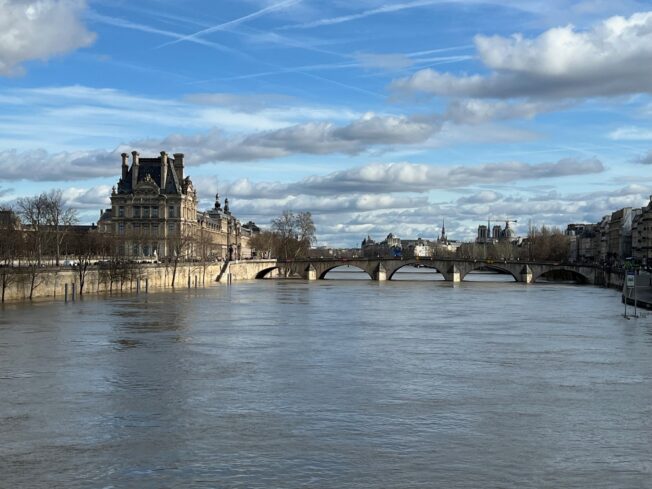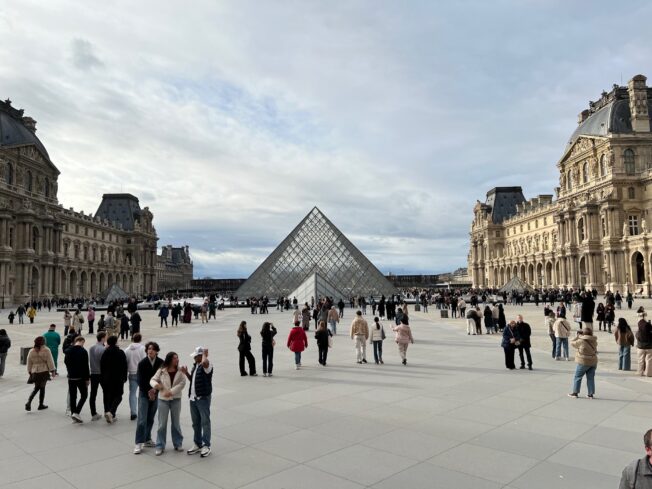
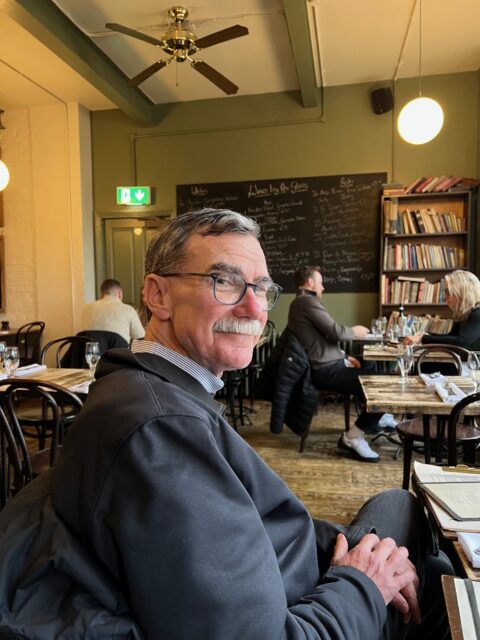
The D&O Diary was on assignment in Europe last week, with a first stop in Dublin for client meetings, followed by a long weekend visit to Paris. February is not the best time to visit Europe, as it can be cold and dark, and on this visit both cities were kind of damp, as well. But notwithstanding the generally gloomy and occasionallly wet weather, it was a great visit overall.
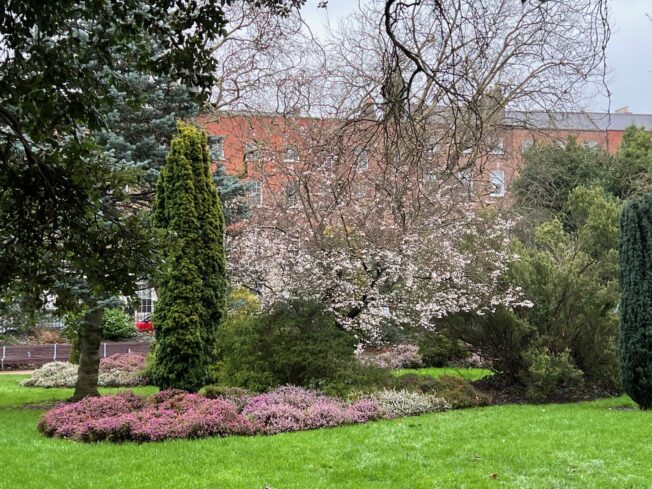
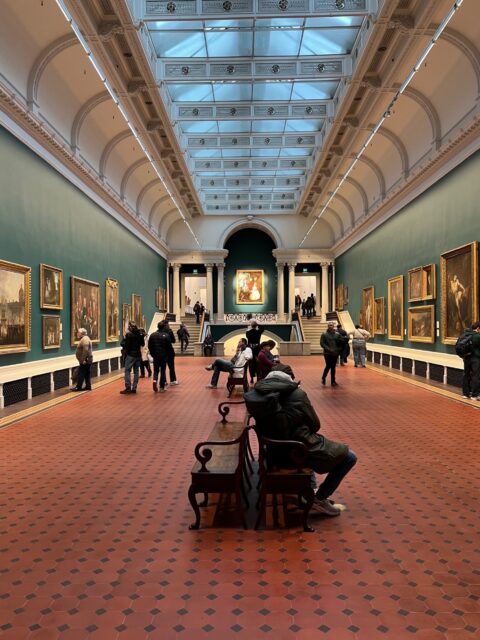
Dublin is such a great place to visit, even in the winter gloom. It is so pleasantly walkable and full of life. During our short Dublin visit, we did enjoy occasional breaks of sunshine, which helped a little bit to lift the winter gloom.
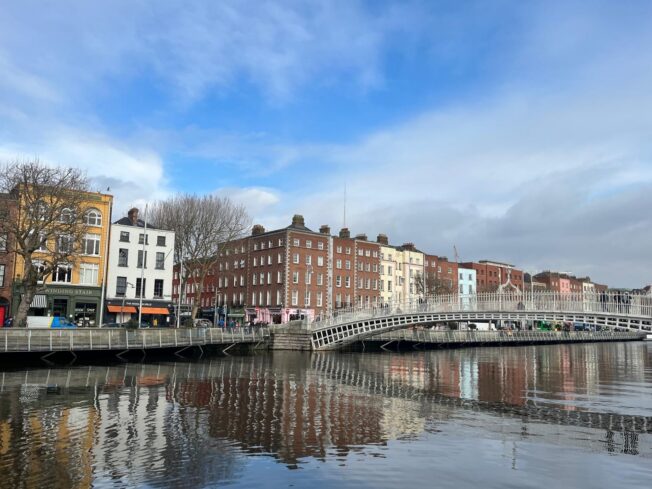
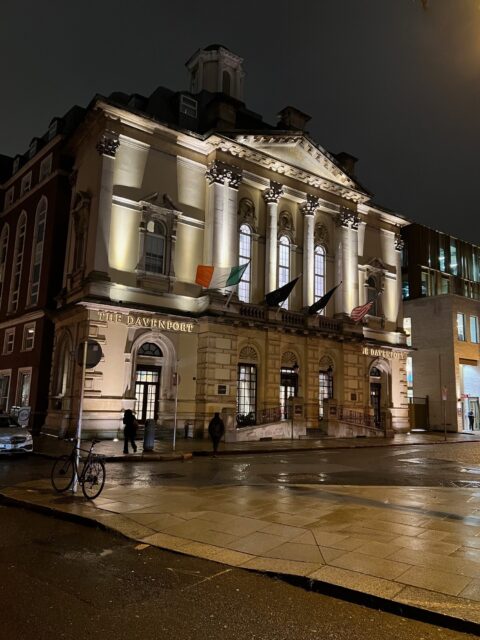
Our visit to Dublin was short, and we were soon off for a weekend visit to Paris. It is surprisingly inexpensive and easy to travel from Dublin to Paris — the air fare was just a little more than 100 euros. In a scene change so dramatic it almost gave us whiplash, we quickly found ourselves in Paris and on an RER train from Charles de Gaulle airport on our way into the center city.
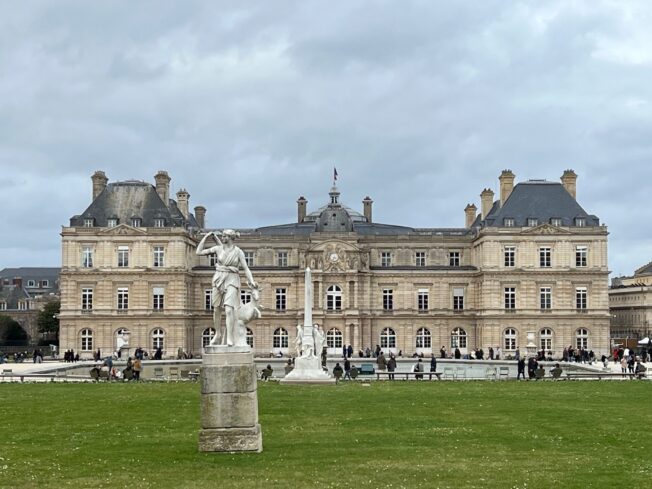
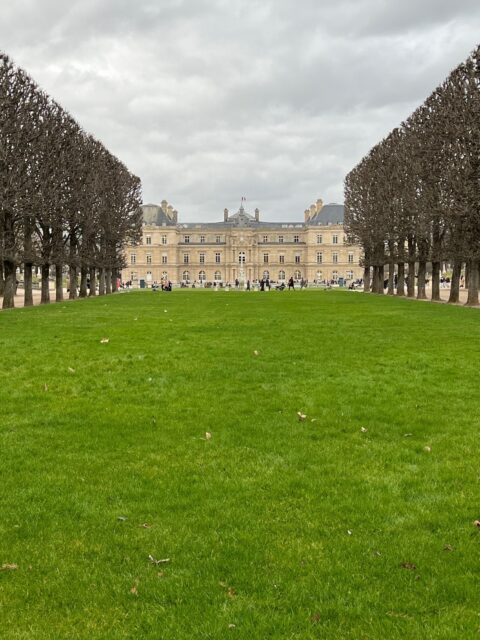
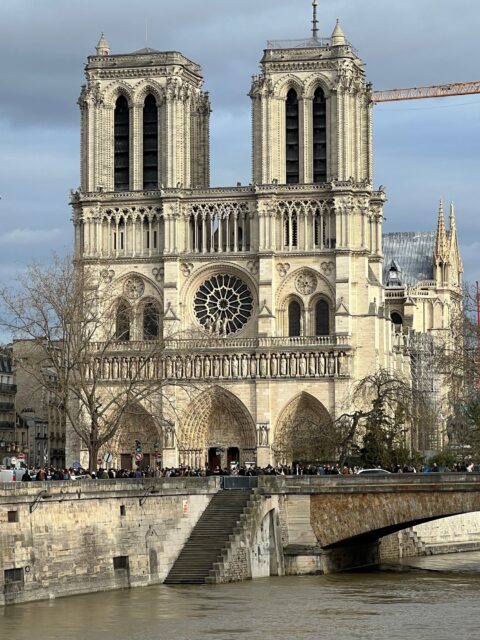
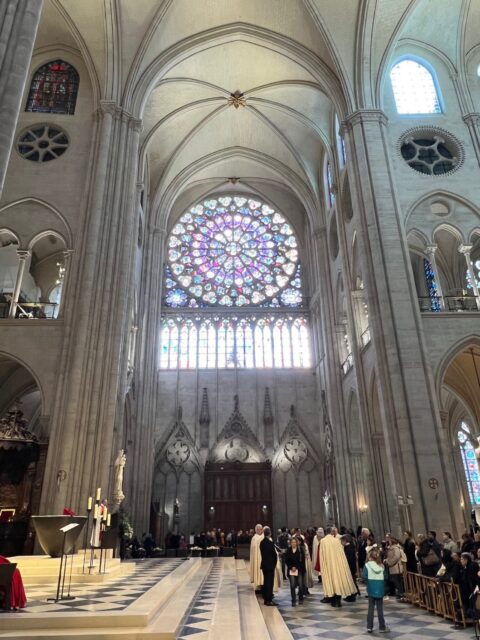
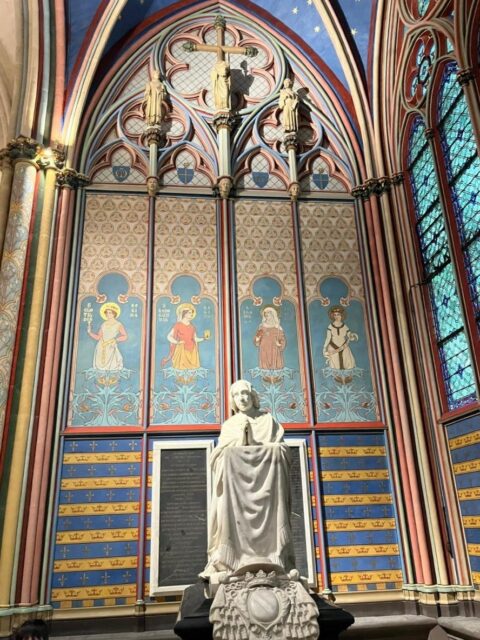
After our mandatory arrival walk through the Jardin du Luxembourg, our next stop was a visit to Notre Dame. I saw the renovated and re-opened church on my prior Paris visit, but my wife had not seen it, so we had to stop and see it.
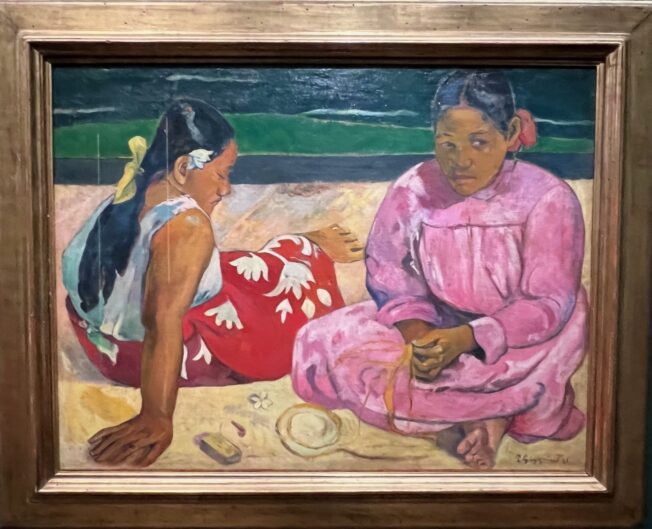
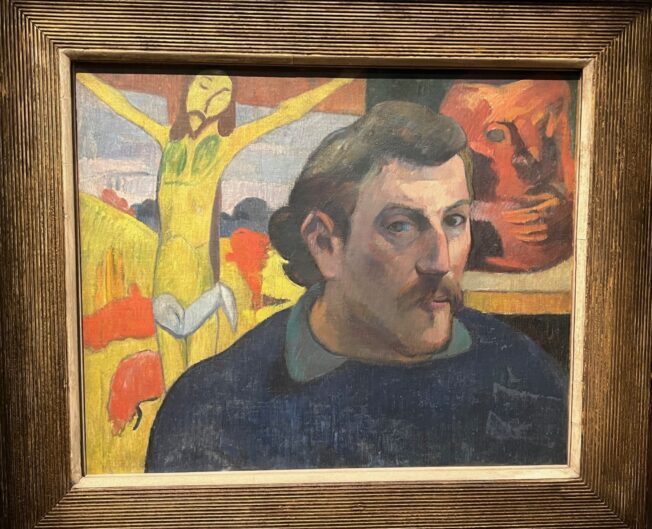
On Saturday morning, we had a major project, which was to visit the Musée d’Orsay, for a very specific objective. Over the winter, I had read Sue Prideaux’s excellent one-volume biography of Paul Gauguin entitled Wild Thing. I had never really clicked with Gauguin’s art before, but reading the biography left me wanting to see his work again, particularly the paintings from his Tahitian travels. The Musée d’Orsay has an excellent collection of his paintings and sculptures, particularly from Gauguin’s time in Tahiti. It was great to have a chance to see and consider the paintings after having read the book. The paintings’ vibrant colors had always been apparent; closer consideration revealed the depth and even the mystery of the work. (I highly recommend the book even if you will not have an immediate opportunity to study Gauguin’s art in person.)
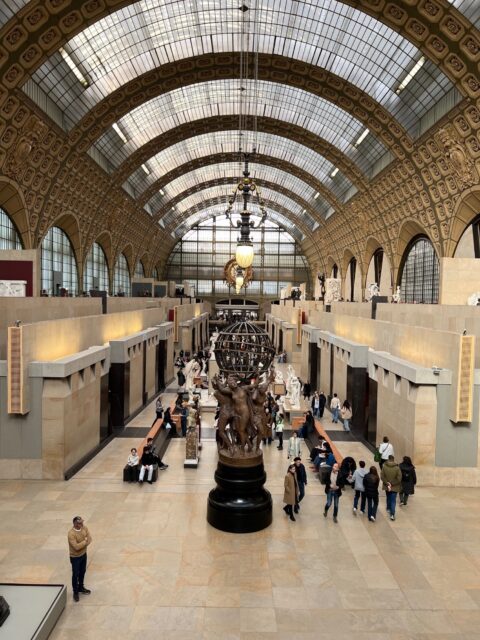
The museum’s Fifth (top) floor is full of some of the most famous artwork from the Impressionist and Post-Impressionist era. The galleries with the works of Van Gogh, Monet, and Cezanne were absolutely packed while we were there. The separate galleries with Gauguin’s work, located at the end of a long series of rooms with Impressionist art, were relatively uncrowded, allowing plenty of opportunity for study and contemplation.
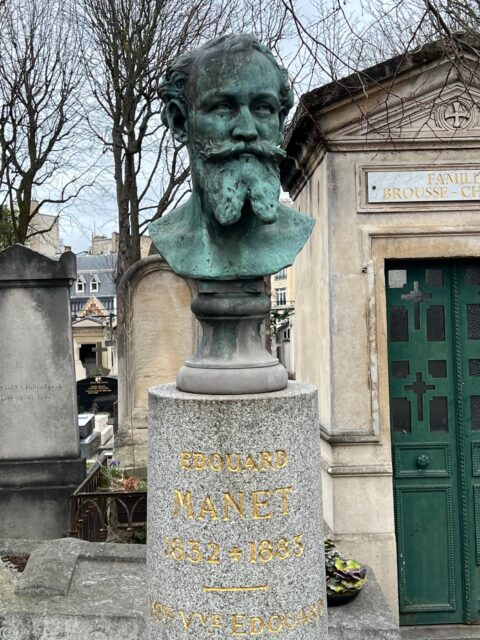
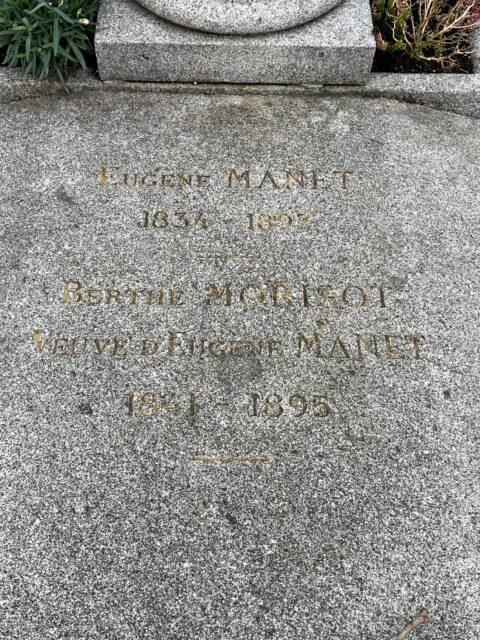
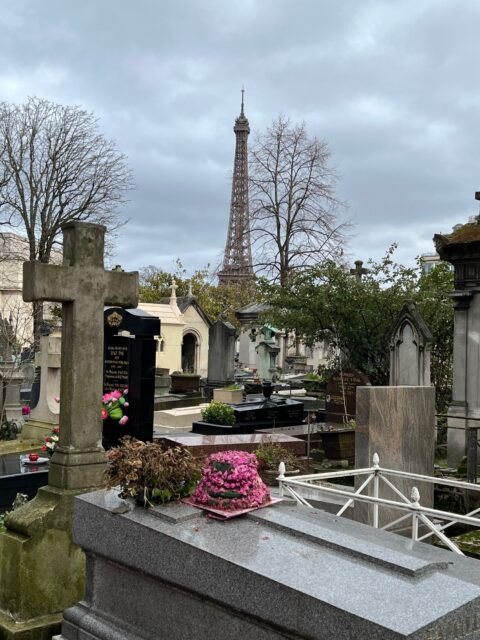
On Sunday morning, we had a different project, which required us to visit the Cimetière de Passy, located near the Place de Trocadéro, across the river from the Eiffel Tower. Admittedly, the cemetery is not on many tourist itineraries. Our purpose in visiting was to see the grave of the impressionist painter, Édouard Manet. My desire to see his grave arose from reading yet another book over this past winter, Sebastian Smee’s Paris in Ruins: The Siege, The Commune, and the Birth of Impressionism. The book tells the story of Paris during the Franco-Prussian war and its immediate aftermath, from the perspective of two of the key painters of the Impressionist era, Manet and Berthe Morisot. The two artists had a deep and enduring relationship, in which each influenced the other artistically. Morisot would go on to marry Manet’s brother, and both the brother and Morisot are buried next to Manet. (I have often thought there is the plotline here for an interesting movie in the two artists’ story.)
The only problem with visiting Paris is that eventually you have to leave. We were off on Monday morning on the Eurostar train for London. The thing about leaving Paris is that even as you are just departing, you are already thinking about when you will return.