Prague Old Town Square

The D&O Diary is on assignment in Europe this week, with a first stop in Prague, the capital and historic heart of the Czech Republic. Nestled on the banks of the Vltava River, Prague is a living museum of architectural treasures. With its bridges, castles, and rich history, Prague is one of Europe’s most charming cities.

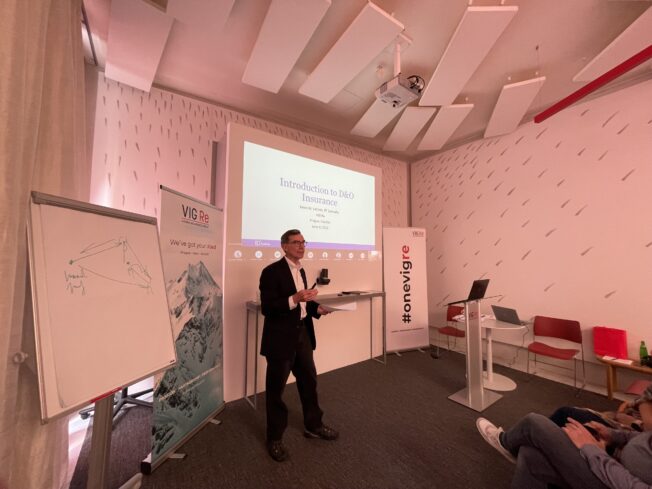
The primary reason for my visit to Prague was to participate in a P&C Group Workshop at VIG Re, which is headquartered in Prague. About 40 VIG Re professionals from 13 different European countries gathered in Prague for the event. It was my honor and pleasure to address the group with a primer on D&O insurance. I really enjoyed the session. The attendees were lively and engaged, and asked excellent questions.
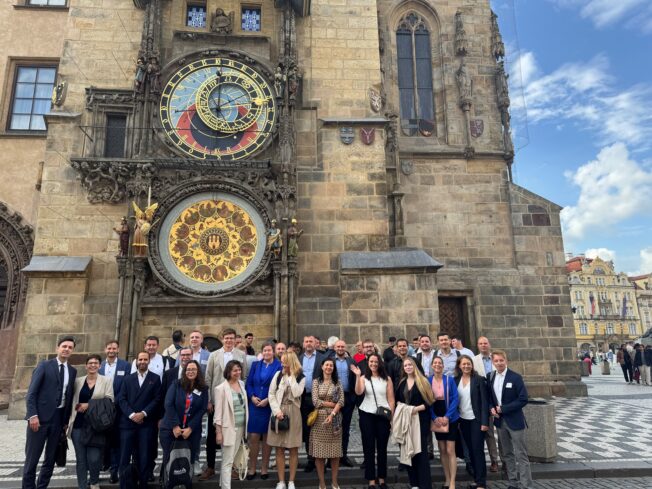
Here’s a group picture of the VIG Re event attendees. The picture was taken while we were walking to dinner the first night of the event. In the picture, we are standing in front of the famous Prague astronomical clock, which is attached to the Old Town Hall in the Old Town Square. The clock, which is a really astonishing work of engineering, recently celebrated its 600th anniversary.
It was a honor to be able to address the VIG Re event attendees. I always feel that if I am having fun during a presentation, then it must be going well. I had a lot of fun addressing this group. They asked a lot of very interesting questions.
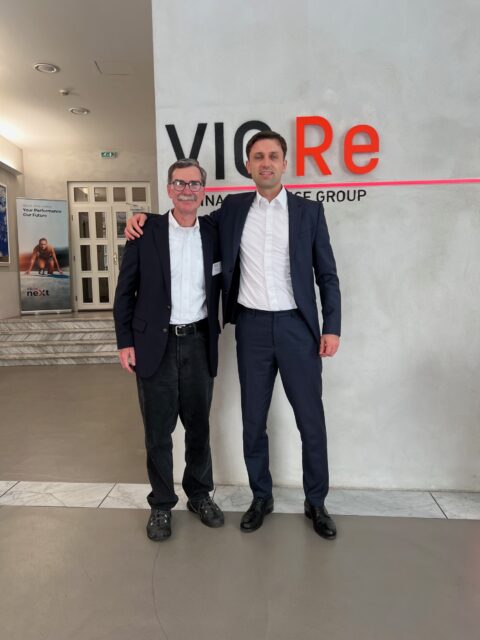
Here’s a picture with Markus Schmid of VIG Re. Markus invited me to attend the event and was my host while I was in Prague. I am grateful to Markus for inviting me to be a part of this excellent event. I very much enjoyed the opportunity to meet so many interesting insurance professionals from around Europe.

I also had a chance while I was in Prague to see the city and to enjoy its beautiful architecture. The Staré Město district, Prague’s old town, is an interesting mix of Gothic, Baroque, and Renaissance architecture. The Nové Město district, Prague’s new town, is called “new” even though it dates back to the 14th century, is also interesting mix of architectural styles, including a profusion of buildings built in the late 19th and early 20th centuries in the Art Nouveau style.
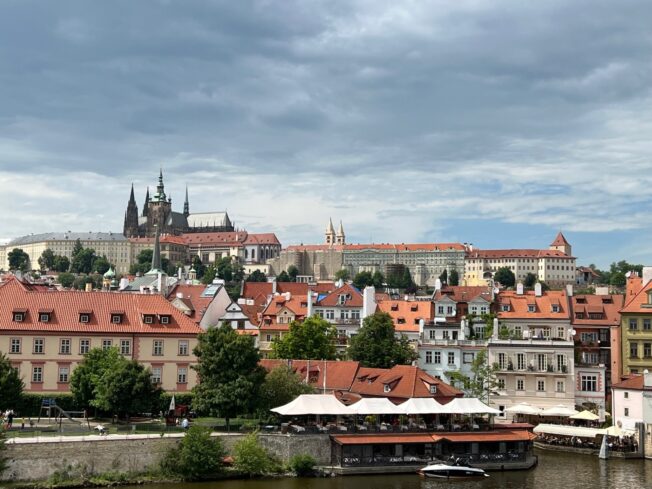
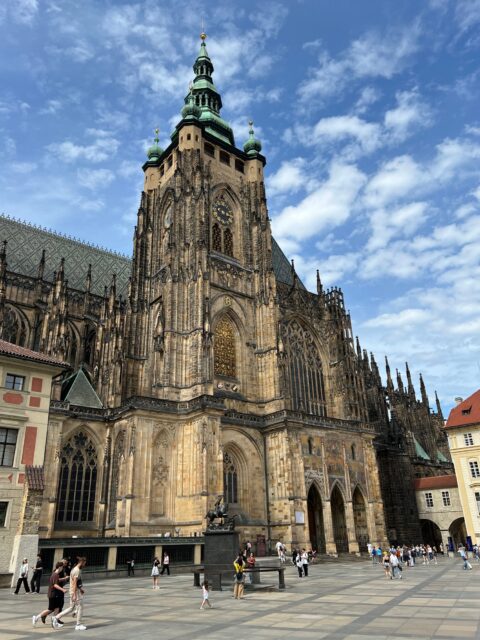
Prague Castle is perched on Hradčany Hill, overlooking the Vltava River, in the heart of Prague. It dominates the city’s skyline and is a central feature of the historic center and is a UNESCO World Heritage Site. The Castle is a complex of different buildings, the oldest of which dates back to the 9th century. The castle’s profile is dominated by the spires of the St. Vitus Cathedral.
This is the southern transept of the Cathedral. Construction on the Cathedral was begun in the 14th century, but it was not completed until 1929, nearly 600 years later.
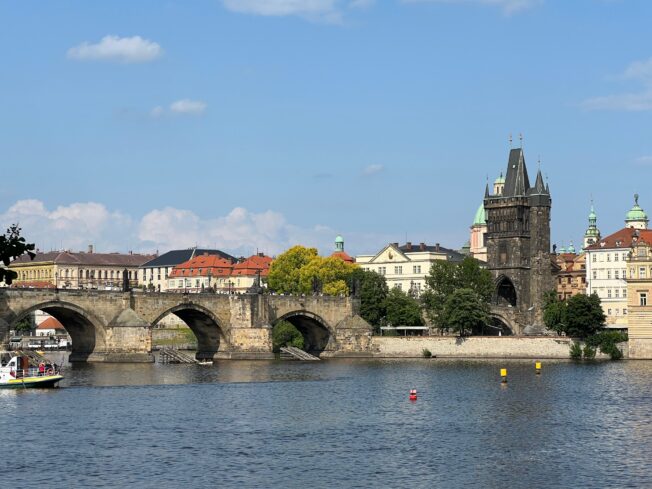
To reach the Castle from the city’s Old Town, you have to cross the river on the Charles Bridge (Karlův most). The medieval stone bridge is lined with sculptures and has come to be something of a symbol of the city’s long history, resilience, and grandeur.
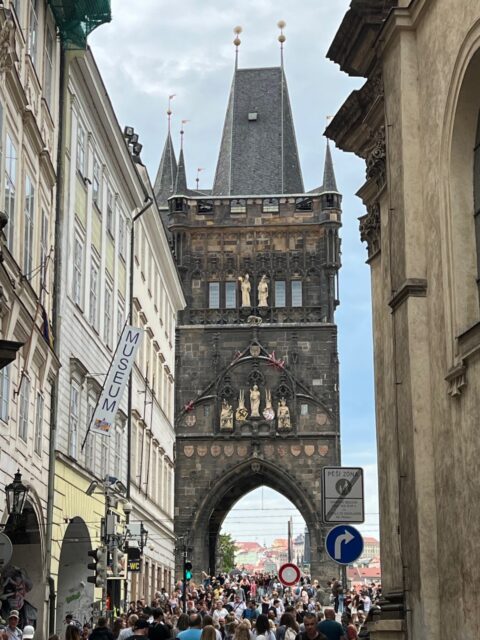
The Charles Bridge is approached from the Old Town side though the Old Town Bridge Tower. The bridge is a popular tourist destination, and you can see in this photo the crowds of tourists approaching the bridge. (Prague is great but it is also full of tourists.)
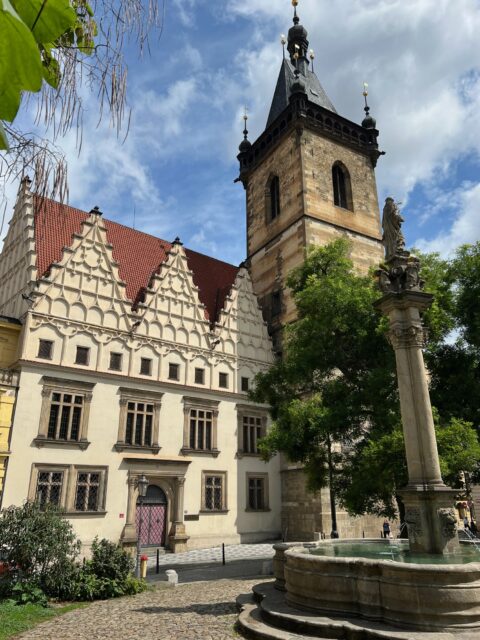
This is the New Town Hall, located on Charles Square (Karlovo náměstí) in the city’s New Town. Those of you who are students of European history will be entertained to know that the New Town Hall was the site of the first defenestration of Prague.
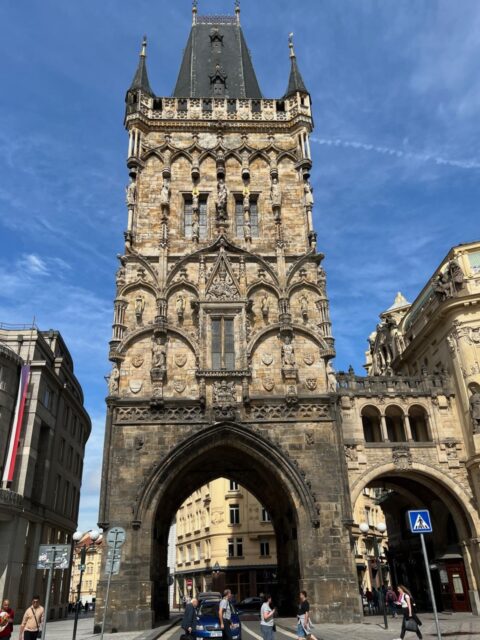
This is the Powder Tower Gate, one of the 13 original gates to Prague’s Old Town, built during the late 15th century. The Tower separates Prague’s Old Town and New Town.
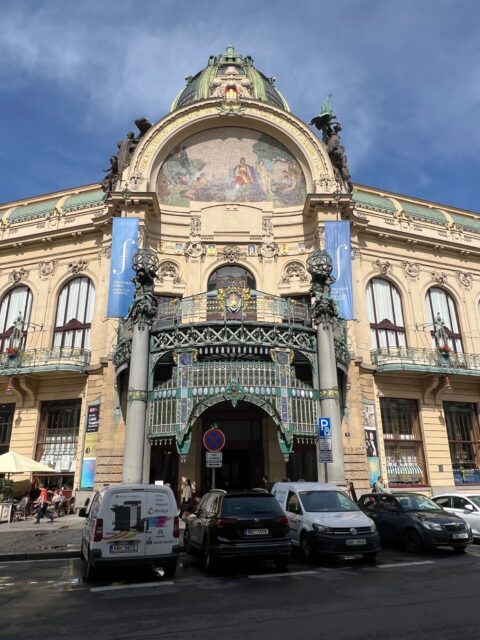
Right next to the Powder Tower Gate on Náměstí Republiky (Republic Square) is the Municipal House, home of Smetna Hall, the city’s major concert venue. Municipal House is one of the city’s many Art Nouveau gems. We had dinner one evening at a sidewalk café in front of Municipal House, and it was great just to sit and enjoy the summer evening and watch the world go by.
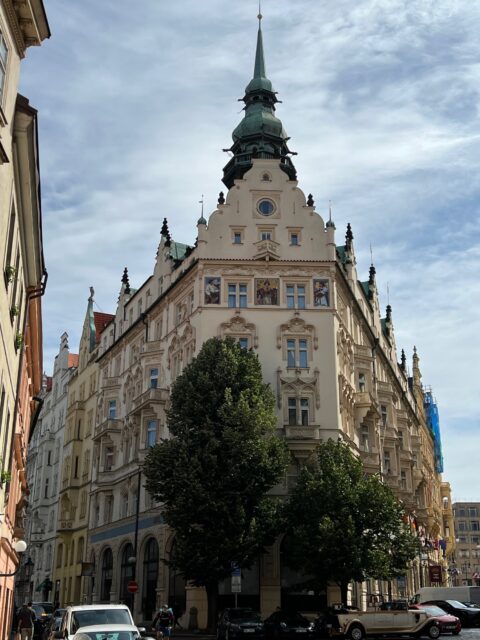
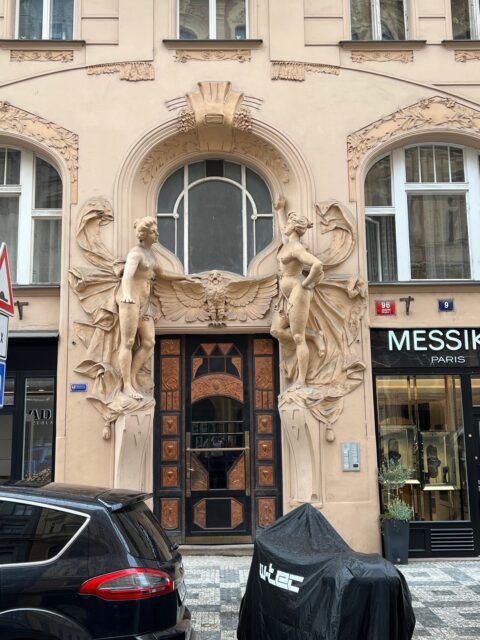
Prague’s Art Nouveau buildings are scattered throughout the city. The Art Nouveau buildings’ softer pastel colors, elegance, and style provide an interesting contrast to the city’s dark Gothic and Baroque structures. The Art Nouveau buildings give the city the feeling of being a living gallery. I could walk along Prague’s streets endlessly, just looking at the city’s beautiful buildings.
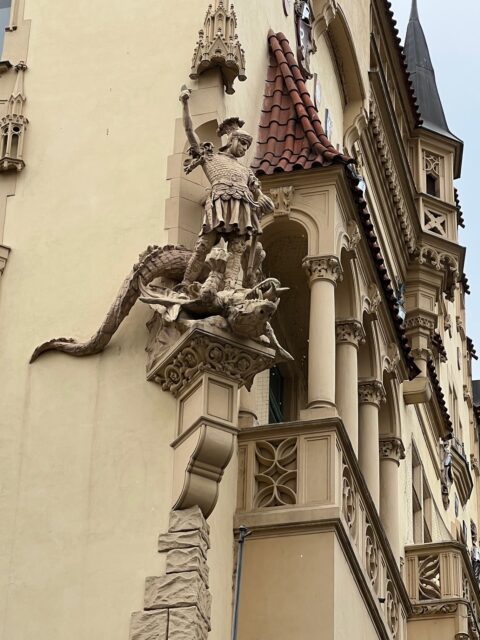
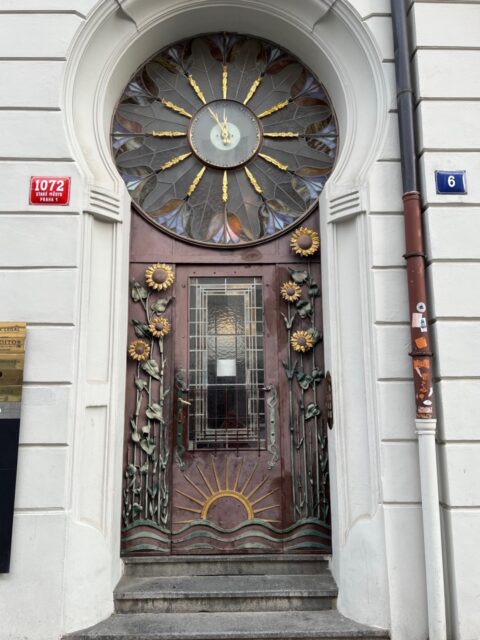
One of the rewarding aspects of strolling through Prague are the many interesting building design features on view.
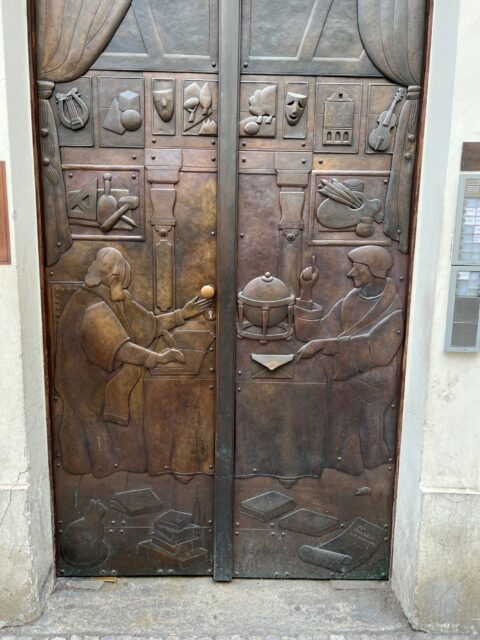
Among the many compelling features of Prague’s Art Nouveau buildings are the many interesting and sometimes intricate entrances.

This bronze door depicts a symbolic meeting between John Amos Comenius, the Czech humanist and philosopher, and Desiderius Erasmus, the Dutch philosopher and theologian.
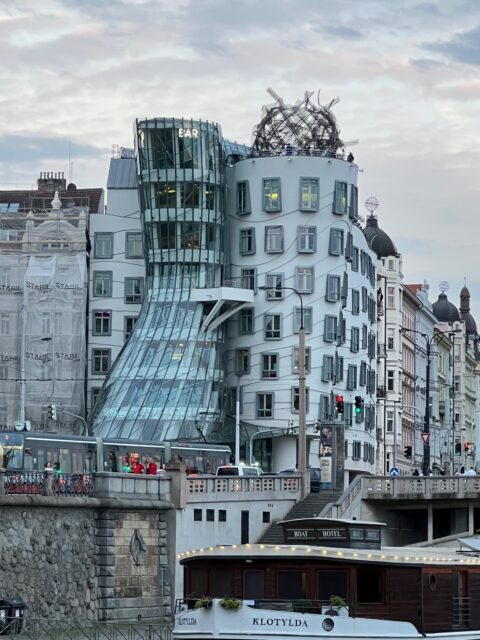
Not all of the interesting buildings in Prague are old. This building, completed in 1996, is known for obvious reasons as the Dancing House. The building was a collaborative project between the Croatian-Czech architect Vlado Milunić and the Canadian-American architect Frank Gehry. Long time readers know that I am a huge fan of the work of Frank Gehry.

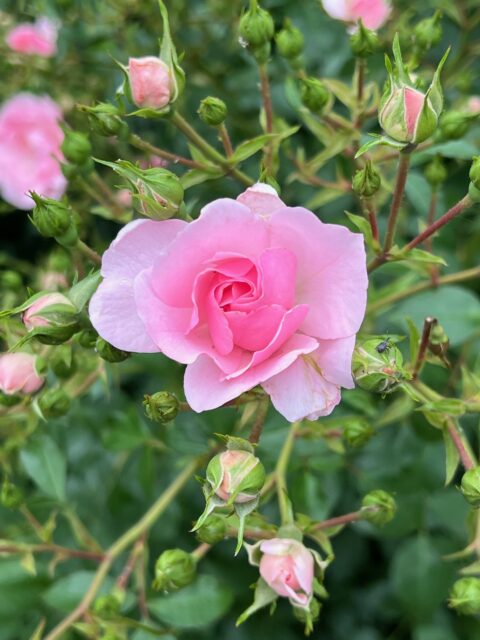
June is a particularly nice time to visit Prague. The flowering plants are blooming throughout the city. The city is also not yet quite as hot as I know it can get later in the summer. (This picture was taken in the Prague Botanical Garden, which I highly recommend.)
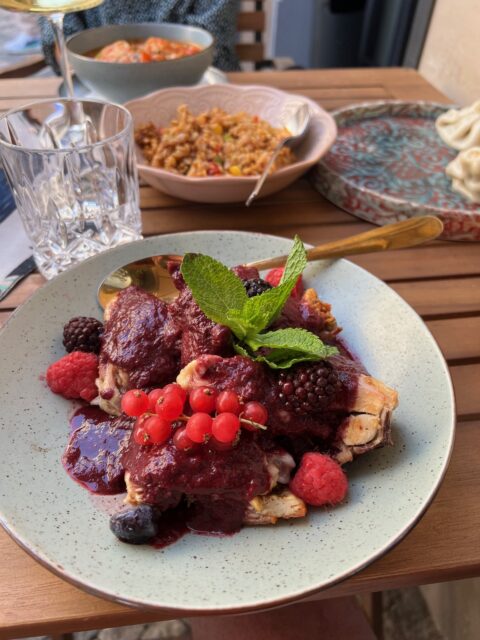
For anyone planning on visiting Prague anytime soon, I also have a restaurant recommendation. The restaurant, called Baraqa, is located near the Old Town Square and serves Georgian food (Georgian, as in the Caucasus Mountains, not Georgian, as in Peachtree Street.) This dish, Roast Chicken with Blackberry Sauce, was absolutely superb.
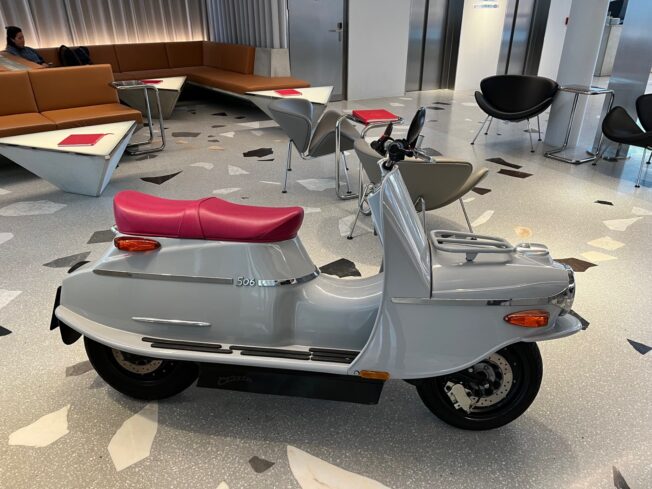
I also have a hotel recommendation as well. The Hotel Josef is a stylish, pleasant hotel located just a few blocks away from the Old Town Square (just far enough away to avoid the tourist hordes). I have actually stayed in the hotel twice now, and can confirm that it is comfortable and conveniently located. Nice staff, great breakfasts. (Yes, there is a motor scooter in the hotel lobby.)

I have one further recommendation. For anyone traveling to Prague, particularly first- time visitors, I recommend Prague Tales, a collection of short stories written by the Czech author Jan Neruda. The stories are set in Malá Strana (literally, the Little Side of the River), a pleasant district between the Castle Hill and the wooded Petřín hill. The stories are wry, humorous, and entertaining, and convey a very interesting sense 19th century Prague.
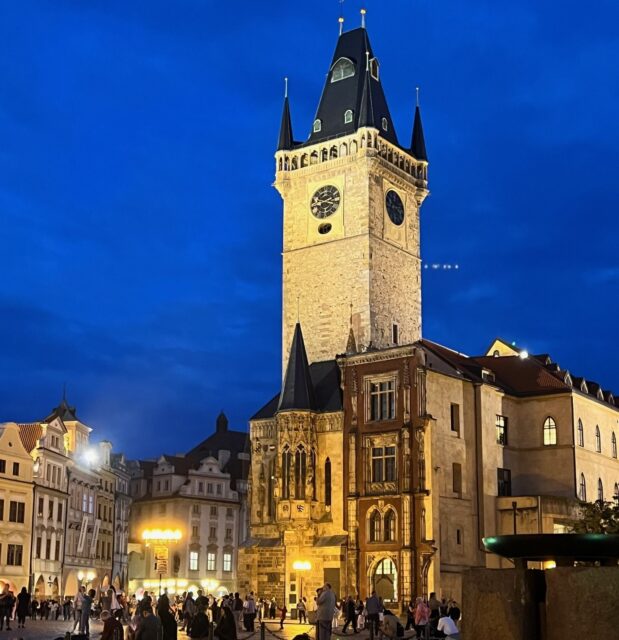
Prague is such a great place, with such a deep, interesting history, and full of interesting places to see. Just walking through the city streets or along the river are truly pleasant experiences. Prague is truly among the great places to visit.