Public company D&O insurance policies restrict “entity coverage” (that is, coverage for claims directly against the corporate entity, as opposed to those against individual directors and officers) to “Securities Claims.” If a claim against the company is not Securities Claim then there is no coverage for the company’s defense fees, settlements, and judgments. This obviously creates a huge incentive for the companies to try to show that the claims against them are Securities Claims – which, in turn, has spawned a great deal of coverage litigation addressing the question whether or not a particular corporate lawsuit is or not a Securities Claim.
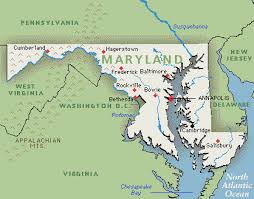
In the latest example of these kinds of coverage disputes, last week the District of Maryland, applying Maryland law, held that an antitrust claim filed against a corporate entity was not a securities claim within the meaning of the applicable policy – not because the antitrust claim was not “Securities Claims,” but rather because the dispute did not involve alleged transactions in the securities of the company or its subsidiaries. The Maryland court’s March 24, 2026, opinion can be found here.Continue Reading D&O Insurance: Not a “Securities Claim” if No Securities of the “Company” Involved

 Coverage for the corporate entity under public company D&O insurance policies is limited to claims that constitute “Securities Claims” as that term is defined in the policy. A coverage dispute between Calamos Asset Management and its D&O insurer involved the question of whether an underlying breach of fiduciary duty claims alleged in connection with the company’s take-private tender offer meet the policy’s “Securities Claim” definition.
 Privately-held companies, on the one hand, and companies whose shares are public traded, on the other hand, face very different liability exposures. Because of these differences in liability exposures, the directors and officers liability insurance available for these types of entities varies – the D&O insurance form available for private companies is quite a bit different from the D&O insurance form available for public companies. A recent law firm memo took a brief look at the differences between the two forms of coverage. There some important additional considerations, that I discuss below.
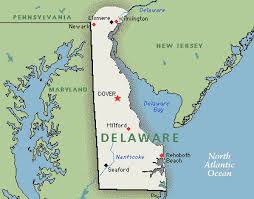
 t is not uncommon for companies to add third parties as additional named insureds to their D&O insurance policies. Most of the time that doesn’t cause any problems. However, serious problems can arise in a subsequent claim if a company’s interests and the interests of the additional named insured conflict. At a minimum, in the event of a serious claim, the company and the third party can clash as they compete for the finite proceeds of the insurance policy. In a recent coverage decision, the Delaware Superior Court, applying Delaware law, held that AR Capital, an additional named insured under the D&O insurance program of VEREIT, was entitled to have its costs of defending the underlying claims advanced under the program. The Court’s December 12, 2018 ruling, which can be found
 After entity coverage began to be added to the D&O insurance policy a couple of decades ago, a recurring problem in the bankruptcy context was whether or not the D&O policy proceeds were property of the estate under