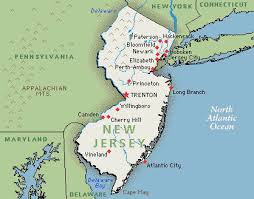
The imposition of tariffs is a key component of the current Trump administration’s trade policies. A corollary of the tariff policies is that the administration is also giving high priority to enforcement of the tariffs. In the latest illustration of the administration’s tariff enforcement approach, the U.S. Attorney’s Office for the District of New Jersey has brought criminal tariff evasion charges against an Indonesian jewelry firm, the company’s founder, and two company employees, based on allegations that the company engaged in a multi-year scheme to evade payment tariffs due on over $1 billion of jewelry and gold the company imported to the U.S. A copy of the November 17, 2025, criminal complaint can be found here. The U.S. Attorney’s Office’s November 17, 2025 press release about the complaint can be found here.

Continue Reading U.S. Brings Criminal Tariff Evasion Enforcement Action
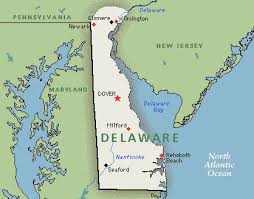
If a defendant company settles a shareholder lawsuit by issuing stock rather than by paying cash, does the settlement represent “Loss” within the meaning of the company’s D&O insurance policy? Earlier this year, a Delaware court said it does. Now, the Delaware Supreme Court has affirmed the lower court, for the reasons stated by the lower court. As discussed below, these rulings raise some interesting issues. The Delaware Supreme Court’s December 9, 2025, order affirming the lower court can be found here.

Continue Reading Does Issuance of Stock to Settle a Shareholder Suit Constitute “Loss”?

As detailed in a recent guest post on this site, authorities in a variety of jurisdictions around the country and around the world are grappling with the right approach to regulate AI. Several U.S. state legislatures, including those in California, Colorado, Utah and Texas, among others, have already enacted AI-specific laws. Now, on December 11, 2025, the White House issued a new Executive Order entitled “Ensuring a National Policy Framework for Artificial Intelligence” (here). The new EO seeks to override or preempt state laws on AI in favor of unified federal regulation. As discussed below, the order raises a number of concerns and may face both resistance and court challenge.

Continue Reading White House Issues Executive Order Targeting State AI Regulation
Nessim Mezrahi
Stephen Sigrist

In the following guest post, Nessim Mezrahi and Stephen Sigrist analyze financial market trends to assess the recent variances in the U.S. securities litigation risk. Nessim Mezrahi is co-founder and CEO, and Stephen Sigrist is a senior vice president, at SAR LLC. SAR previously published this data on their U.S. Securities Litigation Risk Management Report – Nov. 2025, here. I would like to thank Nessim and Stephen for allowing me to publish their article on my site.

Continue Reading Guest Post:  Deterioration in U.S. Securities Litigation Risk
Sarah Abrams

In the following guest post, Sarah Abrams, Head of Claims Baleen Specialty, a division of Bowhead Specialty, takes a look at the potential liability and litigation risks surrounding celebrity-branded companies in light of the recent litigated dispute that has arisen between golfing legend Jack Nicklaus and the company he founded. I would like to thank Sarah for allowing me to publish her article as a guest post on this site.

Continue Reading Guest Post: Slice and Dice: Celebrity-Branded Companies and Litigation Risk

Sexual harassment allegations can of course support an employment practices claim. But if the conduct results in harm to the company through an adverse judgment, can the same misconduct allegations also support a claim under Delaware law for breach of fiduciary duty? At least one past Delaware court said, in the context of that case, that the answer is “yes.” However, a recent Delaware Chancery Court decision took a different view, holding that “interpersonal” conduct alleged was “not a matter of corporate internal affairs.” A copy of the December 1, 2025, decision can be found here.

Continue Reading Del. Court: Harassment Charges Do Not Establish Fiduciary Duty Breach         
Sarah Abrams

One of the more interesting emerging phenomena involving cryptocurrencies has been the recent rise of crypto treasury companies – that is, companies whose primary purpose is acquiring and holding cryptocurrencies as part of their corporate treasury. There arguably are a host of concerns with these kinds of firms. Among other things, and as discussed in the guest post below from Sarah Abrams, there may be issues for these kinds of firms in connection with FDIC deposit insurance disclosure requirements. Sarah is Head of Claims Baleen Specialty, a division of Bowhead Specialty. I would like to thank Sarah for allowing me to publish her article as a guest post on this site.

Continue Reading Guest Post: FDIC Advertising Rule and Crypto Treasuries

Just about every company these days is grappling with the arrival of Artificial Intelligence (AI). But what should companies be telling their investors about the impact of AI deployment on their operations and financial results? At a recent meeting, the SEC’s Investment Advisory Committee recommended that the agency issue guidance requiring issuers to provide disclosures about the impact on the company from AI. As discussed below, while the committee’s recommendations may be unlikely to cause the agency to issue AI disclosure rules or guidance, the committee’s recommendations do provide a useful framwork to consider corporate AI-related disclosure best practices.

Continue Reading SEC Investor Advisory Committee Recommends AI-Related Disclosure Guidelines
Alexander Hopkins

One of the most important developments in the business, economic and financial arenas has been the recent emergence of Artificial Intelligence (AI). The advent of the AI era has also presented novel legal issues and has presented regulators with a host of potential challenges. In the following guest post, Alexander Hopkins takes a look at the developing efforts of a variety of governmental regulators to address the issues that AI presents, and considers the implications of these regulatory developments for the liabilities of corporate directors and officers. Alex is Of Counsel at the Saxe Doernberger & Vita, P.C. law firm. I would like to thank Alex for allowing me to publish his article as a guest post on this site.

Continue Reading Guest Post: Global AI Regulations: D&O Liability Implications in a Changing Legal Landscape

It is already well understood that there has been a change in direction at the SEC under the current Trump Administration and SEC Chair Paul Atkins. In a speech earlier this week at the New York Stock Exchange entitled “Revitalizing America’s Markets at 250,” Atkins described the ways in which he thought the agency in recent times has lost its direction, particularly with respect to its public company disclosure requirements. With the stated aim of restoring its original mission, Atkins identified two main public company disclosure reform goals for the agency. He also set out “three pillars” to “make IPOs great again.” Atkins’s IPO-related remarks include brief but noteworthy comments about securities class action litigation reform that have largely been overlooked in the press coverage of his speech.

Continue Reading SEC Chair Paul Atkins and Public Company Disclosure Reform