Peter C. Fischer
Burkhard Fassbach

In the following guest post, Peter C. Fischer and Burkhard Fassbach explore the reasons why board members of German companies would be well-advised to negotiate a clause in their service agreements requiring their companies to procure D&O insurance, as well as the preferred terms and provisions that the D&O insurance should incorporate. Peter is a Professor of Law at the University of Applied Sciences Dusseldorf and Burkhard is a D&O lawyer in private practice in Germany. A version of this article in German previously was published in the law journal GWR. I would like to thank Burkhard and Peter for allowing me to publish their article as a guest post on this site. I welcome guest post submissions from responsible authors on topics of interest to this site’s readers. Please contact me directly if you would like to submit a guest post. Here is the authors’ article.

Continue Reading Guest Post: The German D&O Procurement Clause Revisited
Here at The D&O Diary, we read everything so you don’t have to. One item that crossed my desk this week particularly resonated with me. The specific item was the court’s dismissal motion grant in the securities class action lawsuit pending against the footwear and apparel company Allbirds.

The plaintiffs had tried to argue that by their use in their complaint of bold and italicized font they had indicated which of the defendants’ statements they (the plaintiffs) alleged to be false and misleading. The court said it could not discern from the plaintiffs’ typography what statements or portions or statements were supposed to be misleading and granted the defendants’ dismissal motion with leave for the plaintiffs to attempt to replead. While the ruling could be only a setback for the plaintiffs, there arguably are some lessons here for all of us that should not be overlooked.

Continue Reading Boldface and Italics Not Enough to Identify Misleading Statements

In a recent decision in an insurance coverage dispute, the Delaware Superior Court granted the insurers’ motions to dismiss, holding that coverage under two towers of insurance was precluded, respectively, by the No Action clause and the Past Acts Exclusion. Insurance coverage practitioners and observers will find this decision interesting in and of itself, for what it says about the relevant policy provisions, and as a general matter, as an example of a Delaware court coverage decision. As discussed below, the decision arguably is an expectations-defying example of an insurer-friendly Delaware court coverage decision. A copy of the court’s May 9, 2024 decision opinion can be found here.

Continue Reading Del. Court Dismisses Coverage Suit Based on No Action, Prior Acts Clauses

As I have noted on this site in discussing artificial intelligence, among the risks and opportunities that the recent rapid emergence of AI represents for organizations of all kinds are the risks associated with AI-related regulatory oversight and supervision. Until now, references to AI-related regulatory concerns have mostly pertained to the EU’s Artificial Intelligence Act, which the European Parliament approved in March of this year. It is now clear that AI-related regulatory concerns likely will also extend to supervisory efforts of U.S. states as well, as reflected in the Colorado legislature’s May 8, 2024 passage of the Colorado Artificial Intelligence Act. This legislation, if signed into law by Colorado governor Jared Polis, would make Colorado the first U.S. state to enact comprehensive AI-related regulation.

As discussed below, the Act may or may not become law, but whether or not it does become law, it contains key signposts concerning the likely course of future AI-related regulation, as well as key AI risk management measures that well-advised companies will take to try to address their AI-related regulatory risk.

Continue Reading Colorado Legislature Passes U.S.’s First State AI Regulatory Bill
Chicago

The D&O Diary was in Chicago for a brief visit this past week. Chicago is a great place to visit anytime of the year, but the month of May might be just about the optimal time to visit. On the day of my arrival at least, the weather was just about perfect. The purpose of my visit to Chicago was to attend the 2024 Annual Meeting of the American College of Coverage Counsel.

Continue Reading Chicago

In the following guest post, James L. Griffith, Jr., of the Reger Rizzo Darnall LLP law firm, takes a look at looming retirement funding problems and the potential liability implications for ERISA fiduciaries. Jim also makes some recommendations on ways that fiduciaries can try to reduce their risk profile. I would like to thank Jim for allowing me to publish his article as a guest post on this site. I welcome guest post submissions from responsible authors on topics of interest to this site’s readers. Please contact me directly if you would like to submit a guest post. Here is Jim’s article.

Continue Reading Guest Post: Protecting ERISA Fiduciaries from Wrongful Blame for the Retirement Funding Crisis

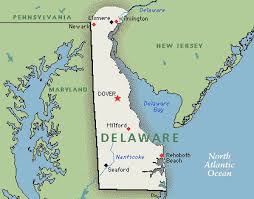
As readers undoubtedly have noted, one of the hot topics these days is the question whether corporations should change their state of incorporation from Delaware to that of another state, usually either Nevada or Texas. The dialog on this topic was already underway when Elon Musk supercharged the conversation by vowing, in reaction to the Delaware court’s disallowance of his $56 billion pay package, to have Tesla change its state of incorporation from Delaware to Texas. I suspect that the state of incorporation debate is going to be with us for some time to come, making it important for those of us who might have to participate in (or at least listen to) the conversation to get a handle on the key differences between the states.

Continue Reading Delaware or Another State: What’s the Difference?

It was roughly this same time a year ago when the banking industry in the U.S. was going through a series of serious events. Within the space of a few weeks during March through May last year, three of the five largest bank failures in U.S. history occurred. At the outset, a wider banking crisis was feared, but the Treasury Department, the Federal Reserve, and the FDIC acted forcefully, in effect backstopping all deposits, and the three bank failures did not lead to a systemic event. But while the immediate crisis was averted, many of the underlying problems – interest rate pressure, stress in the commercial real estate sector – continue, and now, a year later, the banking industry remains under stress. Problems have continued to emerge, and signs are that challenges in the industry will continue.

Continue Reading Thinking About Banks One Year After Last Year’s Crisis Events

Since OpenAI launched ChatGPT in November 2022, the race to capitalize on emerging artificial intelligence (AI) technologies has super-charged the financial markets. The stock prices of AI-associated companies, such as Nvidia and Super Micro Computer, have soared. Several AI-related companies  — such as, for example, Astera Labs and Rubrik — have recently successfully completed IPOs, so much so that that the long-moribund market for IPOs is showing definite signs of life. Other AI companies – including for example, Zapata and MultiplAI Health Ltd. — recently became public through mergers with SPACs.

With the consuming interest in AI in the financial markets, many companies want to try to catch some of the lightning for themselves. However, what the companies say about AI, their AI prospects, and their AI risks could have significant consequences for the companies’ corporate and securities litigation risks, as well as their risks of regulatory scrutiny.

Continue Reading AI, Risk, and Public Company Disclosures

One of the more distinctive developments in the capital markets in recent years has been the rise in the number of very large private companies. These companies are sometimes referred to as “unicorns,” as if they are very rare creatures — but the reality is that worldwide there over 1,230 of them.  Because the rise of so many large private companies is relatively recent, many of the legal principles and procedures relevant to these companies are just forming – giving rise to what University of Illinois Law Professor Verity Winship describes as the “gaps between private-market reality and legal structures that were designed for public companies.”

Among the “uncharted areas” is shareholder litigation; in a new paper, Professor Winship considers what shareholder litigation has meant in the context of these unicorn companies. What she found is that shareholder litigation involving these companies is rare, and that the procedural mechanisms available to investors are limited, at least by comparison to the mechanisms available to public company investors. Professor Winship describes her paper in an April 25, 2024,  Harvard Law School Forum on Corporate Governance post entitled “Unicorn Shareholder Suits” (here). The paper itself can be found here.  

Continue Reading Unicorn Companies and Securities Litigation