The SEC wants everyone to know that it is watching what the companies and firms it regulates are saying about their use of Artificial Intelligence (AI). SEC Chair Gary Gensler set the stage in a speech he made last December in which he warned companies about “AI Washing” – that is, making unfounded AI claims to the public. Now the agency has brought settled enforcement actions against two investment advisers for making allegedly false statements about their use of AI technology. As if the enforcement actions themselves were not enough to send the message that the SEC is on the AI beat, the agency also released a video statement from Gensler emphasizing the agency’s AI-related concerns.

The SEC’s March 18, 2024, press release about the enforcement actions can be found here. The SEC’s March 18, 2024, Administrative Order against Delphi (USA) Inc. can be found here. The SEC’s March 18, 2024, Administrative Order against Global Predictions, Inc. can be found here. The link to Gensler’s March 18, 2024, video can be found here.

Continue Reading SEC Hits Two Investment Advisers With “AI Washing” Enforcement Actions

D&O insurance policies typically extend coverage to “duly elected or appointed” directors and officers. But what happens if the proper election or appointment procedures were not followed yet the individual served as a director anyway? Is that person a “director” for purposes of D&O insurance coverage? How about for purposes of the Insured vs. Insured exclusion? These are the questions that a federal district court, applying Idaho law, addressed in a case involving individuals whose board appointments were procedurally flawed but whose board membership was subsequently ratified by corporate conduct. The court concluded the individuals are “directors” within the meaning of the policy, and so lawsuits brought by the individuals against the company and other board members represent insured vs. insured claims for which coverage is precluded by exclusion. A copy of the court’s March 15, 2024, decision can be found here. (Hat Tip to Paul Curley of the Kaufman, Borgeest, & Ryan law firm for his March 16, 2024 LinkedIn post about the case, here.)

Continue Reading Is a Director “Duly Elected or Appointed” If the Election Was Flawed But Later Ratified?

We have all seen the various league tables showing which plaintiffs’ firms have had the highest average securities class action settlements. But do these firms wind up at the top of the tables because they produce better outcomes for the plaintiff class, or do they produce these results simply because they are better at winning the race to become lead counsel in the better cases? As three academics put it in their recent paper, “do the plaintiffs’ lawyers matter”?

In their paper, New York Law Professor Stephen J. Choi, University of Richmond Law Professor Jessica M. Erickson, and University of Michigan Law Professor Adam C. Pritchard survey securities class action lawsuit settlements in order to determine whether the “top tier” plaintiffs’ firms actually produce better outcomes for the plaintiff class. Interestingly, the authors conclude that while the top firms produce better outcomes in a narrow subset of cases, in most other cases they do not. The authors suggest these observations have important implications for both claimants and courts. The authors’ paper can be found here. The authors’ March 12, 2024, column in the CLS Blue Sky Blog about their paper can be found here.  

Continue Reading Does the Plaintiff Law Firm Matter in Securities Suit Outcomes?

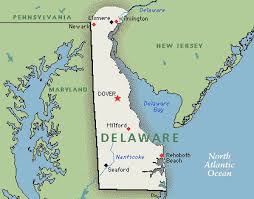
It is an idea that suddenly is all the rage – that companies should shake the Delaware dust off their feet and reincorporate elsewhere. Elon Musk has famously said, in the wake of the Delaware Chancery Court’s decision voiding his $55.8 billion pay package, that he will seek to reincorporate Tesla in Texas. (SpaceX, also a Musk company, has in fact already reincorporated in Texas.) The former Attorney General William Barr and another GOP official published a Wall Street Journal column arguing that Delaware’s courts are driving corporations away (as discussed here), and suggesting that companies increasingly will find it more attractive to be incorporated in Nevada or another state. Some companies have indeed left Delaware and reincorporated elsewhere – including not just SpaceX, but also TripAdvisor, for example. Why would a company change its state of incorporation from Delaware to another state? And with reference to the focus of  this blog, does a company’s redomestication from Delaware to another state have implications for the potential liability exposures of the company’s directors and officers?

Continue Reading Does a Del. Corp.’s Reincorporation in Another State Reduce D&O Liability Exposure?

On March 13, 2024, the European Parliament approved the adoption of the EU Artificial Intelligence Act, legislation that the Wall Street Journal, in a front-page article, called the “World’s First Comprehensive AI Law.” The sweeping law, the effectiveness of which will be staged-in over the next several years, will affect all companies deploying or using Artificial Intelligence (AI) in the EU. As discussed below, the passage of the Act, which has been several years in the making, could have significant implications for the adopting and deployment of AI worldwide, and could also have significant liability risk implications as well. A copy of the EU’s March 13, 2024, press release about the Act’s adoption can be found here. The Act’s text as adopted can be found here.

Continue Reading EU Adopts Sweeping AI Law: What Does it Mean?

I have noted in prior posts on this site the phenomenon of ESG backlash, which has not only taken the form of legislative and other overtly pollical action, but has also taken the form of litigation as well. Though the ESG backlash lawsuits generally have not fared well in the courts, one of these suits recently survived a motion to dismiss.

In a February 21, 2024, ruling, the Northern District of Texas denied the motion to dismiss in a lawsuit filed by an American Airlines pilot alleging that the airline and its employee benefits committee violated their fiduciary duties under ERISA to the company’s 401(k) plan participants in connection with selection and retention of funds whose managers allegedly pursue non-economic ESG objectives rather than maximizing plan participants’ financial benefits. As discussed below, the ruling underscores just how fraught the ESG-related litigation picture has become. A copy of the court’s ruling can be found here.

Continue Reading ESG Backlash ERISA Lawsuit Survives Dismissal Motion

Form PF (here) is a reporting form that requires private fund advisers to report regulatory assets under management to the Financial Stability Oversight Council (FSOC). On February 8, 2024, the SEC and the CFTC announced amendments to the Form PF disclosure requirements (as reflected here and here). In the following guest post, Geoffrey Fehling, Scott Kimpel, and Evan M. Holober of the Hunton Andrews Kurth law firm review the new disclosure requirements and consider the potential liability exposures and possible insurance implications. A version of this article previously was published as a Hunton Andrews Kurth client alert (here). I would like to thank the authors for allowing me to publish their article as a guest post on this site. I welcome guest post submissions from responsible authors on topics of interest to this blog’s readers. Please contact me directly if you would like to submit a guest post. Here is the authors’ article.

Continue Reading Guest Post: Insurance Implications of SEC and CFTC’s New Form PF Requirements

On March 6, 2024, in a decision that has attracted a lot of attention in the business press, the Eastern District of Virginia, applying Virginia law, held that the bump-up exclusion in Towers Watson’s D&O insurance policy precludes coverage for the $90 million paid in settlement of claims relating to the firm’s January 2016 merger with Willis Group Holdings. As discussed below, the court’s ruling highlights recurring issues concerning the wording of the bump-up exclusion. A copy of the March 6, 2024, opinion can be found here.

Continue Reading Bump-Up Exclusion Precludes Coverage for Merger-Related Claims Settlement

As reflected in my recent post, last week I attended the PLUS D&O Symposium in New York. The sessions were great, but based on some comments of various panelists, there are some items for follow-up – for example, references that panelists made that need to be checked out, items that panelists suggested we should pursue, and so on. I have run down these various items, and I link to them below. I emphasize that these items will be of interest even if you didn’t attend the Symposium. I have also included below several other items from around the Internet as well.

Continue Reading PLUS D&O Symposium Follow-Up and Other Notes
Nighttime in Times Square

This week I was in New York for the 2024 PLUS D&O Symposium, along with a thousand or so professionals from around the D&O insurance community. PLUS staged the conference at the Marriott Marquis hotel in Times Square, the bright, beating heart of NYC. No matter how many times you may visit, there is still something special about being in New York. The conference was great as well, a great chance to catch up on the latest news and developments, to meet with my many friends in the industry, and to make some new friends, as well.

Continue Reading PLUS D&O Symposium 2024