The 2019 merger between Viacom and CBS to form ViacomCBS (later renamed Paramount Global) generated extensive litigation that ultimately settled. The Merger — and the Merger-related litigation — followed events involving the two companies going back to 2016, and in fact there had been prior litigation back in 2016 as well. National Amusements, Inc. (NAI), which owned a majority of the voting shares of both CBS and Viacom, sought coverage for the defense and settlement of the 2019 litigation from its D&O insurers. The insurers contended that the 2019 post-Merger litigation and the 2016 lawsuits were interrelated, and therefore that the settlement was covered under policies in force in 2016, rather than under the policies in force in 2019.

In an opinion dated February 17, 2025, but only recently made public, the Delaware Superior Court granted NAI’s motion for summary judgment, holding that the 2019 Suit is not interrelated with the 2016 Suits, and therefore that costs associated with the 2019 Suit were covered under the 2019 Policy and not under the 2016 Policy. The court’s analysis, in which it concluded that the two sets of litigation were not “meaningfully linked,” is detailed and interesting, and helps to explain what factors are relevant in the analysis of the meaningfully linkage issue. A copy of the court’s opinion can be found here.

Continue Reading Del. Court Holds Merger Litigation Not “Meaningfully Linked” to Prior Suits

Times Square

This week I was in New York for the 2025 PLUS D&O Symposium, along with a thousand or so other professionals from around the D&O insurance community. The Symposium took place at the Marriott Marquis hotel in Times Square, the bright, beating heart of NYC. No matter how many times you visit, there is still something special about being in New York. The conference was great as well, a great chance to catch up on the latest news and developments, to meet with my many friends in the industry, and to make some new friends, as well.

Continue Reading PLUS D&O Symposium 2025
John McCarrick

Readers of this blog have no doubt followed both the recent ongoing controversy over whether companies should leave Delaware for supposedly friendlier jurisdictions as well as the legislation recently introduced in the state’s General Assembly to try to address some of the legal concerns behind the leaving Delaware initiative. In the following guest post, and in the context of these issues, John McCarrick, a partner at the Robinson & Cole law firm in New York, takes a look at recurring Delaware issues that in his view are of significant concern to D&O insurers. I would like to thank John for allowing me to publish his article as a guest post on this site. I welcome guest post submissions from responsible authors on topics of interest to this site’s readers. Please contact me directly if you would like to submit a guest post. Here is John’s article.

Continue Reading Guest Post: DExit Drama and D&O Insurance Issues

In my recent post discussing Trump administration changes affecting the world of D&O, I noted recent developments suggesting that the SEC seems poised to either withdraw or non-enforce the agency’s Climate Change Disclosure Guidelines, which, as discussed here, were finalized in March 2024. However, as I also noted, even if the guidelines are withdrawn, many U.S. companies could still remain subject to ESG reporting requirements under the EU’s Corporate Sustainability Reporting Directive (CSRD).

Now, apparently reflecting a desire among EU member states for their economies to be more competitive in the global business environment, the European Commission has proposed an “Omnibus package” of proposed revisions to streamline a number of EU laws, including the CSRD. As discussed below, the proposed revisions could significantly reduce the number of U.S. companies, and the number of companies overall, obliged to report under the CSRD.

Continue Reading Proposed EU ESG Reporting Changes Could Spare Many U.S. Companies

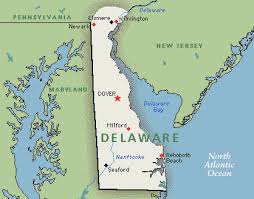
As I have frequently noted on this site, Delaware’s courts have a well-earned reputation for being policyholder friendly. Accordingly, policyholders aiming to sue their insurers frequently seek to file their coverage lawsuits in Delaware. However, a recent ruling in a coverage dispute, in which the Delaware Superior Court concluded it lacked personal jurisdiction over two of the defendant insurers, underscores the fact that there are limits on the circumstances on which insurers can hauled into Delaware’s courts. The Delaware Superior Court’s February 19, 2025, opinion in the case can be found here. A February 27, 2025 LinkedIn post by Paul Curley of the Kaufman, Borgheest & Ryan law firm about the court’s ruling can be found here.

Continue Reading Limits of Delaware Courts’ Personal Jurisdiction Over Non-Resident Insurers

A D&O insurance policy provides its most important protection in the bankruptcy context, when the company is unable to indemnify its executives for claims arising out of their service as directors or officers. But because of the competing interests in bankruptcy – including the interests of the bankruptcy estate itself – bankruptcy can also be a complicated insurance coverage context. A Fourth Circuit decision, in which it held that two bankruptcy trustees lacked standing to sue a bankrupt company’s D&O insurer in a declaratory judgment action, highlights important principles governing D&O insurance in the bankruptcy context.

Continue Reading 4th Circ.: Bankruptcy Trustees Lack Standing to Sue D&O Insurer

At a time when the future of the Public Company Accounting Oversight Board (PCAOB) appears uncertain, a recent report shows that the agency’s enforcement activity levels in 2024 were a multi-year highs and the agency’s monetary recoveries were at all-time highs. The agency’s enforcement actions are detailed in a Cornerstone Research report entitled “Public Company Accounting Oversight Board (PCAOB) Enforcement Activity: 2024 Year in Review,” which can be found here. Cornerstone Research’s February 26, 2025, press release about the report can be found here.

Continue Reading PCAOB 2024 Enforcement Activity at Multi-Year Highs, But What Next?

It was no secret that the crypto enforcement approach was going to change under the Trump administration. Indeed, one of Trump’s first acts upon returning to the White House in January was to sign an executive order calculated to try to make the U.S. the “crypto capital of the world.” The SEC has likewise made it clear that under the new administration the agency will also be taking a new approach to crypto. The acting SEC leadership has already made a number of crypto-friendly moves – among other things,  the new leadership disbanded the agency’s Crypto Enforcement Task Force. The SEC has also dismissed pending cases against Binance (here) and Coinbase (here). As discussed below, the agency recently has taken even further crypto friendly actions – all of which has at least one observer to ask whether the SEC crypto pull back has gone too far?

Continue Reading Sounding the Alarm on the SEC’s New Crypto Approach

As readers of this blog well know, a recent debate has been brewing over whether Delaware corporations should de-camp and reincorporate in another state, with Nevada and Texas often the preferred candidates. This debate gained momentum when Elon Musk called for states to redomesticate outside Delaware after the state’s courts struck down his ginormous Tesla pay package. As discussed here, in response to the DExit debate, Delaware legislators have now proposed a massive revision to Delaware’s corporate laws, among other things as a way to try to stop the perceived retreat of companies from Delaware. It now appears that opponents of the legislation are mounting an organized campaign to oppose the proposed revisions. It looks like the game is on for the proposed changes, as the bill sponsors prepare to try to move the legislation forward.

Continue Reading Critics Launch Campaign Opposing Delaware SB 21

As I have previously noted on this site (for example, here), a long-standing and frequently recurring litigation pattern has been the filing of a corporate or securities lawsuit in the wake of an antitrust enforcement action. In the latest example of this pattern, a plaintiff shareholder has alleged that Atkore, a PVC pipe manufacturer, misled investors by failing to disclose that its product pricing was being propped up by an alleged scheme with its competitors to fix prices. The securities suit filing follows a prior civil antitrust action against the company and its competitors. The securities suit, which in addition to representing an example of antitrust follow-on securities litigation, is also an example of a lawsuit arising out of a company’s post-COVID business operations. A copy of the February 21, 2025, complaint can be found here.

Continue Reading Antitrust Allegations Lead to Securities Suit Against PVC Pipe Company