Photo of Kevin LaCroix

Kevin M. LaCroix is an attorney and Executive Vice President, RT ProExec, a division of RT Specialty. RT ProExec is an insurance intermediary focused exclusively on management liability issues.

Governance Issues frequently are the heart of corporate and securities lawsuits. For that reason, the testimony in this type of litigation of corporate governance and management practices experts can be indispensable. In the following guest post, Dr. Stephen Grace, President and Founder of H.S. Grace & Company, Inc., Alvin H. Fenichel, CPA, Senior Advisor at H.S. Grace & Company, Inc., and Joseph P. Monteleone, Esq., the Principal in Catamount Services LLC,  take a look at the ways in which the testimony of these experts can be utilized in these kinds of lawsuits, as well as the related question of who is qualified to serve as a governance expert. I would like to thank the authors for allowing me to publish their article as a guest post on this site. I welcome guest post submissions from responsible authors on topics of interest to this site’s readers. Please contact me directly if you would like to submit a guest post. Here is the authors’ article.Continue Reading Guest Post: Is It Ever Too Early To Engage A Corporate Governance Expert?


Francis Kean

Portions of the U.K. Economic Crime and Corporate Transparency Act 2023 went into effect just after Christmas 2023. Who are the senior manager that the Act affects and how worried should they be? These are the questions Francis Kean, Partner in Financial Lines Team at McGill and Partners, asks in the following guest

Jennifer Weinstein
Jamie Filipovic

Most readers of this site are acquainted with or at least aware of the Illinois Biometric Information Privacy Act (BIPA). In the following guest post, written by Jennifer Weinstein, Senior Claims Manager, Management Liability Claims, Intact Insurance Specialty Solutions, and Jamie Filipovic, Partner, O’Hagan Meyer, LLC, the authors explain that we are now likely going to have to be come familiar with the Illinois Genetic Information Privacy Act (GIPA), and for many of the same reasons. I would like to thank Jenn and Jamie for allowing me to publish their article as a guest post on this site. I welcome guest post submission from responsible authors on topics of interest to this blog’s readers. Please contact me directly if you would like to submit a guest post. Here is the authors’ article.Continue Reading Guest Post: What you Need to Know about Illinois’ Genetic Information Privacy Act

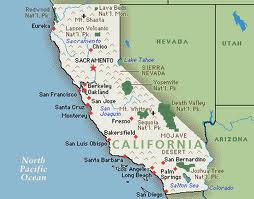
Section 533 of the California Insurance Code provides that an insurer is not liable for loss caused by an insured’s willful act. The applicability and impact of Section 533 are frequently litigated issues in insurance coverage cases to which California law applies. The following guest post surveys the recent significant case law involving Section 533. The article’s authors are Marisa DeMartini, Vice President, Management Claims Liability Manager, Ascot Insurance Company, James Talbert, Associate, Bailey Cavalieri LLC and Elan Kandel, Member, Bailey Cavalieri LLC. I would like to thank the authors for allowing me to publish their article as a guest post on this site. I welcome guest post submissions from responsible authors on topics of interest to this site’s readers. Please contact me directly if you would like to submit a guest post. Here is the author’s article.Continue Reading Guest Post: 2023 Survey of Significant Decisions Involving California Section 533

The number of securities class action lawsuit filings increased in 2023 for the first time in four years, according to a new report from NERA. According to the report, the number of filings increased more than 10% in 2023 compared to 2022. On the other hand, the number of cases resolved in 2023 declined during the year. The January 23, 2024 report, entitled “Recent Trends in Securities Class Action Litigation: 2023 Full-Year Review, can be found here.Continue Reading NERA: 2023 Fed Court Securities Suit Filings Increased for the First Time in Four Years

If the underlying insurers have paid their limits, you would generally expect that the next-in-line excess insurer would also have to pay its limit as well for losses within its layer. However, in an appellate decision with what is arguably an unexpected twist, an appellate court has held – in reliance on express policy language – that an upper layer excess carrier is relieved of its obligation to pay because the underlying carriers, all of whom paid their full limit, did not admit liability. The Third Circuit’s January 19, 2024, decision, marked “not precedential,” can be found here. A January 21, 2024, LinkedIn post about the decision by Paul Curley of the Kaufman, Borgeest & Ryan law firm can be found here.Continue Reading Excess D&O Insurance Coverage Barred Because Underlying Insurers Didn’t Admit Liability

A few days ago when I published a post discussing a new COVID-19-related securities lawsuit I expressed my surprise that pandemic-related suits were still being filed in 2024, particularly after the pace of new coronavirus-related suits tailed off completely in the latter half of 2023. Well, it appears that the recent new case filing not just a single anomaly, as this past week yet another new pandemic-related securities lawsuit was filed.

On January 19, 2024, a plaintiff shareholder filed a securities suit against BioVie, a developmental stage biotech company, after the company reported that clinical trials for its Phase 3 drug candidate produced results the company concluded deviated from protocols and Good Clinical Practice (GCP) because the pandemic had limited patient access to clinical trial sites. A copy of the new complaint can be found here.Continue Reading Biotech Hit with Securities Suit After Pandemic Impact on Clinical Trials

In my recent wrap-up of the top D&O stories of 2023, I noted that one of the key developments during the past year was California’s adoption of new climate change disclosure requirements, which were enacted at a time when there was the added prospect that the SEC would finally release its own climate change disclosure guidelines by April 2024. While the California requirements have not yet been implemented and the final SEC disclosure guidelines have not yet even been released, there are growing signs that these climate change-related disclosure requirements may face significant hurdles and challenges.

It is not news that the SEC disclosure guidelines, whenever they are finally released, likely will face significant legal challenges, as I have previously noted on this site (here). However, this past week, in a Congressional hearing before a House Financial Services subcommittee, as reported in a January 18, 2024, Law360 article (here), spokespersons for conservative and business interests reiterated their belief that the SEC’s climate change disclosure guidelines, as proposed, reflect “several deficiencies,” and likely will face significant legal challenges.Continue Reading Climate Change Disclosure Requirements Face Hurdles and Challenges

Sarah Abrams

Many readers may have seen the recent news that the New York Times had sued Microsoft and OpenAI alleging that OpenAI’s use of New York Times content to train their AI tool’s database infringed the newspaper’s copyright. The lawsuit raises its own set of issues but lawsuits of this type relating to AI development also pose an interesting set of insurance coverage related issues. In the following guest post, Sarah Abrams, Head of Professional Liability Claims at Bowhead Specialty, takes a look at the insurance questions that these kinds of lawsuits present. The views of the author are her own and not necessarily that of Bowhead Specialty Underwriters. I would like to thank Sarah for allowing me to publish her article on this site. I welcome guest post submissions from responsible authors on topics of interest to this blog’s readers. Please contact me directly if you would like to submit a guest post. Here is Sarah’s article.Continue Reading Guest Post: Can There Be “Misappropriation of Trade Secret[s]” in the Age of AI?’

In my recent round-up of the Top D&O stories of 2023, I noted that one of the key drivers contributing to the number of securities class action lawsuit filings last year was the presence of macroeconomic factors affecting company operations and financial results. Among these factors was supply chain disruption. While the pandemic-related disruptions that snarled supply chains in 2021 and 2022 appeared to have eased during 2023, the impact from the earlier supply chain disruptions continues to weigh on some businesses.

 In the latest example of how the prior supply chain disruption continues to affect businesses and how that can translate into securities litigation, on January 16, 2024, a plaintiff shareholder filed a securities lawsuit against advanced driver assistance system company Mobileye Global, after the company announced that it anticipated lower than expected sales of its key product because its leading customers had built up product in 2023 in order to avoid supply disruptions of the type that resulted from supply chain constraints in 2021 and 2022. This latest lawsuit shows how the consequences from pandemic related supply chain disruptions are continuing to weigh on businesses and result in securities litigation. A copy of the January 16, 2024 complaint can be found here.Continue Reading Supply Chain Woes Causing Inventory Build-Up Leads to Securities Suit