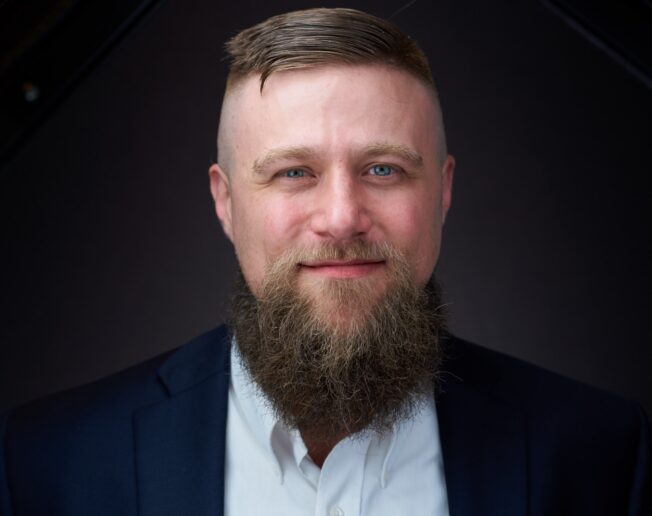
In the following guest post, Lucas Roberts, a Management Liability Broker for Burns & Wilcox, examines a recent coverage dispute in which a nonprofit organization unsuccessfully sought to have its insurer defend the organization in a civil rights lawsuit. My thanks to Lucas for allowing me to publish his article on this site. Here is Lucas’s article.
*****************************
Imagine you’re sitting on the board of your local chamber of commerce. It’s a pretty benign, uncontroversial position. Perhaps you’re a local business owner, and you want to contribute to the economic welfare of your community while also networking with other entrepreneurs.
One day, to your utter shock and horror, you receive notice that the entire board is being sued by a regional religious organization.
Not all is lost though. You know that the chamber carries a Directors and Officers Liability policy. We just need to tender the claim to the carrier and let them take over the management of the suit.
Except no, the carrier will not take the suit, and will deny the claim based on their Discrimination Exclusion. Now the chamber will have to handle the defense all by themselves.
This claim denial is an important lesson for anyone who handles Nonprofit Directors and Officers Liability. Just because a nonprofit is staffed with only volunteers and has no employees doesn’t mean they don’t need EPLI. They still have exposures that only an Employment Practices Liability policy is designed to respond to.
The Case
The South Florida Muslim Federation (SFMF), an umbrella organization representing over thirty South Florida Muslim entities and over 200,000 Muslims across three counties, had contracted with a Marriott hotel in Coral Springs, FL to host their second annual conference, “Lighting the Path”. SFMF had finalized the contract with Marriott 6 months prior to the start of the conference, only to be told 1 week prior that the Marriott was canceling their hosting of SFMF’s conference.
What caused the sudden cancellation?
The General Manager of the hotel cited “significant undesirable interest” that compelled them to cancel on such short notice.
The root of this “significant undesirable interest” seemed to stem from political pressure the hotel was receiving by a variety of groups, including the president of the Parkland Chamber of Commerce.
Court documents show the following series of events:
- December 29th , 2023, a delegation of community members including the Chamber of Commerce met with the hotel manager in an effort to convince the manager to cancel the upcoming conference.
- At this point the manager did not capitulate, citing the hotel’s contractual obligation to SFMF.
- January 2nd, 2024, the Middle East Forum (MEF) published this article, framing SFMF’s conference as a gathering of “Hamas Sympathizers”.
- The final sentence of this article best exemplifies the intent of the piece, “What price is the Marriott, with its thousands of international locations, willing to pay as it hosts the region’s most extreme alliance of Islamist organizations?”
- January 5th, 2024, amidst an email campaign from Parkland community members threatening to boycott the hotel, the Parkland Chamber of Commerce President AND the Director of Programming sent a joint email to the other chamber members appraising them of the conference whilst citing the MEF article. They later posted on their Instagram account a warning that the hotel was “hosting a meeting for pro-Hamas sympathizers”.
- Later that day the hotel informs SFMF that they are cancelling their hosting of the conference.
- January 6th, 2024, the Chamber of Commerce posted an additional “Important Update” announcement on its social media channels, confirming that the SFMF 2024 Conference was canceled and that it “will continue to watch for any changes and provide updates as needed.”
- The Chamber later confirmed that they threatened to cease doing business with the hotel should they reschedule the event with the SFMF.
The Chamber of Commerce was later named in the lawsuit with allegations of civil right violations, using tactics of “intimidation, threats, and coercion” to deprive the SFMF of their right to assemble.
The suit alleges multiple categories of misconduct against the insured, the Chamber of Commerce. But as previously mentioned, their claim was denied. How and why did that happen exactly?
The Claim
The insured had a D&O policy through Mount Vernon Fire Insurance Company, who denied the claim since the underlying suit arose from discrimination claims, which their policy excluded. The exclusion read as follows:
The Company shall not be liable to make payment for Loss or Defense Costs in connection with any Claim made against the Insured arising out of, directly or indirectly resulting from, in consequence of, or in any way involving any actual or alleged:
Discrimination
Discrimination, including but not limited to discrimination based on religion, race, creed, color, sex, age, material status (sic)5, sexual preference, pregnancy, handicap or disability;
The court noted the insurer has a duty to defend its insured when the complaint alleges facts that fairly and potentially bring the suit within policy coverage.
“If the complaint alleges facts partially within and partially outside the scope of coverage, the insurer is obligated to defend the entire suit.”
“All doubts as to whether a duty to defend exists are resolved against the insurer and in favor of the insured, and if the complaint alleges facts which create potential coverage under the policy, the duty to defend is triggered.”
“But of course, because the lawsuit must be for something covered by the insurance policy, ‘the insurer has no duty to defend’ when ‘the pleadings show the applicability of a policy exclusion.’”
Next the court examined if the exclusions were “clear and unambiguous”.
The insured’s argument for coverage was that the Conduct Exclusion created ambiguity. Since some of the claims against them allege “intentional discrimination”, then both the Conduct AND the Discrimination exclusions would be invoked. Since the Conduct Exclusion allowed for the carrier to cover defense costs, it seems the insured was hoping that the court would permit only the Conduct Exclusion to be invoked, and while there wouldn’t be any indemnification provided they could at least access coverage for their defense costs.
The court did not buy this reasoning.
“If this Court were to adopt (the insured’s) interpretation of the Policy, the policy would provide a windfall for perpetrators of intentional discrimination.”
The insured also tried to argue that while discrimination claims may be excluded from the policy, allegations of tortious interference with a business relationship were not. Since those allegations were covered, the policy should be triggered. The court didn’t buy this argument either. The underlying allegations included discrimination, and the Discrimination Exclusion clearly and unambiguously excluded claims based upon or arising from discrimination.
The court upheld Mount Vernon’s claim denial.
Aftermath and Lessons Learned
Interestingly enough, the Chamber of Commerce and other defendants seemed to have prevailed in court. On May 12, 2025 a federal judge ruled that the SFMF could not demonstrate that they were discriminated against based on race, and therefore the claims in the suit were not actionable under the laws cited by the SFMF.
The SFMF continues to face obstacles even today as this recent local news clip shows.
So while the Parkland Chamber of Commerce ended up winning their case, they faced over a year of defense costs all by themselves with no carrier backing, despite the fact that they had proactively purchased a D&O policy.
Those of us in the Management Liability sector know it’s not uncommon to package D&O and EPLI together. If this insured had purchased EPLI together with its D&O, then it’s very likely this claim would have evolved much differently. Instead of a Discrimination Exclusion barring coverage, an insuring agreement for discrimination claims would be available through the EPLI coverage section. The insured would still have to contend with the Conduct Exclusion, but at least there would then be defense costs coverage available.
It’s possible that the insured looked at EPLI and concluded they didn’t need the coverage. They didn’t have any employees after all. But since EPLI policies usually extend coverage to claims arising from third party exposures, it would have behooved the insured to consider this coverage more carefully.
What can we as executive line practitioners take away from this case?
Agent/Brokers, are you:
- Recommending EPLI to your nonprofits even when they don’t have employees?
- If not, are you advising them that any discrimination or harassment claims are likely excluded, even from third party exposures?
- These exclusions are often written in an absolute manner. Even if the allegations include wrongful acts other than discrimination, the “based upon or arising out of” will kick the claim out of coverage. This is a glaring coverage gap that many nonprofits are blissfully unaware of.
Underwriters, are you:
- Upselling EPLI to your agents?
- When your agents push back, do you point out that their clients are running bare with respect to third party harassment and discrimination exposures?
- “They don’t need EPLI, they don’t have any employees!” True, but third party EPLI exposures remain nonetheless.
Remember, these exclusions, oftentimes written in an absolute manner (based upon or arising out of), completely exclude coverage from what might otherwise be considered a normal claim. This Chamber of Commerce expected their board members to be protected if and when they were sued because of actions they undertook as an entity. They learned the hard way that once an absolute exclusion is triggered all bets are off.
Footnote: Parkland Chamber of Comm. v. Mt. Vernon Fire Ins. Co., 2025 WL 3214313 (S.D. Fla. Nov. 18, 2025).
Lucas Roberts is a Management Liability Broker for Burns & Wilcox. You can visit www.0omissions.com for more of his writings.